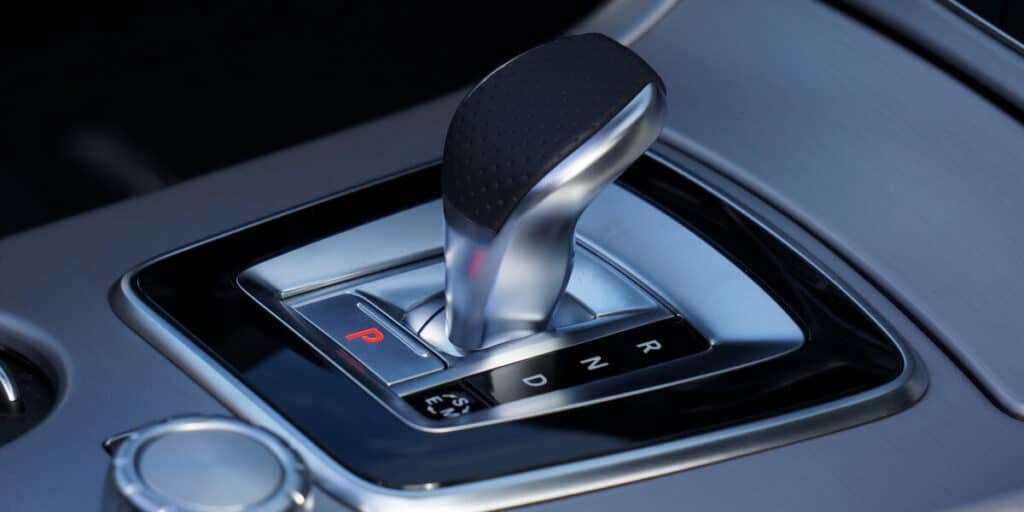
If your car won’t go into Park, you’re usually facing an electrical interlock fault—bad brake switch, blown fuse, weak battery, or failed shift‑lock solenoid—or a mechanical issue like a stretched/broken shift cable, jammed shifter, or damaged parking pawl; check brake lights, fuses, and battery first, test the brake switch and solenoid for 12V and audible click, inspect cable/linkage for play, and verify transmission fluid and pawl condition, and continue for step‑by‑step tests and fixes.
Quick Tips
- Check brake lights and fuses first; a blown fuse or faulty brake switch often prevents the shift‑lock from releasing.
- Test shift‑interlock solenoid for 12V and audible click when brake is pressed; replace if coil or plunger fails.
- Inspect shifter cable, linkage, and parking pawl for stretching, damage, or misalignment that mechanically blocks Park.
- Verify transmission fluid level/condition and TCM/ECM faults, since low fluid or software errors can stop pawl engagement.
- If cylinder sticks or obstruction exists, lubricate lock with dry graphite, try spare key, wiggle steering, and call a mechanic if unresolved.
Quick Checklist: Why Your Car Won’t Go Into Park

If your car won’t shift into Park, start with a focused checklist that helps you isolate the problem quickly and safely.
Check shift cable and linkage for stretching, frays, or loose connections, inspect the shifter mechanism and parking pawl for breakage or wear, verify transmission fluid level and condition, and note any electrical faults like a faulty park solenoid or misaligned brake pedal switch. Also consider that a common cause is a broken or stretched cable which often prevents engaging the outermost gears. Also inspect for any low vehicle voltage issues that can cause electronic park interlocks to fail.
Quick Checks: Brake Lights, Fuses, and Battery
Start by checking whether your brake lights actually illuminate when you press the pedal, because a non-functioning brake light or switch often prevents the shift interlock from releasing; have someone stand behind the car or use hazard lights as a temporary signal if the lamps don’t light.
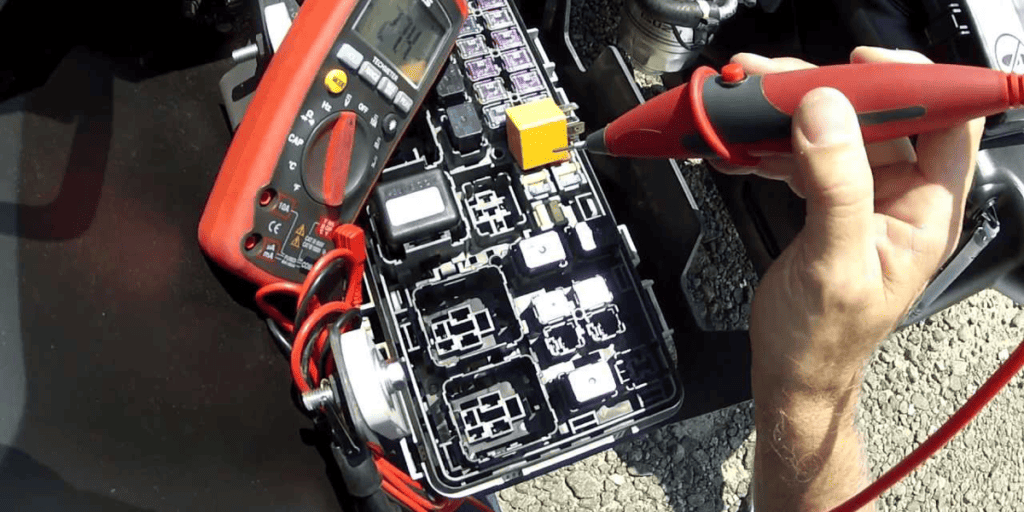
Next, inspect the relevant fuses and relays—locate the under-dash or engine-bay fuse box, pull the fuse labeled STOP/Brake or Shift Lock, and look for a broken element or use a multimeter to test continuity, replacing any blown fuse with the same amperage.
Finally, verify battery voltage with a multimeter (expect at least about 12.2 volts), since low or dead batteries can disable modules and mimic electrical failures, and jump-start the vehicle if voltage is below the threshold.
Also check the shift lock solenoid fuse and related brake switch wiring, since a blown fuse or faulty brake switch commonly prevents the shifter from moving out of Park.
Brake Light Function Check
Wondering whether a simple lighting fault is keeping your car from going into Park? Check rear brake illumination while someone presses the pedal; flicker or one-side failure hints at switch, ground, or socket issues.
Test switch continuity and voltage at its terminal with ignition on. Inspect bulbs, clean sockets, confirm battery voltage and secure grounds so the brake circuit receives steady power.
Fuse And Relay Inspection
After checking the brake-light operation, move on to the vehicle’s fuses and relays, because a fault in those circuits often prevents the shift interlock from releasing.
Locate the fuse box, find the “Shift Lock/Interlock/Brake Light” fuse, inspect its filament, and replace with the same amperage if blown.
Swap identical relays, check terminals for corrosion, and verify relay output under key start.
Battery Voltage Status
When diagnosing a car that won’t shift out of Park, check the 12‑volt battery and related electrical indicators first, because the shift interlock solenoid, brake switch, and several control modules all rely on steady battery voltage to operate;
use a multimeter to confirm a resting voltage around 12.6 V (with 12.2 V as the practical lower limit), verify that the brake lights illuminate when you press the pedal, and look for dim or flickering dash lights or slow accessory operation—symptoms that point to low battery charge or poor battery connections and can cause the interlock to stay engaged even if the mechanical linkage is fine.
Measure voltage, test brake-light signal, note dimming, try a jump or charger, then recheck interlock click and diagnostic codes to confirm resolution.
How to Tell Electrical vs Mechanical Causes
How can you tell whether your car’s refusal to go into Park is caused by an electrical fault or a mechanical problem?
Check brake lights and fuse first; no lights, blown fuse, or no interlock click point to electrical failure.
Live-data showing “Brake Applied = No” confirms switch or wiring issues.
Physical signs—loose shifter, blocked console, stretched cable, or burnt fluid—indicate mechanical trouble.
Also inspect the neutral safety switch for faults and wiring integrity, since a faulty neutral safety switch can prevent starting or proper gear detection.
Test and Replace the Shift Interlock Solenoid
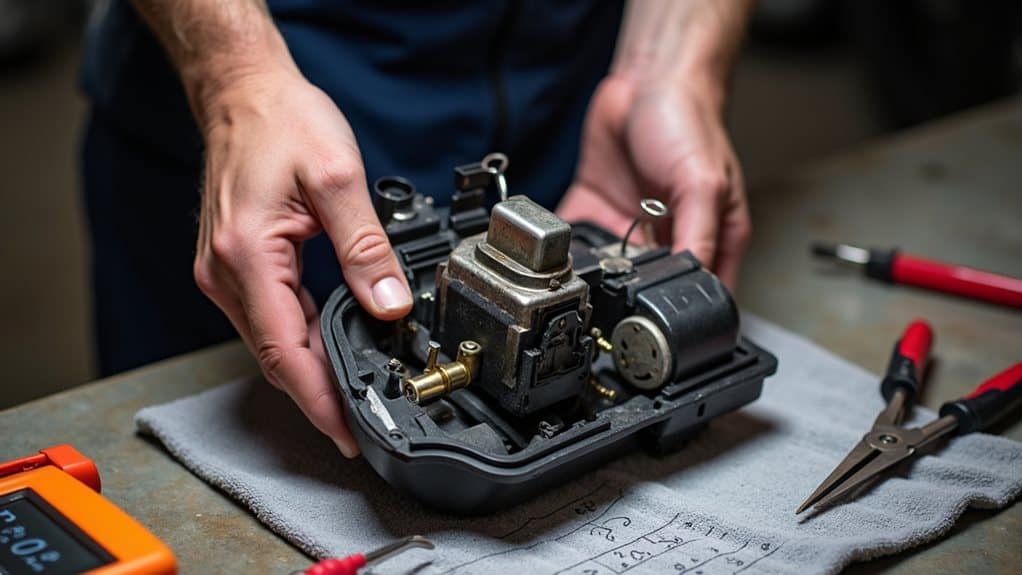
You’ll start by testing the shift interlock solenoid to confirm whether the problem is electrical or mechanical, checking for 12V at the connector when the brake is pressed and listening for an audible click or measuring coil resistance with an ohmmeter.
If the solenoid won’t actuate but the brake light switch and fuses are good, perform a manual override then apply direct battery power to the solenoid’s pins to verify plunger movement and rule out wiring faults.
When the unit fails these functional tests, remove the center console, disconnect the battery, unbolt and replace the solenoid with a compatible part, then reconnect and verify that the shifter only releases from PARK when the brake is depressed. The Mack E7’s low-end torque characteristics illustrate how early torque delivery can aid heavy-load starting, similar to ensuring the shifter only releases under correct conditions.
Solenoid Function Test
Why test the shift interlock solenoid before replacing it?
You’ll verify electrical and mechanical function first: apply battery power carefully to the connector (correct polarity), listen for a distinct click, and confirm the lever moves from Park and locks back when power is removed.
Use a scan tool to command ON/OFF and check brake-switch power; absence of voltage points to wiring or switch faults.
Solenoid Replacement Steps
Ready to replace the shift interlock solenoid? Disconnect the battery, wear gloves and eye protection, and clear your work area.
Remove center console panels, unplug the wiring cable, and release locking tabs to lift out the old solenoid.
Install plunger and spring in the new unit, align and grease the plunger tip, secure tabs, reconnect the connector, restore power, and test shifting with the brake depressed.
Inspect and Fix Shifter Cable and Linkage
If the car won’t go into Park, start by inspecting the shifter cable and linkage, since these components directly translate your console movements into transmission positioning and a fault here will prevent the transmission from reaching the Park detent.
Check routing, clips, bushings, and cable for kinks or wear; verify smooth movement.
Adjust alignment with shifter and transmission in neutral, or replace cable and secure fittings.
Also check the shifter interlock system, including fuses and the shift lock release mechanism, as it can prevent the transmission from engaging Park.
Parking Pawl vs TCM: When It’s a Transmission Problem
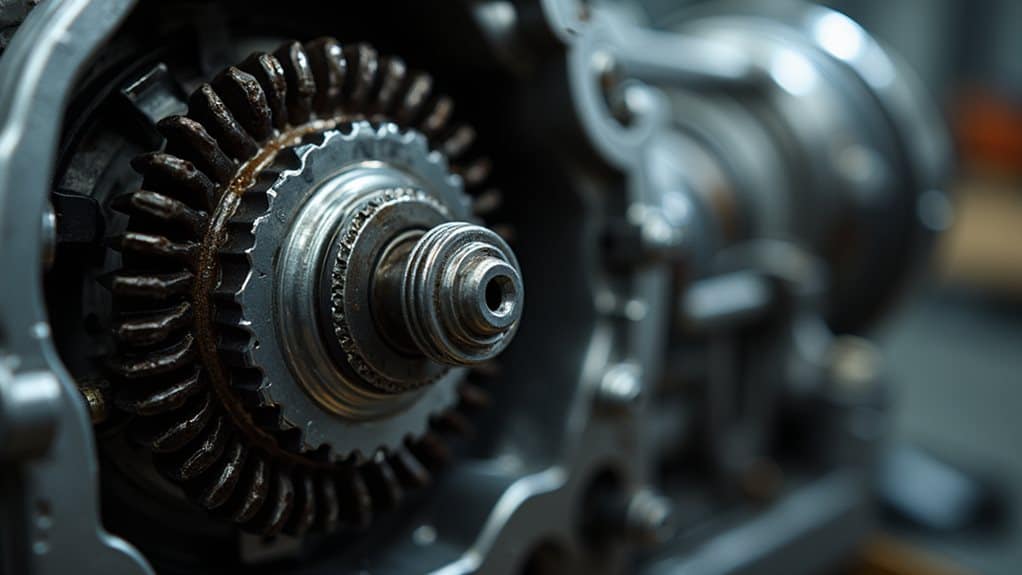
After you’ve checked the shifter cable and linkage, the problem may still lie inside the transmission electronics or the pawl itself; these are separate systems that both control whether the car actually locks in Park.
Check for TCM software faults or ECM‑TCM communication errors that stop pawl engagement, or physical pawl breakage that jams gears — both require diagnosis and often transmission removal.
Low or overheated transmission fluid can cause internal pressure issues that prevent the pawl or clutches from engaging properly, so verify fluid level and condition and scan for related transmission codes.
Ignition Keyway Fixes and When to Call a Mechanic
Beginning with basic cleaning and inspection can resolve many ignition keyway problems without needing a mechanic: use a can of compressed air to blow out lint, dust, or metal debris, then apply a dry graphite or PTFE lock lubricant and insert and remove the key three to five times to spread the lubricant evenly, avoiding oil‑based sprays like WD‑40 that attract grime.
Check key for bends, test spare, wiggle steering to release lock, confirm shifter is fully in Park, and inspect battery, fuses, and shift‑interlock solenoid.
Call a mechanic if sticking persists, the cylinder won’t turn, obstruction requires removal, or electronic fob/start fails.
Wrapping Up
You’ve reviewed electrical and mechanical causes, from a dead battery, blown fuse, or faulty shift‑interlock solenoid to stretched shifter cable, damaged linkage, a seized parking pawl, or transmission control module issues. Start with simple checks—brake lights, fuses, battery—then test the interlock and inspect cable connections. Minor fixes you can do; replace the solenoid or cable if needed. If the parking pawl or TCM is involved, call a qualified mechanic for safe, professional repair.