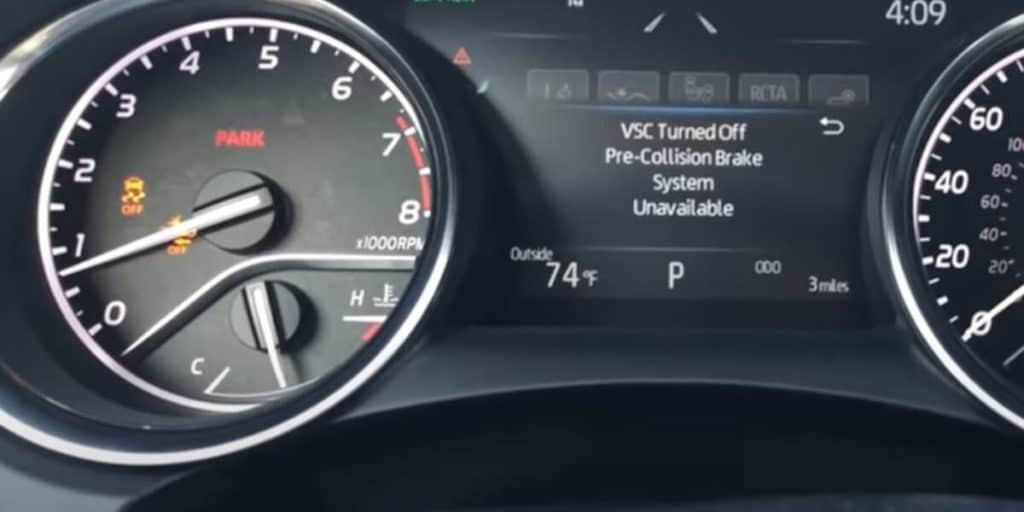
When you press the ESC OFF button, the car’s electronic stability control stops intervening in wheel‑slip and steering, disabling both traction‑control and stability‑modulation while leaving ABS and basic braking active. A brief press turns off only traction control; holding the button for about three seconds disables the full stability system, indicated by an amber lamp or “ESC” symbol. The engine no longer receives torque‑reduction commands for skids, so you must monitor wheel lock‑up and power delivery yourself. The system reactivates automatically after a restart, and the dashboard light flashes to show its status. If you keep exploring, you’ll discover when and how to use ESC OFF safely.
Quick Tips
- ESC OFF disables the vehicle’s electronic stability control, stopping traction‑modulation and stability‑correction commands.
- A short press of the dashboard button turns off only traction control; holding the button ~3 seconds disables both traction and stability control.
- The dashboard shows a flashing ESC icon or amber lamp when the system is off, and a warning chime sounds on activation.
- With ESC OFF, ABS and braking operate independently, and the engine no longer receives torque‑reduction signals for skid prevention.
- Use ESC OFF only on flat, even surfaces at low speeds; re‑enable it before higher‑speed or uneven‑road driving.
Understanding What ESC OFF Actually Does
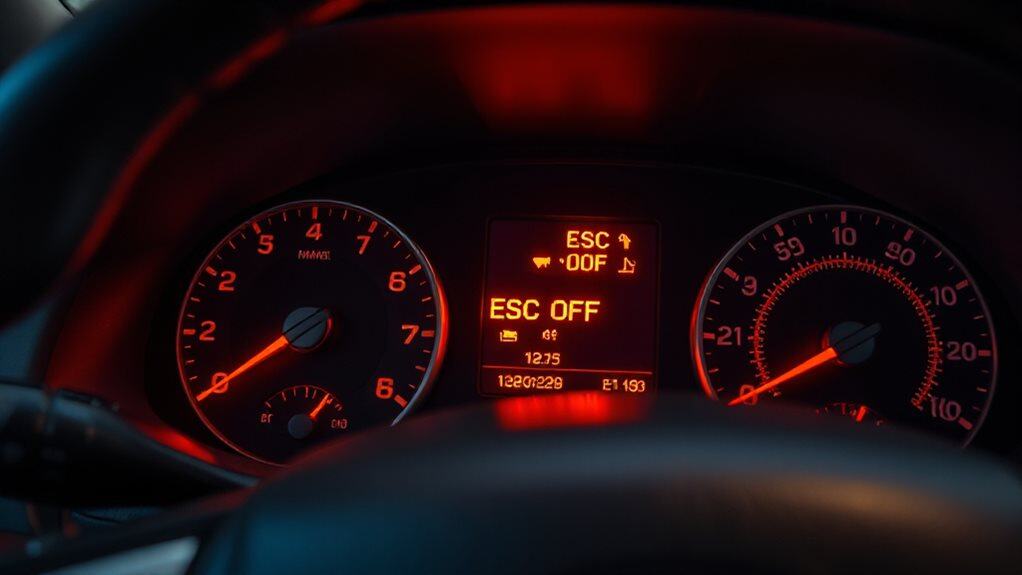
How does ESC actually behave when you switch it off? You disable the system’s automatic power reduction and asymmetric braking, but you can still invoke brake‑only intervention with a short button press. A long press turns off both traction and brake control, silencing the chime. The dashboard icon stops flashing, and the system stays off until you restart the vehicle. ESC reduces crashes by up to 35% in real‑world studies. Well‑insulated spaces can retain heat better, reducing overall energy needs and making vehicle diagnostics more comfortable in cold climates, especially in a well‑insulated shop.
How to Turn ESC OFF Using the Dashboard Button
Ever wonder where the ESC OFF button lives and how it works? You’ll find it on the dashboard or near the steering wheel for quick access.
A brief press disables traction control while stability brake functions stay active; hold three seconds to turn off both systems.
The ESC OFF light lights up, a warning chime sounds, and you must be safely parked before using the button.
Wheel slip or traction loss can trigger ESC interventions, so check tire pressure and wheel speed sensors if the system behaves unexpectedly.
Identifying Traction‑Only vs. Full Stability Deactivation
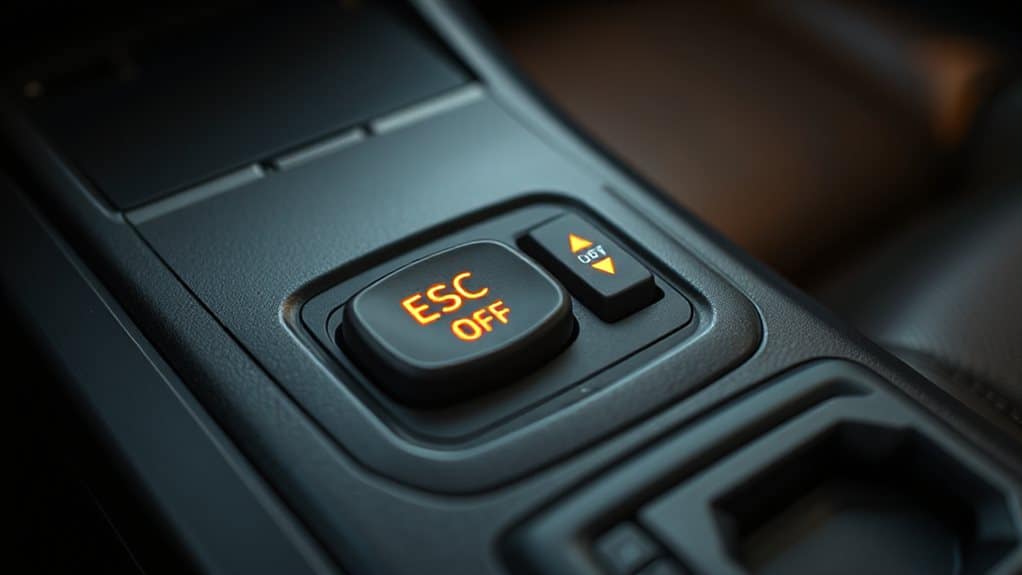
Where can you tell if the car’s ESC button has turned off only traction control or the entire stability suite? Look at the dashboard lights: a single amber lamp usually indicates traction‑control deactivation, while two lamps or a combined “ESC” symbol shows full stability deactivation. A brief press disables just traction, a hold disables both. Sensors still monitor wheel speed, but only the selected system intervenes. Using premium fuel in turbocharged vehicles can help maintain engine stability and optimal performance under higher loads.
How ESC OFF Impacts ABS, Braking, and Engine Management
When you turn ESC off, the system stops sending stability‑modulation commands to ABS, so the brakes operate in a pure, equal‑pulsing mode without selective wheel control.
This also means the engine control unit no longer receives torque‑reduction signals for skids, allowing full throttle and preventing automatic downshifts or spark‑timing retard.
As a result, braking and engine management become independent of the stability controller, giving you direct control but requiring you to monitor wheel lockup and power delivery yourself.
Be aware that while ESC off gives direct control, it also removes protections that can prevent wheel lockup and reduce the risk of skids if left unmonitored.
ESC and ABS Interaction
How does turning ESC off affect the way ABS works? When ESC is disabled, ABS still functions independently, using wheel‑speed sensors and the hydraulic modulator to prevent lock‑up. It won’t apply selective wheel braking for yaw correction, so you’ll experience normal ABS stopping distances.
Engine throttle modulation for skid control stops, but wheel‑speed monitoring and basic brake modulation remain intact. This isolates stability control while preserving essential ABS safety.
Engine Management During ESC Off Braking System Independence
What happens to your car’s engine and braking when you turn ESC off? You lose engine‑management torque reduction, so the throttle stays high even if a wheel spins.
In the brief‑press state, brake‑control still works; in the full‑hold state, ESC‑specific wheel‑brake interventions stop, but ABS remains fully functional.
Standard brakes still provide emergency stopping, while the system auto‑reactivates on restart.
Safe Conditions for Using ESC OFF?

You should only turn ESC off on flat terrain where the road surface is even and you’re moving at low speed. In those conditions the vehicle won’t need the electronic stability corrections that prevent wheel slip, so disabling ESC lets you control throttle and steering without interference. Remember to re‑enable ESC before any higher‑speed or uneven‑road maneuvers. Check ignition components like spark plugs and coils if you notice rough idling or stalling after toggling ESC.
Flat Terrain Only
Ever wonder why turning ESC off on a perfectly level road isn’t recommended? On flat terrain you have consistent grip and predictable handling, so ESC’s wheel‑brake modulation and yaw‑control are unnecessary.
Disabling it removes automatic stability corrections, raising skid risk even on dry pavement. Manufacturers and FMVSS 126 require ESC on for all on‑road flat driving, ensuring safety and crash‑rate reduction.
Low‑Speed Maneuvers
When you move from flat‑road cruising to tight, low‑speed maneuvers, the role of ESC (Electronic Stability Control) shifts from a passive safety net to an active corrective system. You’ll notice ESC intermittently brakes slipping wheels, reduces engine power, and may disable ABS to keep momentum on icy or snowy surfaces.
Use ESC OFF only on flat, dry roads; avoid it when the system is actively correcting oversteer or understeer.
Best Driving Scenarios for ESC OFF
Why consider turning ESC off? In deep snow you need wheel spin to rock free, so disabling ESC prevents traction‑limiting intervention.
The same applies on sand or gravel, where premature braking kills momentum. Snow chains alter grip, triggering unwanted ESC; turning it off lets power flow smoothly.
Off‑road rock crawl and track mode also benefit, as ESC can interfere with extreme angles or aggressive drifting. Reactivate once traction stabilizes.
In some situations you may instead want to measure wheel or nut dimensions with a digital caliper to verify fitment before making suspension or wheel changes.
Risks of ESC OFF on Normal Roads

How does turning off ESC (Electronic Stability Control) affect your safety on everyday roads? You lose the electronic net that prevents skids, so sharp turns can spin you out. The system no longer cuts engine power on ice, snow, or wet surfaces, increasing wheel‑spin risk. Emergency maneuvers become harder; ABS and steering coordination decline, raising crash likelihood on slippery or gravel‑covered roads.
ESC Reactivation & Dashboard Indicator Guide
After reviewing the safety risks of driving with ESC turned off, it’s important to understand how the system comes back online and what the dashboard tells you. The ESC warning light stays solid when you manually deactivate it, then extinguishes automatically after you restart the ignition. A battery disconnect of 15‑30 minutes also resets the system, prompting sensor recalibration. Watch the light; flashing indicates a fault, not just deactivation.
Wrapping Up
When you switch ESC off, you disable the vehicle’s electronic stability control, allowing wheels to slip without corrective braking. This can improve maneuverability on low‑traction surfaces but also reduces safety on ordinary roads. Remember that ABS, traction‑control, and engine‑torque limits may still function, though their effectiveness diminishes. Use ESC off only in conditions that demand it—like deep snow, sand, or off‑road obstacles—and reactivate it promptly once normal driving resumes.