
You’ll notice that a healthy lead‑acid battery is virtually odorless, but when it’s overcharged, aging, or leaking it releases hydrogen sulfide (H₂S) and sometimes sulfur dioxide (SO₂), which together give a sharp, rotten‑egg or acrid sulfur smell. H₂S has an extremely low odor threshold, so even a few parts per billion can be detected, while SO₂ appears as a fine mist during severe overcharge and adds a harsh, irritating note. This sulfur‑like aroma signals electrolyte breakdown, gas buildup, and possible venting damage, so you should ventilate the area, inspect the battery for leaks or bulging cases, and shut off the charger immediately. If you keep voltage within the recommended 14.4–14.7 V range, use smart chargers, and maintain proper ventilation, you’ll reduce these emissions and stay safe. Further details on detection and prevention await you.
Quick Tips
- Battery “acid” itself has little odor; the smell comes from hydrogen sulfide (H₂S) released during electrolyte breakdown.
- H₂S produces a characteristic rotten‑egg scent detectable at extremely low concentrations (≈0.00047 ppm).
- Overcharging or aging can also generate sulfur dioxide (SO₂), which smells sharp, acrid, and sulfuric.
- The odor is most noticeable during the first charge of new flooded batteries and fades after the initial day.
- Proper charging, ventilation, and temperature control prevent gas buildup and reduce the sulfuric smell.
What Does Battery Acid Actually Smell Like?
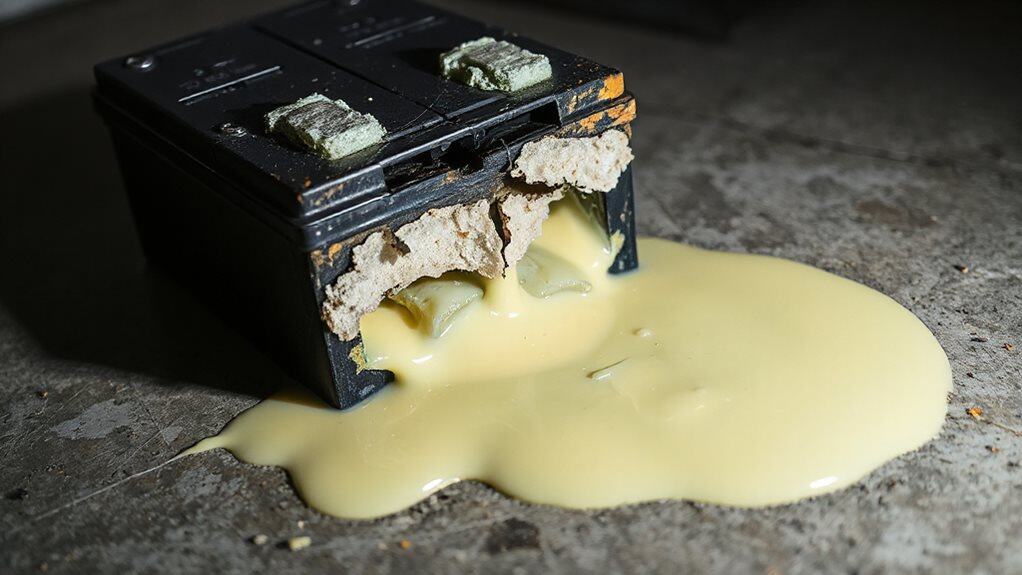
The pungent, rotten‑egg and burnt‑match scent comes from hydrogen sulfide and sulfur dioxide gases released when the electrolyte breaks down during overcharging, shorting, or aging.
Those gases, not the acid, give lead‑acid batteries their characteristic sharp, acrid smell. Overcharging can cause the electrolyte to overheat, producing these sulfur‑based gases. A common preventive measure is to ensure proper charging and ventilation to reduce the risk of hydrogen sulfide buildup.
Why Does a Rotten‑Egg Smell Appear in Lead‑Acid Batteries?
When a lead‑acid battery emits a rotten‑egg odor, it’s not the liquid electrolyte itself but hydrogen sulfide (H₂S) gas that’s being released. You’ll notice it when sulfuric acid breaks down—especially during overcharging or when the battery is old and electrolyte levels are low.
The H₂S forms as a colorless, toxic gas, signaling internal corrosion, heat, and possible failure, so you should ventilate and inspect the unit promptly. A persistent rotten‑egg smell can also indicate coolant system issues that may affect adjacent vehicle components and require immediate attention.
How Do Lithium‑Ion Batteries Smell When They Fail?

Why do lithium‑ion batteries give off a distinct smell when they start to fail? You’ll notice a sweet, metallic or solvent‑like odor, often compared to nail‑polish remover, as electrolyte gases vent during overheating.
This ether‑like scent signals early thermal runaway, electrolyte leakage, or internal short.
Inhalation can irritate lungs and eyes, so you should power off the device, move it to a safe area, and avoid further use.
Stage 2 clutches use Kevlar friction linings that resist heat and wear, making them better suited for high‑heat failure modes.
Which Gases Create Sulfur‑Like, Acrid Smells in Batteries?
You’ll notice the sharp, rotten‑egg odor when hydrogen sulfide (H₂S) escapes from a leaking cell, because the gas forms when sulfuric acid reacts with sulfide contaminants or metal surfaces.
At the same time, overcharging or heating can break down the electrolyte and release sulfur dioxide (SO₂), which smells acrid and irritating to the respiratory tract.
Both gases are toxic, so proper ventilation and protective gear are essential when working with batteries.
Regular maintenance and avoiding contamination help prevent issues like moisture-induced freezing of fluids that can exacerbate battery and system damage.
Hydrogen Sulfide Emission
Where does that unmistakable “rotten‑egg” odor come from when a lead‑acid battery is charging? It’s hydrogen sulfide (H₂S), released during the first charge of new flooded batteries. The gas appears even without visible bubbling, especially at higher voltages like 29 V for a 24 V bank. Its odor threshold is extremely low, about 0.00047 ppm, and it fades after the initial day as the battery settles. Ventilating the area and lowering charge voltage (e.g., switching to GEL mode) reduce emission.
Sulfur Dioxide Release
When a lead‑acid battery is overcharged, the electrolyte—an aqueous solution of sulfuric acid—can be forced out as a fine mist that quickly vaporizes into sulfur dioxide (SO₂).
You’ll notice a sharp, acrid sulfuric odor as the mist escapes through vents.
This gas forms when voltage exceeds about 14 V, especially during absorb charging at 56 V, and it corrodes nearby metal components while irritating your respiratory tract.
When Does a Battery Acid Smell Signal a Safety Hazard?

Ever notice a sharp, sulfuric odor drifting from a lead‑acid battery and wonder if it’s just a nuisance or a real danger? When you smell that sharp, strong sulfuric scent, it usually means leakage or damage, and you should treat it as a safety hazard.
The odor often accompanies wet residue, corrosion, or visible damage, indicating toxic fumes and risk of skin or eye burns. Promptly ventilate, avoid inhalation, and inspect the battery for leaks. Also be aware that nearby steering or suspension problems — such as excessive play or pulling — can indicate broader vehicle issues that warrant a professional wheel alignment and inspection.
How to Quickly Detect and Respond to a Battery Acid Odor?
When you notice a faint “rotten‑egg” scent, it means hydrogen sulfide is escaping, so you should act immediately. Shut off any chargers, open windows, and evacuate the area while you put on gloves and eye protection; this prevents inhalation and limits exposure. After the space is ventilated, inspect the battery for crusty deposits, bulging cases, or low fluid levels to confirm a leak before contacting a qualified technician. Also be aware that running cables through HVAC ducts can create safety and code issues, so consider alternatives or consult a professional about using plenum-rated cables for safe installations.
Detect Odor Early
What does a battery‑acid odor tell you about the condition of a power source? It signals a possible leak, internal short, or overcharging. Sniff near terminals and in enclosed spaces; a sharp, sour, or rotten‑egg smell appears even at low concentrations.
Pair the odor with visual clues—bulging case, crusty deposits, or sticky white residue—to confirm early deterioration before hazardous buildup.
Take Immediate Safety Measures
How do you act the moment a battery‑acid smell hits the air? Immediately don chemical‑resistant gloves, goggles and apron, then locate the spill kit.
Flush eyes with clean water for fifteen minutes, never interrupting, and wash skin with lukewarm water for fifteen to thirty minutes.
Neutralize the spill using one pound of baking soda per gallon, applying it at the edges first.
Evacuate non‑essential personnel, report the incident to your supervisor, and seek medical attention promptly.
How Can You Prevent Odor‑Related Battery Failures?
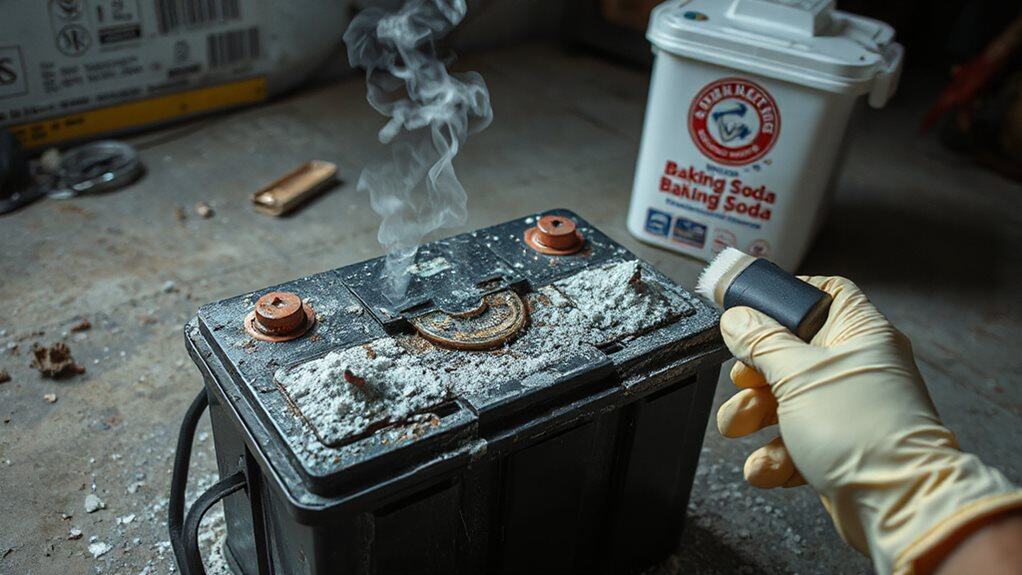
Ever wondered why a lead‑acid battery sometimes emits a rotten‑egg smell?
Keep voltage within 14.4‑14.7 V, use smart chargers that taper off, and monitor cycles to avoid over‑charging.
Maintain ambient temperatures below 60 °C, ventilate compartments, and install exhaust fans.
Inspect monthly for bulging cases, clean terminals, and replace batteries older than five years.
Deploy H₂S sensors and set alarms for early detection.
Wrapping Up
Remember, the sulfur‑like odor signals hydrogen sulfide or sulfur dioxide leaking from a damaged cell, and it can indicate overheating, over‑charging, or internal corrosion. If you detect that smell, ventilate the area, avoid direct contact, and inspect the battery for swelling, leaks, or discoloration. Replace compromised units promptly, follow manufacturer safety guidelines, and store batteries in a cool, dry place to prevent future odor‑related hazards.


