
The TPMS light on a Ford Fusion stays solid orange when any tire’s pressure falls below the manufacturer’s low‑pressure threshold, usually around 32 psi, or when a sensor can’t communicate with the control module. A flashing light indicates a sensor fault, often caused by a dead battery or damaged transmitter. First, check each tire’s cold‑inflation pressure against the door‑jamb spec and inflate as needed; then drive a few minutes to let the system reset. If the light persists, use an OBD‑II scanner to read the fault code and consider a TPMS relearn or sensor replacement. Proper proximity during relearn and a healthy battery are crucial, and a faulty sensor will usually show a constant yellow “U‑shaped” warning. Follow the ignition‑key relearn steps, and if the issue remains, replace the sensor and reprogram it. Continuing will reveal detailed troubleshooting and cost‑effective replacement options.
Quick Tips
- A TPMS fault light in a Ford Fusion indicates one or more tire sensors are not transmitting pressure data, often due to low pressure, dead batteries, or sensor damage.
- Verify all tire pressures (including spare) against the door‑jamb PSI spec; inflate to cold PSI and drive 5‑10 minutes to see if the light resets.
- If the light remains solid or flashes, scan with an OBD2 TPMS tool to retrieve fault codes (e.g., sensor battery low, communication loss).
- Perform the manufacturer‑specified relearn procedure (ignition‑key cycles or push‑start sequence) while keeping the TPMS tool within 5 inches of each valve stem.
- Persistent fault after relearn usually requires replacing the faulty sensor(s) and reprogramming them, typically every 7‑8 years or when battery failure is confirmed.
What the TPMS Light Means on a Ford Fusion
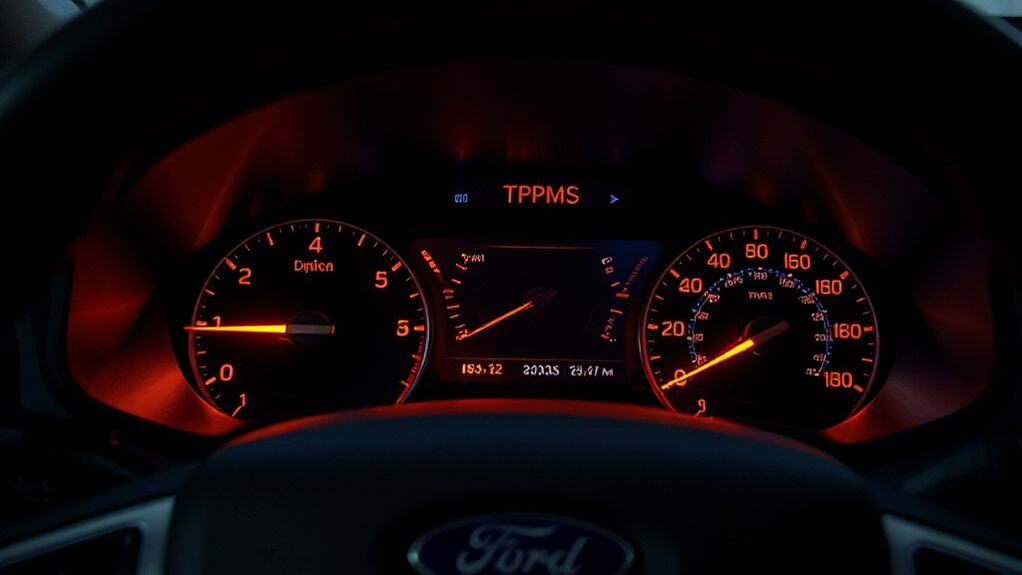
What does the TPMS light actually tell you when it comes on in a Ford Fusion? It means one or more tires are below the recommended pressure, creating unsafe driving conditions. The dashboard may show a solid orange icon and pressure numbers for each wheel. If the light flashes, the system is malfunctioning—sensors aren’t communicating, requiring inspection before low‑pressure warnings work. Inflate tires, drive briefly, and reset the system. Check tire pressures across all tires when the light remains solid. H-rated tires can offer a smoother ride and improved wet/dry performance for daily driving, which may help maintain proper tire pressure.
Why Low Pressure Triggers the TPMS Light
You’ll notice the TPMS light flicker as soon as any tire’s pressure falls beneath the system’s 75 % threshold, because the sensor’s built‑in logic constantly compares real‑time readings to the manufacturer’s recommended PSI.
This sensor threshold sensitivity means that even a modest 20‑25 % drop—often caused by a slow leak or a temperature‑related contraction—triggers the alert, and the vehicle’s computer instantly signals the fault.
Understanding the monitoring logic helps you see why the light appears before a full loss of pressure occurs.
A failing diaphragm in related sensor systems can cause erratic alerts and should be inspected for wear or leaks, since a worn diaphragm can disrupt proper pressure sensing.
Sensor Threshold Sensitivity
How does the Fusion’s TPMS know when to flash the yellow exclamation‑point light? The system monitors each tire’s pressure continuously and compares it to a manufacturer‑set low‑pressure threshold, typically 32 psi. If any sensor reads below that value, it sends an instant signal to the dashboard controller, which lights the exclamation point. The threshold is fixed, unadjustable, and based on cold‑inflation standards, ensuring safety without user‑defined changes.
System Pressure Monitoring Logic
Why does the Fusion’s TPMS flash the yellow exclamation‑point light when pressure drops? Low pressure in any wheel sends a signal from the sensor to the ECU, which continuously monitors tire data. When the ECU detects under‑inflation beyond the preset threshold, it activates the dashboard indicator. The light stays on until all tires reach the recommended PSI, then the system resets automatically.
How Sensor Battery Age Affects Ford Fusion TPMS Signal
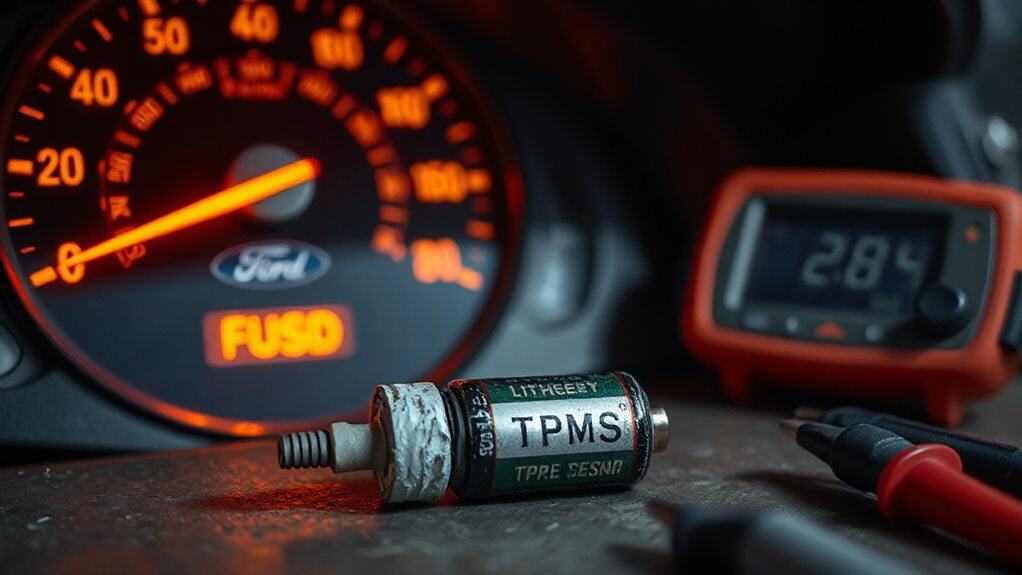
You’ll notice that as the sensor’s battery ages, its signal strength drops, which can cause the TPMS to misread pressure and flash false alerts.
This happens because the weakened battery can’t sustain the radio frequency transmissions needed for reliable communication, especially after the typical 5‑10‑year lifespan.
Adding cold-focused features like heated steering can make winter driving more tolerable and reduce condensation that might affect sensors, though they don’t directly fix TPMS issues related to battery age heated steering wheel.
Battery Life Reduces Signal Strength
Ever wondered why your Ford Fusion’s TPMS warnings become erratic as the sensor battery ages? As the battery depletes, voltage drops, weakening the radio signal that carries pressure data to the dashboard. You’ll notice intermittent readouts, reduced range, and occasional loss of contact.
Cold weather can slow this decay, while frequent stop‑and‑go driving and high temperatures accelerate it, shortening effective battery life.
Aging Sensors Trigger False Alerts
Ever‑acceler your Ford Fusion’s TPMS begins flashing “TIRE PRESSURE SENSOR FAULT” while the pressure numbers bounce wildly, the culprit is often the aging sensor battery. As the lithium cell loses capacity, signal strength drops, causing erratic readings and intermittent light flashing. Heat speeds depletion, while frequent transmissions from stop‑and‑go traffic accelerate wear. Eventually the system interprets weak signals as faults, triggering false alerts across all wheels.
Replacement Timing Prevents Failures
Why does the TPMS warning light start flashing just as the sensor battery ages?
As the battery depletes, the ECU receives irregular RF signals, causing intermittent alerts.
You should replace all four sensors around the 7‑8‑year mark, because batteries are non‑replaceable and age together.
Proactive replacement prevents sudden failures, reduces dealer visits, and maintains consistent pressure monitoring across all tires.
How to Tell If a Sensor Is Bad or Just Low Pressure
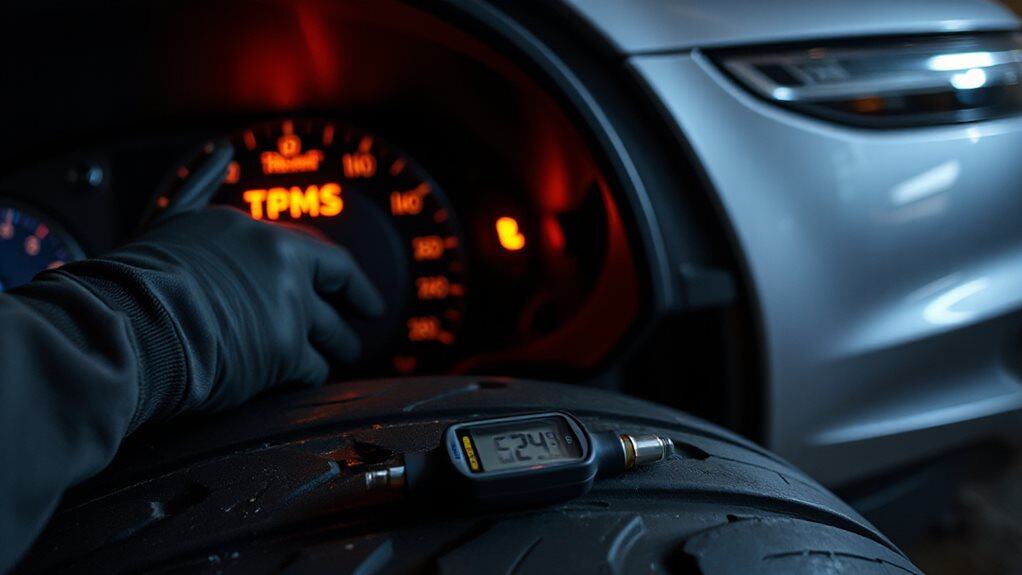
How can you tell whether the TPMS warning is caused by low tire pressure or a faulty sensor?
First, pull over, check the dashboard for which tire is flagged, and inflate each tire to the cold‑psi spec.
Drive about 20 mph for two minutes; if the yellow U‑shaped light stays on, the sensor is likely bad.
An OBD2 scanner can confirm the exact fault code.
If the vehicle still rocks while driving, inspect the suspension components for wear that might be causing instability.
Ignition‑Key TPMS Relearn Procedure
After checking whether low pressure or a bad sensor triggered the TPMS warning, you’ll need to reset the system with the ignition‑key relearn procedure if your Ford Fusion uses a traditional key.
Insert the key, press the brake once, cycle OFF‑ON three times, stay ON, press brake again.
Turn OFF, wait a second, then ON‑OFF three times; the horn beeps and “TRAIN LEFT FRONT TIRE” appears, confirming relearn mode. A reliable battery charger can help prevent dead batteries that might otherwise complicate TPMS diagnostics.
Push‑Start TPMS Relearn Procedure
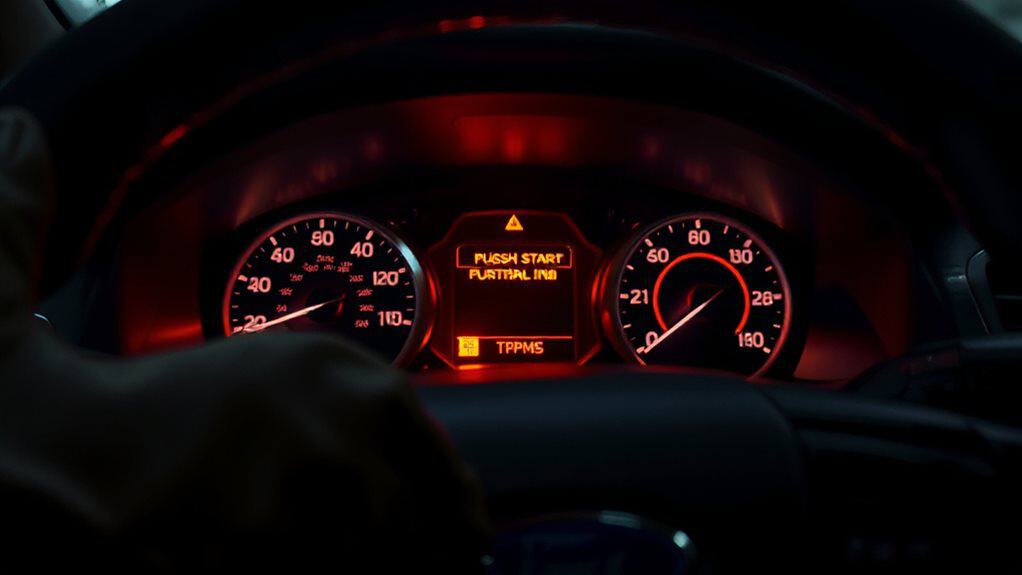
What you’ll do first is activate the push‑start relearn sequence, which prepares the TPMS (Tire Pressure Monitoring System) to recognize each sensor without a traditional key. Press the brake, cycle the push‑start button three times to RUN, repeat the brake press and three more cycles within two minutes. A horn chirp confirms entry, then start with the front‑left tire and proceed clockwise, holding the TPMS tool steady against each sidewall until the horn sounds per tire. Highway vibrations can indicate failing components like tires or wheel bearings, so check for serious vehicle trouble if problems persist.
Tools Needed for a Ford Fusion TPMS Reset
Ever wondered which equipment you actually need to reset the TPMS on a Ford Fusion? You’ll need a Ford‑compatible TPMS reset tool, sold on Amazon or at dealers, plus the steering‑wheel reset button. The tool presses a button near each valve stem; hold it until the light blinks. Also keep the ignition key or push‑button start handy for the required on/off cycles.
Typical Errors That Stop the TPMS Relearn From Working
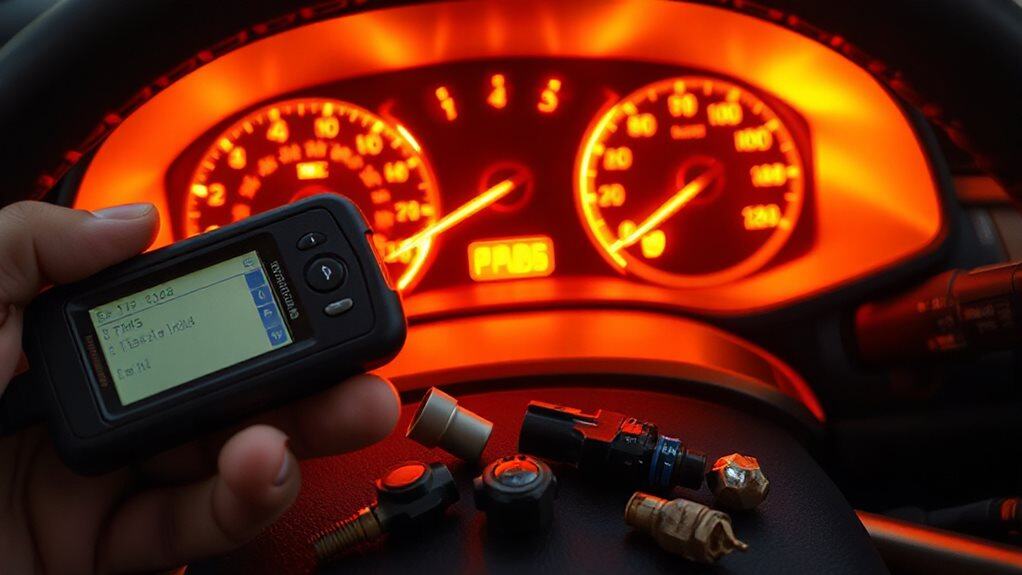
You might notice the TPMS relearn fails if the sensor’s battery is already low, because the weak power can’t sustain the required communication during the procedure.
It also helps to keep the diagnostic tool within a few inches of each wheel; too much distance prevents the low‑frequency activation signal from reaching the sensor.
When either of these issues occurs, the system won’t register the tire pressure data, and the warning light stays on.
Battery Depleted Early
Usually, a depleted TPMS sensor battery shows up as an intermittent warning light that won’t turn off even after you’ve verified the tire pressures are correct. When the battery dies—typically after 5‑10 years—the sensor stops transmitting data, so the control module can’t complete a relearn. Even if you reset, the light persists, confirming a battery fault. Replacement of the individual sensor and reprogramming are required.
Improper Tool Proximity
When the TPMS battery dies, the warning light stays on even after you’ve checked the pressures, and the relearn process can’t finish without a functioning sensor. You must hold the tool directly on the sidewall next to the valve stem; any distance or tilt blocks the RF signal, preventing the horn beep and sensor ID registration. Metal objects, key fobs, or even your hand can interfere, so clear the area.
Keep the tool stationary for 5‑10 seconds per tire, maintaining a perpendicular angle, especially in cold or windy conditions. Failure to meet these proximity requirements yields incomplete relearn and a persistent warning.
Diagnosing a Persistent TPMS Light After Inflation
Ever notice the TPMS light staying on even after you’ve topped off the tires? First, verify every tire, including the spare, matches the door‑jamb PSI spec; uneven pressure keeps the sensor awake. Then drive at 50 mph for ten minutes so the sensor relearns values, or use the reset button—hold until three blinks, release, and restart. If it persists, try full deflation/reinflation or briefly disconnect the battery to clear stored power.
When to Replace a Ford Fusion TPMS Sensor
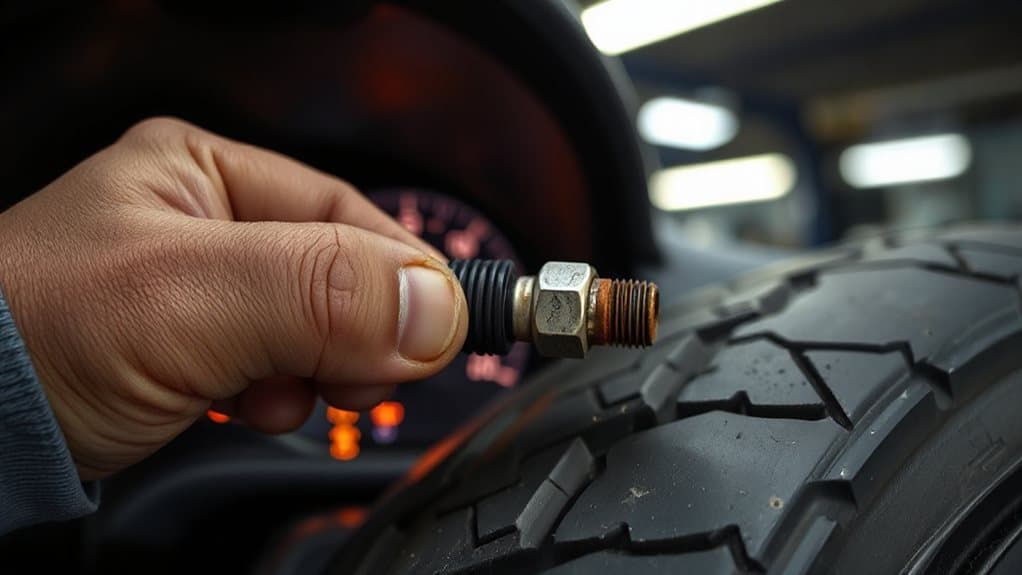
How can you tell it’s time to replace a Ford Fusion TPMS sensor? You’ll notice the warning light when the ECU stops receiving proper readings, indicating communication failure or low battery.
Physical damage to the housing, valve stem cracks, or corrosion from dissimilar metals also demand replacement.
Sealant blockage, impact damage, or persistent low‑battery alerts confirmed by diagnostics signal the sensor must be swapped.
Affordable Ford Fusion TPMS Sensor Replacement Options
If the warning light on your Ford Fusion’s dashboard tells you the TPMS (Tire Pressure Monitoring System) sensor has failed, you don’t have to accept the high price tag of a dealership. You can buy aftermarket sensors for $5‑$25, have Discount Tire install them for about $60 total, or install yourself for $5‑$63 per unit. Labor‑only at retailers costs $20, and a $49‑$72 relearn fee completes the fix. This approach cuts costs dramatically versus dealer quotes.
Quick Checklist to Keep Your Ford Fusion TPMS Healthy
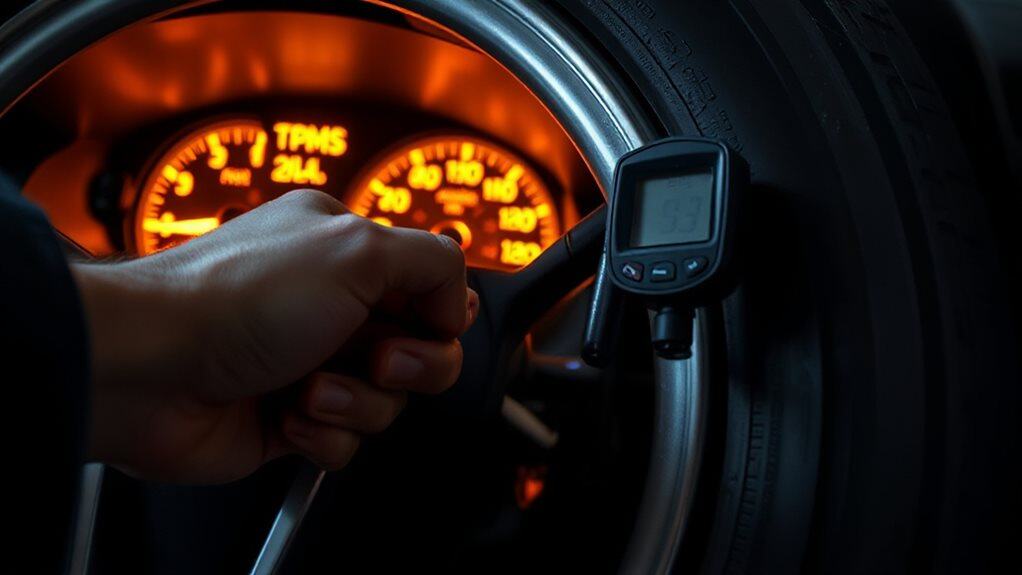
What keeps your Ford Fusion’s TPMS running smoothly is regular maintenance and timely checks. Inflate tires to the PSI listed on the driver‑side door jamb, check pressure monthly, and reset the system if the horseshoe light stays on. Use the ignition‑on reset sequence, then drive at 50 mph for ten minutes. After rotation, relearn each sensor in order, confirming “Training Complete.”
Wrapping Up
By understanding how the TPMS light signals low pressure, battery wear, and sensor failure, you can quickly diagnose a Ford Fusion issue. Perform the ignition‑key relearn after inflating tires, then verify the light stays off. If it persists, replace the faulty sensor with an affordable aftermarket unit and reset the system. Regularly check tire pressure and sensor health to prevent future warnings and maintain optimal vehicle performance.