Replacing a clutch typically costs between $1,200 and $1,500, including parts and labor. The total price depends on your vehicle’s make, model, and complexity, with larger or luxury vehicles often costing more. OEM parts usually cost more but guarantee better fit and durability, while aftermarket options are cheaper but vary in quality. Additional costs may include replacing the flywheel or cylinders, which can increase expenses. If you continue exploring, you’ll get a detailed understanding of factors influencing these costs.
Clutch replacement cost at a glance
The table below shows what each class of vehicle typically pays in the US in 2026, with parts and labour separated so you can see what the shop is charging for.
| Vehicle class | Parts (USD) | Labour (hours) | Total fitted (USD) |
|---|---|---|---|
| Compact or economy car | $250 to $450 | 4 to 6 | $700 to $1,200 |
| Mid-size sedan | $300 to $550 | 6 to 7 | $900 to $1,500 |
| SUV or light truck | $400 to $700 | 7 to 9 | $1,200 to $1,900 |
| Performance or all-wheel drive | $600 to $1,200 | 8 to 12 | $1,600 to $2,800 |
Labour is priced at roughly $100 to $150 an hour, which is the usual independent-shop range in the US. These are indicative ranges for planning, not a quote: the same job on two vehicles of the same size can differ by several hundred dollars once engine layout, rust and parts availability are taken into account. Get two quotes before committing.
Quick Tips
- Replacement costs typically range from $1,200 to $1,500, including parts and labor.
- Larger vehicles like trucks or SUVs may cost $1,200 to $2,000 due to increased labor.
- OEM clutch kits cost $600 to $1,200, while aftermarket options are cheaper at $200 to $800.
- Additional costs such as flywheel or slave cylinder replacements can add $200 to $800.
- Labor rates vary from $50 to $150+ per hour, affecting overall expenses.
How Much Does a Clutch Replacement Cost?
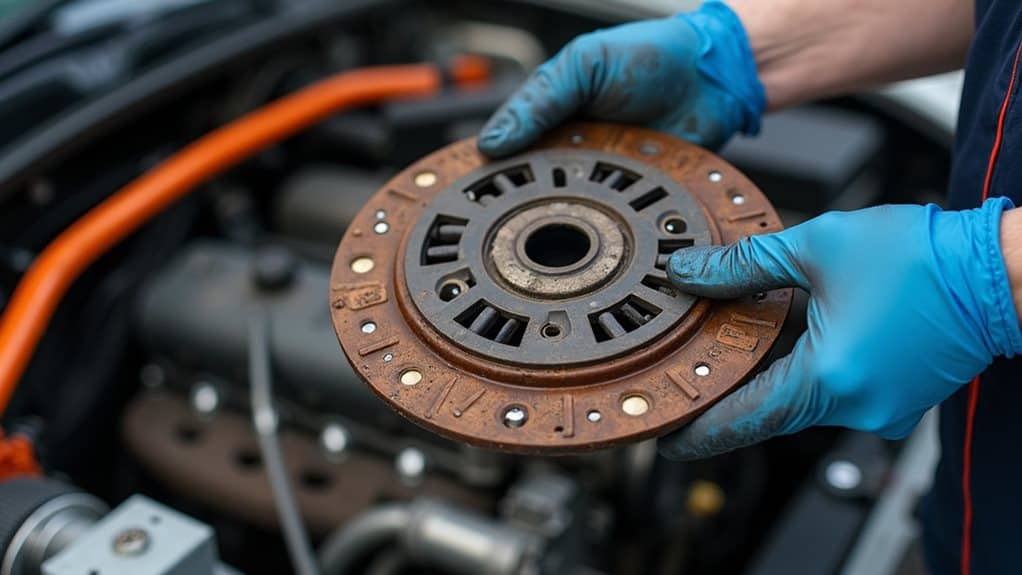
The cost of replacing a clutch can vary considerably depending on several factors, including the make and model of your vehicle, the type of clutch parts used, and the labor rates in your area.
Typically, a new clutch, pressure plate, and release bearing cost between $600 and $1,200.
The total cost to replace a clutch usually ranges from $1,200 to $1,500, including labor and additional parts.
For vehicles like the Toyota Camry, follow proper wheel and torque procedures and recheck lug nut torque after 50–100 miles to ensure safety and component longevity (recheck torque).
What Factors Affect the Cost of Replacing Your Clutch
Several factors influence the total cost of replacing your clutch, starting with your vehicle’s type and size. Trucks and high-performance cars generally require more complex work and parts, raising expenses.
Your choice of parts, such as OEM versus aftermarket, also impacts the price. Original equipment manufacturer parts often cost more but offer better compatibility.
Additionally, local labor rates and the time needed for the repair can considerably affect the overall cost. These factors vary depending on your location and the specific vehicle.
Vehicle Type and Size
Vehicles of different types and sizes considerably influence the cost of replacing a clutch, primarily because larger or more complex vehicles require more time and effort to work on.
Compact cars typically need $400–$700 in labor, while trucks and SUVs may cost $700–$1,200.
Luxury vehicles often exceed $1,500 due to specialized systems and increased complexity.
Clutch Parts Selection
Choosing the right clutch parts is a key factor that influences the overall cost of replacing your clutch.
OEM kits typically cost between $600 and $1,200, while aftermarket options range from $200 to $800.
Performance or heavy-duty kits, designed for increased durability, may cost $1,000 to $2,000.
Additional components like flywheels and bearings can add $20 to $400.
Labor Rates and Location
Labor rates for clutch replacement can vary widely depending on where you’re located. Urban areas or regions with a higher cost of living usually have higher rates, often between $50 and over $150 per hour.
Vehicle type, shop overhead, and mechanic proficiency also influence costs. This is especially true for complex or luxury models requiring specialized tools or skills.
OEM vs Aftermarket Clutch Kits: Which Is Better for Your Budget?
When selecting between OEM and aftermarket clutch kits, consider your budget, as OEM parts typically cost between $600 and $1,200, while aftermarket options range from $200 to $800.
Durability and performance are also important; high-quality aftermarket kits can match or even surpass OEM longevity, especially for specialized or heavy-duty vehicles.
Additionally, guarantee compatibility and quality by choosing reputable brands, since not all aftermarket parts meet the same standards as original equipment.
LS3 cylinder heads, for example, can flow up to 332 cfm at .600 lift, illustrating how component selection affects overall engine performance.
Cost Differences and Budget
The cost difference between OEM (Original Equipment Manufacturer) and aftermarket clutch kits can substantially impact your budget when replacing a clutch.
OEM kits typically range from $600 to $1,200, offering guaranteed compatibility and factory standards.
In contrast, aftermarket kits cost $200 to $800, often matching or exceeding OEM durability, especially with high-performance options.
This provides a more affordable choice without sacrificing quality.
Durability and Performance
Choosing between OEM and aftermarket clutch kits involves evaluating their durability and performance relative to your budget.
OEM kits, costing $600–$1,200, guarantee quality and fit but may last longer.
Aftermarket kits, priced lower at $200–$800, can match or exceed OEM durability, especially performance-grade options with higher torque capacity and heat resistance.
These aftermarket options are suitable for specialized driving needs.
Compatibility and Quality
Deciding between OEM and aftermarket clutch kits requires careful consideration of compatibility and quality, as these factors directly impact performance and longevity.
OEM parts, costing $600 to $1,200, guarantee perfect fit and original standards.
Aftermarket options, ranging from $200 to $800, often match or surpass OEM durability, especially for high-performance vehicles, offering a balance of cost savings and reliable quality.
Hidden Costs of Clutch Replacement You Should Know
Many people overlook the additional costs that can arise during a clutch replacement, which can considerably increase the overall expense beyond the initial estimate.
These include replacing the flywheel, which can cost $200–$800, and replacing slave and control cylinders for $150–$400 to prevent future failures.
Also, consider transmission fluid flushes and essential parts like pilot bearings, which can add to the total.
Compact dryers often fit small SUVs when loaded upright or slightly tilted, so measure cargo height and liftgate opening to ensure a safe fit for interior clearance.
Signs Your Clutch Is Failing and When to Replace It
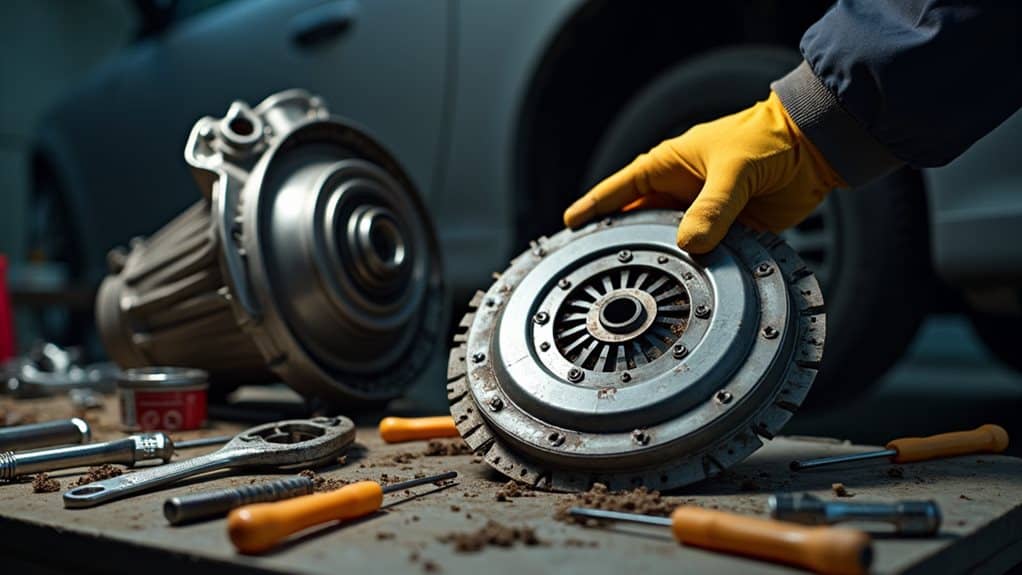
Since a failing clutch can compromise your vehicle’s performance and safety, it’s important to recognize the warning signs early.
High RPMs during gear shifts, difficulty engaging gears, and a burning smell indicate overheating or slipping.
Gear grinding and slipping—where engine revs increase but speed doesn’t—are signs of worn components, signaling it’s time for inspection or replacement.
Regular inspection of related systems, including the HVAC blower motor, can help identify concurrent issues that may affect overall vehicle performance.
DIY or Professional Clutch Replacement: Which Saves You Money?
Opting for a DIY clutch replacement can seem like a way to save money, but it involves considerable challenges that can outweigh the initial cost savings.
Without specialized tools and mechanical proficiency, mistakes may damage the transmission or flywheel, leading to higher repair costs.
Professionals include inspections and additional repairs, making their service often more reliable and cost-effective overall.
Low or degraded transmission fluid can cause shifting problems that exacerbate clutch and transmission wear, so be sure to check transmission fluid levels and condition.
Wrapping up
Replacing your clutch involves understanding various costs and factors, from choosing OEM or aftermarket parts to taking into account labor expenses. Recognize signs like slipping or difficulty shifting to prevent further damage. Deciding between DIY or professional replacement depends on your mechanical skill and tool access. Ultimately, thorough knowledge of these elements guarantees you make informed decisions, minimizing unexpected expenses and prolonging your vehicle’s performance. Accurate assessment and timely replacement are essential for safety and reliability.