To identify a failing torque converter, look for signs like transmission slipping, shuddering, or vibrations at highway speeds. Unusual noises such as whining or grinding, along with delayed engagement during shifts, indicate internal damage. Overheating transmission fluid, burnt smells, and high RPMs without increased speed also signal problems. You might experience harsh or delayed shifting, and fluid leaks can point to internal failure. Continuing with this guide will help you understand how to properly diagnose these issues.
Quick Tips
- Experience transmission slipping, shuddering, or vibrations at highway speeds.
- Notice high engine RPMs without corresponding increases in vehicle speed.
- Observe delayed engagement or harsh shifting during gear changes.
- Listen for unusual noises like whining, grinding, or rattling during operation.
- Detect overheating signs such as burnt smell, fluid discoloration, or warning lights.
How Do You Recognize the Signs of a Failing Torque Converter?
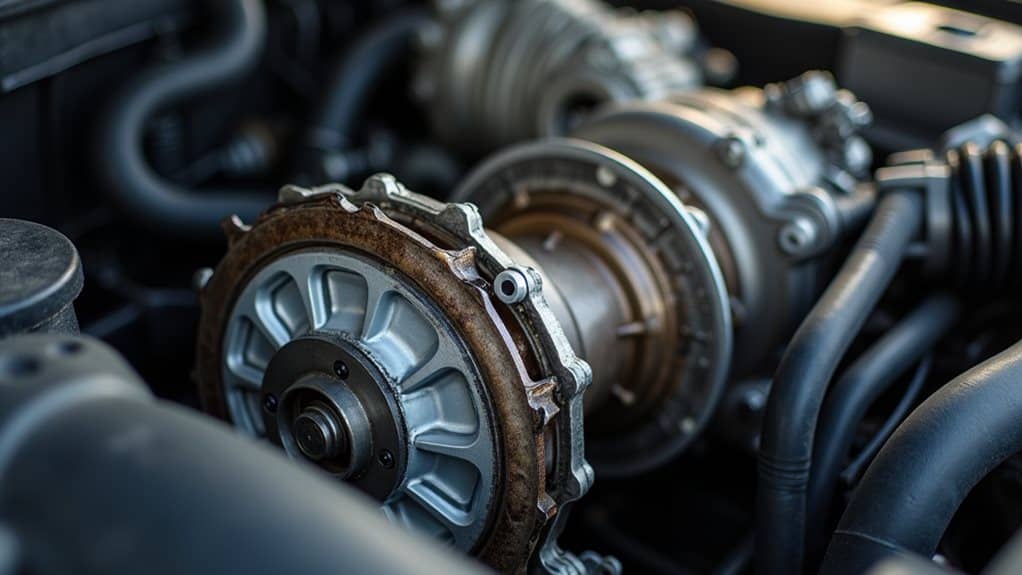
Recognizing the signs of a failing torque converter is essential for maintaining your vehicle’s transmission health. Symptoms like transmission slipping, shuddering, or vibrations at highway speeds suggest internal damage.
Overheating transmission fluid, high engine RPMs without a corresponding increase in speed, and delayed engagement are warning signs. These issues indicate problems with the torque converter, often linked to overheating or internal malfunction. Regular checks of cabin airflow and HVAC performance can help prevent related overheating that may affect vehicle systems.
What Are the Common Symptoms of Torque Converter Problems?
Unusual noises such as whining, grinding, or rattling during acceleration or deceleration can signal a failing torque converter, as these sounds indicate internal components are worn or damaged.
You might also notice transmission slipping, shuddering, or hesitation during gear shifts, which suggest the converter isn’t transmitting power smoothly.
Additionally, if your transmission fluid appears dark or burnt and the engine’s RPMs are high without a corresponding increase in vehicle speed, these are clear signs that the torque converter may be overheating or not locking up properly.
If the warning light returns after a reset, it often means an underlying issue like a faulty sensor or worn component remains and needs professional diagnosis, so don’t ignore a recurring persistent warning.
Unusual Noises During Operation
When a torque converter begins to fail, one of the most noticeable signs is the presence of unusual noises during vehicle operation.
A whining noise may suggest worn needle bearings or internal component failure.
Rattling sounds can come from loose parts like clutch plates or metal debris.
Changes in noise levels during gear shifts also indicate internal damage and potential converter failure.
Transmission Slipping or Shuddering
Transmission slipping or shuddering is a common sign that your torque converter may be failing. You might experience vehicle vibrations, shaking at steady speed, or harsh gear shifting, indicating possible internal transmission damage.
These symptoms, along with delayed engagement and shuddering at highway speeds, suggest torque converter failure.
If left unaddressed, this could lead to overheating and further transmission issues.
Overheating Transmission Fluid
Overheating transmission fluid is a common sign that your torque converter may be experiencing problems. It often triggers a transmission temperature warning and causes the fluid to appear dark and burnt-smelling.
Excess heat can lead to fluid breakdown, reducing its effectiveness. You might notice fluid leaks, slipping gears, or rough shifting, all indicating that heat buildup is compromising your transmission’s condition.
How Can You Tell if Your Transmission Is Slipping or Shuddering?
If your vehicle feels like it’s slipping out of gear or hesitating during acceleration, you may be experiencing transmission slipping.
You might also notice vibrations or shuddering at highway speeds, which often indicate torque converter issues.
Recognizing these signs early can help you identify internal transmission problems before they cause more severe damage.
Check related systems like wheel speed sensors for faults that can mimic or contribute to drivability issues.
Signs of Transmission Slipping
When your vehicle begins to behave unusually during acceleration, it’s often a sign that something isn’t functioning properly within the transmission system.
Transmission slipping may cause hesitation, with RPMs rising but speed not increasing. You might notice shuddering, harsh gear shifts, or unusual noises like rattling, indicating worn internal components or a faulty torque converter, leading to loss of power.
Indicators of Shuddering
Shuddering during acceleration or shifting gears is a clear sign that your transmission might be slipping or experiencing internal issues, often tied to the torque converter.
This vibration, especially between 40-50 mph, indicates potential clutch failure or internal wear.
Consistent shuddering at specific speeds suggests contamination or malfunction in the torque converter clutch, a key symptom of failure.
Why Is Transmission Overheating a Major Warning Sign?
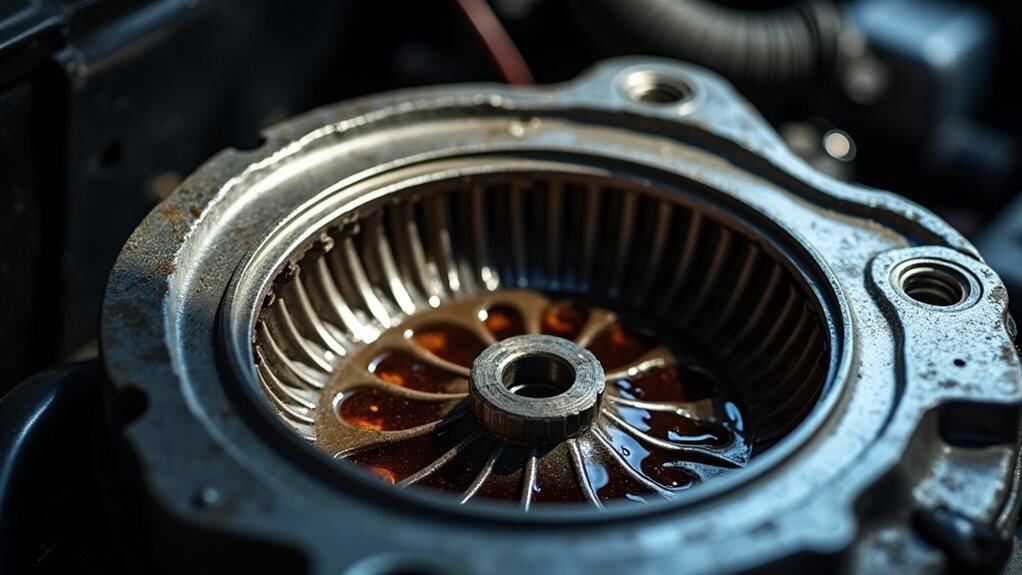
Transmission overheating is a critical warning sign because it directly indicates that the transmission system is under excessive stress, often due to torque converter failure.
Overheating fluid leads to fluid breakdown, increasing internal friction and causing slipping. This disrupts fluid circulation, raising transmission temperature, and can produce burnt-smelling fluid.
Ultimately, this can result in internal component damage. Regular maintenance like routine fluid checks can help prevent these issues and detect problems such as low transmission fluid before they lead to failure.
What Causes Delayed or Harsh Shifting in Your Vehicle?
Delayed or harsh shifting often indicates an issue within the transmission system, particularly involving the torque converter’s ability to transfer power smoothly.
Causes include clutch failure, internal damage, or fluid contamination reducing hydraulic pressure.
Overheated or low transmission fluid also impairs shifting.
Electrical problems with the control solenoid can disrupt fluid flow, resulting in inconsistent, harsh, or delayed gear changes.
A related vehicle security issue, such as an immobilizer detecting an unrecognized key, can prevent engine start and complicate diagnosing transmission symptoms.
Which Internal Components Usually Fail and Lead to Torque Converter Issues?
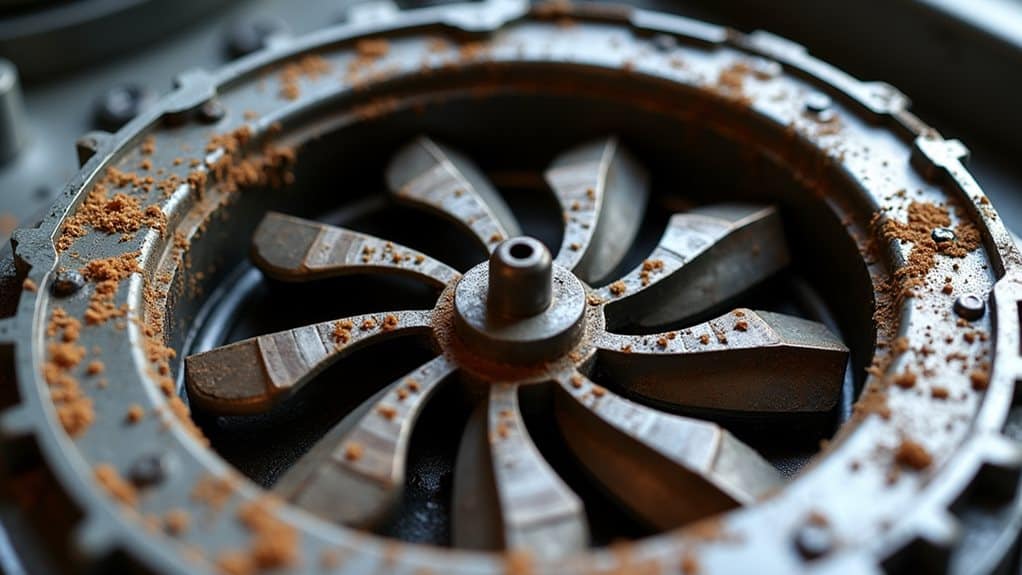
Understanding which internal components typically fail in a torque converter can help you identify performance issues.
Needle bearings may cause grinding sounds and damage.
Worn seals and clutch linings lead to fluid leaks and slipping.
Damaged impeller or turbine blades impair fluid movement.
Failed stator clutches or broken splines cause gear slippage and power loss.
Exterior signs such as electrical arcing on nearby components or wiring can indicate broader vehicle damage that may accompany torque converter issues.
How Can You Diagnose Torque Converter Problems Before Repair?
Diagnosing torque converter problems before repairs involves systematic diagnostic tests and careful observations of vehicle performance.
Conduct a stall test to compare stall speed with specifications.
Use a pressure gauge to check line pressure during driving.
Listen for unusual noises, and monitor for shuddering, slipping, or delayed engagement, all signs of internal converter damage or torque converter failure.
What Are Your Repair and Replacement Options for a Faulty Torque Converter?
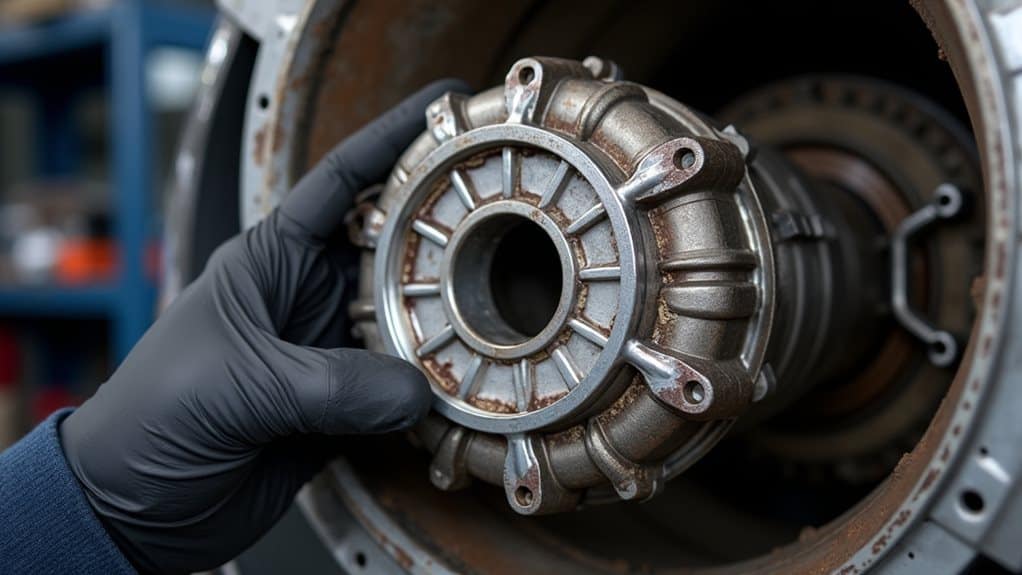
When a torque converter is confirmed faulty, repair options are usually limited to professional replacement rather than rebuilding. This is because rebuilding often proves to be less cost-effective and less reliable over time.
The typical cost to replace a torque converter ranges from $600 to $1,200, with high-quality parts. A certified mechanic should perform the job, including a transmission fluid change. This helps prevent further internal transmission damage and guarantees proper function.
Wrapping up
Recognizing torque converter issues involves paying attention to symptoms like slipping, shuddering, overheating, and harsh shifting. These signs indicate internal component wear or failure, which can compromise your vehicle’s transmission system. Proper diagnosis through professional inspection guarantees accurate identification of problems. If diagnosed early, repairs or replacement can prevent extensive damage. Regular maintenance and prompt attention to transmission concerns help maintain vehicle performance and longevity, making understanding these signs essential for responsible vehicle care.