
You’ll typically see a real-world Toyota FJ Cruiser return about 15–18 mpg combined, with city driving commonly 12–16 mpg and steady highway trips around 18–22 mpg depending on model year, drivetrain, transmission, and condition. Mods like larger tires, lifts, roof racks, or towing often cut fuel economy by 1–4+ mpg. Maintain tire pressure, airflow components, and avoid unnecessary 4WD to help efficiency. Keep going and you’ll get specific year, mod, and technique impacts next.
Quick Tips
- Typical real-world combined fuel economy for the FJ Cruiser is about 15–18 mpg, with many owners reporting ~16 mpg.
- City driving commonly yields about 12–16 mpg, while steady highway driving often reaches 18–22 mpg.
- Early models (2007–2010) average around 17 mpg combined; later years often trend slightly lower.
- Larger tires, lifts, roof racks, or heavy loads commonly reduce MPG by 1–4 mpg depending on severity.
- Good maintenance (tire pressure, air filter, MAF cleaning, synthetic oil) and light loads improve MPG toward the high teens/low 20s.
Short Answer: FJ Cruiser Real-World MPG
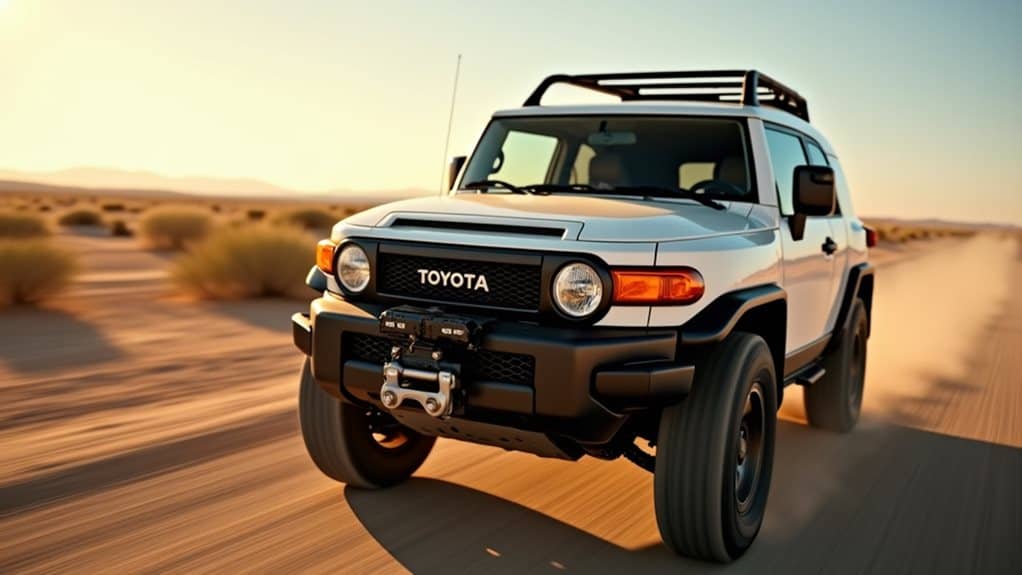
Typically, the Toyota FJ Cruiser delivers relatively modest real-world fuel economy, and you should expect city figures around 12–17 mpg and highway figures near 17–21 mpg depending on conditions.
You’ll generally see combined averages of 15–18 mpg, with owner reports clustering around 16 mpg.
Factors like traffic, tires, roof racks, cold weather, and driving style noticeably affect those numbers.
Real-World MPG : By Year, Drivetrain, Transmission
You’ll see clear year-to-year MPG shifts in FJ reports, with early models (2007–2010) averaging about 17 MPG combined and later years often tracking slightly lower due to changes in use and modifications.
Pay attention to drivetrain and transmission: 4WD automatics typically match EPA city/highway gaps closely, manuals lose about 1–2 MPG in town but can be more efficient off-road, and rare 2WD examples show the best highway numbers.
When comparing, use consistent metrics (city vs. highway vs. combined), note tire, lift, and roof-load effects, and factor driving mix (60/40 city/highway) to predict realistic fuel use.
Also check related electrical and starting system health, since issues like a failing starter relay can indirectly affect real-world MPG by causing multiple start attempts or increased idling.
Yearly MPG Differences
The Yearly MPG Differences section breaks down how real-world fuel economy for the Toyota FJ Cruiser changes by model year, drivetrain (2WD vs. 4WD), and transmission, so you can compare expected city, highway, and combined numbers rather than relying solely on EPA ratings.
Across years you’ll see city 12–16 mpg, highway 18–22 mpg, combined mostly 15–18 mpg; specific years vary (e.g., 2010 low city, 2014 high combined).
Drivetrain & Transmission
Having compared year-by-year MPG trends, you should next look at how drivetrain and transmission choices change those numbers in real-world use, since they often affect fuel economy more than model-year tweaks.
4WD adds weight and drag, cutting MPG versus 2WD; automatics average ~17–18 MPG, manuals often gain 1–2 MPG on highway.
Off-road mods (tires, bumpers, lifts) reduce MPG 2–4 MPG.
City vs Highway MPG: Typical Owner Reports and Causes
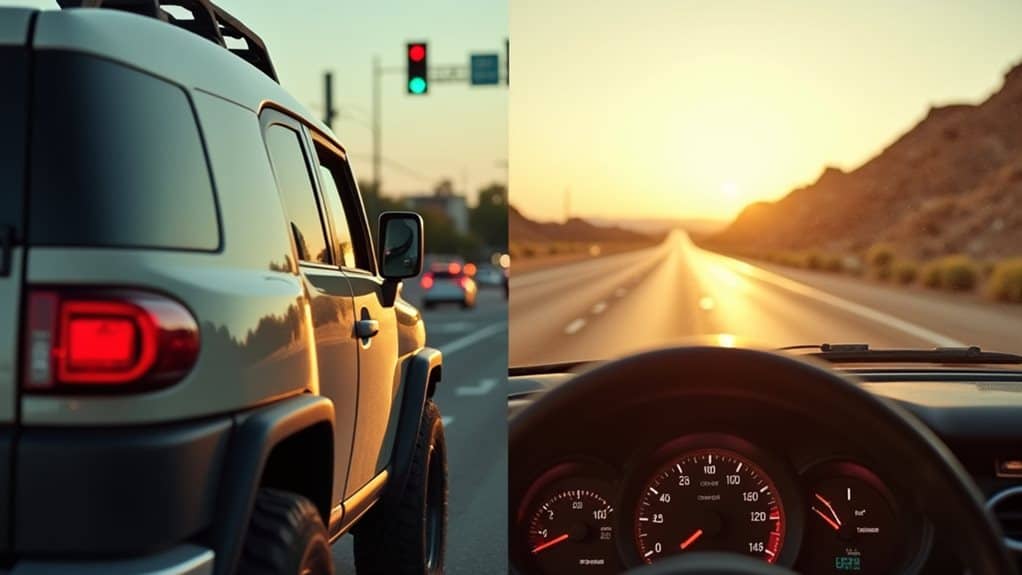
While city driving puts frequent acceleration, idling, and shifting on your Fj Cruiser’s engine and transmission, highway cruising lets it run at steadier loads and usually gives better miles per gallon.
Owners report about 12.5–16 mpg in urban stop‑and‑go, versus 18–22 mpg on open roads.
Higher city engine load, frequent shifts and idling reduce efficiency; steady cruising lowers fuel per mile.
Most owners find it wise to refuel by the one‑quarter tank mark to avoid running out, since a quarter tank often provides only 120–140 miles of range depending on conditions.
How Mods & Driving Habits Change MPG (Tires, 4WD, Racks)
When you change tire size, rolling resistance and aerodynamic drag go up—switching from stock rubber to 33-inch mud tires typically costs you about 1–2 mpg, and combined with a 3-inch lift you’ll see averages fall into the 12–14 mpg range.
Adding roof racks, tents, or heavy loads on the roof increases drag and weight, shaving another 0.7–2 mpg (a Sherpa rack with a 120 lb tent often yields roughly 12–13 mpg in city use, while a full rack and storage can drop averages to 8–10 mpg).
To manage these losses, choose more fuel-efficient tire tread patterns, limit roof load and use aerodynamic fairings where possible, because small changes in rolling resistance and drag produce measurable changes in real-world fuel economy.
The taller 275/60R20 tires increase overall diameter by about 1.1 inches, which can further affect speedometer readings and fuel consumption, so consider proper calibration and diameter differences when changing sizes.
Tire Size Impact
You’ll usually see a noticeable drop in fuel economy after fitting larger or heavier tires, because bigger-diameter rubber increases rolling resistance, adds rotational mass, and can throw off drivetrain and speedometer calibration.
Larger tires demand more torque to accelerate, raise frontal area and drag, distort odometer/speed readings by ~3% per inch, and worsen MPG in stop-and-go and off-road conditions unless you adjust pressures and gearing.
Roof Racks & Load
A roof rack changes your FJ Cruiser’s fuel economy more than most owners expect, because it alters aerodynamics, adds weight up high, and can interact with other modifications like tires and gearing; even low-profile OEM cross rails typically cut highway MPG by about 1% at 65 mph, whereas full rack systems with cargo boxes or tents can drop highway fuel economy by 2–3 points or more.
You’ll see larger losses with heavy loads, rooftop tents, or combined mods (lift, big tires, 4WD use).
Remove the rack to regain 2–3 MPG at high speed, and use cruise control and streamlined cargo to minimize drag-related penalties.
Practical Tips to Improve FJ Cruiser Fuel Economy
Regularly checking and adjusting a few key systems can noticeably improve your FJ Cruiser’s fuel economy, so start with tire pressure and basic maintenance checks and work outward from there.
Keep tires at 32–35 PSI, replace air filters every 15–30k miles (sooner in dust), use synthetic oil, clean MAF and throttle body, inspect plugs, reduce cargo weight, avoid unnecessary 4WD, and use steady speeds. Modern vehicles also benefit from ensuring a healthy engine ground connection to prevent electrical inefficiencies.
Extremes: Lowest & Highest Owner-Reported MPG and Why
After you’ve tightened tire pressures, cleaned sensors, and trimmed unnecessary weight, it helps to look at the outer limits of what owners actually see on the road. You’ll see lows around 10–14 mpg from towing, short cold-start trips, aggressive driving, heavy mods, or city congestion.
Highs hit 20–21 mpg with steady highway speeds, warm engines, light loads, proper maintenance, and mild climates.
Estimating remaining range can help plan refueling stops, since a warning light often indicates roughly 30-50 miles of additional driving capability.
Wrapping Up
You’ll generally see the FJ Cruiser deliver mid-to-high teens in city driving and low-to-mid twenties on highways, though exact figures vary by year, drive type, and transmission. Mods like larger tires, roof racks, or frequent 4WD use lower fuel economy, while smoother driving, correct tire pressure, and regular maintenance improve it. Track MPG by using the trip meter and full-to-full fill-ups, and expect extremes when towing, off-roading, or driving conservatively.


