
A high‑pitched “timing belt” squeak usually comes from the accessory (serpentine) belt, tensioner, idlers, or accessory pulleys rather than the timing belt itself, so check belt tension, pulley alignment, and contamination first; spray a mist on ribs, toggle electrical/A/C load, and use a stethoscope to localize noise, then inspect for glazing, oil, or bearing play; remove the timing cover and rotate the crank only after isolating the source, and continue for step‑by‑step checks and fixes.
Quick Tips
- Most squeaks originate from the accessory/serpentine belt, tensioner, idlers, or pulleys, not the timing belt.
- Spray a one-second water mist on ribbed belts and toggle A/C/electrical load to see if noise changes, indicating accessory drive.
- Inspect belt condition: cracked ribs, glazing, missing teeth, oil/coolant contamination, and correct routing.
- Remove the timing cover, rotate the crank slowly, and check for pulley wobble, side play, or bearing grind to confirm timing-side faults.
- Fixes: clean grooves, set proper tension with a gauge, replace contaminated/worn belts, noisy pulleys, tensioners, and repair leaks.
Quick Verdict: Is the Timing Belt the Culprit?
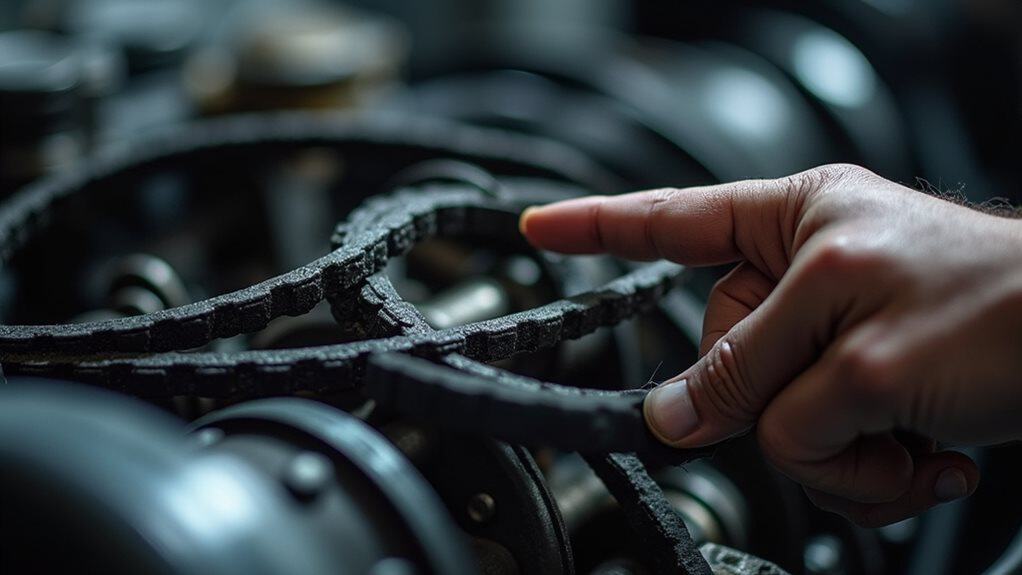
Wondering if that high-pitched squeak is coming from the timing belt? You’ll often find it isn’t: most squeaks trace to the serpentine belt, tensioner, idlers, or accessory pulleys.
Check belt tension, pulley alignment, and contamination. A failing water pump pulley or oil/coolant on grooves can cause slip and vibration.
Clean, measure tension with a gauge, and replace worn pulleys to eliminate the noise. Noise that changes sharply with electrical load or disappears when the accessory belt is removed often points to the accessory drive. A failing tensioner can also cause rough idle and should be inspected for belt tension and bearing wear.
10‑Minute Diagnostic Checklist to Isolate the Noise
Because a quick, methodical check can save hours and costly repairs, use this 10-minute diagnostic checklist to isolate whether the noise comes from the serpentine or timing system and to identify the likely component at fault.
Listen for loud, exposed serpentine squeaks versus hidden timing chirps, spray water on ribs, spin and wiggle idlers, inspect routing, tension indicators, seals, pulleys, and use a stethoscope.
Cooling fans may also run briefly after shutdown to dissipate heat, so check for post‑shutdown fan operation as an indicator of related cooling or electrical issues.
Accessory‑Belt Problems That Sound Like Timing‑Belt Squeaks
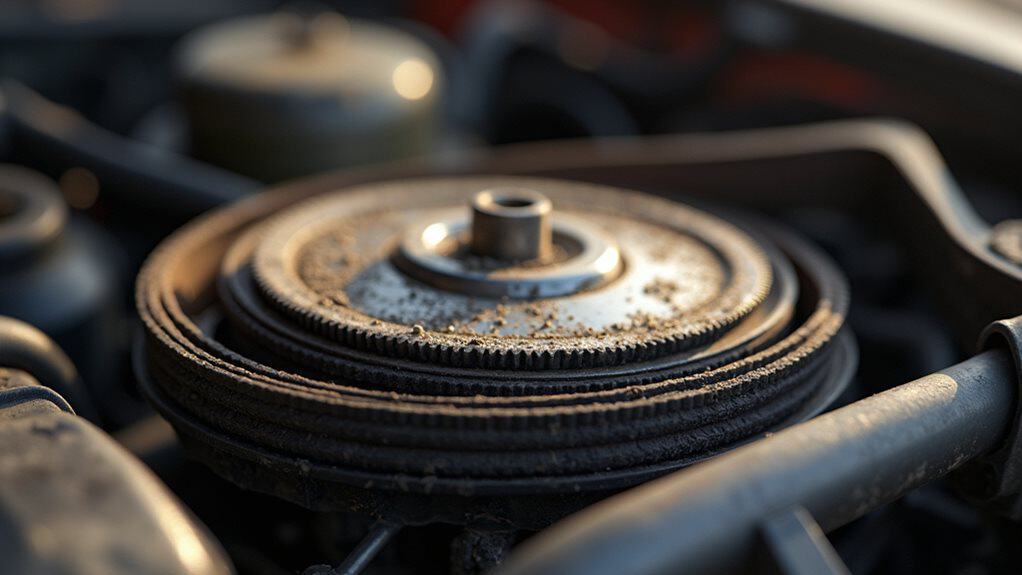
When a squeak sounds like it’s coming from the timing belt, you should still suspect the accessory-belt drive because more than half of reported “timing belt” noises actually originate from belts, pulleys, or tensioners in the accessory system.
Check for belt slip, glazed or wet belts, misaligned pulleys, worn idler/tensioner bearings, and contamination; tension errors and pulley misalignment commonly cause sharp squeaks that mimic timing-belt faults.
Also inspect the cooling system and condenser coils for airflow blockages or overheating that can exacerbate accessory-belt noise and drive component wear.
How to Confirm the Timing Belt or Internal Pulleys Are Faulty
To confirm that the timing belt or internal pulleys are at fault, start by isolating the timing-side noise and then perform both auditory and hands-on inspections:
Listen with the engine idling to determine whether the high‑pitched whine comes from behind the timing cover (timing-side) rather than from the front accessory assembly.
And if it does, safely disable the ignition and fuel system, remove the timing cover, and rotate the crankshaft slowly while observing the belt and pulleys under good lighting.
Inspect for cracked ribs, missing teeth, glazing, oil contamination, frayed edges, pulley wobble, grinding bearings, side play in idlers or tensioner, and a spongy tensioner.
Any of these confirms internal component failure.
Regular maintenance, including correct coolant and inspection routines to prevent issues like a stuck thermostat, helps avoid secondary problems that can affect belt and pulley performance.
Fixes and Maintenance: Temporary Repairs, Permanent Fixes, and Prevention
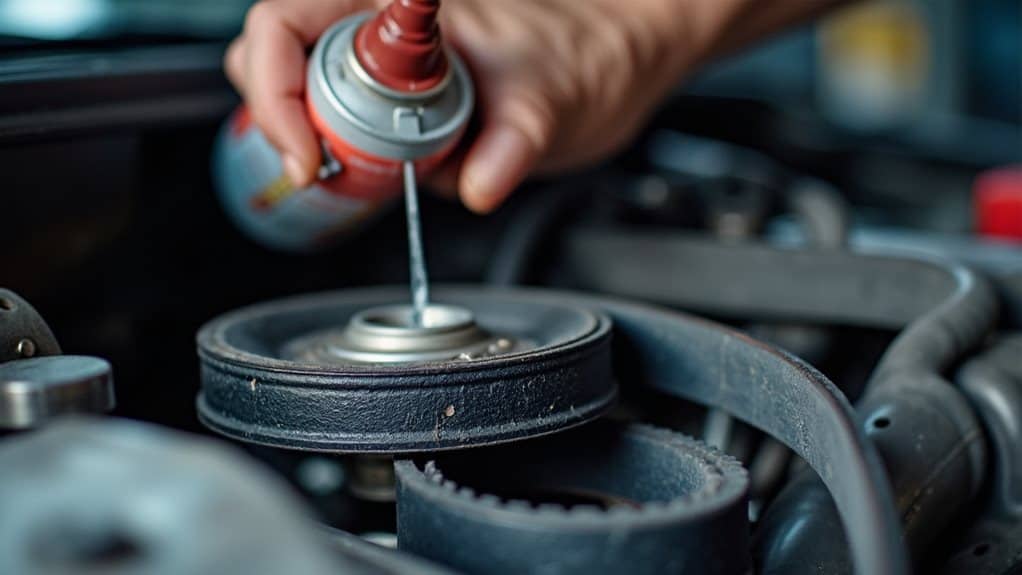
If you hear a timing- or accessory-side squeak, start with temporary, low‑risk checks that help you isolate the source before committing to parts replacement:
quickly perform a one‑second water mist on the ribbed belt to see if the pitch changes (a clear sign the outer drive is responsible),
toggle heavy electrical loads and the A/C to note shifts in noise level,
and do a short cold start to distinguish glazing chirps from bearing noise.
Then set correct tension with a gauge, align pulleys, clean debris (no solvents), replace contaminated or worn belts and any noisy pulleys or tensioners, and fix leaks to prevent recurrence. A common related symptom is that a faulty belt-driven component or its electrical circuit can cause correlated noises and should be inspected as part of diagnostics.
Wrapping Up
You can usually tell if the timing belt is the problem by listening, doing a quick belt-tension and wear check, and isolating accessory belts with simple tests. If noise comes from inside the timing cover, suspect worn belt teeth, a failing tensioner, or bad idler bearings; these need prompt replacement because they affect engine timing. Temporary fixes mask symptoms; permanent fixes replace faulty components and follow manufacturer service intervals to prevent recurrence.


