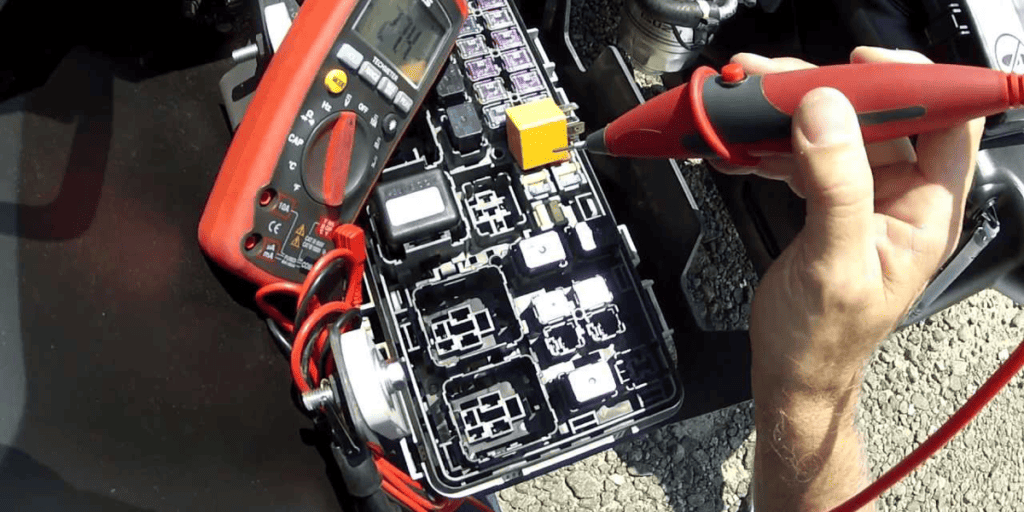
The check‑engine light on your Acura TSX means the engine control module has detected a fault in the emission‑control system, such as a bad O₂ sensor, a P0420 catalytic‑converter efficiency problem, a MAP‑sensor pressure error, an EGR‑valve flow issue, or a fuel‑cap vacuum leak. The light may glow steadily for non‑critical faults or flash for misfires. You’ll need an OBD‑II scanner to read the diagnostic trouble code, verify the component’s operation, and fix the problem promptly to avoid reduced fuel economy, higher emissions, and costly damage. Continued exploration will reveal how to troubleshoot each specific code.
Quick Tips
- The “Check Emission System” light signals the ECM logged a fault, often related to O₂ sensors, catalytic converter, or EVAP leaks.
- A steady glow indicates a non‑critical issue; a rapid flash points to an active misfire that needs immediate attention.
- Common Acura TSX triggers include P0135 (upstream O₂ sensor heater circuit), P0420 (catalytic converter efficiency), and EVAP leak codes (P0455/P0456).
- Use an OBD‑II scanner to read the specific DTC, then inspect the related component (e.g., sensor wiring, fuel cap, catalytic converter) before clearing the code.
- After repair, the light may remain on for 20–40 miles; if it stays lit, re‑diagnose and verify proper sensor voltages and exhaust flow.
What Does the Check Engine Light Mean on an Acura TSX?
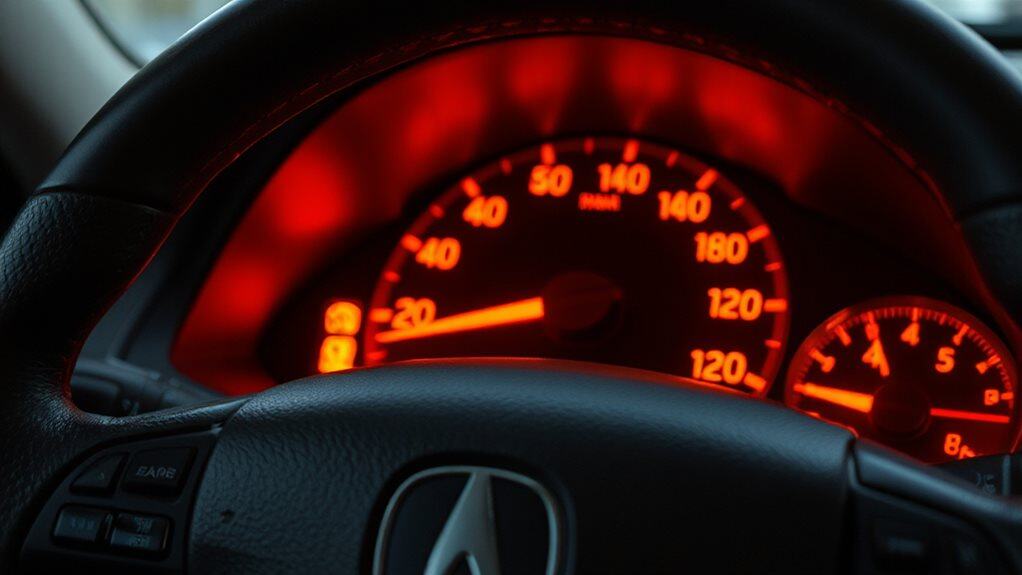
What does the check‑engine light actually tell you when it comes on in an Acura TSX? It signals that the ECM has logged a fault code, whether from a loose gas cap, faulty spark plug, clogged catalytic converter, or a bad MAF sensor. A steady glow means a non‑critical issue; a flash indicates an active misfire that could damage the converter. You should read the code with an OBD2 scanner, then address the problem—tightening the cap or replacing worn plugs—to avoid costly repairs. The light may take 20‑40 miles to turn off after the issue is resolved. Electrical system problems, such as a failing alternator, can also trigger multiple dashboard lights and should be checked promptly for vehicle safety.
How the Acura TSX O₂ Sensor Triggers the Light?
You’ll notice the check‑engine light comes on when the O₂ sensor’s voltage stops shifting between rich and lean readings, because the ECM can’t verify the proper air‑fuel ratio. This steady or biased voltage triggers the P0135 fault code, which tells the diagnostic system that the upstream sensor is malfunctioning. As a result, the ECM flags the issue and activates the warning light to prompt inspection. Prolonged issues like this can also accompany serious vehicle vibrations on the highway that signal failing components before complete breakdown.
O₂ Sensor Voltage Shifts
Ever wondered why the Acura TSX’s check‑engine light flickers when the oxygen sensor’s voltage jumps around? The upstream O₂ sensor swings between 0.1 V (lean) and 0.9 V (rich) as it tells the ECU to trim fuel. When voltage stays low (0.1‑0.3 V) or high (0.7‑0.9 V) too long, the ECU flags a persistent mixture error and illuminates the light. The downstream sensor should hover near 0.45 V; deviations indicate catalytic issues.
Fault Code P0135 Activation
When the Acura TSX’s engine control module (ECM) detects an abnormal condition in the upstream oxygen sensor’s heater circuit, it logs fault code P0135 and flashes the check‑engine light.
The ECM checks heater resistance and current after start‑up; if the circuit draws too much or too little current, the code registers.
Common causes include a faulty sensor, damaged wiring, or a blown fuse.
This prevents the sensor from warming quickly, delaying closed‑loop fuel control and reducing efficiency.
Why Does My Acura TSX Show a P0420 Catalytic Converter Code?
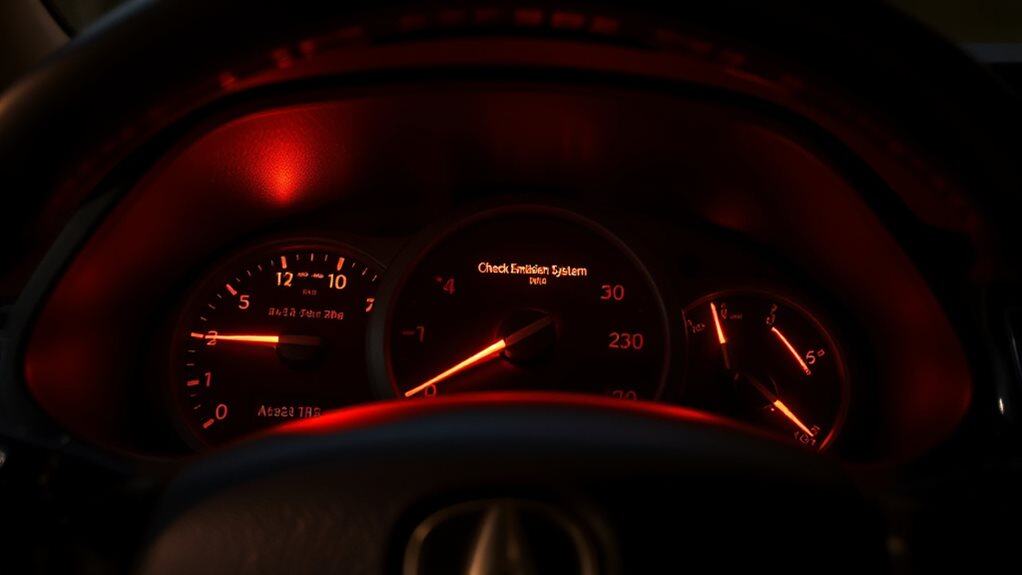
You’re seeing a P0420 because the PCM detects that the catalytic converter isn’t reaching the required efficiency, meaning the downstream oxygen sensor’s signal no longer mirrors the upstream sensor’s fluctuations.
This discrepancy usually points to a loss of conversion efficiency, often caused by a clogged or damaged converter, or by exhaust flow restrictions that prevent proper oxygen processing.
Check the O₂ sensor readings, inspect for exhaust leaks, and verify that the converter isn’t contaminated before deciding whether a repair or replacement is needed.
Use a properly sized socket and six-point tool when removing drain plugs to avoid stripping or damaging components.
Catalytic Converter Efficiency Loss
Why does your Acura TSX flash the check‑engine light and store a P0420 code?
The ECM detected catalytic converter efficiency below the 92‑95 % threshold. A degraded converter fails to reduce pollutants, causing the downstream oxygen sensor to mimic upstream readings. This inefficiency lowers fuel economy, roughens idle, and may trigger misfires.
Inspect exhaust leaks, sensor wiring, and fuel delivery before considering costly converter replacement.
Oxygen Sensor Signal Discrepancy
Ever wondered why your Acura TSX’s oxygen sensors can send conflicting signals that culminate in a P0420 code? A pre‑catalyst sensor should swing between 0.3 V and 0.8 V, while the post‑catalyst sensor should stay steady. Leaks, corroded connectors, or poor fuel can distort these voltages, making the ECU think the converter is inefficient. Scan‑tool data and visual inspections verify readings before replacing sensors.
Exhaust Flow Restrictions Detected
Could a blockage in the exhaust system be the hidden cause of your Acura TSX’s P0420 code? A restriction—like a collapsed pipe, clogged muffler, or debris—limits flow, raising downstream oxygen levels. The ECM then sees the downstream O₂ sensor mirroring the upstream sensor, indicating the converter isn’t cleaning exhaust.
Inspect for leaks, damaged pipes, and replace any obstructed components before assuming the catalyst itself failed.
How the Acura TSX MAP Sensor Controls Air‑Fuel Balance?
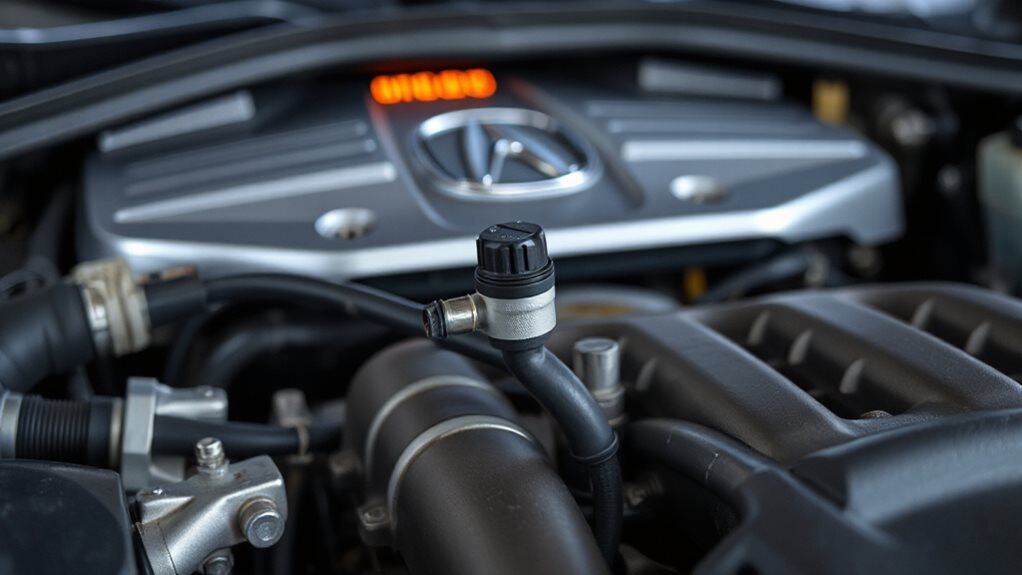
How does the MAP sensor keep the Acura TSX’s air‑fuel mixture in check? It measures manifold absolute pressure, converting silicon‑chip flex into a voltage the ECU reads.
The ECU calculates air density from this pressure, then determines the exact fuel amount needed for stoichiometric combustion. By constantly adjusting injection timing with engine speed and temperature data, the sensor prevents rich or lean conditions, improving performance and emissions. Aluminum wiring requires larger gauges for equivalent current capacity, so installers commonly choose 4/0 AWG for 200 amp service to ensure safe ampacity margins.
EGR Valve Problems That Light Up the Acura TSX Engine Warning?
Why does the Acura TSX’s Check Engine Light flash when the EGR valve misbehaves?
The ECM detects abnormal exhaust‑gas recirculation, triggers codes P0400‑P0409, and illuminates the light.
Carbon buildup, a stuck‑open or stuck‑closed valve, or contaminated fuel can cause rough idle, stalling, knocking, and higher fuel use.
Inspect the valve, clean or replace it, and verify performance under load to restore proper emissions control.
How to Spot a Fuel‑Cap Leak on Your Acura TSX?
Ever notice a faint gasoline smell around the fuel door or a sudden drop in fuel economy? Check the cap for a loose or stick‑slip feel when you tighten it; you should hear three to four clicks. Inspect the gasket—brown indicates a proper seal, black suggests wear. Look for cracked rubber, fuel residue, or damaged threads.
A strong sniff test or a P0455/P0456 code confirms an EVAP leak. The cooling system capacity for many vehicles, including similar models, is often specified in the owner’s manual and can be around 14.0 quarts depending on year and engine, so consult your manual for exact figures.
How to Scan Acura Tsx Emission Codes With an Obd‑Ii Tool?
First, locate the OBD‑II port under the dashboard of your Acura TSX—usually near the steering column and covered by a small plastic flap. Plug in the scanner, power it on, and let it communicate with the PCM. Retrieve stored emission codes, note each DTC, then interpret them using the scanner’s guide. After repairs, clear the codes and verify the light stays off. For deeper troubleshooting or to access advanced systems beyond basic emission codes, consider using a top OBD2 scanner that supports enhanced diagnostics and system tests.
When to Replace O₂, MAP, and EGR Parts on Your TSX?
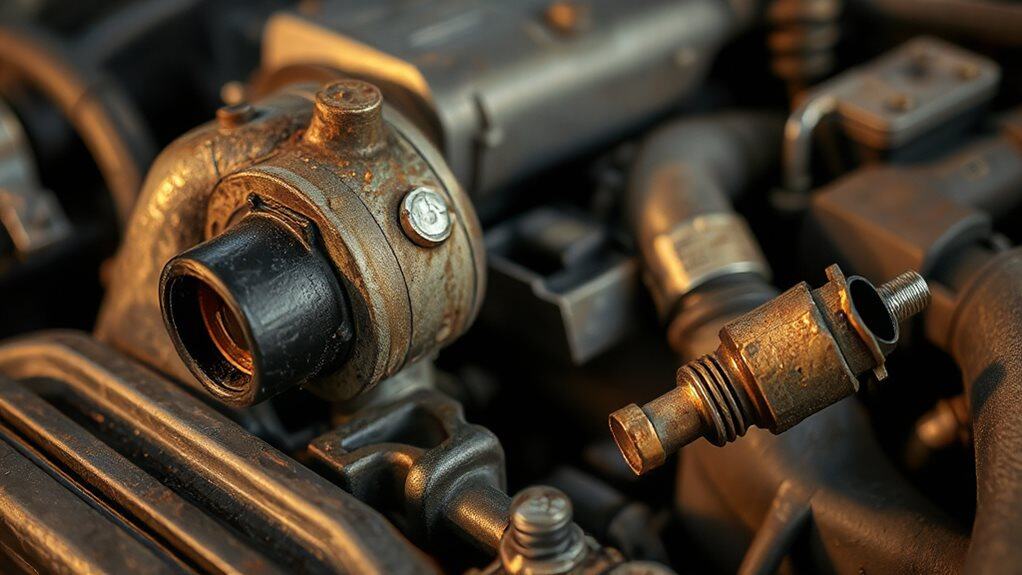
After you’ve scanned and cleared any emission codes, the next step is to know when the actual hardware—oxygen (O₂) sensor, manifold absolute pressure (MAP) sensor, and exhaust gas recirculation (EGR) valve—needs replacement on your Acura TSX. Replace O₂ sensors around 100 k mi, earlier if fuel economy drops or idle worsens. Swap MAP sensors when misfires, rough idle, or erratic voltage appear. Inspect EGR at 100 k mi; clean or replace if carbon buildup causes sticking or flow codes trigger.
OEM vs. Aftermarket: Finding the Best Acura TSX Emission Parts?
Where do you start when evaluating OEM versus aftermarket emission components for a 2003‑2014 Acura TSX? Understanding the trade‑offs begins with the core advantages each source offers: OEM parts are genuine Acura items that fit precisely, come with a factory warranty, and include built‑in diagnostic features such as the vapor canister vent solenoid, which helps maintain the vehicle’s carbon‑footprint reduction goals. Aftermarket options lower price, wide brand selection, and comparable specs; verify fit, check ratings, and prioritize warranty.
Wrapping Up
By regularly monitoring the check‑engine light, scanning OBD‑II codes, and addressing O₂, MAP, or EGR failures promptly, you keep your Acura TSX running cleanly and avoid costly repairs. Replace faulty sensors or the catalytic converter when diagnostics confirm a P0420 or similar emission code. Choose OEM parts for guaranteed compatibility, but quality aftermarket options can work if they meet manufacturer specifications. Consistent maintenance ensures emissions compliance and prolongs engine life.