
The DPF warning light tells you that soot has built up in the diesel particulate filter to a level where the differential‑pressure sensor detects excessive restriction, usually around 50‑70 % capacity. A solid orange light means partial blockage, while a flashing orange light, often with a check‑engine code, signals an urgent need for regeneration. Short trips keep exhaust temperatures too low for passive cleaning, so you may need an active or parked regeneration. Ignoring the warning can cause back‑pressure, reduced power, and costly filter replacement; continue to explore the steps for proper regeneration.
Quick Tips
- The DPF light signals soot buildup or sensor issues, indicating the filter is 50‑70 % full or misreading pressure data.
- A solid orange light means partial blockage; a flashing orange light (often with a check‑engine) requires immediate regeneration.
- The PCM triggers the light when differential pressure reaches ~20 mbar (≈15‑17 g soot) at 3000 RPM, showing excessive exhaust restriction.
- Short urban trips prevent passive regeneration; sustained highway driving (10‑15 min) raises exhaust temperature for self‑cleaning.
- Ignoring the warning can cause back‑pressure, limp mode, black smoke, and costly DPF replacement; timely active or parked regeneration is essential.
What the DPF Light Means
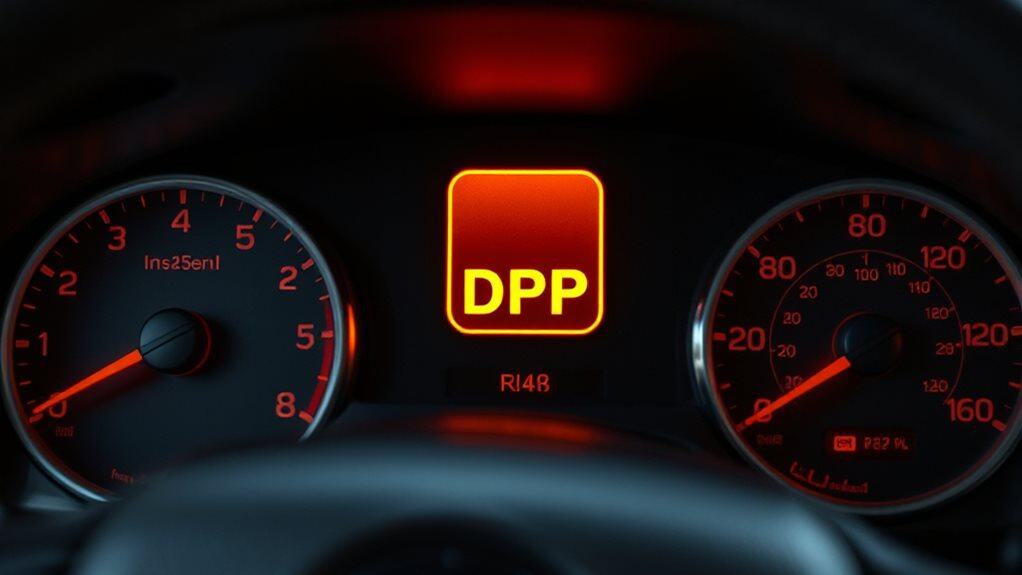
Why does the DPF warning light come on? It signals that soot has built up in the diesel particulate filter, usually around 50‑70 % of capacity, or that a sensor is misreading pressure or temperature.
A solid orange light means a partial blockage; a flashing orange, often with the check‑engine light, demands immediate regeneration. Ignoring it can trigger limp mode and reduce efficiency. Short trips prevent the high exhaust temperatures needed for passive regeneration. The vehicle may also need a forced regeneration or inspection of related sensors and components to resolve persistent warnings.
Why Does the DPF Light Come On?
When the soot accumulation in your diesel particulate filter reaches its designed capacity, the DPF light flashes to alert you that the filter can no longer self‑clean.
If the system then attempts a passive or active regeneration but the exhaust temperature isn’t high enough—often because of short trips, low‑speed city driving, or a faulty sensor—the regeneration fails and the warning stays on.
In either case, the light signals that you need to address the soot buildup or fix the regeneration process before the filter becomes permanently clogged.
Sometimes related alerts—like traction or stability warnings caused by sensor or module issues—can appear alongside the DPF light if underlying sensors or wiring are faulty, so check for sensor faults and read DTCs with an OBD‑II scanner.
Soot Accumulation Threshold
How does the DPF light know it’s time to warn you?
Your PCM monitors differential pressure across the ceramic honeycomb; when soot builds up to roughly 15‑17 g, pressure spikes above the preset limit, triggering code P2463.
The sensor reads around 20 mbar at 3000 RPM, indicating excessive restriction.
Once the calculated soot load exceeds this threshold, the light illuminates to prompt regeneration.
Failed Regeneration Process
What triggers the DPF warning light during a failed regeneration is a mismatch between the expected soot‑burn‑off conditions and the actual sensor data. Faulty pressure or temperature sensors give false readings, while a blocked DOC, leaking exhaust, or malfunctioning EGR disrupts flow and heat.
Low‑quality fuel, short trips, or stuck cooling fans prevent the temperature needed for soot burn‑off, causing the light to illuminate.
How Do Driving Habits Influence the DPF Warning Light?
Short, urban drives keep exhaust temperature below the 40 mph threshold needed for passive regeneration, so soot accumulates.
Low‑speed, low‑fuel conditions further block self‑cleaning, while high mileage and poor‑quality fuel increase soot production.
To clear the light, you need sustained highway speeds for ten to fifteen minutes, allowing the filter to burn off particulates.
Regular inspections and maintenance, including checking related components like wheel bearings, help prevent issues that can exacerbate DPF problems.
Active Regeneration for a Stuck DPF Light – Step‑by‑Step Guide
When the diesel particulate filter (DPF) light stays on despite attempts to clear it, an active regeneration cycle is required to burn off the accumulated soot. You’ll see the high‑exhaust‑temperature lamp illuminate as the engine injects extra fuel during the exhaust stroke, raising exhaust heat above 550 °C.
The control module monitors soot level, typically around 45 %, and initiates the cycle automatically, lasting several minutes. Keep the engine running; interruptions stop the process and may worsen blockage. Regular maintenance such as replacing a clogged cabin air filter can help prevent related ventilation and airflow issues.
When to Perform a Parked Regeneration
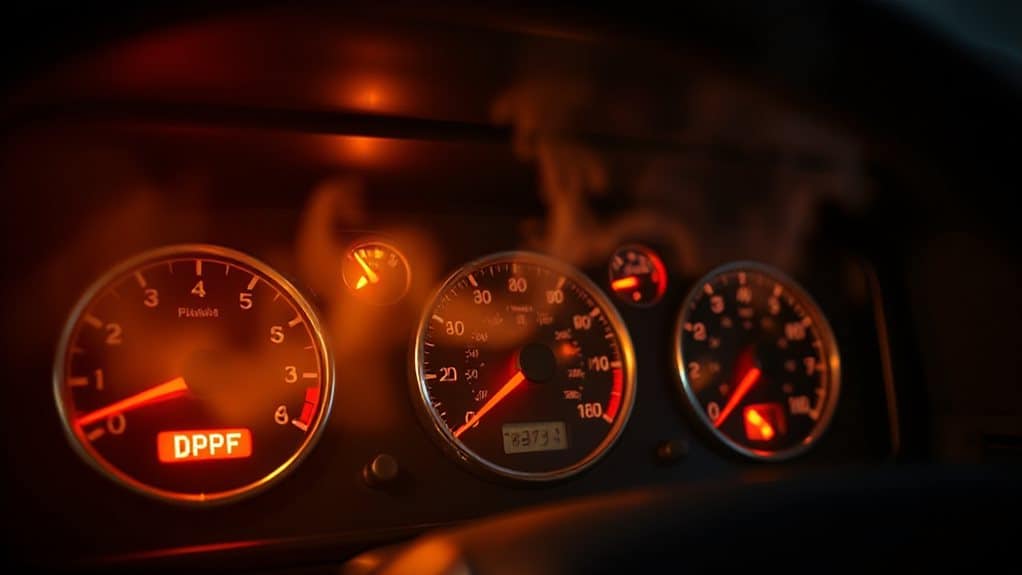
You should start a parked regeneration when the DPF light flashes with a “PARKED REGEN REQUIRED” message, indicating the soot load has exceeded the threshold for passive cleaning. Make sure the truck is in neutral, the parking brake is set, and you stay with the vehicle while the engine runs at the prescribed RPM and exhaust temperature. Following these safety precautions and timing guidelines will prevent filter clogging and avoid costly downtime. Older vehicles may also emit warning chimes for issues like lights or security systems, so check for door ajar or related interior alerts before starting.
Ed Regeneration Timing
Ever wondered exactly when you should trigger a parked regeneration for your diesel’s particulate filter? You start it once the DPF light flashes and the ECU reports full soot load, provided the vehicle is in neutral, the parking brake is engaged, and the engine is at idle. Hold the regen button two seconds, then the parked‑regen switch two seconds; the REGEN light will illuminate, and the engine will rev to a higher preset RPM for 20‑45 minutes. Completion shows the DPF light steady or off and the TEMP light extinguished.
Safety Precautions Required
So, before you start a parked regeneration, make certain the vehicle is completely stationary: shift the transmission into park, engage the parking brake fully, and keep the car from moving for the entire 20‑45 minute cycle.
Park outdoors, away from structures, flammable material, and vegetation; assure at least one‑eighth tank of fuel and adequate DEF.
Stay with the vehicle, watch the DPF indicator, TEMP light, and HEST lamp, and never interrupt the process unless an emergency occurs.
What Happens When the DPF Light Starts Flashing?
When the DPF (Diesel Particulate Filter) light starts flashing, it signals a second‑level warning that the filter’s soot load has exceeded the safe threshold despite previous passive regeneration attempts. You must stop the vehicle, shift to neutral, and initiate a parked regeneration by holding the REGEN button. The engine runs at higher RPM for 20‑40 minutes, heating the exhaust to burn soot into ash. Check Engine and HEST lights will appear, and both will extinguish once regeneration succeeds. Ignoring the warning risks engine restriction, black smoke, and costly DPF replacement. Proper maintenance and correct torque on related drivetrain fasteners, like following a three-stage torque sequence of 15, 40, and 74 lb-ft final, help prevent downstream failures.
DPF‑Related Power Loss & Fuel‑Economy Impact
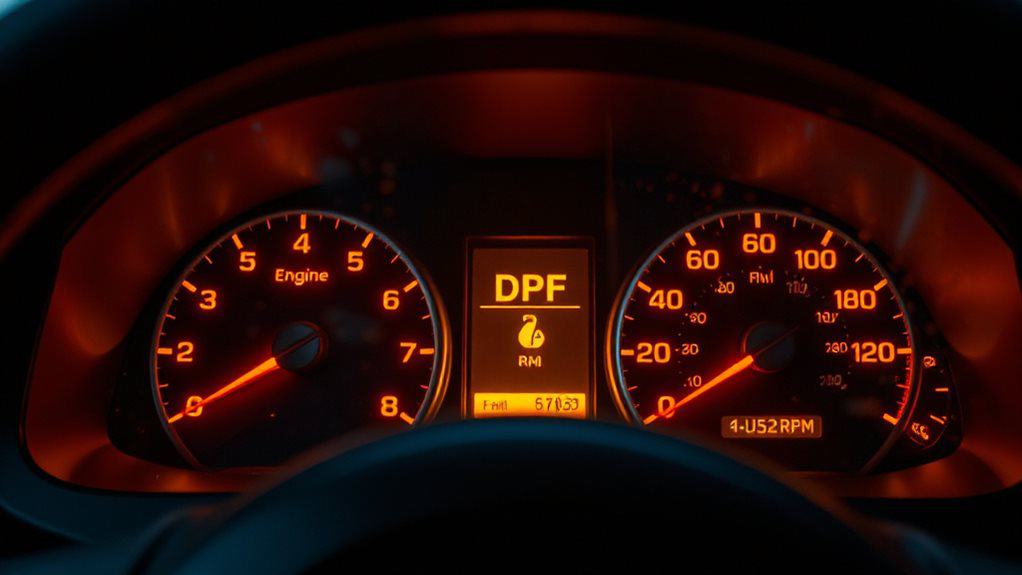
How does a clogged diesel particulate filter (DPF) affect your vehicle’s power and fuel economy? The blockage creates back‑pressure, forcing the engine into limp‑home mode, which cuts horsepower and limits RPMs. Acceleration feels sluggish, especially on hills or with a load.
Simultaneously, the engine burns more fuel to push exhaust gases, dropping miles‑per‑gallon and raising operating costs. Short trips and faulty EGR or turbo components can worsen the issue.
Risks & Repair Costs of Ignoring the DPF Warning Light
A clogged diesel particulate filter (DPF) doesn’t just sap power; it also triggers a cascade of mechanical risks that can skyrocket repair bills.
Ignoring the warning forces limp mode, limiting speed and torque while backpressure damages the turbocharger, EGR valve, and catalytic converter.
Soot hardens, regeneration fails, and engine oil contaminates, leading to costly component replacements and potential total engine failure.
Preventive Maintenance Tips to Keep Your DPF Healthy
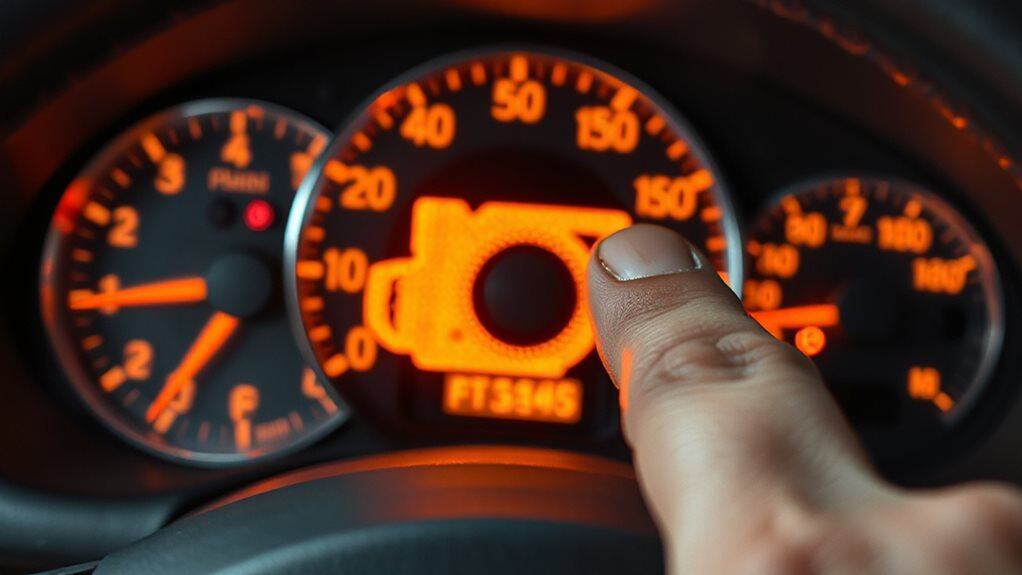
What you can do to keep your diesel particulate filter (DPF) in top shape is follow a disciplined preventive‑maintenance routine that combines regular inspections, proper fuel and oil selection, and disciplined driving habits. Schedule DPF cleaning every six months, check warning lights monthly, use ULSD fuel and low‑ash OEM oil, drive at highway speed 30 minutes weekly, and monitor backpressure and regeneration indicators to catch issues early.
Wrapping Up
By monitoring the DPF warning light and following the outlined regeneration steps, you’ll prevent costly repairs and maintain engine efficiency. Regular driving habits, timely park‑mode regeneration, and prompt attention to flashing signals keep the filter clear, preserving power output and fuel economy. Ignoring the light risks severe blockage, reduced performance, and expensive component replacement. Stay proactive with preventive maintenance to ensure reliable operation and avoid unnecessary downtime.


