When the fuel pump quits while you’re driving, the engine instantly loses the pressure needed to push fuel into the cylinders, so it sputters, hesitates, and often stalls, especially at high speed or on a hill. You’ll feel a brief choking sensation, notice a sudden drop in power, and see fuel‑economy numbers fall from, say, 15.5 mpg to 12–13 mpg. A high‑pitched whine from the tank can signal low pressure, while a sharp screech may indicate pump overheating from bearing wear. If this happens, pull safely to the shoulder, turn on hazard lights, and call roadside assistance; keeping the tank at least a quarter full and replacing the fuel filter every 30–60 k mi can prevent future failures. Continuing will reveal more diagnostic cues.
Quick Tips
- Engine may sputter or stall, especially at high speeds, as fuel pressure drops.
- Power loss occurs when accelerating, often accompanied by a brief choking sensation.
- Fuel economy declines noticeably, sometimes dropping from ~15 mpg to 12–13 mpg.
- High‑pitched whine or screech from the fuel tank area signals low pressure or pump overheating.
- Safe response: pull over, turn off ignition, call roadside assistance, and avoid driving until the pump is inspected.
Identify Immediate Fuel‑Pump‑Failure Symptoms While Driving
When a fuel pump fails while you’re on the road, the engine’s behavior changes instantly, and recognizing those signs can prevent a dangerous situation. You’ll notice sputtering at high speeds, a choking sensation that lasts a couple seconds, and sudden loss of power when you try to accelerate. The car may stall randomly at low speeds, surge without pedal input, and fuel economy drops noticeably. These symptoms together signal immediate pump failure. A sudden loss of fuel pressure can cause the engine to stall abruptly. Regularly checking for decreased fuel efficiency can help catch pump problems early.
Diagnose Fuel‑Pressure Loss Causes From a Failing Pump
Why does the engine stumble when fuel‑pressure drops? You’ll notice sputtering at high speeds, hesitation on hills, and misfires because the pump can’t keep pressure steady.
Look for sudden surges, fluctuating RPMs, or rapid pressure loss after shutdown.
Overheating from low fuel, clogged passages, and weak priming also cause inconsistent delivery, leading to power loss and reduced efficiency.
Cold temperatures can also reduce system pressure as temperature fluctuations cause air and fuel behavior to change.
Interpret Whining or Screeching Noises That Signal Pump Trouble
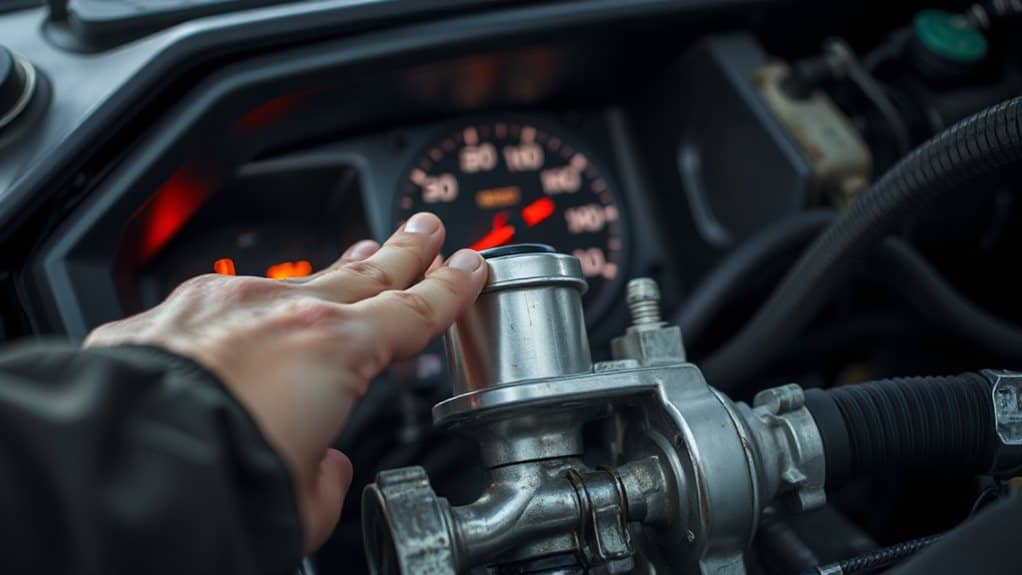
If you hear a high‑pitched whine coming from the fuel tank, it usually means the pump’s pressure is dropping below the normal 49‑58 psi range, often because low fuel levels or clogged filters are starving the motor of coolant.
A sharp, screeching sound, on the other hand, points to the pump overheating, which can happen when bearings wear out or the impeller spins too fast under load.
Listening for these distinct noises lets you diagnose whether the problem is a pressure loss or a thermal issue before the pump fails completely.
Regular maintenance and checks, including inspecting fuel filters and ensuring proper mounting to reduce vibration, help prevent premature pump wear and preserve performance.
Whine Indicates Low Pressure
Ever notice a high‑pitched whine coming from the fuel tank area while the engine runs? That sound usually means the pump can’t keep proper pressure, dropping below the normal 30‑80 PSI range. You’ll feel sputtering, hesitation, or stalling, especially under load. Test pressure with a gauge, check OBD2 codes, inspect the filter, and verify fuel level and quality before replacing the pump.
Screech Signals Pump Overheating
When the fuel pump starts to overheat, it often produces a high‑pitched screech that you’ll hear from the tank area during acceleration.
Low fuel exposes the pump, causing rapid temperature rise and cavitation that creates the screech.
Clogged intake or debris adds friction, intensifying the noise.
You’ll notice stalling, power loss, and a hot‑to‑touch pump.
Check fuel level, clear clogs, and monitor temperature to prevent failure.
Calculate MPG Drop Caused by Fuel‑Pump‑Failure
How much your MPG drops when the fuel pump starts failing can be quantified by comparing the vehicle’s baseline fuel‑economy to the readings taken after the pump’s pressure falls below the ideal 30 psi threshold. Record the original 15.5 mpg, then note the 13 mpg after pressure dips, and later 12 mpg as degradation continues. Use these figures to calculate the percentage loss and track the pump’s health. Electrical and mechanical faults, like a stuck trunk latch, can similarly reveal hidden causes when you diagnose symptoms and check related systems.
Assess Overheating and Control‑Loss Risks When the Pump Fails
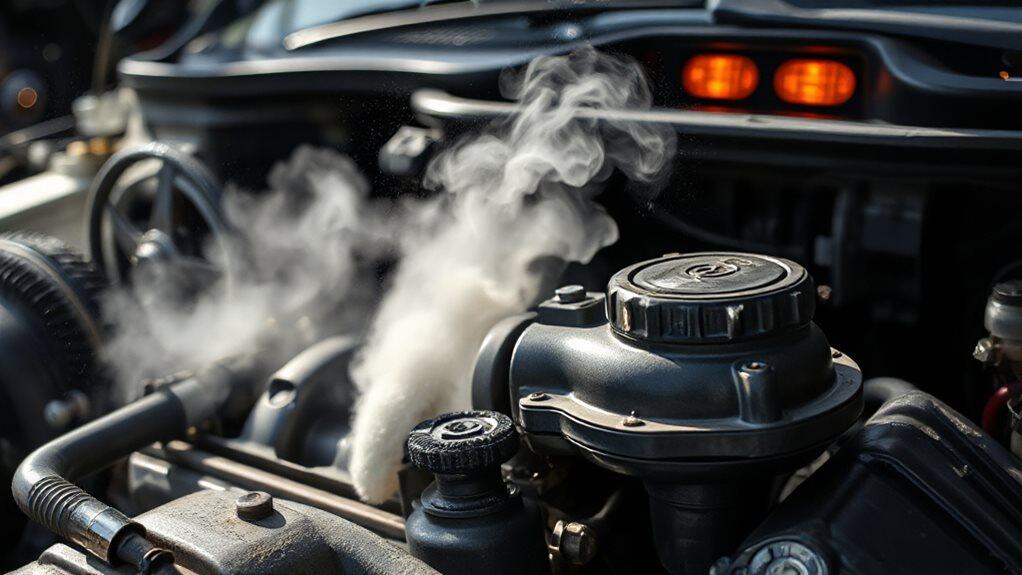
What happens when the fuel pump overheats or loses pressure is more than a temporary inconvenience; it can trigger a cascade of mechanical failures that jeopardize both engine health and driver safety.
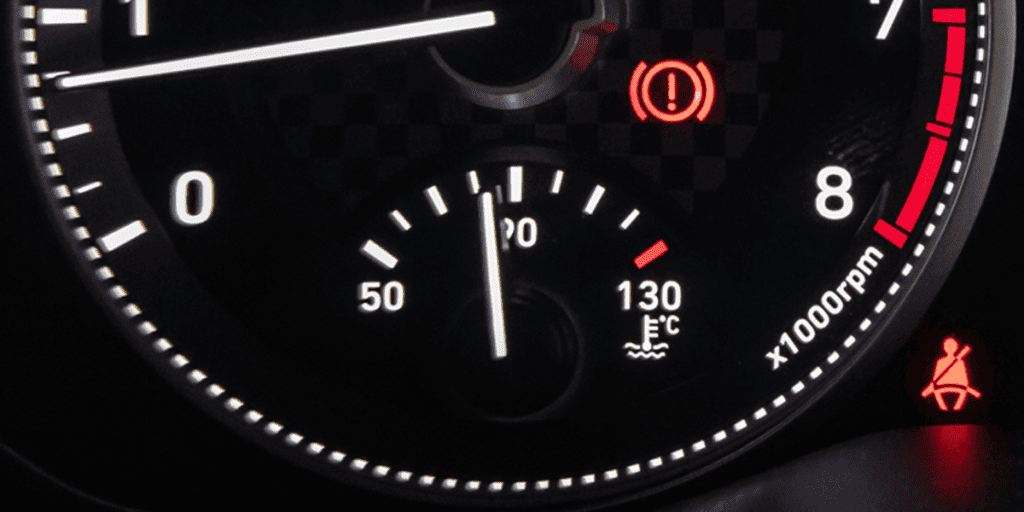
You’ll notice the temperature gauge climbing, rough idling, and sputtering under load as the pump’s cooling fuel dwindles.
Sudden power loss or stalling can leave you immobile, especially on hills or highways, risking steering control and increasing wear on injectors, pistons, and valves.
Regular inspections and treating emerging issues promptly can prevent escalation, and using proper preventive maintenance helps extend component life.
Take Safe Steps If the Pump Gives Out on the Road
The loss of fuel pressure that follows a pump failure can turn a routine drive into a hazardous situation, so you need a clear, step‑by‑step plan for staying safe.
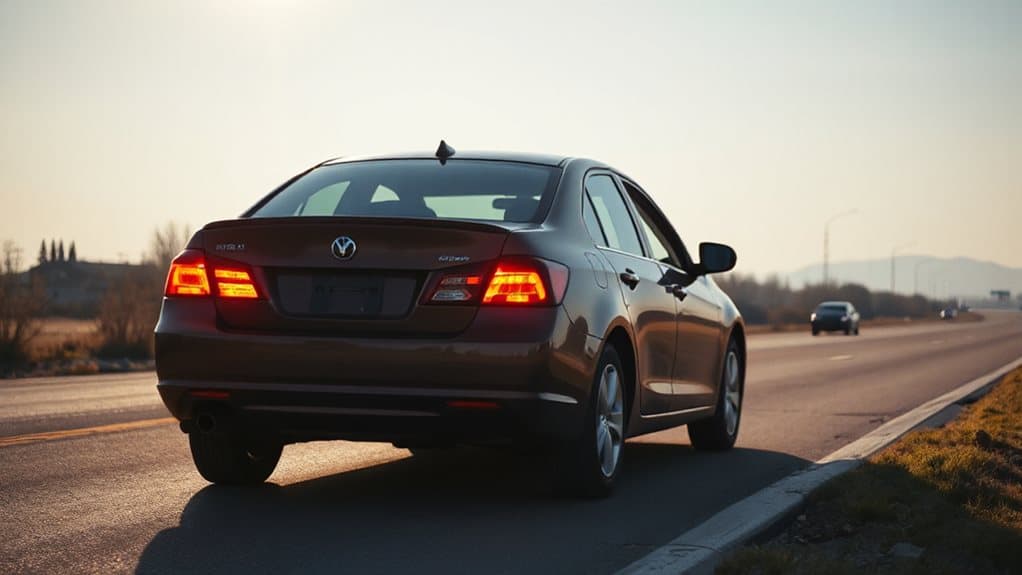
When the engine sputters or stalls, gently steer to the shoulder and activate hazard lights. Apply the parking brake, turn off the ignition, and call roadside assistance. If traffic permits, move the vehicle far enough from traffic to avoid collisions. Inspect for leaks, then wait for professional help. Consider checking local roadside assistance policies to understand towing and service coverage.
Prevent Future Fuel‑Pump‑Failure With Regular Maintenance
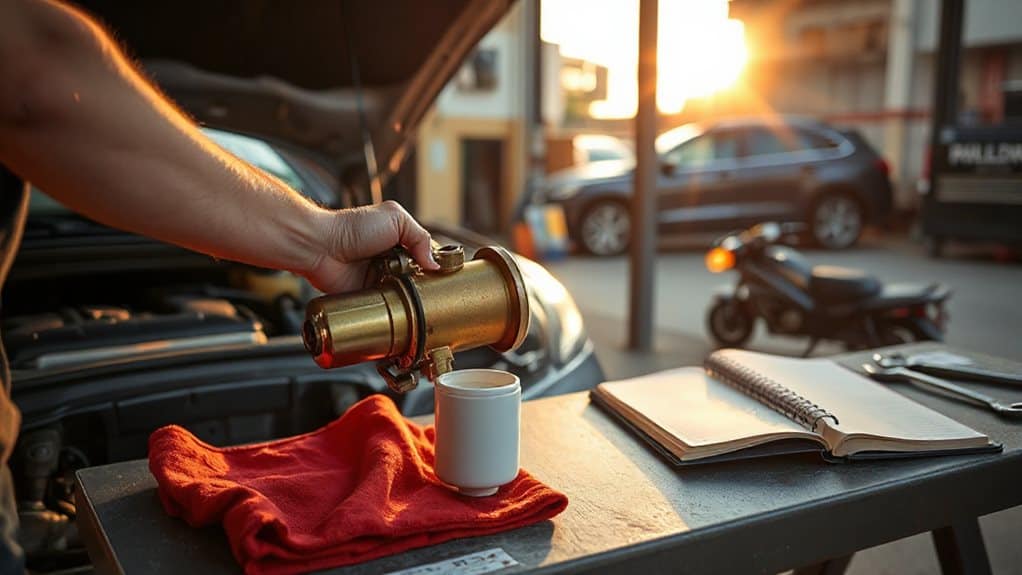
Keeping your fuel pump healthy starts with regular maintenance, because a well‑maintained system reduces the risk of sudden loss of pressure that can stall the engine.
Keep the tank at least a quarter full, preferably half, to keep the pump submerged and cool.
Use high‑quality fuel, replace the fuel filter every 30‑60 k miles, and inspect hoses, nozzles, and connections weekly.
These steps prevent debris, overheating, and premature wear.
Wrapping Up
If your fuel pump quits while you’re driving, you’ll notice sudden power loss, sputtering, or a whining noise, followed by a rapid drop in MPG and possible engine stalling. The immediate risk is loss of control, especially at high speeds or on steep grades. Pull over safely, turn off the engine, and call for assistance. Regularly inspect fuel‑filter condition, pressure regulator function, and pump wear to prevent future failures. Proper maintenance keeps the pump operating within spec and preserves vehicle reliability.