
Full bolt‑ons are aftermarket parts that replace OEM components with pieces that bolt directly onto the engine or chassis without welding, cutting, or internal disassembly. They include cold‑air intakes, performance exhaust headers, turbo accessories, and suspension upgrades, all installed using basic hand tools and reversible bolt. The upgrades cost roughly $600–$1,000, delivering 20–30 hp gains while keeping the original block intact, and they require only software tuning to optimize fuel, timing, and boost. Proper compatibility checks, emissions certification, and documentation keep the modifications legal and safe; the next sections will show you how to install and tune them effectively.
Quick Tips
- Full bolt‑ons are external upgrades installed or removed without opening the engine, using only bolts and no welding or custom fabrication.
- They replace OEM parts with aftermarket equivalents such as cold‑air intakes, headers, exhaust systems, intercoolers, and suspension components.
- Installation requires basic hand tools, is reversible, and typically costs $600–$1,000 for 6–10 kW power gains.
- Bolt‑ons must meet emissions and safety regulations (CARB, EPA, state inspections) and retain proper documentation for compliance.
- Pairing bolt‑ons with ECU remapping optimizes fuel‑air ratios, ignition timing, and boost pressure for maximum performance.
Full Bolt‑Ons: Definition & What They Aren’t
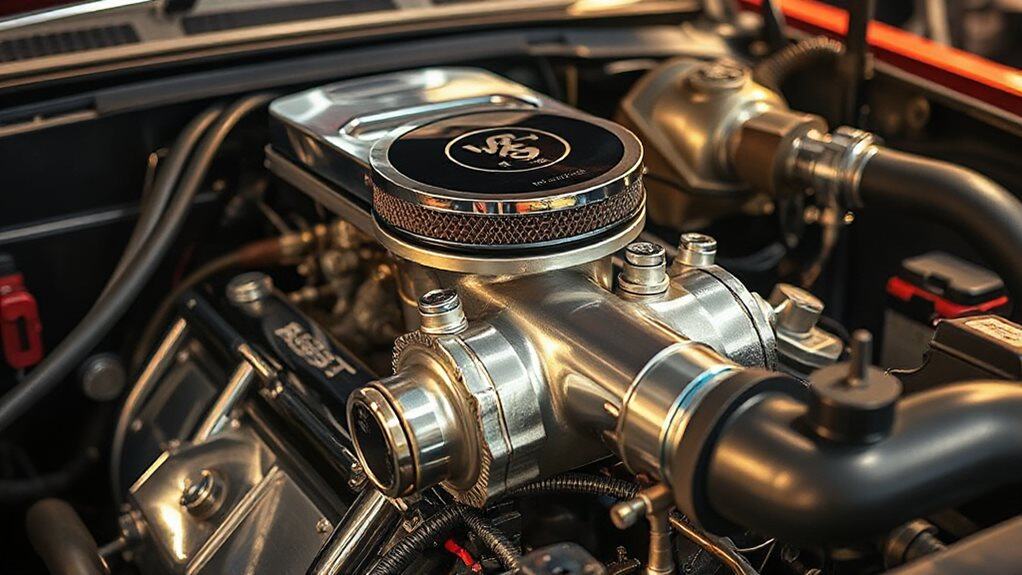
What exactly counts as a full bolt‑on? It’s any external modification you install or remove without opening the engine. You replace OEM parts with aftermarket pieces using only bolts—no welding, cutting, or custom fabrication. Typical items include cold‑air intakes, throttle‑body upgrades, performance headers, exhaust systems, and intercoolers. These parts increase airflow, horsepower, and throttle response, yet remain reversible and street‑legal. Regular maintenance like replacing a cabin air filter can help maintain airflow benefits from intake upgrades. Internal changes like camshafts, pistons, or any weld‑required work aren’t full bolt‑ons. Improved airflow is achieved through upgraded intake manifolds that distribute the air‑fuel mixture more evenly to each cylinder.
Why Enthusiasts Prefer Bolt‑Ons to Full Engine Rebuilds
You’ll notice that bolt‑ons cost far less than a full engine rebuild because they reuse the existing block and only replace a few components, so you avoid buying new pistons, bearings, and precision‑machined parts.
The installation process is straightforward; you can swap a sport‑tuned exhaust or a larger throttle body with basic hand tools, and you can return to stock by reinstalling the original parts without any permanent modifications.
Moreover, these upgrades let you gain noticeable performance gains through software tuning—like increased horsepower from a better exhaust—while keeping the core engine untouched and fully reversible.
Always follow proper safety measures when working on vehicle components to reduce the risk of injury and accidents.
Cost‑Cost Efficiency
Why do many car enthusiasts favor bolt‑ons over a full engine rebuild? You’ll see bolt‑ons cost roughly $600‑$1,000 for 6‑10 kW gains, achieving a $200‑$180 per kW ratio, while a rebuild runs $2,500‑$6,000 and often requires extensive machining. Bolt‑ons add power instantly without a teardown, preserving the original block and delivering a clearer, more predictable cost‑to‑performance return.
Ease of Installation
Bolt‑ons win over full engine rebuilds largely because they can be installed with a handful of basic tools, eliminating the need for specialized equipment like torque wrenches or engine pullers. You’ll use ordinary wrenches, screwdrivers and clips; exhausts bolt directly with stock hardware, and oil separators mount without tuning. Installations focus on alignment and fastening, take minutes per component, and require no engine disassembly, so you finish in hours instead of days.
Reversible Performance Gains
How do reversible performance gains shape a car enthusiast’s decision‑making? You can install a drop‑in air filter, wheel spacers, or front lip and then remove them without structural changes, preserving resale value. Bolt‑ons avoid engine disassembly, reducing risk of machining errors. They support chip remaps and E85 tunes, providing 20‑30 whp gains while keeping warranty intact and allowing quick reversion to stock for testing.
The Main Bolt‑On Types – Exhaust, Intake, Suspension & More
Where do you start when you want to enhance a car’s performance without tearing the engine apart? You begin with bolt‑ons: exhaust upgrades replace the stock system with higher‑flow pipes, headers, or cutouts to reduce back‑pressure and increase horsepower.
Cold‑air intakes and high‑flow filters improve breathing, while upgraded shocks, springs, sway bars, and wheel spacers sharpen handling.
Ignition wires, coils, and turbo accessories add spark efficiency and forced induction, all reversible and installable without internal work. Many European cars use common bolt patterns like 5×112 which can simplify wheel and brake upgrades.
Top Bolt‑On Packages for B58, C6, E36 & Classic Muscle
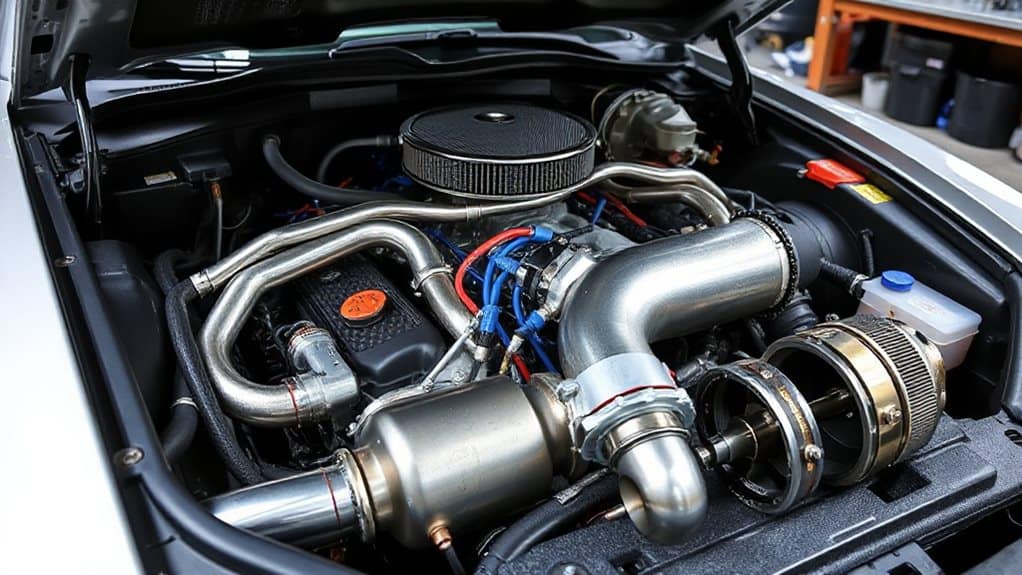
A solid bolt‑on package for a B58, C6, E36, or classic muscle car typically combines intake, exhaust, and tuning upgrades that work together to liberate hidden power without opening the engine. For the B58, a JB4 tuner, cold‑air intake, and upgraded intercooler deliver 475 WHP.
C6 builds benefit from high‑flow catted downpipes, meth injection, and intake tweaks.
E36 owners gain airflow from cold‑air kits, downpipes, and intercooler kits, plus coilovers for handling.
Classic muscle cars see headers, high‑flow exhaust, cold‑air intakes, MSD ignition, and lightweight pulleys for torque and reduced parasitic loss.
Bolt‑On Power Gains: From Modest HP to Turbo‑Boost
Bolt‑on upgrades can lift a street car’s output from a modest increase of a few dozen horsepower to the high‑kilowatt range typical of turbo‑charged machines, and the steps involved are largely the same regardless of the platform. A cold‑air intake or catback pipe may add 20‑30 hp, while full bolt‑ons with E85 can push a Mustang from 427 rwhp to over 500 rwhp.
Ported heads, roller rockers, and milled heads contribute additional gains, and a turbo‑charged LT1 can exceed 480 rwhp, approaching four‑digit power with forced induction. Custom tuning unlocks the full potential of each component. Floor jacks rated for vehicle weight and safety provide essential support when installing those components, making floor jacks a key part of the garage toolkit.
Installing Bolt‑Ons: Tools, Safety & Reversibility
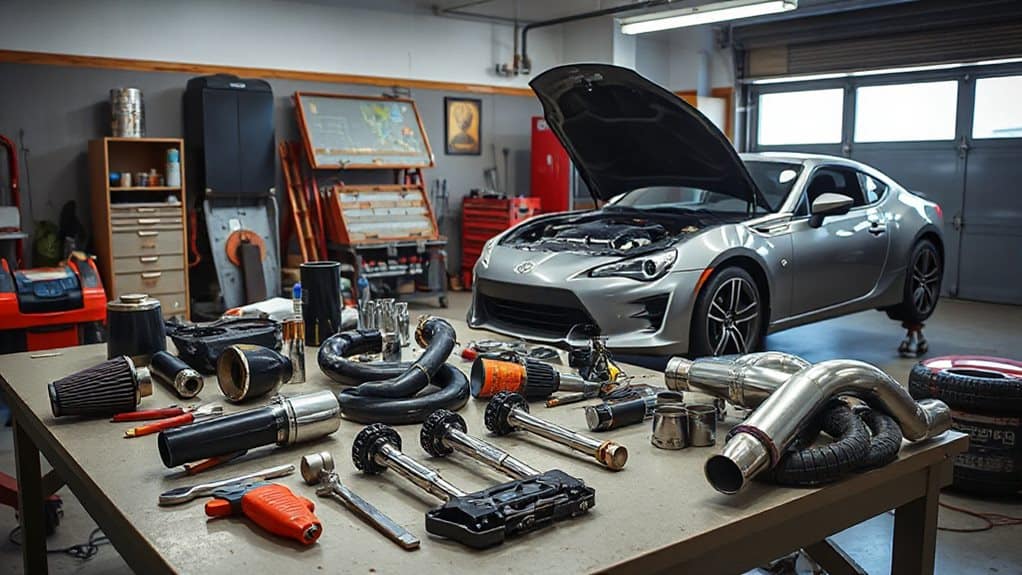
How do you prepare a car for bolt‑on upgrades while keeping safety and future removal in mind? First, clean surfaces, remove existing panels, and measure fit. Use a drill for 3/16‑inch holes, screwdrivers, wrenches, and a pneumatic rivet gun. Align parts loosely, then tighten bolts with washers to avoid tearing. Favor mechanical fasteners like threaded clips for reversibility; avoid permanent adhesives. Also, be prepared to address potential freezing of external drain or discharge lines by increasing ambient temperature and thawing blockages with hot water or a hairdryer to protect nearby components and drains sump pump line.
Bolt‑On Legal & Emissions Checklist
You’ll need to verify that each bolt‑on part meets emissions compliance standards, which means checking the CARB Executive Order (EO) certification and ensuring the part won’t raise pollutants above factory limits.
The emissions test requirements usually involve submitting data to the EPA or CARB for a Certificate of Conformity, and you must keep records of those test results and any calibration changes.
Finally, legal installation documentation—such as the manufacturer’s compliance paperwork and your own installation logs—must be retained to prove the modification complies with the Clean Air Act and avoids tampering violations.
Proper installation and documentation can also help preserve warranty coverage under the Magnuson‑Moss Act by showing that a bolt‑on did not cause a specific failure and was installed correctly, which is central to warranty protection.
Emission Compliance Verification
What you need to know first is that any bolt‑on performance upgrade—whether it’s a cold air intake, exhaust system, or ECU remap—can change a vehicle’s emissions output, so it must be verified against state and federal standards before you can legally drive it. Verify the modification by consulting the EPA’s certification database, checking CARB listings for California, and ensuring the part carries a valid emissions‑compliance label. Keep documentation, such as receipts and test results, ready for inspection.
Emissions Test Requirements
After confirming that a bolt‑on upgrade meets emissions‑compliance standards, the next step is to understand the specific test requirements that apply to your vehicle. In Texas you’ll face annual OBD inspections in Houston or Dallas, and OBD2 monitors must stay active and match OEM values; Texas ignores rear O2 sensors.
New Jersey and Illinois require catalytic‑converter checks, and any bypass triggers failure. Vehicles 1995‑old are exempt, while newer models undergo OBD plus safety checks. Ensure your headers are CARB‑certified and retain the catalytic converter to pass.
Legal Installation Documentation
Where do you start when you need to prove a bolt‑on upgrade complies with the law? Gather receipts, DOT, SAE, or CARB certification labels, and installation manuals. Keep them in a binder for registration, inspection, or police stops. Include state‑specific approvals—CARB for California, local DOT for New York and Massachusetts. Store OEM parts for reversible changes, and document installation steps clearly to avoid fines, failed inspections, or insurance denial.
Common Mistakes to Avoid When Adding Bolt‑Ons
Ever you start adding bolt‑ons, the first thing you must verify is compatibility; mismatched bolt patterns, offsets, center bores, or widths can render wheels unusable, while exhaust manifolds designed for a different engine variant may not line up correctly. Verify lug‑nut types, hand‑tighten bolts before torquing, avoid reusing single‑use washers, and match coilover specs to your car’s market. Skip cheap, untested parts and plan each mod to address a specific performance need, preventing over‑kill and safety risks.
Bolt‑On & Software Tuning: Maximizing Performance
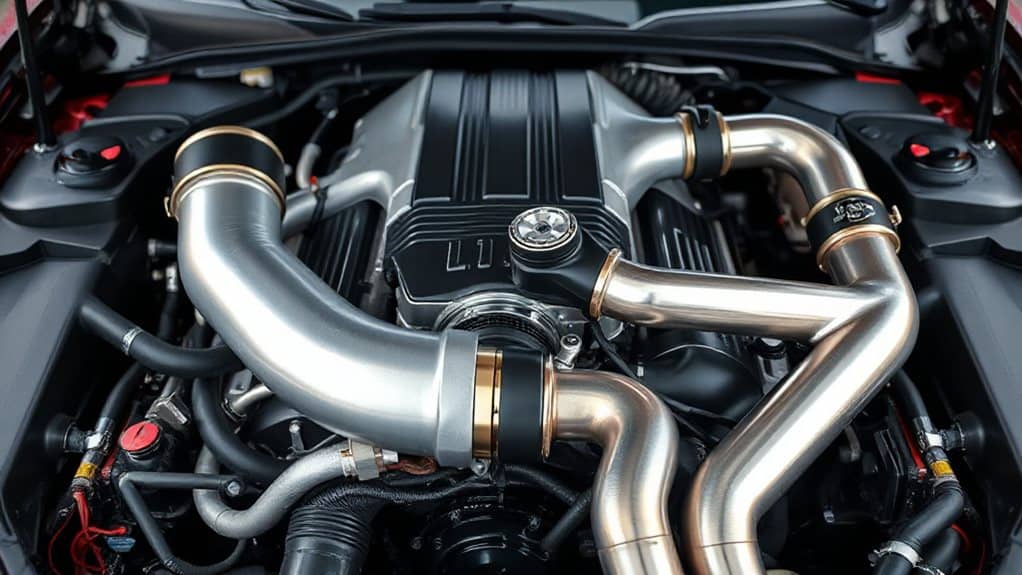
When you’ve confirmed that each bolt‑on fits your vehicle’s specifications, the next step is to pair those hardware upgrades with software tuning to release their full potential.
A proper ECU remap adjusts fuel‑air ratios, ignition timing, and boost pressure to match the new intake, exhaust, or forced‑induction parts.
This synergy maximizes horsepower and torque gains, improves throttle response, and guarantees reliability without damaging the engine.
Wrapping Up
By installing bolt‑ons you’ll enhance power, improve handling, and keep the engine intact, provided you follow proper fit‑check procedures and respect legal limits. Choose components that match your vehicle’s platform, verify compatibility, and use the right tools to avoid damage. Pair hardware upgrades with appropriate software tuning to extract the full benefit. Finally, document each change, retain original parts for reversibility, and stay within emission regulations to ensure a safe, reliable, and compliant build.


