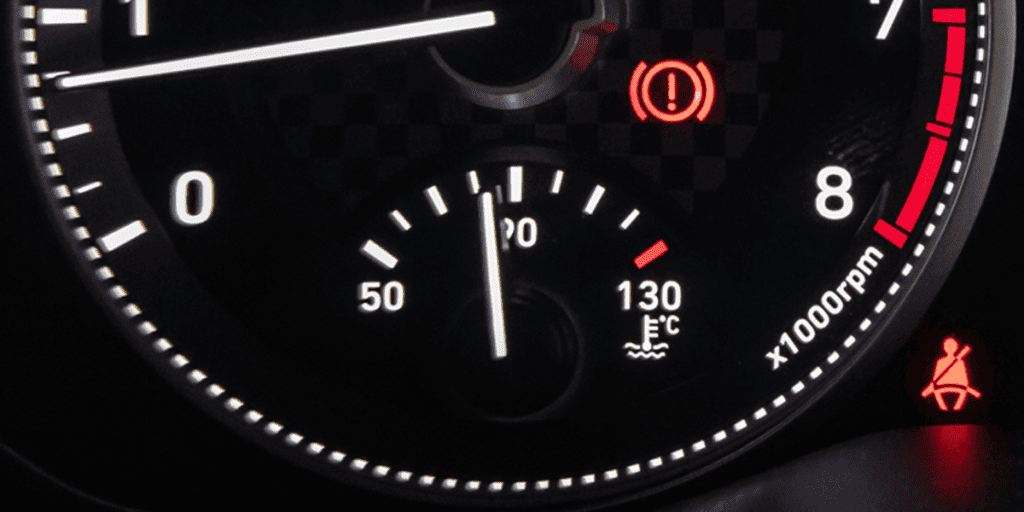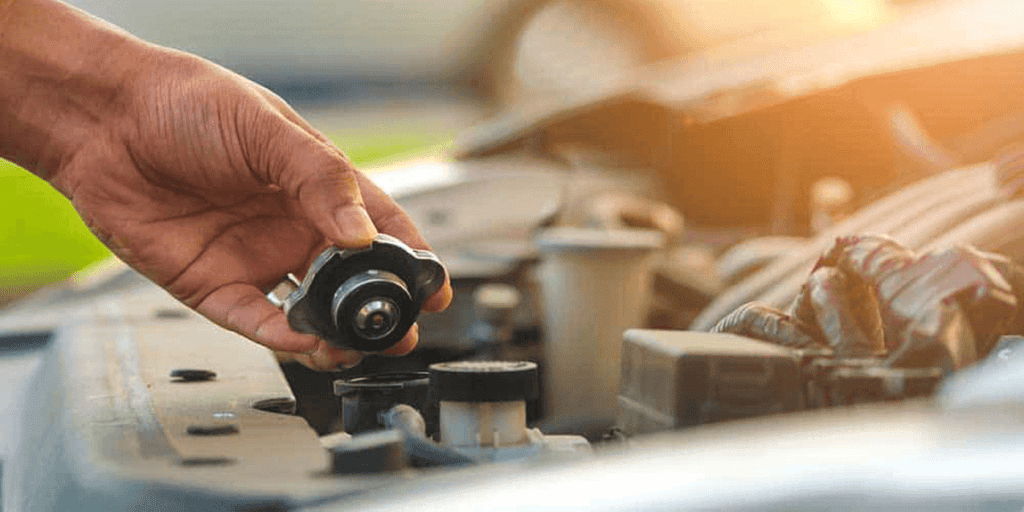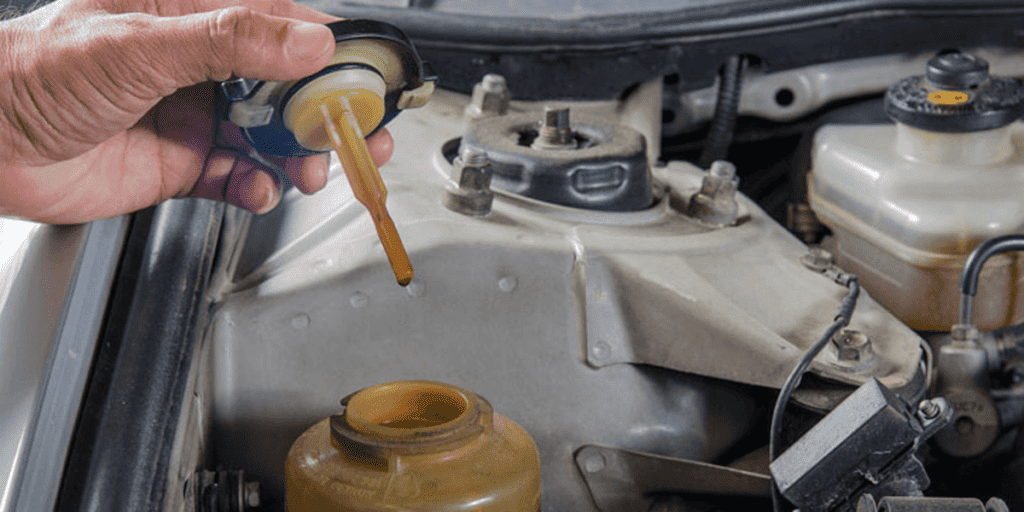
You can add water to coolant only as an emergency fix to prevent overheating, but don’t treat it as a permanent mixture. Use distilled or deionized water if possible; tap or mineral water adds minerals that cause scaling and corrosion and dilute corrosion inhibitors. Wait 30–60 minutes for the system to cool before opening the reservoir, add water slowly to the MAX mark, drive only short distances while monitoring temperature, and replace with a proper 50/50 coolant mix immediately to avoid damage and learn how to restore the system correctly.
Quick Tips
- Yes, distilled or deionized water can be added safely as a short-term emergency top-up to a cooling system.
- Only add water after the engine cools (wait 30–60 minutes) and pour into the reservoir, not a hot radiator cap.
- Use water only to reach the “MAX” mark for short trips to a repair shop; do not run long-term on plain water.
- Avoid tap, bottled, or well water because minerals and impurities cause scaling and corrosion over time.
- Replace with the correct 50–60% antifreeze/water mixture and perform a flush/refill within 24–48 hours.
Short Answer: Can You Safely Add Water to Coolant?
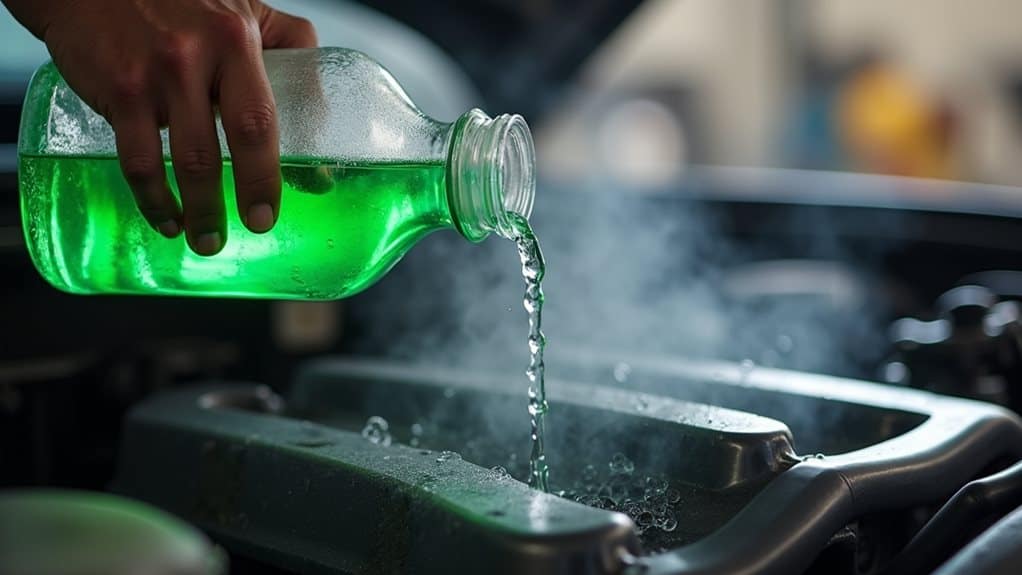
Although you can add water to coolant in an emergency, you should do so only as a short-term fix and replace it with the proper mixture as soon as possible.
You can top up briefly with distilled, deionized, or even tap water, but minerals cause scaling and corrosion.
Keep glycol between 40–60% to maintain freeze and boil protection; flush and restore 50/50 soon.
In an emergency it’s acceptable to top up with water, but remember that mixing water can dilute additives and lead to corrosion. A hidden risk is that low electrical system voltage or poor cooling-system condition can exacerbate problems by affecting sensors and engine idle behavior.
When Adding Water Is an Emergency-Only Solution
If your temperature warning light comes on and the coolant overflow is empty, you can add distilled water as a strictly temporary measure to prevent immediate engine damage and reach a repair facility.
Cool the engine fully before opening the radiator cap, add water slowly to the reservoir or radiator to the “MAX” or brim, and then drive only short distances at reduced speeds while watching the gauge.
Replace the water with a proper 50/50 antifreeze/distilled-water mix within 24–48 hours, flushing the system if water made up more than about 60% of the coolant, because tap or mineral water will cause scaling and remove corrosion inhibitors.
Also inspect for signs of leaks or a failing component, since issues like a broken radiator or faulty hoses can cause coolant loss that adding water won’t fix.
Emergency Overheat Tactics
When your temperature gauge spikes and steam starts to appear, treat adding water as an emergency-only tactic and follow a controlled sequence to reduce immediate risk:
Pull safely to the shoulder.
Shut the engine off.
Turn the heater to maximum and fans to high to draw heat from the block.
Wait at least 30 minutes for the cooling system to drop to a safe handling temperature before attempting to open any caps.
After cooling, stand aside, use a thick cloth, check reservoir levels, add distilled water slowly into the reservoir (not the hot radiator), and verify no leaks or boiling before restarting.
Short-Term Driving Only
For short-term driving after an emergency top-up, treat distilled water as a temporary, controlled fix and plan to drive only the minimum distance needed to reach a safe service location; you’re restoring enough coolant circulation to move the vehicle, not to restore long-term protection.
Use only distilled/deionised water, cool the engine first, limit driving to urgent needs, and flush and refill with correct coolant within seven days.
Which Water to Use When Adding Water to Coolant
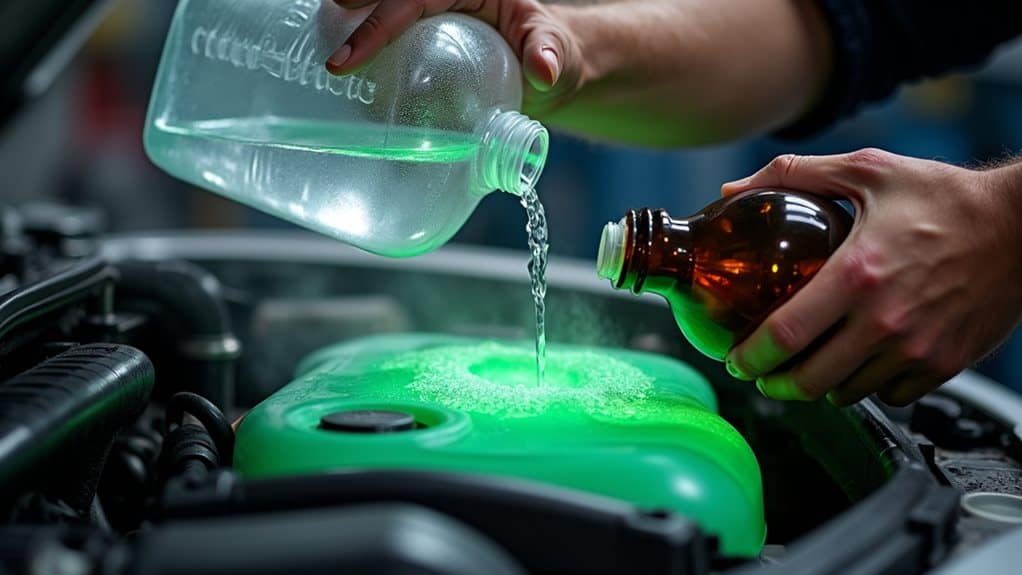
Choosing the right water to mix with coolant matters because dissolved minerals and ions can interfere with corrosion inhibitors, block passages, and reduce heat transfer; distilled water is the recommended option for most vehicles since it contains virtually no minerals, demineralized ions, or impurities that cause scale, while high-grade deionized water is an acceptable alternative if distilled is unavailable because it similarly removes mineral ions through ion exchange.
Use tap water only briefly, avoid bottled or mineral water, and follow manufacturer specs.
Regular monitoring of coolant levels is important because consistent coolant loss can indicate leaks or other cooling system problems.
How Water Changes Freezing and Boiling Protection
When you add more water to coolant, the freezing point rises because water molecules encourage ice formation while reducing the antifreeze molecules that interrupt crystallization, so a 50/50 mix drops freezing from 32°F to about -34°F but diluting below ~40% glycol quickly reduces cold-weather protection.
At the same time, extra water lowers the boiling point—pure water boils at 212°F while a typical 50/50 coolant boils nearer 265°F under system pressure—so adding water makes boiling (and localized vapor formation) more likely under high engine loads.
That tradeoff means you must balance seasonal risks: in winter keep enough antifreeze concentration to prevent freeze-up and corrosion, and in summer avoid over-diluting so the system can resist boiling while retaining adequate heat-transfer efficiency.
A clogged catalytic converter can also contribute to engine overheating by creating exhaust back pressure that reduces cooling efficiency and increases engine load, potentially worsening coolant boiling issues when combined with diluted antifreeze; see reduced engine power for more.
Freezing Point Rise
During cold weather, you need to understand how adding water changes a coolant’s freezing and boiling protection, because even small shifts in composition have large thermal consequences. Diluting glycol raises freezing points: 50/50 hits about -35°F, 40/60 about -12°F, while over 70% water risks freeze near 10–15°F. Use distilled water, follow 50/50 or 60/40 ratios for colder climates.
Boiling Point Drop
You already looked at how water affects freeze protection; now consider how it alters boiling behavior and overall cooling performance.
Adding water lowers boiling elevation from concentrated antifreeze values, reducing high-temperature margin.
Mixtures cut heat capacity and thermal conductivity, and raise viscosity, so pumps must work harder to maintain flow.
Under lower pressure the boiling point drops further, increasing vapor and overheating risk.
Seasonal Risk Tradeoffs
Although adding water to coolant can improve heat transfer, it also shifts the balance between freeze protection and boil resistance in ways you need to manage seasonally.
More water raises the freezing point—60/40 protects to about -60°F, but 40/60 only to roughly -10°–-20°F—and lowers boiling elevation, reducing overheating margin.
Use distilled water only for emergency top-offs and restore 50–60% antifreeze.
Wait First: Safety Steps Before Opening a Hot System
Before you touch the radiator or reservoir cap, let the engine sit until the cooling system has fully depressurized and cooled—typically at least 30 minutes for normal operation and up to 60 minutes after severe overheating—because hot coolant under pressure can erupt and cause serious burns.
Test by feeling the upper radiator hose for heat and firmness, watch for steam or hissing, and don’t open caps until all are cool.
If the engine stalled or shut off due to overheating, be aware that internal damage such as a blown head gasket or cracked block can make restarting unsafe and requires inspection.
Step-by-Step: Adding Water in an Emergency
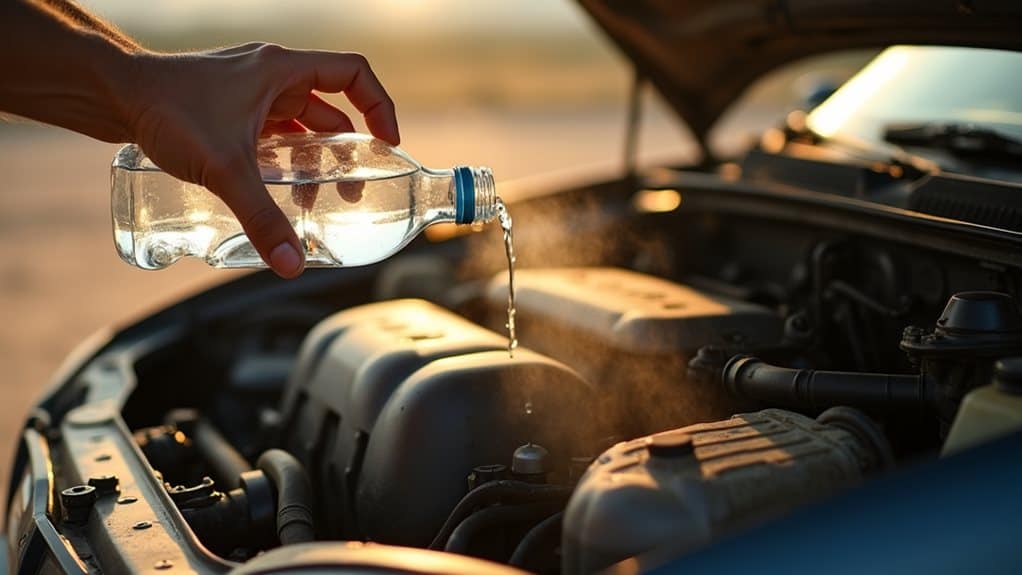
Before you open the coolant reservoir, let the engine cool completely to avoid steam burns and sudden pressure release; only remove the cap when the temperature has returned to near ambient.
Use distilled water whenever you need an emergency top-up because it lacks minerals that cause scaling and corrosion; if distilled isn’t available, deionized or bottled purified water are acceptable short-term substitutes, while tap, mineral, or well water should be avoided.
Add water slowly with a funnel until the reservoir reaches the “Full” or “MAX” line, then replace the cap securely and seek a proper coolant refill as soon as possible.
If you notice persistent dripping from a pump weep hole, stop driving and have the cooling system inspected to prevent further damage.
Wait Until Engine Cools
When the engine overheats, shut it off and park the vehicle immediately, then give the cooling system time to depressurize and drop in temperature; this reduces the risk of hot coolant or steam bursting out when you open the radiator or coolant cap.
Turn the engine off, set Park or Neutral, engage the brake, remove keys, and wait 30–60 minutes.
Check hood warmth cautiously before touching.
Use Distilled Water Only
If you have to add liquid to a hot cooling system in an emergency, use distilled water only, because it’s chemically neutral and won’t leave mineral deposits that reduce heat transfer.
Distilled water’s low conductivity and lack of dissolved salts make it the safest diluent for concentrated antifreeze, while tap, bottled, or natural waters contain minerals and contaminants that can cause scale, corrosion, and impaired cooling.
Use distilled, mix 50/50, flush soon.
How Long and How Far You Can Drive on Water
A short drive using only water in the cooling system can get you to safety, but it’s strictly a temporary measure and the limits depend on several variables you should understand.
You can usually drive a few miles to a few hundred miles in emergencies, often 10–50 miles safely; heat, freezing conditions, engine type, and water quality cut that range, so monitor temperature and replace coolant immediately.
How Water Causes Corrosion, Scaling, and Damage
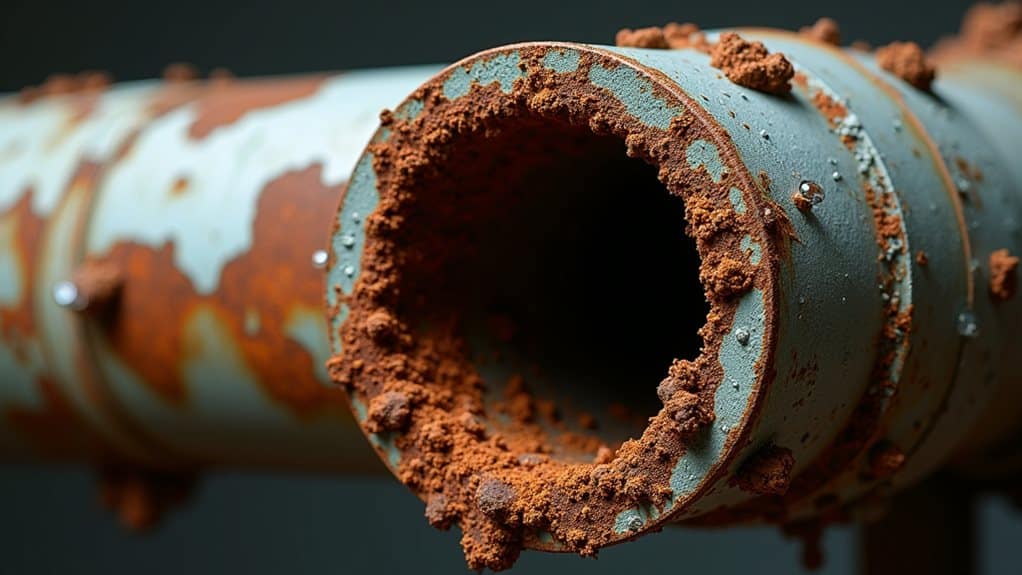
Because plain water contains dissolved oxygen, salts, and microbes that actively attack metal and foul heat-transfer surfaces, you need to understand exactly how it promotes corrosion and scaling before you consider using it in a cooling system.
Dissolved O₂ and chlorides drive electrochemical and pitting corrosion, microbes create underdeposit attack, and bicarbonates plus high TDS precipitate insulating calcium scale that reduces heat transfer and flow.
Flush and Refill: Restoring Your Cooling System After Water Use
When you’ve run water through a cooling system—intentionally or accidentally—you’ll need to perform a controlled flush and refill to prevent corrosion, scale buildup, and loss of heat-transfer efficiency; this process restores correct coolant chemistry and helps reveal any hidden leaks or damage.
Verify cool engine, drain fully, flush with hose until clear, run engine with heater, repeat, then refill slowly to specified level.
Choosing and Maintaining the Correct Coolant Mix
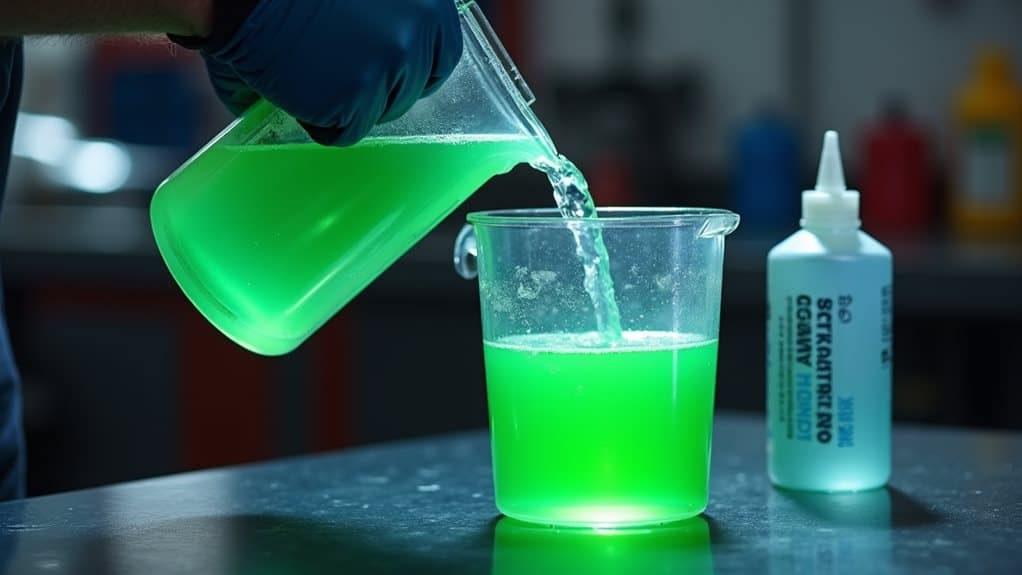
While choosing and maintaining the correct coolant mix may seem straightforward, you need to follow precise steps to protect your engine and cooling components from corrosion, freezing, and overheating.
Always premix concentrate into distilled or deionized water, never add water to concentrate.
Use clean containers, agitate 30 seconds, label ratio and date.
Adjust over-concentration with low-strength premix and retest until uniform.
Wrapping Up
You can add water to coolant only as a short-term, emergency fix; don’t make it a permanent practice. Use clean distilled water when possible, avoid opening a hot system, and drive minimally at moderate speeds to reach a repair shop. Water reduces freeze and boil protection and increases corrosion risk, so flush and refill with the correct antifreeze/water mix promptly. Maintain the proper coolant concentration and check hoses, clamps, and the radiator cap for leaks or damage.