You should schedule routine maintenance for your EV every one to two years, with inspections of the battery, cooling system, electrical components, and software updates. Tire checks and rotations are recommended every 7,500 miles, while brake system assessments occur around 50,000 to 70,000 miles due to regenerative braking. Regularly monitor and service the battery, especially after initial years, and conduct safety checks on high-voltage systems. Continuing will help you understand specific service intervals and maintenance tips.
Quick Tips
- EVs typically require maintenance every two years, less often than traditional gas vehicles.
- Tire rotations are recommended every 7,500 miles or annually.
- Brake system inspections and fluid checks are advised every 2 years or as needed.
- Battery cooling systems should be inspected roughly every 8 years.
- Routine safety and high-voltage system checks are recommended every 1-2 years.
How Often Does Your EV Need Maintenance?
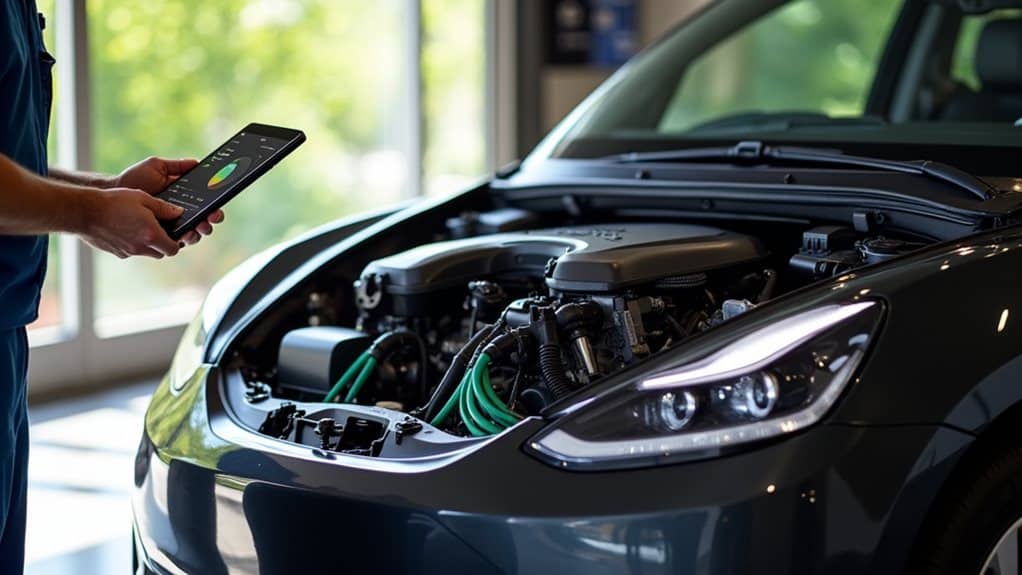
Most electric vehicles (EVs) require less frequent maintenance than traditional gasoline cars, typically every two years. Routine tasks include inspecting the brake system, checking battery life, and monitoring fluids.
You should also perform inspections to guarantee components like tire condition and brake fluid levels are maintained. These measures help optimize performance and extend the vehicle’s lifespan. Acetone is flammable and can pose fire hazards if not handled or disposed of properly, so always follow safe disposal practices when dealing with acetone.
Key Routine Services for EVs
Regular maintenance of key components is essential to keep your electric vehicle (EV) operating efficiently and safely.
You should perform tire checks regularly and rotate tires every 7,500 miles.
Brake fluid needs testing every 2 to 5 years, and the cabin air filter should be replaced annually.
Cooling systems require inspections every 5 to 10 years, while software updates keep your EV’s performance current without dealership visits.
Consider using a phosphoric acid solution on preliminary surfaces for metal components to prevent corrosion during longer-term storage or repairs.
When Should You Replace Your EV Tires?
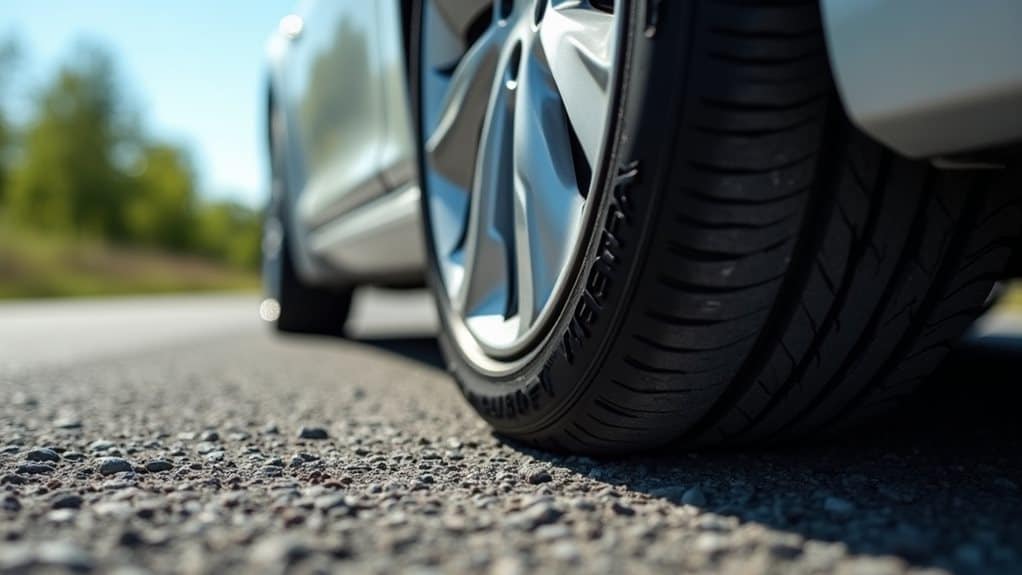
Knowing when to replace your EV tires is essential for maintaining safety and ideal performance. Tire replacement depends on tire wear, which should be checked through regular tire inspection for tread depth and sidewall damage.
Typically, EV tires need replacement every 20,000 to 40,000 miles. However, heavier weight and driving habits can shorten tire lifespan, requiring earlier replacement. One critical mistake during brake line double flaring causes catastrophic failure—learn the proper technique before attempting this essential repair, and understand the risks of improper brake line flaring.
How Often Do EV Brakes and Regenerative Systems Need Servicing?
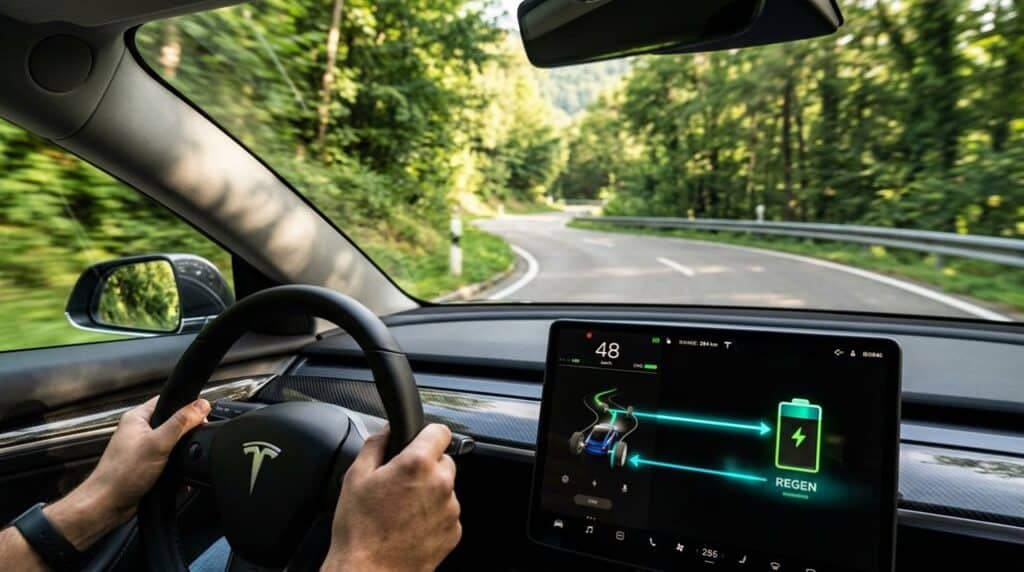
Since regenerative braking considerably reduces wear on traditional brake components, EV brakes usually need less servicing than conventional cars.
Brake pads last around 50,000 to 70,000 miles, with minimal brake system maintenance.
Brake fluid should be checked every two years.
Regular inspections guarantee the brake system functions properly, even though brake pads and fluid require less frequent replacement.
DTE systems can also help drivers monitor remaining range during trips by estimating Distance to Empty based on current energy consumption.
How Frequently Should You Check or Service the EV Battery?
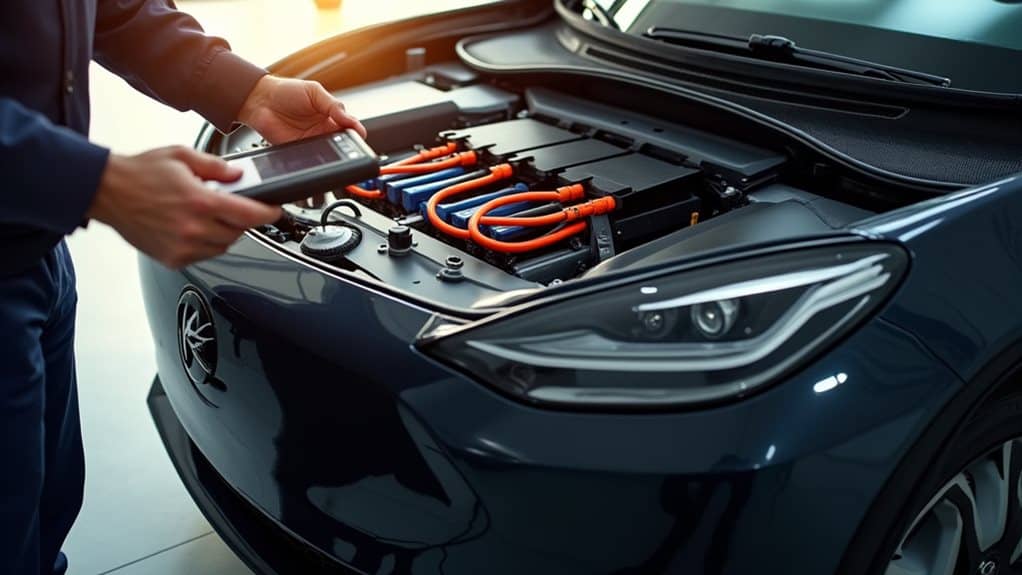
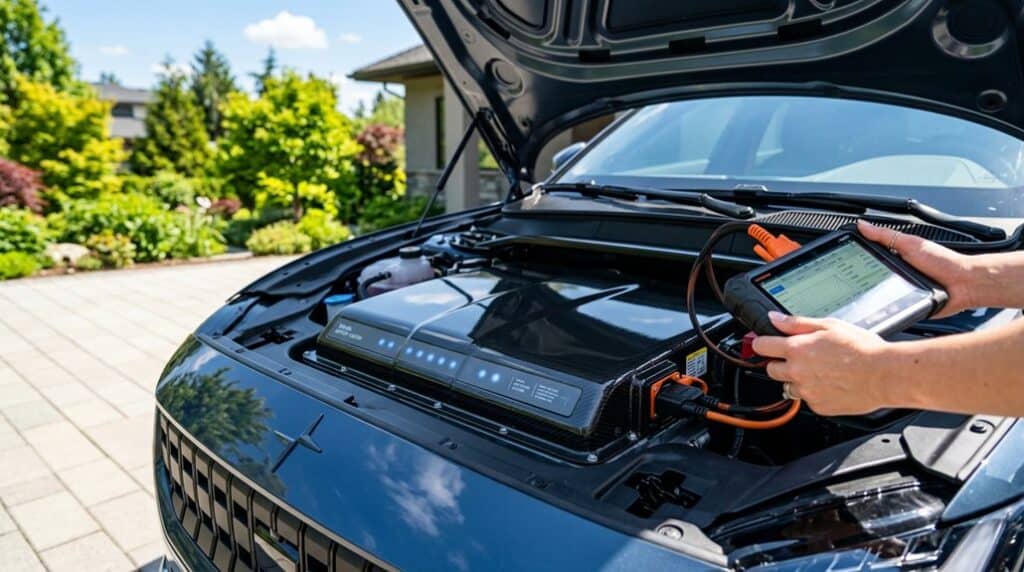
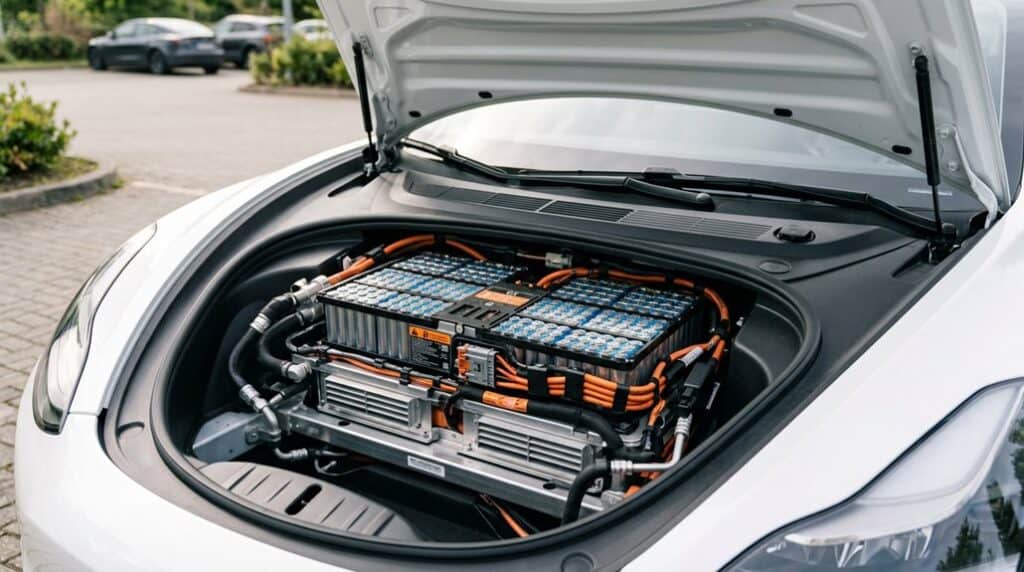
You should check your EV battery’s cooling system and overall condition every 1 to 2 years to prevent overheating and guarantee peak performance.
Monitoring battery capacity and performance regularly helps identify degradation early, especially since capacity loss below 75% may be covered by warranty.
Additionally, practicing proper charging habits, like avoiding frequent fast charging, can extend your battery’s lifespan and reduce the need for more extensive servicing.
Inspect exhaust hangers and mounting points for rust or wear to avoid low-hanging muffler issues and potential exhaust leaks.
Battery Cooling System Checks
The cooling system of an electric vehicle (EV) battery is essential for maintaining ideal performance and longevity, making regular inspections a critical aspect of vehicle maintenance.
You should check the coolant level during routine service every 1 to 2 years.
Additionally, cooling system components, like coolant pumps and hoses, need inspection or replacement around every 8 years to guarantee peak battery health and prevent overheating.
Capacity and Performance Monitoring
How often should you check your EV battery’s capacity and performance? Typically, manufacturers recommend annual inspections, especially after the first few years.
Regular diagnostics, often via dealership tools, help monitor capacity and overall health.
Checking battery temperature and updating software also aid performance.
These practices guarantee the battery maintains ideal capacity and prevents unexpected performance issues over time.
Proper Charging Practices
Maintaining proper charging habits is essential for preserving your electric vehicle’s battery health and ensuring peak performance over time.
Check the battery and cooling system during routine maintenance every 1 to 2 years, and monitor temperature to avoid extreme heat or cold.
Keeping the charge between 20% and 80%, and using Level 2 charging, helps sustain capacity and reduces wear.
Do Electric Motors Require Regular Maintenance?
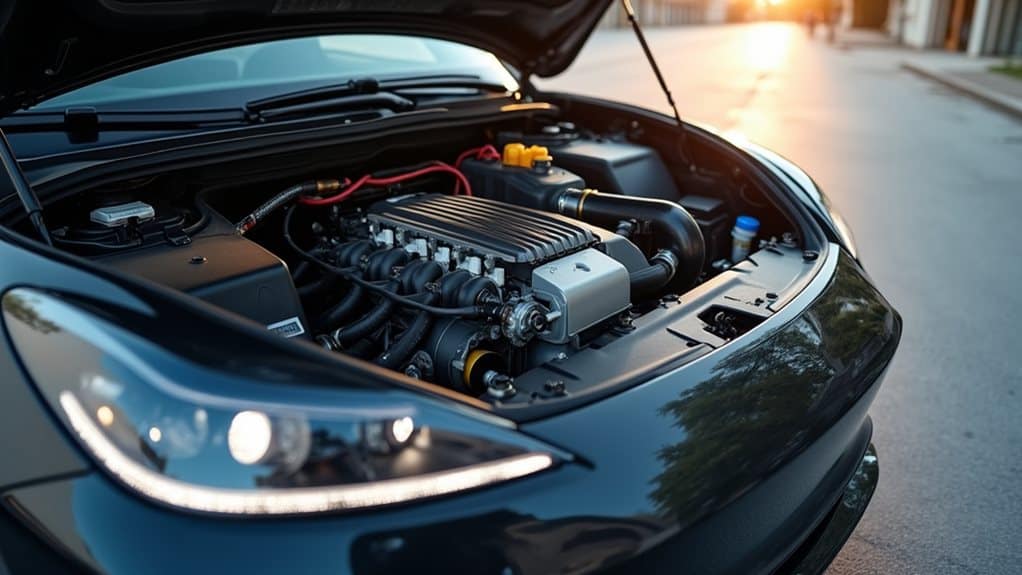
Electric motors in EVs are designed to be highly durable and require minimal regular maintenance. They’ve fewer moving parts than internal combustion engines, which reduces mechanical failures.
Cooling systems generally need little attention; coolant pumps may only require servicing every few years. Hydraulic lifters are not used in EV powertrains, so concerns like valve lash adjustment and lifter pump-up are irrelevant to electric motor maintenance.
Safety and Emergency Checks for EV Owners
Regular safety checks are crucial for EV owners, including inspecting high-voltage system components and understanding emergency procedures.
You should familiarize yourself with manufacturer guides and recognize the orange markings on high-voltage cables, which indicate danger zones.
Additionally, routine maintenance of the cooling system and staying updated on safety recalls help guarantee your vehicle remains safe and reliable in emergency situations.
High-Voltage System Safety
How often should you check the high-voltage system of your electric vehicle (EV) to guarantee safety? Regular safety checks, recommended every 1-2 years at certified service centers, assure system integrity.
These checks verify safety features that prevent electric hazards, confirming that high-voltage components meet safety standards. Proper maintenance minimizes risks associated with high-voltage systems and enhances overall vehicle safety.
Emergency Response Procedures
Understanding the importance of proper emergency response procedures is essential for anyone involved with electric vehicles (EVs), whether as an owner, responder, or first aider.
High-voltage safety is critical; always look for orange-insulated high-voltage cables and follow safety procedures.
To disconnect the battery safely, use designated cutoff switches, avoiding contact with energized components to prevent electric shock or fire.
EV Maintenance vs. Gas Vehicles: What’s the Difference?
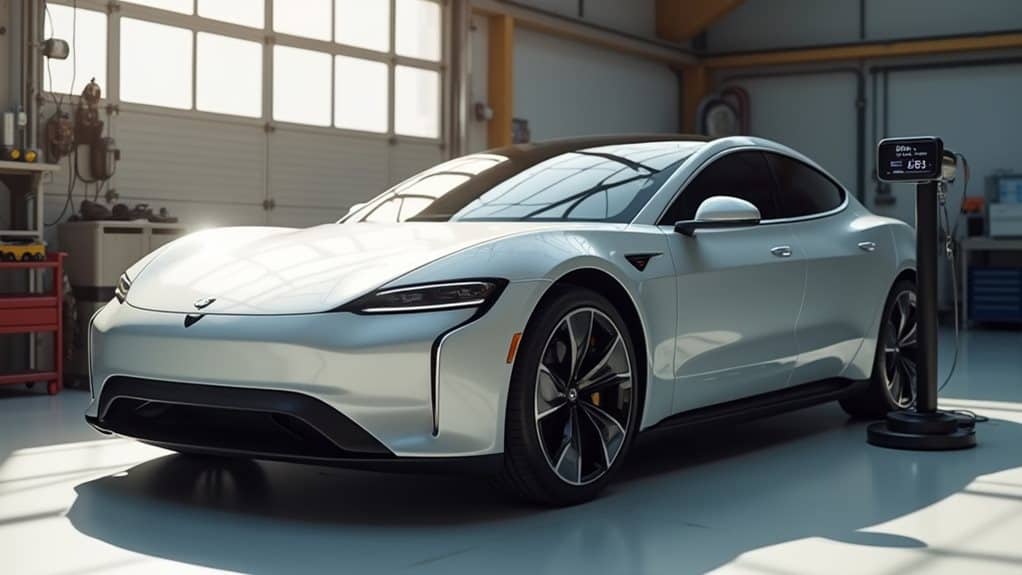
Electric vehicles (EVs) generally require less maintenance than gas-powered cars because of their simpler systems and fewer moving parts.
Unlike internal combustion engine vehicles, EVs need minimal routine servicing, mainly tire checks and battery inspections.
Brake pads last longer due to regenerative braking, and fluids like engine oil are unnecessary, reducing overall maintenance tasks and costs.
Wrapping up
Regular maintenance for your electric vehicle involves scheduled checks of tires, brakes, batteries, and electric motor components. Typically, tires should be inspected every 6,000 to 8,000 miles or when worn, while brake systems and regenerative braking need assessment annually or as signs of wear appear. Battery health requires periodic diagnostics, often yearly, to guarantee peak performance. Unlike gas vehicles, EVs demand less fluid changes but still require professional inspections to maintain safety and efficiency.