To properly use engine braking on a steep descent, you should shift into a lower gear before starting your descent, ideally second gear under 50 mph or first gear below 30 mph, to increase resistance. Maintain steady pressure on the accelerator and avoid constant braking, instead relying on the engine’s compression to slow the vehicle. Release the brake periodically to prevent overheating, then reapply gently. Continuing will provide a detailed understanding of managing descents safely and efficiently.
Quick Tips
- Shift to a lower gear before starting the descent to utilize engine resistance.
- Downshift gradually to maintain control and prevent engine over-revving.
- Use engine braking in combination with light, controlled brake applications.
- Release brakes periodically to cool them and avoid overheating.
- Monitor vehicle speed and engine sound to adjust gear shifts proactively.
Why Brake Overheating Is Dangerous and How to Prevent It
When brakes overheat, their ability to slow or stop a vehicle diminishes considerably, creating a serious safety risk. This phenomenon, called brake fade, occurs when excessive heat reduces brake effectiveness.
To prevent brake fade, avoid continuous braking on steep descents. Instead, use controlled, intermittent braking and engine braking to manage heat buildup and maintain braking power. Regular checks of your vehicle’s ventilation and HVAC components can help ensure optimal airflow and cooling for prolonged downhill driving, especially by inspecting the cabin air filter and vents.
How to Choose the Right Gear for Steep Hills
Choosing the correct gear before starting a steep hill descent is essential for maintaining control and preventing excessive brake wear.
You should shift into a lower gear—such as second gear for descents under 50 mph or first gear for steeper grades below 30 mph—before starting.
This guarantees the engine provides resistance, helping you control your speed safely and effectively.
Regular maintenance of the clutch area keeps engine braking reliable and prevents unexpected failures clutch maintenance.
How to Use Engine Braking Effectively in Automatic Vehicles
To use engine braking effectively in automatic vehicles, you need to manually select a lower gear before beginning your descent.
Relying solely on the “Drive” mode can lead to excessive brake use and potential overheating.
Engage engine braking by downshifting to 2nd or 1st gear, keeping your speed steady and controlled without overusing the brake pedal.
Always inspect brake condition and related systems before a long descent to ensure safe operation.
When and How to Shift Gears During a Downhill
Knowing the appropriate moments to shift gears during a downhill run is essential for maintaining control and preventing brake overheating.
You should shift into a lower gear before starting the descent, especially if you’re approaching a steep hill.
Shift on the fly smoothly, choosing 2nd or 1st gear depending on the hill’s steepness.
Then return to higher gears when safe.
Consider using engine braking to reduce reliance on your brakes during long descents.
Tips for Combining Engine and Controlled Braking for Safety
To guarantee safe and effective control during a steep descent, you need to coordinate engine braking with controlled braking. This involves downshifting to a lower gear before gently applying the brakes, which helps maintain a steady speed without overloading the braking system.
Synchronize Brake and Engine
Effectively synchronizing engine braking with controlled braking is essential for maintaining safety on steep descents.
You should gradually downshift before applying light, steady brake pressure, using engine braking first to reduce speed.
Release brakes periodically to cool them, then reapply gently, ensuring smooth shifts and consistent control.
This coordination helps prevent brake fade and maintains ideal vehicle response.
Maintain Steady Control
Maintaining steady control during a steep descent requires careful coordination between engine braking and controlled braking techniques.
You should use lower gears, like 1st or 2nd, to regulate speed without over-relying on brakes.
Applying short, controlled bursts of brake pressure, then releasing, helps prevent overheating.
Continuously monitor your descent, adjusting engine and brake input to keep your speed consistent and safe.
Common Mistakes to Avoid When Engine Braking on Steep Slopes
Relying solely on your vehicle’s brakes during a steep descent can lead to serious problems, such as overheating and brake failure. Avoid excessive braking that wears down brake pads quickly.
Instead, don’t shift into too low a gear too suddenly, which risks engine over-revving. Properly managing engine speed and terrain awareness prevents damage and maintains control. In some cases, vehicles may enter limp mode to protect the transmission, so be aware of symptoms and safe recovery steps.
How to Monitor Your Speed and Vehicle Response on Downhill Roads
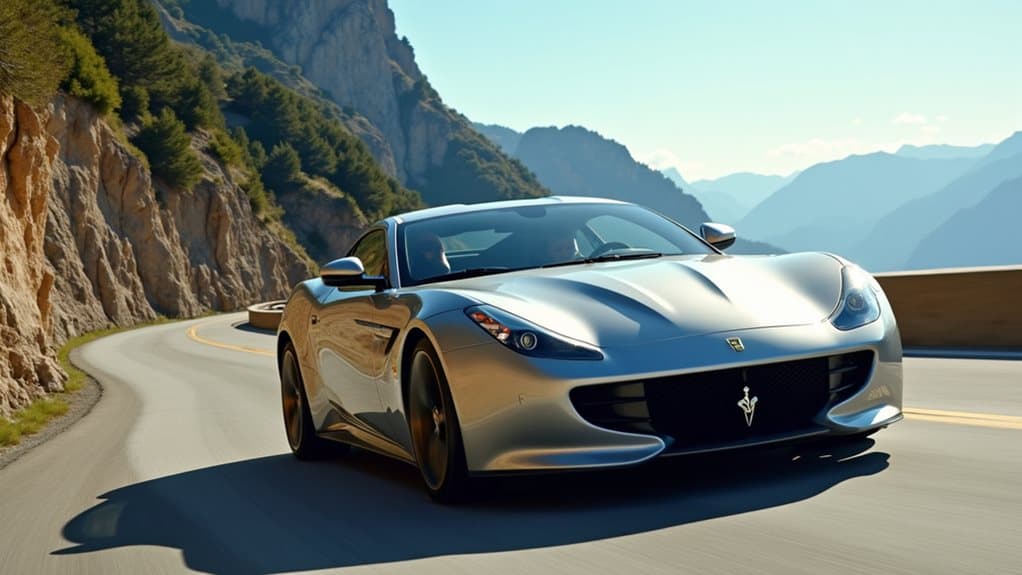
As you descend, regularly check your speed with the vehicle’s speedometer to make certain it stays within safe limits, especially when using engine braking.
Pay close attention to how your vehicle responds—if it accelerates or decelerates unexpectedly, adjust your gear selection or braking pressure accordingly.
Additionally, monitor changes in road conditions and terrain, making timely modifications to your speed and braking techniques to maintain control throughout the descent.
If your vehicle has been exposed to flooding or deep water recently, inspect for wet spark plugs and other water-related damage before relying on engine braking on steep descents.
Observe Vehicle Behavior
When descending a steep hill, it’s essential to actively monitor how your vehicle responds to engine braking and your overall speed.
Observe changes in engine sound and RPM to gauge control. Watch how the vehicle gradually decelerates, ensuring it doesn’t stall or rev excessively.
Keep an eye on road conditions and vehicle reactions to maintain safe, consistent descent without over-relying on brakes.
Adjust Brake Pressure
Adjusting brake pressure effectively on a downhill road involves continuous monitoring of your vehicle’s speed and response.
You should adjust brake pressure gradually, applying light, intermittent force rather than constant pressure.
Watch your vehicle’s response—if it accelerates or brake temperature rises, ease off and rely more on engine braking.
Maintaining control depends on precise, timely adjustments.
Monitor Speed Consistently
How can you guarantee you’re maintaining the proper speed and vehicle response on a downhill road? Regularly monitor your vehicle’s speedometer and observe engine RPMs to verify using engine braking effectively.
Adjust gear and braking pressure based on road conditions, especially when approaching sharp turns.
Always keep a visual scan ahead to anticipate terrain changes and apply the brakes smoothly when needed.
Maintaining Your Vehicle for Safe Hill Descents
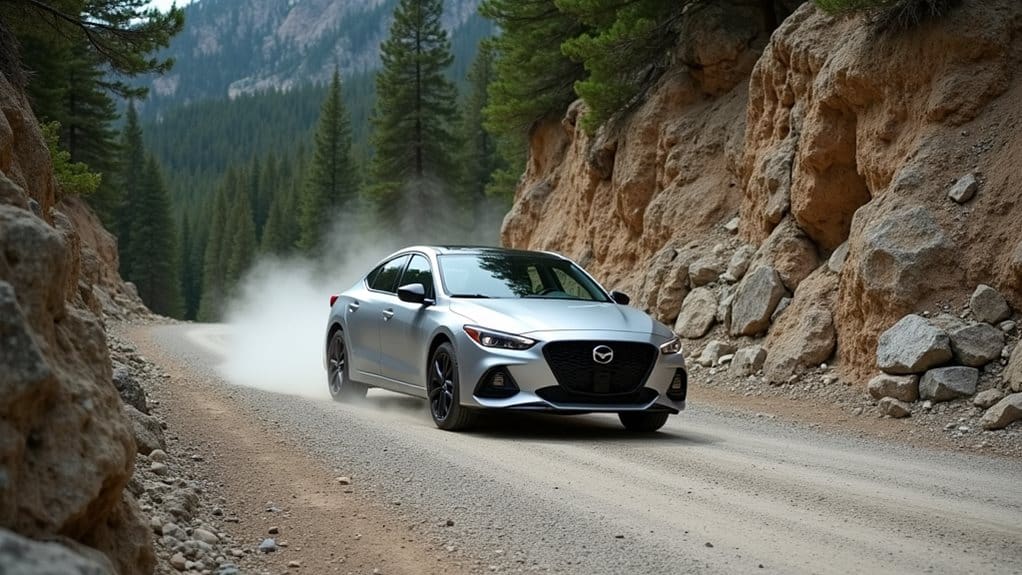
Maintaining your vehicle properly is essential for guaranteeing safety during steep hill descents, especially when relying on engine braking. Regularly inspect and maintain brakes and tires, and keep transmission fluid at proper levels for smooth gear shifts.
Use the brake pedal to maintain control, confirming the engine is well-tuned and practicing gradual descents to build confidence and ensure safety.
Practice Tips: Mastering Engine Braking on Different Terrain
Practicing engine braking on different terrains is essential to gaining confidence and developing effective control.
You should start by gradually shifting to lower gears on gentle slopes to observe how engine braking slows your vehicle smoothly.
Experiment with gravel or dirt to see how surface traction affects deceleration.
Consistent RPM and combining light braking optimize control on steep descents.
Wrapping up
Properly using engine braking on steep descents requires selecting the correct gear, avoiding excessive brake use, and shifting smoothly to maintain control and prevent brake overheating. Monitoring your speed and vehicle response is essential, as is combining engine braking with controlled, gradual braking. Regular vehicle maintenance guarantees peak performance. Practice on different terrains builds confidence and skill. Follow these guidelines carefully to promote safety, minimize wear on your brakes, and descend slopes efficiently and responsibly.