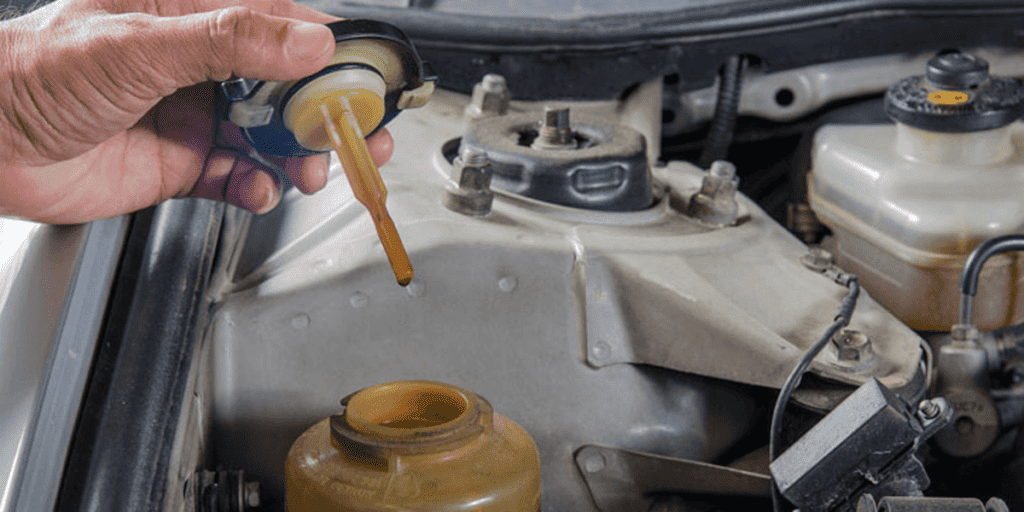
A bad ground strap can cause significant electrical problems in your vehicle because it creates high resistance in the grounding circuit, disrupting normal current flow. This can lead to flickering lights, sensor errors, engine misfires, or even a no-start condition. Since the ground strap connects critical components like the engine, battery, and chassis, any faults can cause intermittent malfunctions or damage electronic modules. For a more detailed understanding of how to diagnose and fix these issues, continue exploring the topic further.
Quick Tips
- A bad ground strap increases electrical resistance, leading to voltage fluctuations and unstable electrical systems.
- Corroded or broken ground straps can cause flickering lights and malfunctioning electronic components.
- Poor grounding hampers the flow of current to essential parts like the starter motor, potentially preventing engine startup.
- Faulty ground straps may trigger sensor errors and cause electronic modules to malfunction.
- Ignoring a bad ground strap can lead to long-term electrical damage and costly repairs.
What Is an Engine Ground Strap and Why Is It Important?

An engine ground strap is an essential component of your vehicle’s electrical system, serving as the direct conductive link between the engine and the negative terminal of the battery or chassis.
It provides a vital electrical path, ensuring proper engine ground.
A faulty ground strap can cause electrical problems, disrupting circuit integrity and affecting vehicle operation and safety.
Regular inspections can prevent issues caused by loose or corroded wires, which may lead to engine electrical failures if left unaddressed.
How Can You Tell if Your Ground Strap Is Bad?
You can often identify a bad ground strap through electrical problems like dim or flickering lights and malfunctioning components such as the radio or power windows.
A poor ground connection causes these issues. Using a multimeter to check voltage drops or inspecting for corrosion, frayed wires, or broken straps at connection points helps confirm if the ground strap is bad.
Regular inspection of grounding points on the engine block and chassis can prevent many of these electrical problems.
Where Are Ground Straps Located in Your Vehicle?
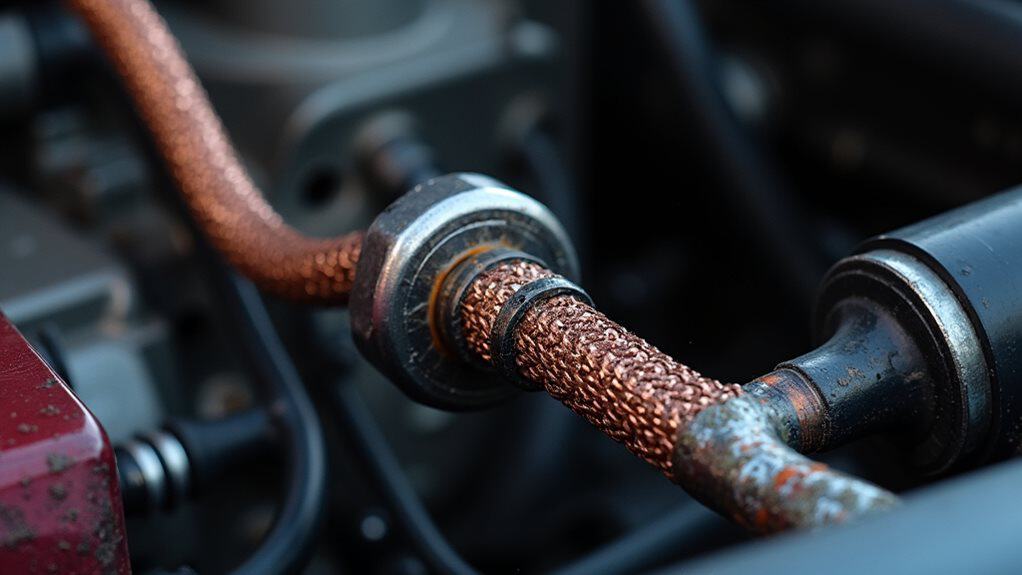
Ground straps are usually located in the engine bay, serving as essential links between the engine and the vehicle’s chassis or battery to guarantee proper electrical grounding.
You’ll find the main ground strap running from the negative battery terminal to the engine block or starter bolt.
Additional straps connect engine components to the chassis, ensuring consistent electrical flow throughout the vehicle.
Using phosphoric acid treatments on preliminary surfaces can help prevent corrosion where straps attach, improving long-term grounding reliability.
How Does a Faulty Ground Strap Affect Your Electrical System?
When a ground strap becomes faulty, it can cause significant disruptions in your vehicle’s electrical system by creating inconsistent voltage levels.
A faulty ground increases electrical resistance, leading to flickering lights, error codes, and malfunctioning components.
This poor grounding hampers communication between sensors and modules, ultimately destabilizing your vehicle’s electrical system and impairing overall performance.
Ensure you inspect and repair grounding points before mounting components to solid structures like wall studs to prevent further electrical issues.
Can a Bad Ground Strap Cause Your Car Not to Start?
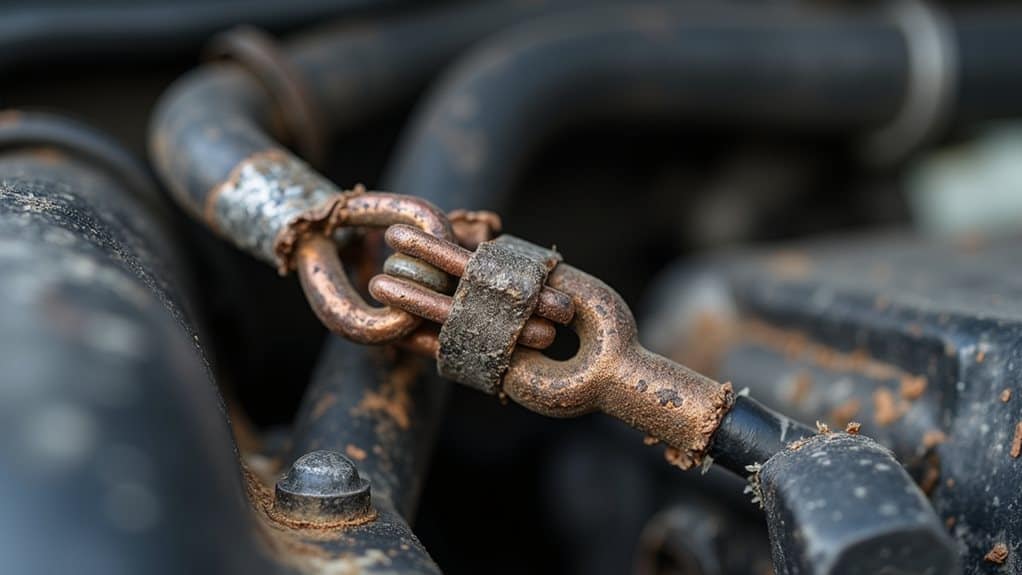
A bad ground strap can prevent your car from starting because it disrupts the electrical circuit needed to power the starter motor.
Without a solid ground connection, the flow of current is hindered, making it difficult or impossible for the engine to turn over.
Troubleshooting this issue involves inspecting the ground strap for damage or corrosion and ensuring it’s properly connected to restore reliable starting performance.
Regular inspections and cleaning can help prevent related electrical issues by avoiding corrosion on terminals that impair connections.
No Ground, No Start
In many cases, a faulty or disconnected ground strap can prevent your vehicle from starting altogether. Without a proper ground, the electrical circuit remains incomplete, causing a no-start condition.
This can disrupt the flow of current to the starter motor, leading to electrical problems. Inspecting the ground strap for corrosion, damage, or looseness is essential to restore proper engine starting.
Troubleshooting Delays
Troubleshooting starting issues can become complicated when a faulty ground strap is involved because it often mimics other electrical problems.
Broken ground connections can cause troubleshooting delays, as they may appear as unrelated issues.
A broken ground can lead to inconsistent starting problems, false error codes, and difficulty pinpointing the root cause, prolonging the repair process.
Are Ground Straps Linked to Head Gasket or Engine Damage?
Ground straps play an essential role in maintaining proper electrical grounding in your vehicle’s engine system. Their condition can influence engine health in several ways.
A faulty ground strap can cause electrical corrosion, which may weaken connections affecting the head gasket’s integrity. While not directly causing damage, poor grounding conditions can contribute to head gasket failure and engine issues over time. Intermittent stalling in your Silverado, often caused by failing alternators or corroded grounds, can signal underlying electrical or fuel problems that demand immediate diagnosis.
How to Diagnose Ground Strap Problems With Simple Tools
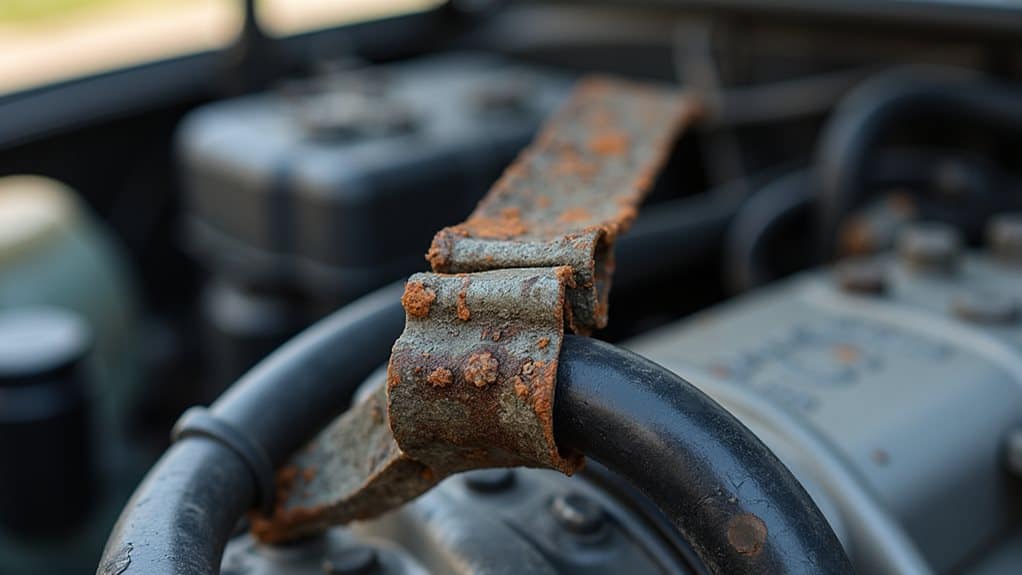
To diagnose ground strap problems, start with a visual inspection to check for corrosion, fraying, or breaks at connection points, especially near the valve covers or starter bolt.
Use a multimeter to measure voltage between the battery negative terminal and the engine or chassis ground; a reading above 0.1 volts suggests a poor connection.
Additionally, perform a continuity test with the multimeter to confirm the ground strap provides a complete electrical path, and clean or replace it if you find signs of deterioration.
Visual Inspection Techniques
Performing a visual inspection of ground straps is a straightforward yet essential step in diagnosing electrical issues in your vehicle. Use a flashlight to check for corrosion, rust, or dirt buildup that can weaken the ground connection.
Look for frayed, cracked, or broken straps, and make certain they’re securely bolted at both the engine and chassis, free of deterioration.
Using Multimeter Effectively
Using a multimeter correctly is essential for accurately diagnosing electrical issues related to ground straps.
Set the multimeter to DC voltage to measure voltage drops across the ground connection; readings above 0.2 volts indicate poor contact.
Conduct a continuity test to verify the ground strap’s resistance, ensuring it’s close to zero ohms, which confirms a good ground connection.
Identifying Corrosion Signs
Identifying corrosion signs on a ground strap begins with a careful visual inspection. Look for rust, discoloration, or broken connections, especially where the strap attaches.
Corrosion can weaken the connection, causing electrical issues. Check for frayed or cracked insulation, and verify all terminals are clean and tight.
Remove the strap to test for continuity with a multimeter.
Step-by-Step: Inspecting and Replacing Your Ground Strap
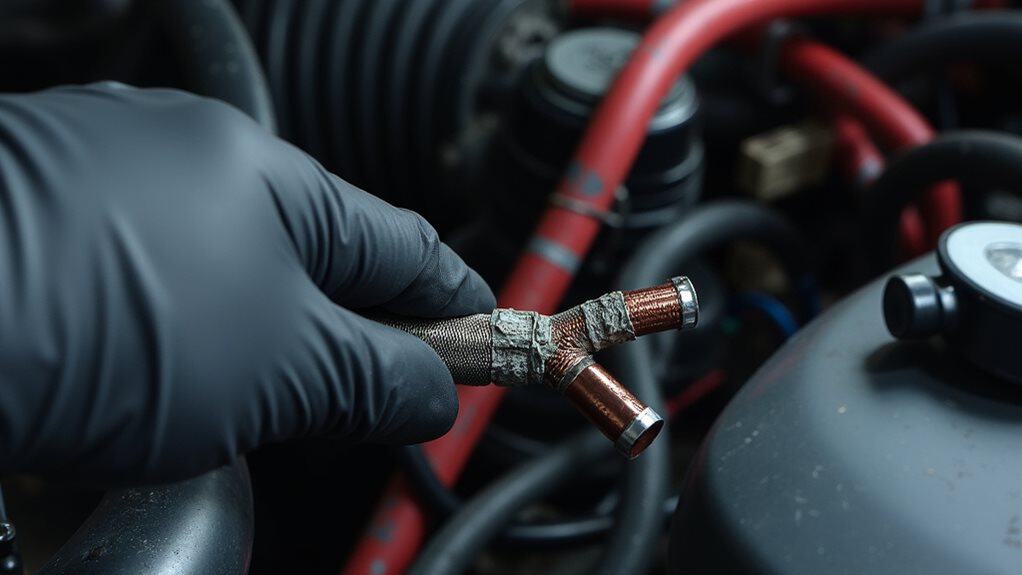
Before attempting to inspect or replace your ground strap, make certain your vehicle is off and the engine cooled to prevent injury.
Visually examine the ground strap for corrosion, fraying, or broken connections.
Use a multimeter to test continuity between the engine block and chassis, confirming a solid electrical connection.
Replace the ground strap if it is damaged or if high resistance persists.
What Happens If You Ignore a Bad Ground Strap?
Ignoring a bad ground strap can lead to serious engine damage and electrical system malfunctions.
Without a proper ground, electrical components may not operate correctly, causing intermittent failures and potential overheating of parts.
Over time, these issues can compromise vehicle safety and result in costly repairs.
Potential Engine Damage Risks
A bad ground strap can cause significant engine problems if left unaddressed because it disrupts electrical flow necessary for engine operation.
This disruption can lead to electrical problems such as uneven current distribution, causing metal migration to crankshaft bearings.
Over time, these issues increase the risk of engine damage, including head gasket failure and accelerated wear on engine components.
Electrical System Malfunctions
When a ground strap is faulty or poorly connected, it can lead to a range of electrical system malfunctions that affect your vehicle’s performance and safety.
These malfunctions include flickering lights, sensor errors, and voltage fluctuations that confuse modules.
Poor grounding can also cause starting issues and damage electronic components due to electrical surges and unstable voltage levels.
When Should You Call a Mechanic for Grounding Issues?
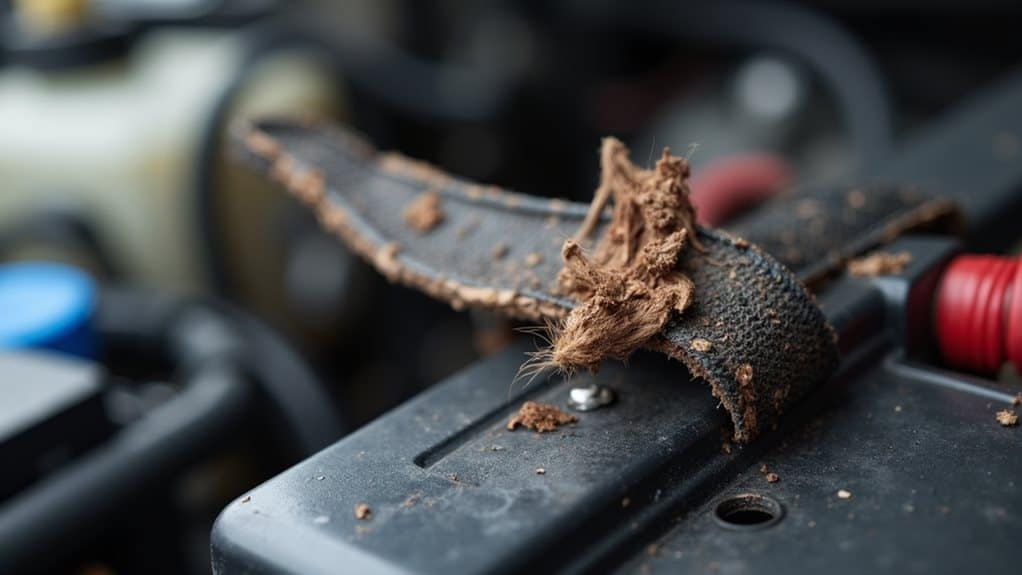
Electrical problems caused by grounding issues can be complex and sometimes difficult to diagnose without professional assistance.
If you notice persistent electrical problems like dimming lights, malfunctioning sensors, or intermittent starting, it’s time to call a mechanic.
Visual signs such as corroded, broken, or loose ground straps also indicate the need for a professional diagnosis to prevent further damage.
Wrapping up
A faulty ground strap can cause significant electrical issues in your vehicle, including starting problems and erratic electrical behavior. Regular inspection and timely replacement are vital to maintain proper circuit function. Use basic tools to check for corrosion, loose connections, or wear, and replace damaged straps promptly. If you’re unsure or notice ongoing issues, consulting a mechanic guarantees safety and proper repair. Addressing ground strap problems promptly prevents more extensive electrical damage and keeps your vehicle running reliably.