
A PCV valve controls the flow of blow-by gases from your engine’s crankcase back to the intake manifold, helping reduce emissions and prevent oil buildup. It plays a key role in maintaining engine performance by regulating these gases and preventing sludge. You should replace it roughly every 30,000 to 50,000 miles or if symptoms appear, such as rough idling or oil leaks. Continuing with proper maintenance guarantees your engine stays healthy and efficient, and further details follow.
Quick Tips
- The PCV valve reroutes blow-by gases from the crankcase to the intake, reducing emissions and maintaining engine performance.
- It prevents oil leaks and sludge buildup by regulating crankcase pressure.
- Signs of a failing PCV valve include rough idle, oil leaks, sludge, and unusual engine noises.
- Replace the PCV valve every 30,000 to 50,000 miles or when symptoms like misfires or sludge occur.
- Regular inspection and cleaning of the valve and hoses help ensure proper engine airflow and prevent damage.
What Does a PCV Valve Do and Why Is It Important?
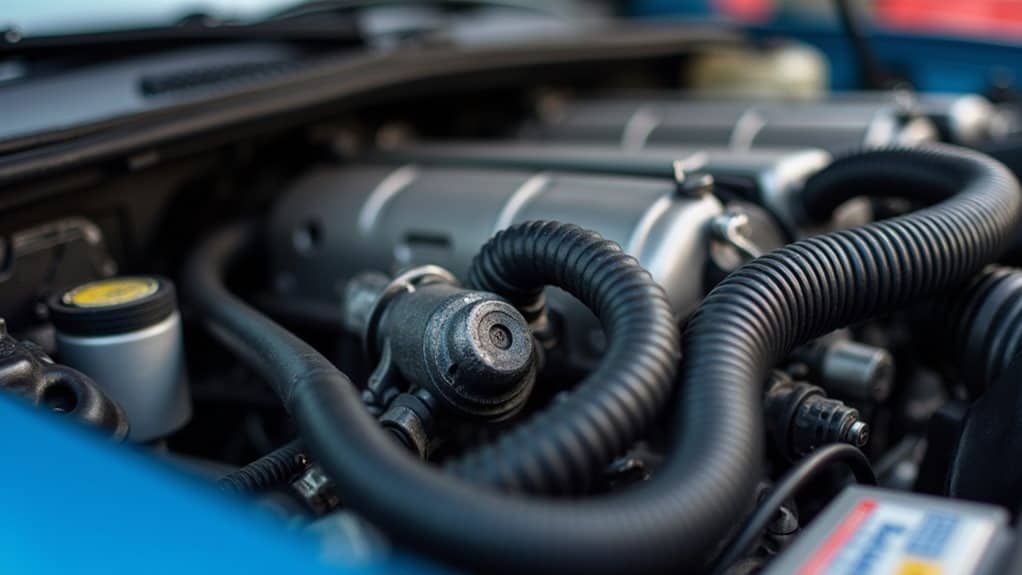
Have you ever wondered what the PCV valve does in your vehicle? It reroutes blow-by gases from the crankcase into the engine’s intake, helping maintain engine performance and reducing emissions.
The ventilation system, regulated by the PCV valve, prevents oil leaks and sludge buildup.
When it malfunctions, it can cause oil leaks and negatively impact your engine’s overall health.
Regular checks of related ventilation components can prevent more significant, costly repairs later and help maintain proper airflow throughout the vehicle.
Where Is the PCV Valve Located in Your Engine?
The PCV valve is usually found near the valve cover or intake manifold, but its exact position can vary depending on your engine’s design.
You can often locate it by following the large vacuum hose from the valve cover to the intake system.
Consulting your vehicle’s repair manual can provide precise details for your specific make and model.
Regular inspections are recommended to ensure maintenance of the electrical system.
Common Location Spots
Where exactly is the PCV valve located within your engine? Typically, you’ll find it on the valve cover or near the intake manifold in the engine bay.
It may be inserted into a grommet on the valve cover or connected via a hose within the ventilation system. The exact position varies, but it’s usually in the upper part of the engine.
Identifying the Valve
Locating the PCV (Positive Crankcase Ventilation) valve within your engine involves following specific components and connections. The location varies but is usually on the valve cover or near the intake manifold.
For inspection, trace the vacuum hose from the valve cover to the intake system. Some engines have multiple valves, often positioned for easy access, aiding system maintenance.
How Do You Know if Your PCV Valve Is Failing?
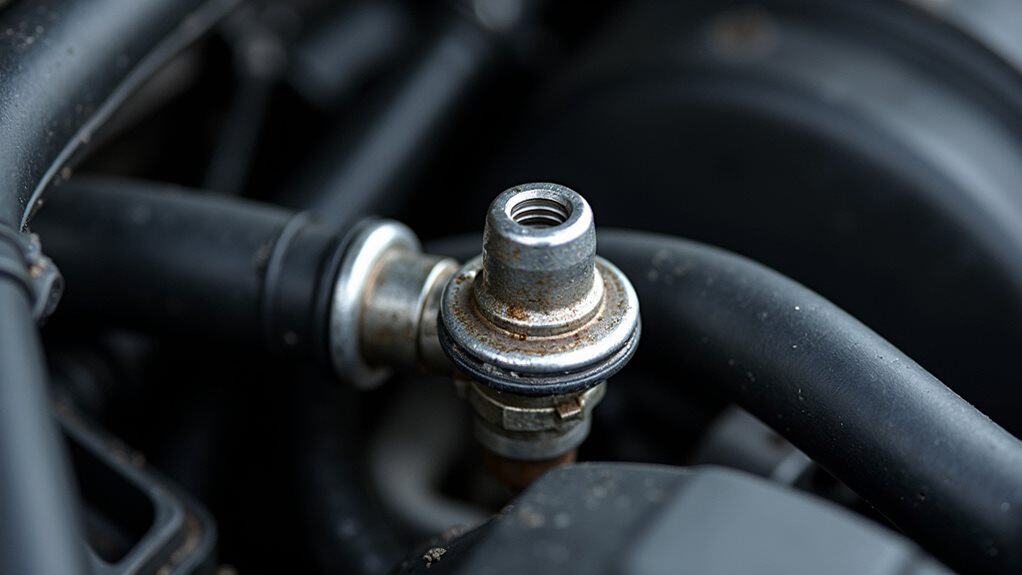
How can you tell if your PCV (Positive Crankcase Ventilation) valve is failing? Signs include a bad PCV valve causing engine performance issues, such as rough idling or misfires.
You may also notice increased oil buildup, which can lead to oil leaks. Unusual whistling sounds and sludge inside the valve or hoses are additional indicators of a malfunctioning system. Idling with the AC running can exacerbate engine stress and contribute to rough idling and overheating risks.
How to Replace Your PCV Valve Step-by-Step
Replacing your PCV valve involves a systematic process that requires attention to detail and careful handling to guarantee proper function and avoid damage.
You’ll locate the PCV valve near the valve cover or intake manifold. Disconnect the hose, then twist or unscrew the old valve counterclockwise.
For installation, insert the new PCV valve securely, reconnect the hose, and check for leaks.
Using a good degreaser like Marine Clean before starting can help ensure a clean installation and better seal.
When Is the Best Time to Replace Your PCV Valve?
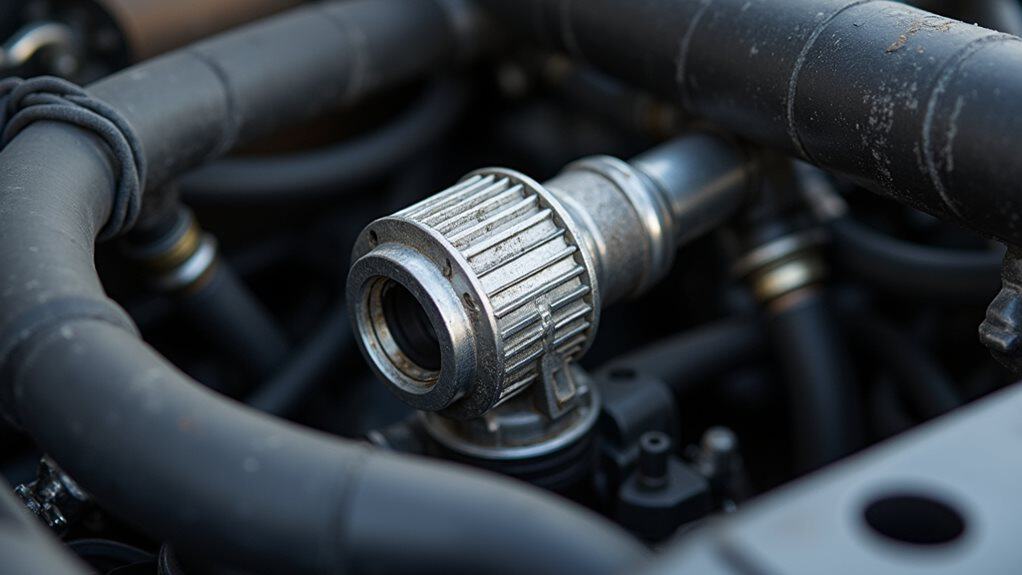
The best time to replace your PCV valve depends on recommended intervals, usually between 30,000 and 50,000 miles, but always follow your vehicle manufacturer’s guidelines.
You should also watch for signs like rough idling, increased oil consumption, or sludge buildup, which indicate the valve may be malfunctioning.
During routine maintenance or oil changes, inspecting the valve for clogs, dirt, or failure to rattle when shaken can help determine if it needs immediate replacement.
Also inspect hoses and related vacuum lines for blockages or leaks that can affect system performance.
Recommended Replacement Intervals
Most vehicle manufacturers recommend replacing the PCV (Positive Crankcase Ventilation) valve every 30,000 to 50,000 miles, though this varies by make and model.
Following these recommended replacement intervals during routine maintenance helps prevent engine sludge buildup and maintains ideal engine performance.
Regular checks guarantee the PCV valve functions properly, supporting efficient engine operation and reducing potential costly repairs.
Signs of Malfunction
Recognizing the signs of a malfunctioning PCV valve is essential for maintaining engine health and preventing costly repairs.
Symptoms like misfires, increased oil consumption, and engine sludge buildup indicate a damaged PCV valve.
If the valve doesn’t rattle when shaken or causes whistling noises, it’s likely time for replacement to prevent further engine issues.
Routine Maintenance Checks
Routine maintenance checks are the most effective way to determine when your PCV valve needs replacing. During inspections, typically between 30,000 to 50,000 miles, check for signs of clogging, damage, or unusual engine performance.
Listening for a rattling sound and inspecting for oil sludge or rough idling can indicate a worn valve, ensuring best system function.
Tips to Keep Your PCV System Working Properly
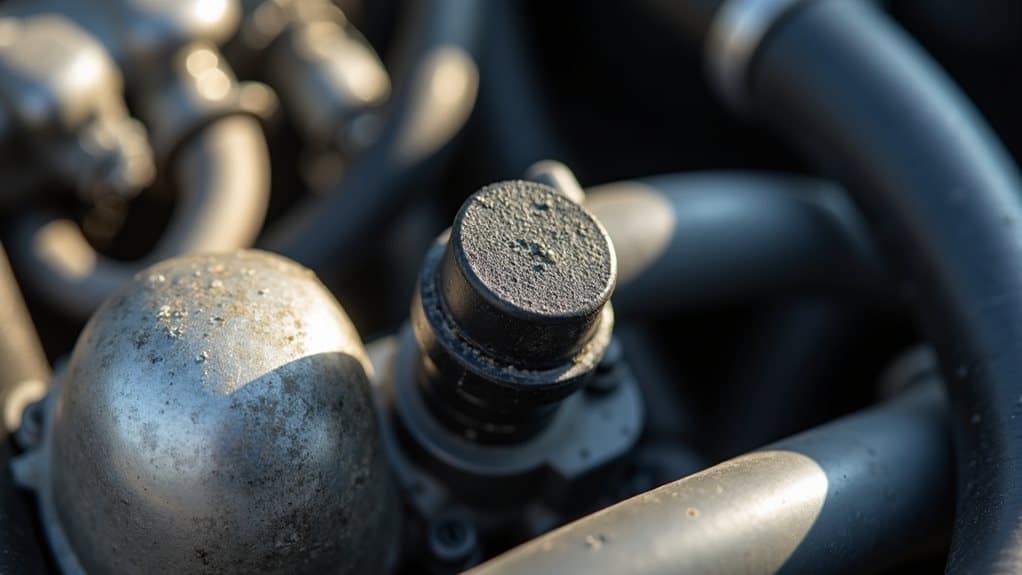
To keep your Positive Crankcase Ventilation (PCV) system functioning effectively, regular maintenance and inspection are vital.
Check the PCV valve and hoses for cracks, leaks, or dirt buildup. Replacing the valve is recommended if you notice symptoms like rough idling or sludge.
Keep the intake area clean and verify all hoses are secure, supporting proper crankcase gases ventilation.
For high-RPM performance applications consider intake choices like a tunnel ram that affect overall engine breathing and should be compatible with your PCV setup.
Wrapping up
Regularly inspecting and replacing your PCV valve guarantees your engine runs smoothly and efficiently. Understanding its role in controlling emissions and preventing harmful buildup is essential for proper vehicle maintenance. Follow recommended replacement intervals and check for signs of failure, such as rough idling or increased oil consumption. Proper maintenance of the PCV system not only extends engine life but also helps meet environmental standards. Staying informed and attentive keeps your vehicle operating reliably and safely over time.