
Your RAV4’s AWD light comes on when it detects issues like faulty wheel speed sensors, ABS problems, or a weak battery causing electrical glitches. A loose gas cap can trigger both AWD and check engine lights by disrupting the fuel system seal. You can try resetting the light by tightening the cap, using an OBD2 scanner, or disconnecting the battery. If warnings return, deeper diagnosis is needed—there’s more to uncover about pinpointing the exact cause.
Quick Tips
- A loose gas cap or EVAP system fault can trigger the AWD and check engine lights due to sensor misreads.
- Failing wheel speed sensors or damaged tone rings often cause the AWD light to illuminate on a RAV4.
- Low battery voltage or corroded terminals may falsely activate AWD, ABS, and traction control warnings.
- Reset the AWD light by clearing codes with an OBD2 scanner or performing a battery disconnect procedure.
- Persistent AWD light after reset indicates a mechanical or electrical fault requiring professional diagnosis and repair.
What Triggers the AWD Light on a RAV4?
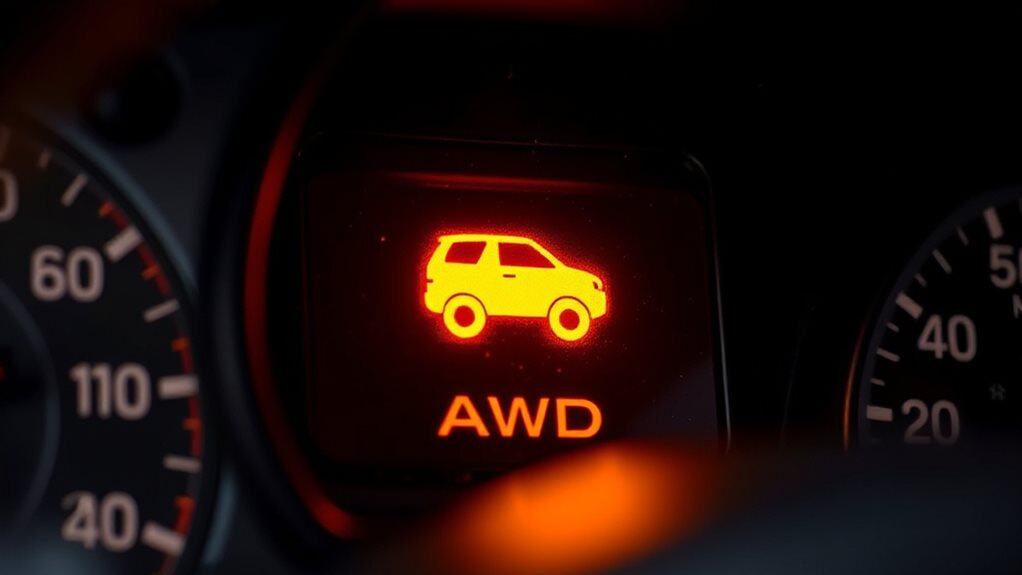
While driving your RAV4, you might notice the AWD light suddenly illuminate on the dashboard, and several underlying issues could be responsible.
A loose gas cap, low battery voltage, or failing wheel speed sensors often trigger it. Wheel speed sensors monitor wheel rotation and can cause TCS or AWD warnings when contaminated or damaged.
Damaged ABS sensors and poor electrical connections also commonly cause the warning.
These issues disrupt system communication, leading to the light—prompt diagnosis with an OBD scanner helps identify the exact cause efficiently.
A diagnostic trouble code (DTC) is stored by the ECM when an issue is detected, which can be retrieved using a scan tool to pinpoint the problem, and addressing the root cause may involve checking components related to faulty sensors.
Why Do the AWD and Check Engine Lights Come On Together?
When your RAV4’s AWD and check engine lights come on at the same time, it usually means a problem in the engine is affecting the drivetrain system, since both rely on accurate sensor data to function properly.
Misfires, faulty sensors, or fuel issues disrupt engine performance, causing the AWD system to react. Electrical faults or emissions failures can also link both warnings, requiring prompt diagnosis. A flashing check engine light with pronounced shaking often indicates a severe engine misfire that requires immediate attention, since continuing to drive can damage the catalytic converter.
Can a Weak Battery Cause AWD Warnings?
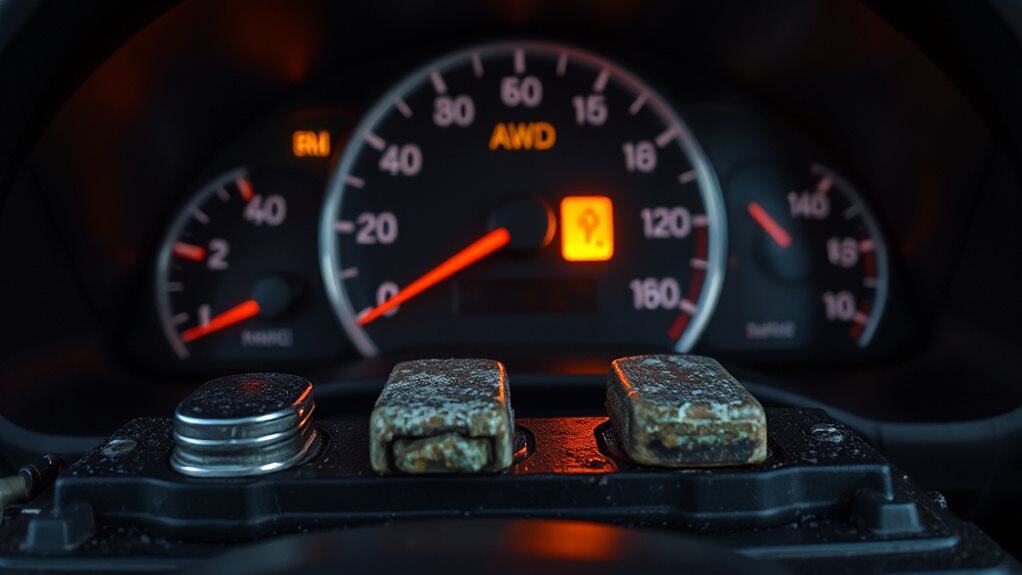
A surprising number of AWD warning lights in your RAV4 can trace back to something as simple as a weak battery.
When voltage drops below 12.6 volts, the ECU and ABS sensors misread signals, triggering warnings.
Corroded terminals or poor charging worsen this.
Dim lights or persistent battery alerts confirm the issue.
Resetting the battery may help, but recurring warnings demand deeper diagnosis.
Modern cars also have protective features that minimize drain, but removing keys from the ignition helps prevent unnecessary battery wear and potential electrical component damage.
Faulty Wheel Speed Sensors: A Common RAV4 AWD Issue
You might notice your RAV4’s AWD, ABS, or traction control lights come on because a faulty wheel speed sensor isn’t sending accurate data.
Start by checking for error codes with a scan tool, then inspect the sensors—especially at the rear wheels—for damage or dirty tone rings.
Replacing the bad sensor, clearing the codes, and taking a test drive usually fixes the warning lights and restores proper AWD function.
Inspect nearby components like wheel bearings and hubs for related faults, since bearing damage can also trigger similar warnings.
Faulty Sensor Symptoms
Though you mightn’t immediately connect dashboard warnings to your RAV4’s AWD system, a failing wheel speed sensor often triggers multiple alerts because it feeds critical data to several safety and performance systems.
You’ll see the ABS, traction control, or check engine light come on, notice erratic speedometer behavior, experience harsh shifting, or find cruise control failing—each symptom tied to inaccurate speed data.
Sensor Replacement Process
When replacing a faulty wheel speed sensor on your RAV4, having the right tools and following a precise sequence guarantees the job goes smoothly and safely.
Loosen lug nuts, jack up the vehicle, then remove the wheel.
Disconnect the sensor’s electrical connector, remove the 10mm bolt, and carefully pull the sensor out.
Install the new sensor, secure it with anti-seize, reconnect the wiring, and torque components properly.
Driving With Sensor Issues
Because wheel speed sensors play a critical role in your RAV4’s safety and performance systems, driving with a faulty sensor can lead to multiple dashboard warnings and compromised vehicle control.
You’ll likely lose ABS, traction control, and cruise control, increasing stopping distances and reducing stability, especially in snow.
Even if the vehicle still drives, uneven sensor data can cause unpredictable handling—get it diagnosed promptly.
How a Loose Gas Cap Can Trigger AWD and Check Engine Lights
Ever wonder why a simple loose gas cap could set off both the AWD and check engine lights in your RAV4?
A loose cap breaks the fuel system’s seal, causing vapor leaks and triggering an evaporative emissions fault.
This vacuum leak stresses the engine, indirectly affecting drivetrain performance.
Since your RAV4’s ECU monitors interconnected systems, one issue can illuminate multiple lights—prompt tightening often fixes it.
Regular inspection of the gas cap can prevent EVAP system faults and trigger codes that lead to warning lights.
How to Reset the AWD Light Using an OBD2 Scanner
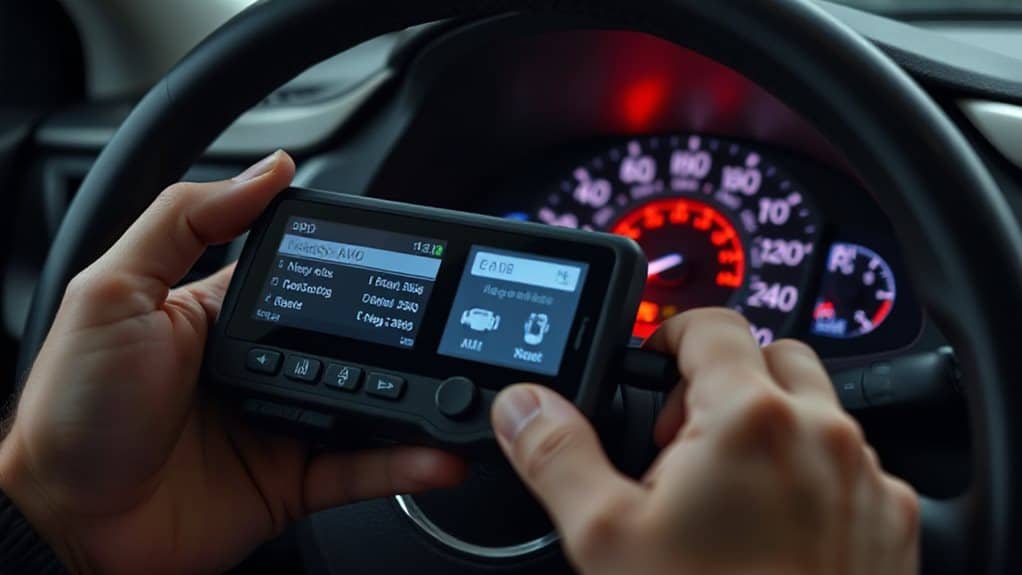
Plug the OBD2 scanner into the port under your dashboard, near the steering column, and turn the ignition to the “on” position without starting the engine.
Once the scanner powers on and connects to your RAV4’s system, select the correct vehicle model and year, then go to the AWD or diagnostic trouble code menu to check for active codes like C1241 or C1374.
After reviewing the codes, choose the “clear” function, turn the ignition off for at least 10 seconds, then restart the system to confirm the codes are erased and the AWD light is reset.
Some temporary fixes, like using metal particle additives to reduce wear in high-mileage engines, can provide short-term improvements but are not a guaranteed long-term solution and should be considered alongside proper diagnosis and repair; see metal particle additives for more details.
Connect OBD2 Scanner Properly
Getting your OBD2 scanner connected the right way sets the stage for a successful AWD light reset. Plug the scanner into the 16-pin port under the dash, near the steering column.
Make sure the engine is off and the parking brake is on. Turn the ignition to “run” without starting the engine. The scanner powers on automatically—confirm the connection before proceeding.
Clear Codes With Ignition Off
Now that your OBD2 scanner is securely connected and communicating with your Rav4’s onboard computer, you’re ready to address the AWD warning light.
With the ignition off, power on the scanner and select “Clear Codes.” This resets the system’s fault memory.
Wait two minutes for completion. The AWD light should turn off if the issue was temporary.
How to Reset AWD by Disconnecting the Battery
If you’re dealing with a persistent AWD warning light on your RAV4, resetting the system by disconnecting the battery can help clear temporary electronic glitches.
First, turn off the ignition and remove the key. Apply the parking brake, then open the hood. Use a 10mm wrench to loosen the negative terminal, followed by the positive.
Wait one minute, then briefly press the start button to discharge residual power.
Clean any corrosion, reattach the positive cable first, then the negative. Make sure connections are tight.
Close the hood and start the engine. Check if the AWD light turns off. Drive to verify system function. Repeat or scan for codes if the light returns.
When Tightening the Gas Cap Clears the AWD Light
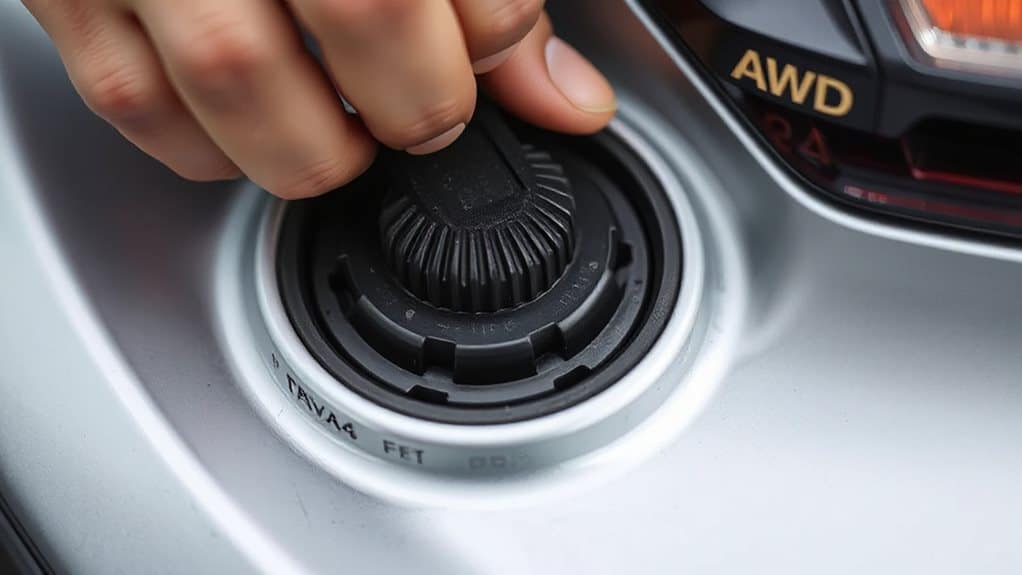
A loose gas cap might seem like a minor oversight, but it can trigger a chain reaction that lights up multiple warning indicators on your RAV4’s dashboard, including the AWD light.
Tighten the cap until it clicks to seal the EVAP system. Cycle the key, wait 10 seconds off, then check for code clearance without starting the engine.
When to See a Mechanic for RAV4 AWD and Check Engine Lights
If your RAV4’s AWD and Check Engine lights stay on or come back right after resetting, it’s time to see a mechanic—this means the problem isn’t fixed, even if the engine seems to run fine.
Recurring codes often point to serious issues like misfiring spark plugs, failing oxygen sensors, or problems with the ABS module or transfer case actuator, all of which can disable AWD and hurt performance.
Ignoring these warnings could lead to catalytic converter damage, poor fuel economy, or even engine failure, so get a professional scan to catch faults that home tools might miss.
Persistent Warning Lights
Though the AWD warning light might seem like a minor concern at first, especially if your RAV4 still drives normally, a persistent signal—particularly when it returns immediately after resetting—points to an underlying hardware issue that won’t fix itself.
If the light reappears quickly, check for corroded wheel speed sensors or actuator faults. Don’t ignore a flashing Check Engine light, as it can indicate serious engine problems.
Persistent warnings often mean professional diagnosis is needed—especially when multiple lights appear, or basic resets fail. Driving with unresolved faults risks further damage.
Recurring Diagnostic Codes
That persistent AWD warning light you’ve been seeing mightn’t be the only clue your RAV4 is trying to tell you something’s wrong—recurring diagnostic trouble codes are often the real indicator of an underlying issue.
If codes like P0353 return after clearing, it signals ongoing hardware failure.
Pending codes may not trigger the check engine light yet but can escalate.
Unresolved issues prevent emission readiness, so see a mechanic when lights persist or performance drops.
Critical System Failures
When the AWD warning light appears alongside the check engine light, it’s a clear sign that your RAV4’s drivetrain or engine systems are experiencing a critical failure requiring immediate attention.
A flashing check engine light means a severe misfire is dumping fuel into the exhaust, risking catalytic converter damage.
Overheating AWD, strange noises, or sudden disengagement demand urgent diagnostics with a professional scan tool to prevent lasting harm.
Prevent RAV4 AWD Lights: 5 Essential Maintenance Tips
Keeping your RAV4’s AWD system in top shape starts with consistent, proactive maintenance.
Change oil regularly to prevent sludge and reduce wear.
Check fluids—transmission, coolant, brake, and power steering—every few months.
Inspect battery terminals for corrosion, and clean them as needed.
Examine wheel sensors and belts for damage.
Stick to your maintenance schedule, and seek professional diagnostics if warnings persist.
Wrapping Up
You now know common causes of the AWD light on your RAV4, from a loose gas cap to faulty sensors. A weak battery or wheel speed sensor issues can trigger warnings, sometimes with the check engine light. Simple fixes—like tightening the cap or resetting via battery disconnect—may help. However, persistent lights mean it’s time to see a mechanic. Regular maintenance prevents most problems, keeping your AWD system reliable and efficient over time.


