
The B13 code on your Honda Civic means the Maintenance Minder has detected roughly 15 % oil life left and that a bundled service is due. You’ll need to replace the engine oil and filter, clean and lubricate the front and rear brakes with a parking‑brake adjustment, rotate the tires, and change the transmission fluid. This service also includes a full multi‑point inspection (sub‑code 0) and replacement of cabin air filters. The code appears after about 10,000 miles, sooner if you drive stop‑and‑go or tow heavy loads. Reset the reminder after service, and decide whether a DIY approach or dealer visit best fits your tools and warranty needs. Continue, and you’ll discover the exact timing and reset steps.
Quick Tips
- B13 signals that the vehicle’s oil life is at 15 % and that tire rotation, brake service, and transmission‑fluid replacement are due.
- It is triggered when mileage, time, and wear sensors (oil, tires, transmission) all reach their service thresholds, typically around 10 000 mi or 5 years.
- The service includes draining and refilling engine oil, replacing the oil filter, changing transmission fluid, and servicing brakes (cleaning, lubrication, parking‑brake adjustment).
- After the B13 service, the Maintenance Minder can be reset manually via the steering‑wheel menu to restore 100 % oil life.
- DIY owners can handle most B13 tasks with basic tools, while dealers provide comprehensive multi‑point inspections and warranty‑protected diagnostics.
What the B13 Maintenance Code Means for Your Honda Civic?
What does the B13 maintenance code actually tell you about your Honda Civic?
It means the system has detected 15 % oil life left and is calling for three tasks: replace engine oil and filter, clean and lubricate front and rear brakes with a parking‑brake adjustment, rotate the tires, and change the transmission fluid.
These actions protect lubrication, braking, tire wear, and transmission performance.
Tunnel ram intakes typically boost high‑RPM power by improving airflow to cylinders, so consider performance-oriented service choices when maximizing engine longevity.
How Is the B13 Code Generated by the Maintenance Minder?
How does the Maintenance Minder actually create the B13 alert on your Civic’s dashboard? It watches mileage, time, engine rpm, speed, and driving conditions. When oil life reaches 0 % after 7,500 miles or 12 months, the system flags a B. Simultaneously, it counts tire‑rotation miles for a 1 and transmission‑fluid wear for a 3. When all three thresholds are met, the combined B13 code appears. The system also monitors brake wear to ensure safety. The vehicle’s suspension condition can influence ride stability and should be checked if you notice excessive rocking while driving.
What Core Tasks Are Included in a B13 Service (Oil, Filter, Brake Care)?
When the Maintenance Minder flashes the B13 code, the service that follows tackles three main areas: engine lubrication, filter replacement, and brake system upkeep.
You’ll drain and refill fresh engine oil, swap the oil filter, and also replace the transmission fluid, engine and cabin air filters.
Finally, you bleed the brake lines and refill the reservoir with new brake fluid, ensuring safe hydraulic performance.
Also, abutment and anti-rattle clips are inspected and replaced as needed to prevent brake noise and uneven pad wear.
Why Does Sub‑Code 1 (Tire Rotation) Belong to B13?
Why does Sub‑Code 1, the tire rotation, sit under the B13 service umbrella? It joins B13 because the rotation aligns with the B‑service interval of 24,000‑32,000 km, letting you handle tire wear while the oil, filter, and brake tasks occur. The rotation checks pressure, tread depth, and wear patterns, extending tire life, improving handling, and saving fuel, all without a separate visit.
When Does Sub‑Code 3 (Transmission Fluid Check) Trigger a B13 Service?
Typically, Sub‑Code 3 triggers a B13 service whenever the vehicle’s maintenance schedule reaches the 24,000‑32,000 km interval and the onboard diagnostics flag a transmission‑fluid inspection. You’ll need to warm the engine, park on a level surface, then check the dipstick near the battery. If the fluid sits below the minimum hatch, the system schedules a fluid check, prompting a B13 service. Proper HVAC maintenance, such as ensuring the A/C compressor engages during defrost cycles to control cabin humidity, can help prevent interior moisture-related issues that might otherwise complicate service diagnostics.
What the ‘0’ Sub‑Code Means – Full Multi‑Point Inspection?
You’ll notice that the ‘0’ sub‑code triggers a full multi‑point inspection, meaning the system checks every major component on the checklist, from brakes to suspension, without adding fluid‑change tasks. The trigger logic behind it’s simple: when the Maintenance Minder detects the B main code but no numeric sub‑code, it assumes the basic oil service plus a thorough visual and functional review.
Honda recommends following the regular service interval—typically every 5,000 miles or six months—to keep the inspection schedule on track. Slightly opening the door before performing a reset and waiting 10 seconds after can help ensure the control responds properly and may be useful if electronic indicators are unresponsive control panel.
Inspection Checklist
What does the “0” sub‑code actually signal on your Honda Civic’s Maintenance Minder? It launches a full multi‑point inspection, covering brakes, fluids, filters, and tire condition. You’ll get brake cleaning, lubrication, parking‑brake adjustment, and fluid checks. The inspection guarantees early issue detection, maintains warranty compliance, and optimizes performance—all without requiring separate service appointments.
System Trigger Logic
How does the ‘0’ sub‑code actually trigger a full multi‑point inspection on a Honda Civic B13?
When the on‑board computer counts oil life down to 15 % and the main‑code fires, it evaluates speed, engine temperature, ambient temperature, time and usage.
If those factors meet the threshold, the ‘0’ sub‑code adds brake, tire, and transmission checks, prompting a thorough inspection before resetting the reminder.
Recommended Service Interval
When the Maintenance Minder signals that the oil life has dropped to 15%, the ‘0’ sub‑code appears and schedules a full multi‑point inspection. This interval aligns with Honda’s B13 schedule, prompting a thorough check of brakes, fluids, tires, filters, suspension, steering, battery, belts, hoses, lights, and wipers.
You’ll receive the service alongside oil changes or rotations, and the code resets after the inspection is completed.
When Should You Expect a B13 Service Based on Mileage and Driving Habits?
You’ll typically see a B13 code appear after roughly 10,000 miles of driving, but if you frequently travel in stop‑and‑go traffic, tow heavy loads, or drive in extreme heat, the Maintenance Minder may trigger it sooner because those conditions accelerate oil and transmission fluid wear.
Your personal driving style—whether you’re a gentle commuter or an aggressive driver—directly influences how quickly the brake system and tires lose efficiency, so a higher‑stress habit can shave months off the recommended interval.
Seasonal factors such as harsh winters or scorching summers also affect fluid degradation, meaning you might need to schedule the service a few thousand miles earlier to keep the engine, transmission, and brakes in optimal condition.
Regular inspections of components like brake system and tires can help catch wear early and prevent more costly repairs.
Average Mileage Triggers
Ever wondered at mileage will actually trigger the B13 service on your Honda Civic?
You’ll hit the B13 code around 100,000 miles or five years, whichever comes first, under normal conditions. Short trips, freezing temps, or Canadian driving push the interval to 30–60 k miles. The service includes oil and filter changes, tire rotation, air‑filter swap, drive‑belt check, and transmission fluid replacement for base engines.
Driving Style Impact
Why does your driving style shift the B13 service schedule? Aggressive braking and rapid acceleration wear pads, rotors, and oil faster, so you’ll need brake inspections and oil changes well before the standard mileage.
Frequent cold starts, short trips, and heavy towing degrade transmission fluid, fuel lines, and suspension components, prompting earlier fluid swaps and component checks. Adjusting habits can extend intervals, but harsh driving inevitably advances B13 triggers.
Seasonal Maintenance Considerations
When does the B13 service become due for your Honda Civic, and how do mileage and driving habits shape that timing?
You’ll usually hit 100,000 mi, but severe conditions—short trips, extreme cold—push it earlier.
Normal drivers follow 5,000‑mile oil changes, 60,000‑mile transmission fluid and coolant flushes, and 30,000‑mile brake fluid swaps, all of which converge into the B13 package.
Adjust schedules if you live in Canada or face harsh weather.
How to Reset Your Civic’s Maintenance Minder After a B13 Service?
How do you clear the Maintenance Minder after a B13 service on your Honda Civic? Turn the ignition to run (or ON for 2016‑2021 models) without starting the engine. Use the steering‑wheel menu: press Menu, select Vehicle Information, then SOURCE to view oil life. Choose Yes with (), press SOURCE again, and confirm. Verify 100% oil life after starting the engine.
DIY vs. Dealer: Which B13 Service Approach Is Right for You?
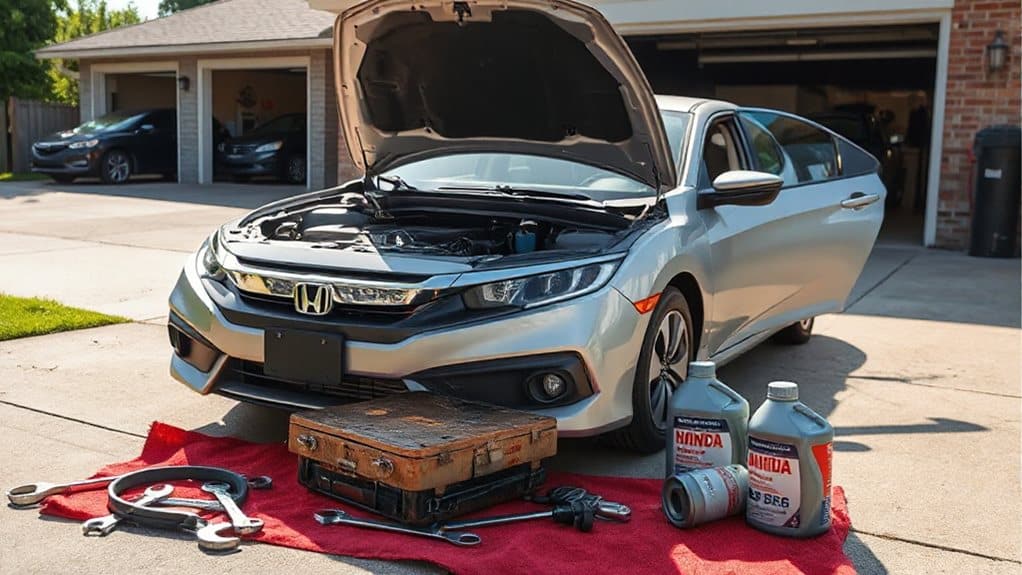
After clearing the Maintenance Minder, the next decision is whether to tackle the B13 service yourself or to bring the Civic to a dealer. DIY saves $50‑$200 on oil, transmission fluid, and filter changes if you have a 17 mm wrench, 0W‑20 oil, and basic tools. Dealers provide multi‑point inspections, warranty protection, and specialized equipment for complex tasks like valve adjustment or differential service. Choose DIY for routine work; choose a dealer for thorough diagnostics or towing‑related differential fluid replacement.
Wrapping Up
By staying on top of the B13 service, you keep your Honda Civic running smoothly and avoid costly repairs. The maintenance minder calculates the interval based on mileage, engine load, and driving conditions, then alerts you when oil, filter, brake care, tire rotation, and transmission fluid checks are due. Resetting the system after service ensures accurate future reminders. Whether you DIY or visit a dealer, following the prescribed tasks preserves performance and safety.


