
You’ll choose hydraulics for quiet, low‑maintenance street use because they use oil‑pressurized plungers and a check valve to self‑adjust to zero lash, reducing routine valve adjustments; solids are single-piece lifters that need a measured valve‑lash but give precise timing, tolerate aggressive cam profiles, and resist float at very high RPMs with stiffer springs. Hydraulics depend on clean oil; solids demand periodic adjustments. Keep going and you’ll learn setup, limits, and installation checks.
Quick Tips
- Hydraulic lifters self-adjust with oil pressure for zero lash and low maintenance, while solid lifters require periodic manual lash adjustments.
- Solid lifters provide more precise valve timing and resist valve float at very high RPMs; hydraulics are limited at top-end speeds.
- Hydraulic lifters use an internal plunger, check valve, and oil chamber; solid lifters are a single rigid metal piece.
- Hydraulics keep the valvetrain quiet and smooth for daily driving; solids favor aggressive cam profiles and racing use.
- Clean oil and correct preload/lash are critical: contamination collapses or sticks hydraulics, and incorrect lash damages solid systems.
Quick Recommendation: Which Lifter Is Right for You?
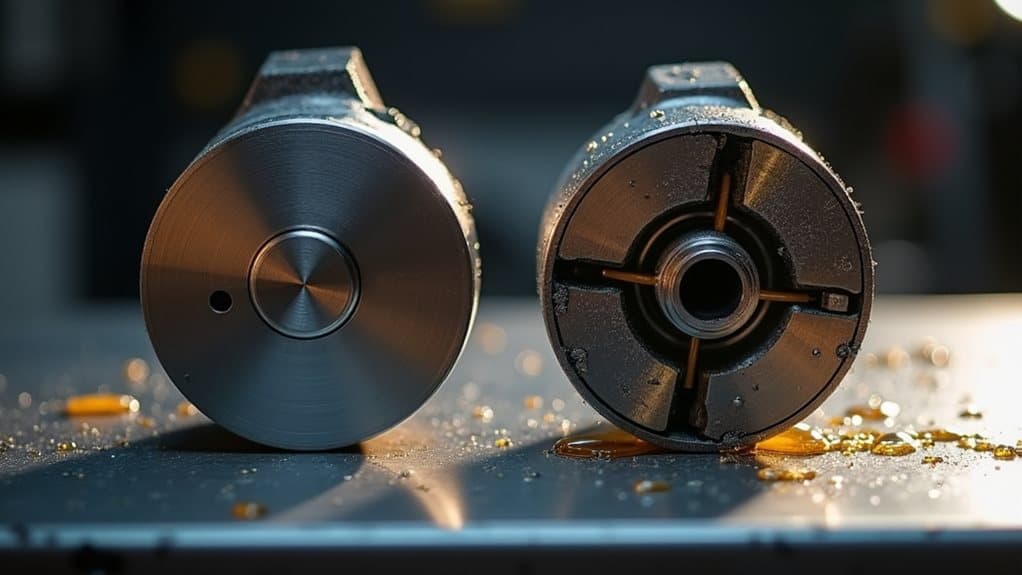
If you plan to drive a stock or daily-driver car and want low maintenance, choose hydraulic lifters because they self-adjust with oil pressure and keep the valvetrain quiet, eliminating routine valve-lash checks; however, if you’re building a high-revving race or dedicated performance engine that regularly sees RPMs above about 7,000, go with solid lifters since they give more precise valve timing, tolerate aggressive cam profiles, and resist valve float at high speeds—even though they need periodic lash adjustments and stiffer springs. You should pick hydraulics for convenience and quiet, solids for ultimate control, accepting added maintenance and stronger springs for high RPM stability. Additionally, remember that lifters sit between the camshaft and valves, separating them and controlling valve opening. Many shops use metal-particle additives as a temporary measure to reduce wear in high-mileage engines and can obscure the need for immediate mechanical repair by reducing friction; see metal particles for details.
Solid vs Hydraulic Lifters at a Glance
A clear comparison helps you quickly grasp the main functional and practical differences between solid and hydraulic lifters: solids are fixed metal components that need a set mechanical gap (valve lash) and give precise valve timing at high RPMs, while hydraulics use an internal spring-loaded plunger, check valve, and oil reservoir to self-adjust and maintain zero lash during operation.
You’ll choose solids for top-end precision, hydraulics for quiet, low-maintenance daily use.
What’s Inside Each Lifter (Internal Anatomy)
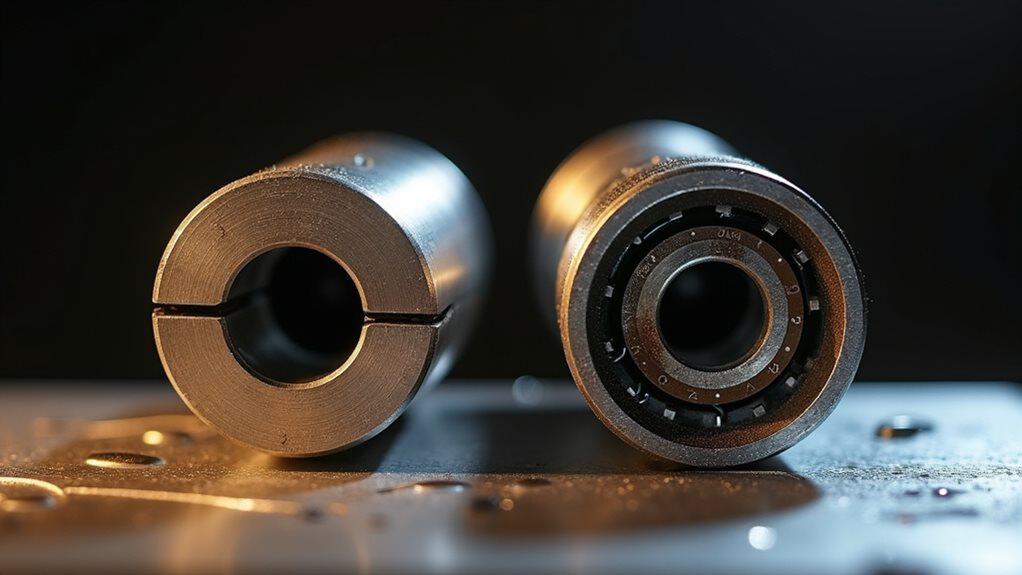
You’ll see two very different internal designs: a solid lifter is a single-piece metal cylinder with a hard-faced bottom and a cup-shaped top that transmits cam motion directly, while a hydraulic lifter contains a spring-loaded plunger and an internal piston that ride in an oil-filled cavity.
In the hydraulic unit, a one-way check valve and pressurized oil trap the fluid under the plunger to maintain zero valve lash automatically, cushioning contact and compensating for thermal expansion; the solid lifter, by contrast, requires a deliberate clearance (valve lash) set and adjusted manually to allow for heat-induced changes.
Understanding these components — solid’s rigid, direct-force construction versus hydraulic’s moving plunger, spring, and oil chamber — explains why hydraulics self-adjust and run quieter while solids offer simpler, predictable contact geometry.
Keeping oil clean and using proper filtration prevents contamination that can clog tiny passages and cause hydraulic lifter plunger seizure, collapse, or loss of self-adjustment.
Solid Lifter Construction
In examining solid lifter construction, think of the unit as a single, rigid metal column that directly transmits camshaft motion to the pushrod without any internal moving parts or fluid-based components.
You’ll see a hollow steel cup supporting the pushrod, a hard-faced bottom that rides the cam, uniform exterior diameter for bore alignment, and no pistons, springs, valves, or oil cavities.
Hydraulic Plunger Mechanism
Although it looks simple from the outside, the hydraulic plunger inside each lifter is a carefully engineered micro-hydraulic system that automatically takes up valve lash and transmits cam motion to the pushrod.
You’ll find a hardened steel housing with tight tolerances, a spring-supported plunger, a one-way check valve and oil reservoir; together they meter oil, trap pressure, and adjust plunger height to maintain zero clearance.
How Solid and Hydraulic Lifters Work
Start by picturing the lifter as the bridge between the camshaft and the valve: hydraulic lifters use oil pressure inside a small internal chamber to eliminate clearance automatically, while solid lifters are a single rigid piece that needs a preset gap (valve lash) to work properly.
Hydraulic units trap oil with a check valve and self-adjust; solids transmit motion directly and require manual lash setting.
Valve Lash, Preload, and Why Adjustment Matters
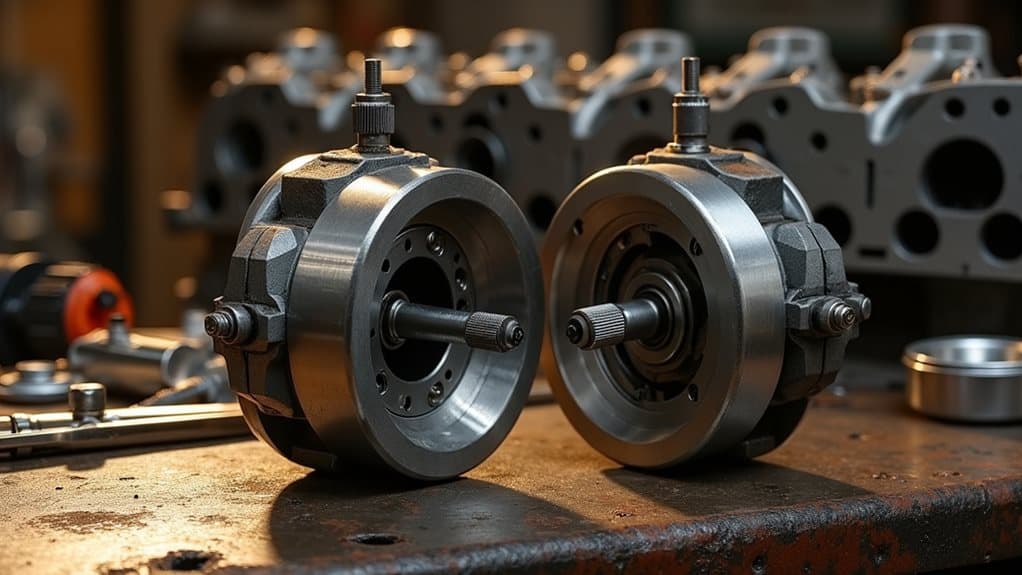
You need to know that solid lifters require a specific measurable lash—a small gap between the rocker and valve tip measured with a feeler gauge—while hydraulic lifters are set to zero lash and use oil pressure internally to remove clearance.
For hydraulics, you’ll establish zero lash by tightening the adjuster until a slight resistance is felt when spinning the pushrod, then add the manufacturer’s specified preload (commonly 1/4 to 1/2 turn, or about 1/2 turn for many roller cams) so the lifter stays on the cam base circle without binding.
Proper lash or preload matters because incorrect settings cause noisy operation, accelerated wear, timing errors, or even cam and lifter damage, and procedures differ: solids are set with cold/hot lash offsets based on head/block materials, whereas hydraulics are set for zero lash plus preload and checked after warm-up.
Regular inspection and cleaning of related components, such as the idle air control valve to prevent idle control issues, can help maintain consistent engine idle and overall drivability.
Valve Lash Basics
When you check valve lash, you’re measuring the small gap between the valve stem tip and the rocker arm or cam follower, and that tiny space—typically around 0.010 to 0.015 inches—matters because it lets the valve fully seat and accommodates thermal expansion.
Use a feeler gauge with the valve on the cam heel (zero lift) to verify the clearance, ensuring the gauge slides with slight drag but no forcing, and remember that hydraulic systems use preload (usually 0.30–0.60 turns past zero lash) while solid lifters require a fixed clearance.
Hydraulic Preload Essentials
Why does hydraulic preload matter, and what happens if it’s set wrong? You set preload after zero lash by adding the specified half‑turn (typically 0.020–0.030″).
Proper preload keeps the internal spring neutral so lifters return to the cam base circle. Incorrect preload causes pump‑up, collapse, valve float, noise, or damage.
Use I.C.E. timing, feel for slight drag, avoid rocker binding.
Noise and Driveability: What to Expect
Although both solid and hydraulic lifters perform the same basic task of translating camshaft motion into valve movement, they create very different noise environments and driving experiences, so you should expect distinct trade-offs when choosing between them.
You’ll hear loud metal clatter (~95 dB) from solids and quieter operation (~85 dB) from hydraulics; solids need periodic lash adjustment, hydraulics self‑adjust but depend on oil quality.
High‑RPM Limits and Cam‑Profile Trade‑Offs
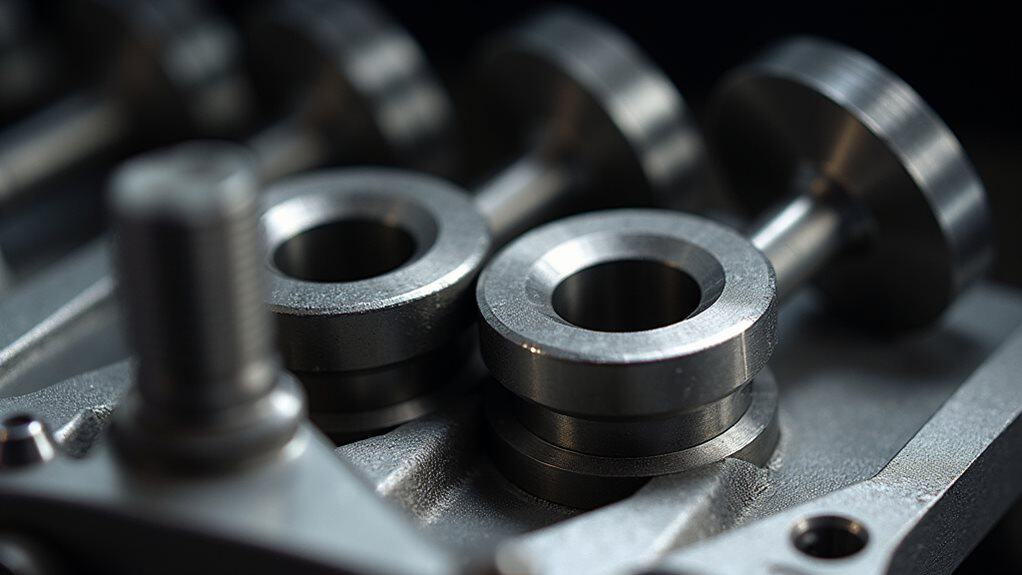
When you push an engine past about 6,500 RPM, hydraulic lifters can start to pump up and lose consistent valve timing because their internal fluid and trapped air compress, while solid lifters keep precise timing and handle revs well beyond 7,000 RPM.
That difference lets you run much more aggressive cam profiles with solid lifters—higher lift and faster ramp rates—whereas hydraulic cams need gentler lobes and clearance ramps to avoid plunger collapse and loss of contact.
To use aggressive cams safely you’ll also need stiffer valve springs, stronger retainers, and careful spring harmonic control to prevent valve float at high RPM, otherwise any gain in top‑end power can be lost to mechanical instability.
Regular inspection and maintenance of related components, including monitoring idle control systems like the idle air control valve, help ensure consistent engine performance and prevent drivability issues.
High‑RPM Capability
Because valve float and loss of lifter contact set the ceiling for engine speed, you need to understand how solid and hydraulic lifters behave at high RPM to pick the right valvetrain for racing or high‑performance street use.
Solid lifters hold contact beyond 7,000–9,000+ RPM with stiffer springs and reinforced components, while hydraulics generally lose contact before ~6,300–6,500 RPM, limiting cam choices.
Cam Profile Aggressiveness
Cam profile aggressiveness defines how a camshaft shifts an engine’s usable RPM range and trades low‑end torque for high‑RPM power, so you need to match duration, lift, and lobe separation to your goals.
Increase duration (≈10° at .050″ ≈ +500 rpm) and lift for top‑end airflow, but expect weaker low‑rpm torque and rougher idle; choose lobe separation to balance drivability versus peak power.
Valve Float & Pump‑Up
At high engine speeds, valve float and hydraulic lifter pump‑up become the limiting factors that decide how aggressive you can make a cam profile, so you need to understand both mechanisms and their trade‑offs.
Valve float happens when springs can’t control inertial mass; lighter valves and stiffer or dual springs raise limits.
Hydraulic pump‑up overextends the plunger, mis-timing valves; solid lifters avoid pump‑up but need precise lash.
Maintenance, Durability, and Long‑Term Reliability
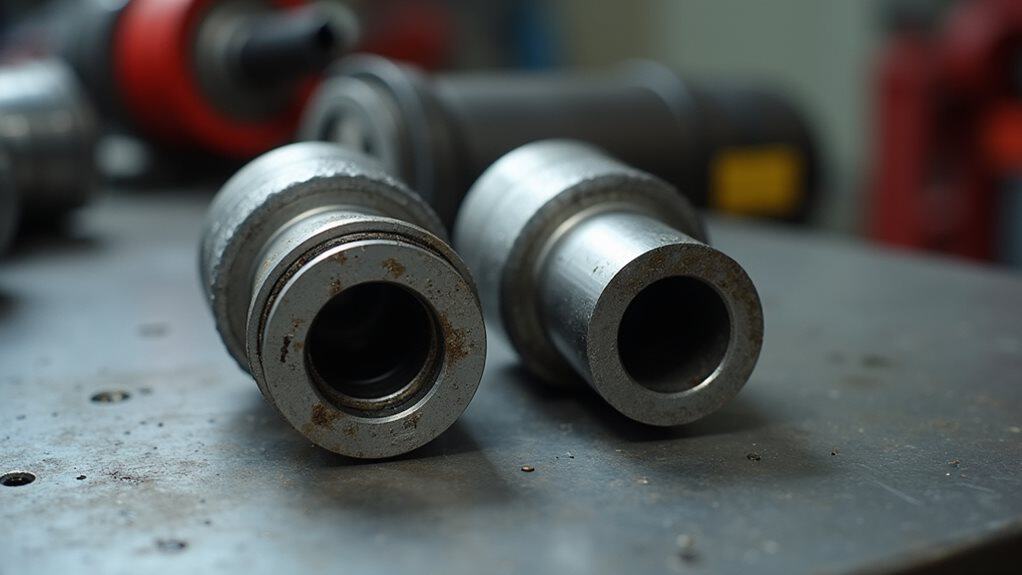
When you compare solid and hydraulic lifters for maintenance, durability, and long‑term reliability, the differences come down to how each design handles clearance, wear, and the demands of everyday versus high‑RPM use.
You’ll adjust solid lifters frequently with feeler gauges, while hydraulics self‑adjust via oil pressure.
Solids resist high RPM wear; hydraulics favor low‑maintenance, quiet daily driving, but can collapse or stick over time.
Regular maintenance, including monitoring coolant and addressing sticking thermostats, helps prevent related engine issues that can affect lifter performance.
Cost, Availability, and Common Use Cases
How do cost, availability, and typical uses affect your choice between solid and hydraulic lifters?
You’ll pay more upfront for solid lifters ($200–$500 sets) used in performance and racing; they’re sold by specialty suppliers.
Hydraulic lifters cost less ($50–$150), are widely available, and suit daily drivers, SUVs, and diesels.
Consider labor, parts, and specific engine requirements when deciding.
Decision Checklist and Installation Pitfalls
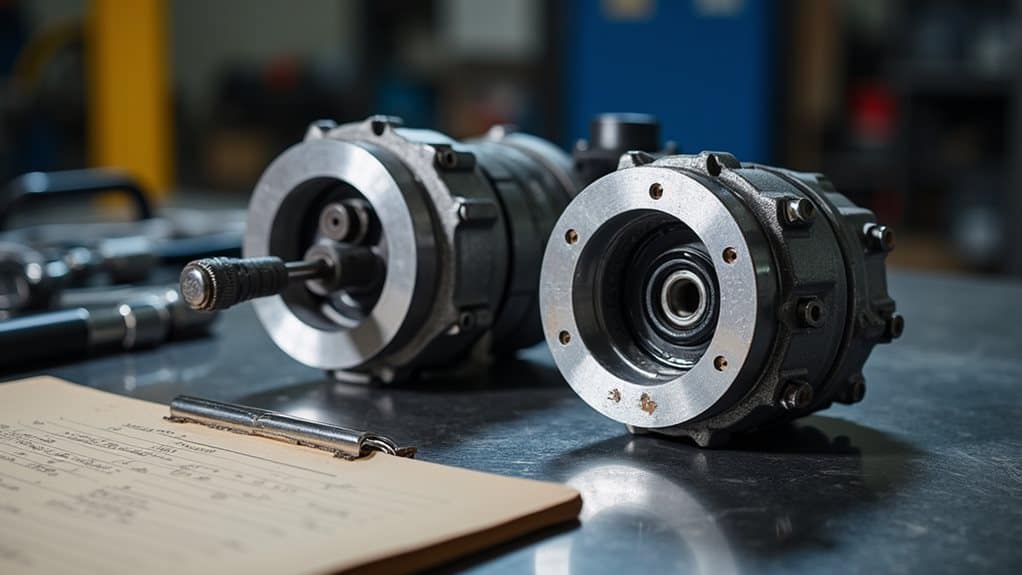
Start with a simple checklist you can run through before choosing or installing lifters, since the wrong selection or setup will cost time and money and can damage your engine. Check RPM goals, noise tolerance, maintenance willingness, and expected loads.
Verify preload or lash procedures, inspect lifter and pushrod materials, and perform overnight bleed or magnetic tests to confirm hydraulic versus solid units. Consider using a beam torque wrench to ensure accurate preload and lash settings.
Wrapping Up
You’ll choose lifters based on goals: pick hydraulic for low maintenance and quieter operation, since they self-adjust and suit daily driving; choose solid for precise valve control at high RPM and aggressive cams, because they require lash adjustment and more frequent checks. Consider cam profile, engine use, and maintenance willingness, then match lifter type to those needs. Install carefully, set lash or preload correctly, and follow service intervals to guarantee reliability.