
If a humming gets louder with vehicle speed, it’s usually a road-speed issue tied to wheel or driveline rotation rather than the engine; common causes are worn wheel bearings, uneven or unbalanced tires, failing CV joints or axle problems, and worn suspension bushings that amplify vibration. You can isolate it by revving in neutral, checking tire wear and balance, rocking lifted wheels for play, and noting when the noise occurs; continue for diagnostic steps and repair guidance.
Quick Tips
- A hum that rises with vehicle speed usually indicates a wheel-, tire-, or driveline-related rotating component, not the engine.
- Check tires for uneven wear, cupping, or imbalance, since irregular tread causes humming that grows with speed.
- Test for bad wheel bearings by jacking the car, rocking the wheel, and spinning to feel roughness or play.
- Inspect CV joints, suspension bushings, and ball joints, as worn drivetrain/suspension parts produce speed-dependent hums.
- If humming is loud, worsens, or causes vibration in the steering, stop driving and have a shop diagnose and repair.
Quick Answer: What Speed‑Dependent Humming Usually Means
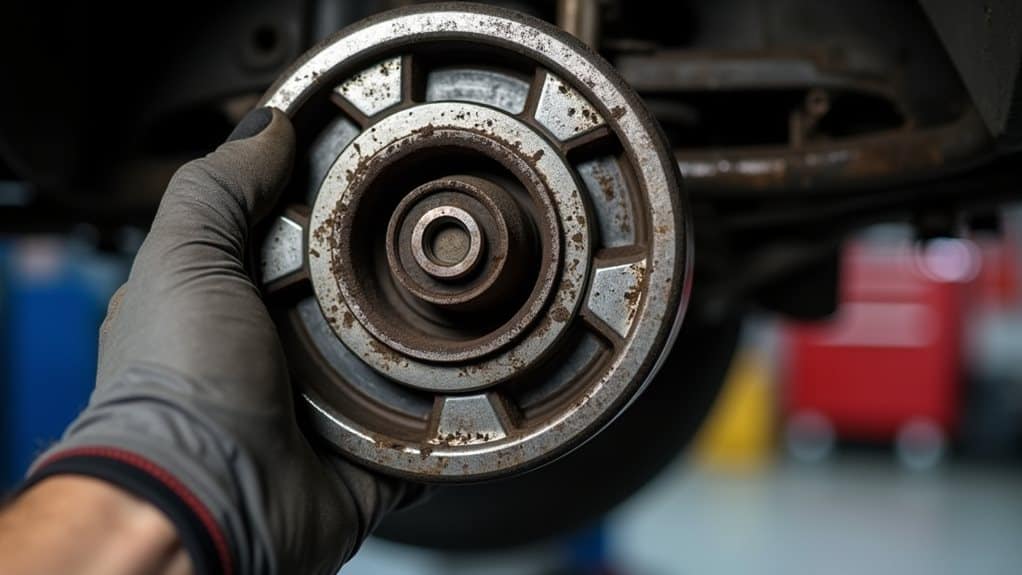
Usually, when a humming noise rises and falls with your vehicle’s speed rather than the engine’s RPM, it means a rotating part tied to the wheels or driveline is failing.
You’re hearing rotational noise that tracks mph, not RPM, so suspect wheel bearings, tires, or driveline components.
Check for consistent drone, pitch changes when turning, uneven tire wear, or roughness when the wheel’s spun by hand. Inspect wheel bearings and other components for wear as part of diagnosing the issue.
Wheel bearings often cause this kind of speed-synchronized humming and are one of the most common sources.
Quick Tests to Isolate Engine vs. Wheel Noise
When a humming noise follows vehicle speed instead of engine RPM, you’ll need a few simple tests to pin down whether the problem comes from the engine or from the wheels, tires, or suspension.
Rev engine in neutral: if hum rises with RPM it’s engine-related.
Drive S-curves to stress suspension.
Remove accessory belt to isolate pulleys.
Bounce and inspect tires; use a screwdriver to localize bearing sounds.
Also consider inspecting the CV joint boot for tears or grease leaks, since a failing CV joint can create noise that varies with vehicle speed.
Signs a Bad Wheel Bearing Is Causing the Hum
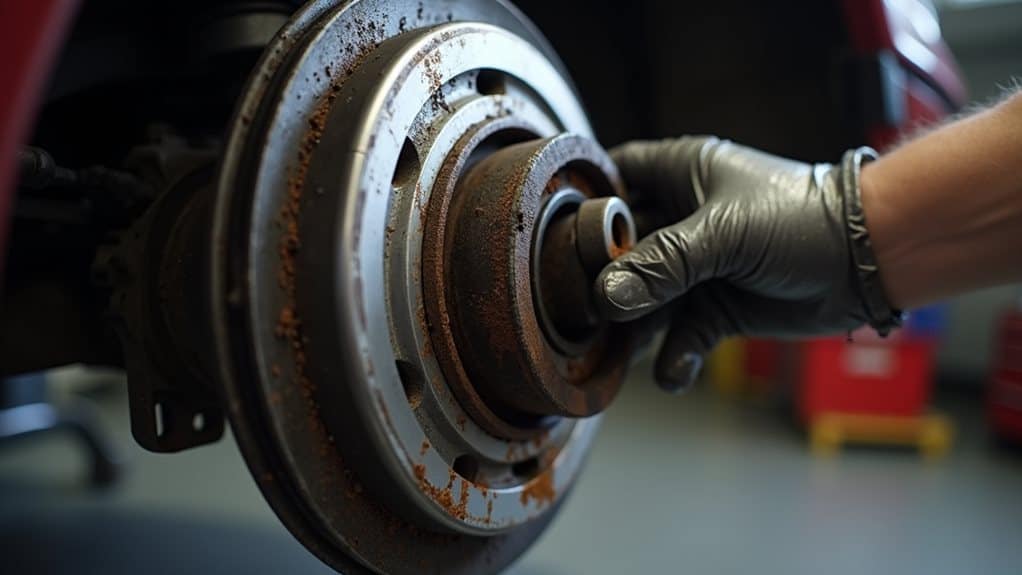
Listen for changes in the humming when you gently turn the steering wheel; if the noise gets louder when you turn one way and quieter when you turn the other, that directional change often points to a worn wheel bearing on the side being loaded.
Next, check for wheel play by jacking up the car and rocking the tire at the 12 and 6 o’clock positions—any clunking, looseness, or side-to-side movement indicates internal bearing wear rather than an engine issue.
Also note vibrations through the steering wheel while driving at speed and any grinding or roughness when you spin the lifted wheel by hand, because those tactile and audible signs confirm the bearing is failing and needs inspection or replacement.
Humming Changes When Turning
Pay attention to how the humming changes as you steer, because the direction and intensity of that change tell you which wheel bearing may be failing.
If the hum gets louder when you turn right, the left bearing is likely loaded and faulty; louder on left turns indicates the right bearing.
Use gentle lane weaves at 30–50 mph to confirm load-related pitch and volume shifts.
Wheel Play And Vibration
Noticing how the hum changes while you steer is helpful, but confirming that a bad wheel bearing is actually causing the noise requires hands-on checks for wheel play and vibration.
Lift and secure the car, rule out loose lug nuts, then rock the wheel at 12/6 and 3/9 to detect play.
Spin the tire, feel for roughness or vibration through the spring and steering wheel—any abnormal feedback signals bearing failure.
How Worn or Unbalanced Tires Make Humming at Speed
Uneven wear patterns—like cupping, scalloping, and feathering—create irregular tread surfaces that vibrate and echo, while improper inflation and misalignment change how tread contacts the pavement and amplify those vibrations.
Check for cupping dips, feathered edges, and pressure. Prompt inspection is important because misalignment and worn suspension can worsen humming and cause uneven tire wear.
Drivetrain & Suspension Problems That Get Louder With Speed
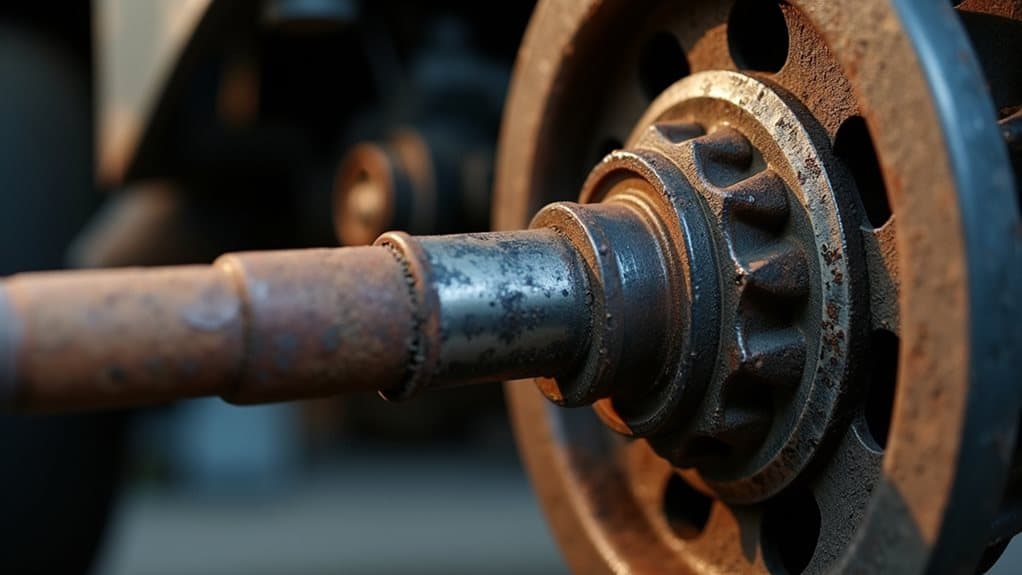
When you hear a humming that climbs with speed, worn CV joints, faulty ball joints, and deteriorated suspension bushings are common suspects you should check first.
CV joints often start with rhythmic clicks in turns and can turn into a speed‑dependent hum as the internal bearings wear, while ball joints that have excess play will transmit a steady road‑linked noise and can cause uneven tire loading when you grab the wheel at 12 and 6 o’clock.
Worn bushings let metal components contact or vibrate against each other, producing a low, steady hum that grows with speed and is usually diagnosed by visible cracking, excessive chassis movement, or distinct changes when you accelerate, brake, or turn.
Also inspect the CV axle seating and retaining clip, since a misseated axle or loose retention can cause grinding, vibration, and transmission issues that worsen with speed.
Worn CV Joints
If a humming or growling noise rises in volume and pitch as you speed up, worn constant-velocity (CV) joints are a likely cause and should be inspected promptly.
Check boots for tears or grease leaks, and note vibration during acceleration.
Outer joints click on sharp turns; inner joints cause shuddering and clunks when shifting.
Replace damaged boots or joints, maintain lubrication, and avoid rough terrain.
Faulty Ball Joints
After checking CV joints for clicking and grease leaks, you should also inspect the ball joints, because worn ball joints produce a distinct low-frequency humming or droning that grows louder as speed increases, typically noticeable between 30 and 60 mph.
You’ll often feel vibration in the steering wheel, hear occasional clunks over bumps, and see uneven front tire wear indicating excessive joint play that needs measurement and replacement.
Worn Suspension Bushings
Although they’re small and often overlooked, worn suspension bushings can produce a humming noise that grows with speed, and you’ll want to check them early because they directly affect vibration isolation and resonance in the chassis.
Dry, torn, or hardened bushings increase friction and change stiffness, shifting resonance; inspect control arm, strut, sway bar, and rear axle bushings, and use lift/spin and push-pry tests.
Engine or Transmission Causes That Sound Like Humming
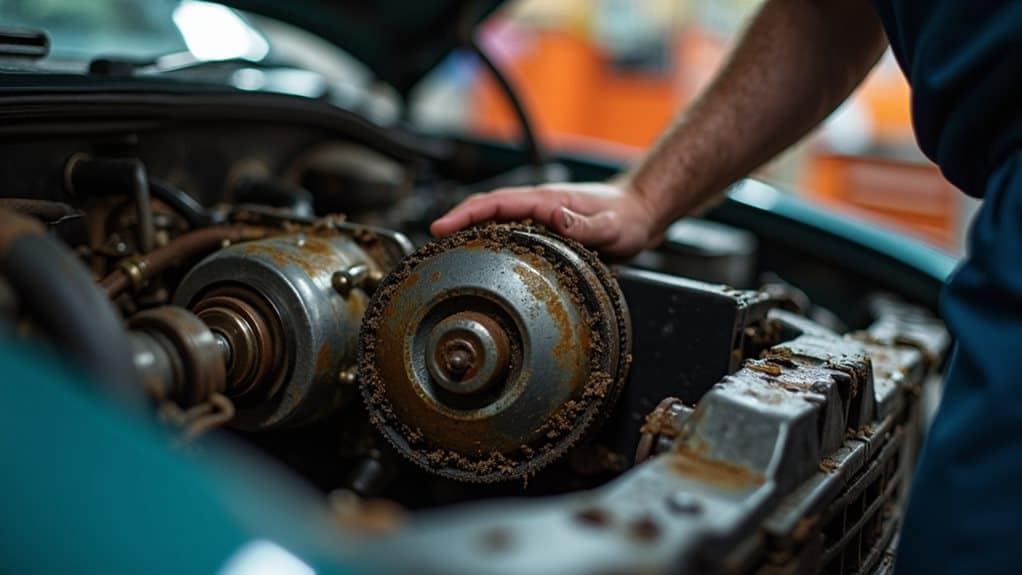
When a humming noise seems tied to engine speed or drivetrain load, you should consider both engine-mounted accessories and the transmission as likely sources, since each system has distinct components that produce similar tonal qualities; for example, misaligned or failing belts, accessory bearings (alternator, water pump, power steering), and exhaust restrictions can create a hum that tracks engine RPM, while low or contaminated transmission fluid, a failing torque converter, worn gears, or collapsing internal bearings produce a speed-sensitive drone that often varies with gear selection.
Check belts, accessory bearings, exhaust integrity, and transmission fluid/torque converter condition; note pitch changes with acceleration and gear selection to narrow the cause. If the sound increases with speed and you also detect fuel-related symptoms like a high-pitched whine from the tank area, low fuel pressure or a failing pump could be contributing.
Road Tests to Pinpoint the Source (Step‑by‑Step)
To pinpoint whether a speed‑sensitive humming comes from the tires, wheel bearings, drivetrain, or engine accessories, you’ll run a series of controlled road tests that isolate variables and change load conditions so you can observe how the noise responds; each test targets a specific subsystem and uses simple steering, braking, throttle, and gear changes to reveal whether the tone tracks road speed, engine RPM, lateral load, or braking forces. Drive at the loudest speed, weave gently, note left/right differences, shift to neutral to see if noise vanishes, apply light brake pressure to test bearing/driveline response, and vary RPM in a high gear to separate road‑speed from engine sources. Worn shocks or bad wheel balance can make the humming worse by amplifying vibrations, so inspect suspension and unbalanced tires if the tone changes with speed.
Visual and Hands‑On Checks You Can Do Safely at Home
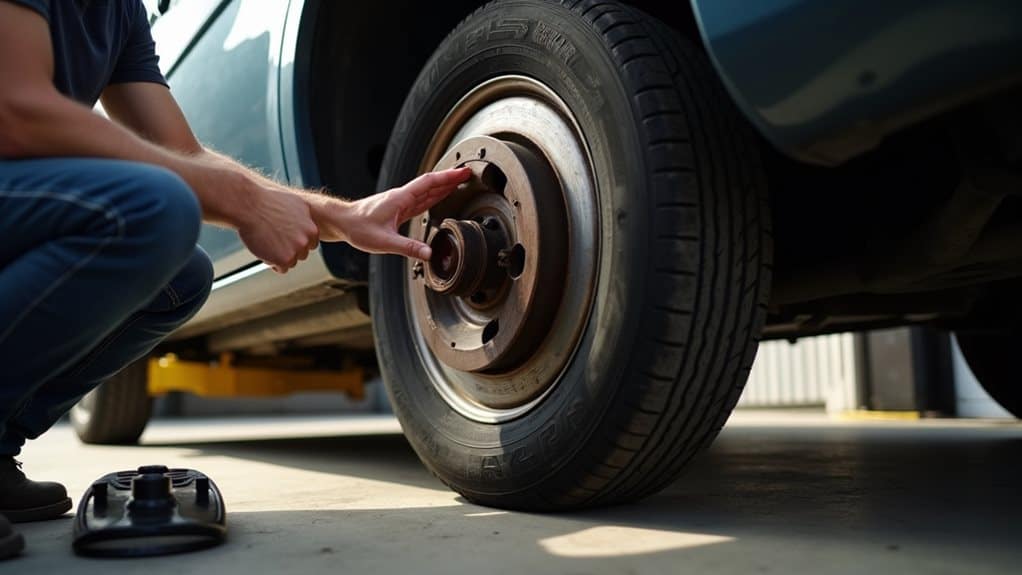
How do you begin checking a speed‑sensitive humming at home without specialized tools?
Start by inspecting tires for cupping, flat spots, cuts, or uneven edge wear; use a tread gauge or penny.
Safely jack the car, wiggle and spin each wheel to detect play or rough bearings, feel rotor heat, and look for brake debris, leaking fluid, or damaged suspension and CV joints.
When to Drive to a Shop : What to Tell the Mechanic
If you hear humming that grows with speed or notice vibration, stop driving and take the car to a shop—if the sound is louder than the radio, flashing lights appear, or the temperature or oil pressure warnings come on, arrange towing rather than driving.
When you contact the mechanic, be ready to give specific details: the speed range where the humming is audible, whether it happens during acceleration, steady cruise, braking, or cornering, and whether vibration is felt in the steering wheel or seat.
Also bring recent service history, tire brand and pressures, a short video or timestamped recording of the noise, and the vehicle’s mileage and any warning-light readings so the technician can prioritize wheel bearing, tire balance, alignment, or drivetrain inspections quickly.
When To Visit Now
A loud, speed‑linked humming noise is something you shouldn’t ignore, and you need to decide quickly whether to drive to a shop or get the car towed; start by matching the sound and symptoms to the risk levels outlined below.
If vibration, smoke, power loss, flashing lights, or fluid leaks appear, call a tow.
Otherwise, drive short distances at low speed to a nearby shop.
Key Details For Mechanic
Now that you’ve decided whether to drive or tow, prepare concise, specific information for the technician so they can diagnose the speed‑linked humming quickly and accurately.
Tell them where the noise is, how loud it gets by speed range, any vibration or steering changes, recent maintenance and mileage when it began, and results of simple tests you ran (coast, brake, shift).
Mention vehicle make, model, and axle affected.
Typical Repairs and Estimated Costs by Cause
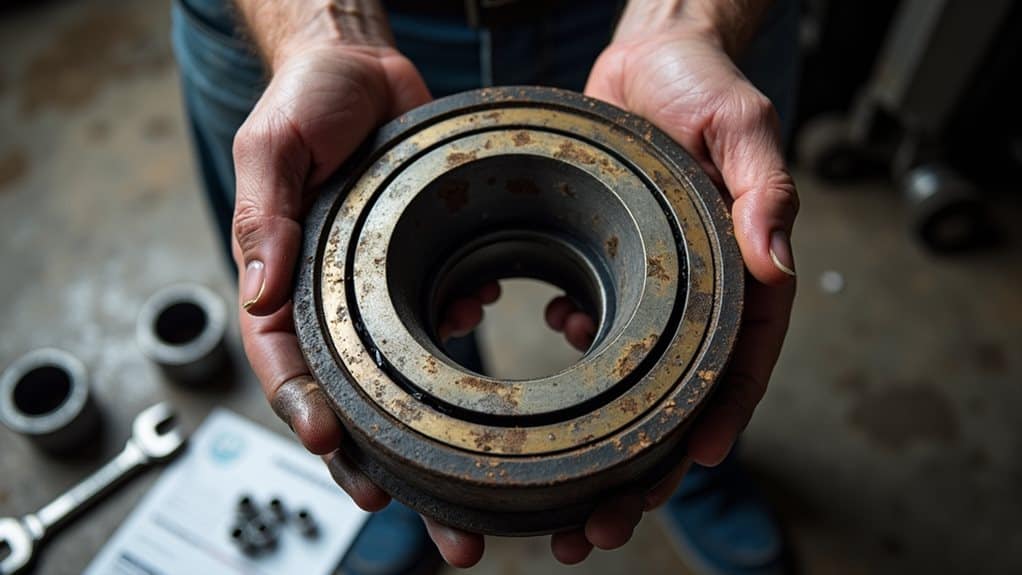
Because humming that grows with speed can come from several systems, you’ll want to match the symptom to likely causes before authorizing any repairs.
Front wheel bearing replacement runs $300–$500 per wheel; tire rotation $20–$50 or new tires $100–$200 each; differential service $150–$3,000+ depending on repair; transmission flush $150–$250, rebuild $3,000+; alternator $350–$600; power steering pump $400–$800.
Preventive Maintenance to Stop Humming Before It Starts
Having covered likely repairs and their costs, you should focus on preventive maintenance to reduce the chance of humming developing in the first place.
Check tire pressure weekly, rotate tires every 5–7k miles, and inspect tread depth monthly.
Annually check wheel bearings, monitor drivetrain fluids and CV joints, inspect belts, pulleys, mounts, and perform alignment and suspension checks after impacts to prevent noise.
Wrapping Up
You’ll want to pinpoint whether the hum follows engine RPM or road speed, because that tells you if it’s an engine, drivetrain, or wheel/tire issue. Do basic checks—tire wear, inflation, wheel play—and listen during a test drive; note side-to-side changes and when it gets louder. If you suspect a bearing, worn tire, or CV/driveline problem, get a mechanic to inspect and quote repairs. Regular tire rotation, balance, and inspections prevent most speed‑dependent humming.