You shouldn’t dump brake fluid; it’s toxic and damages plumbing and the environment. Collect used fluid in a sealed, labeled chemical‑grade container (note DOT type, “Used Brake Fluid,” date, and volume), wear nitrile gloves, then take it to a household hazardous waste (HHW) center or an auto shop that accepts it. Small spills can be absorbed with kitty litter; large spills need containment and hazmat. Follow local HHW rules, bring ID, and check fees — more practical disposal, storage, and spill steps follow.
Quick Tips
- Never pour brake fluid onto ground, into drains, or into septic systems — it’s hazardous and illegal.
- Store used fluid in a labeled, tightly sealed chemical-grade container and avoid mixing different types.
- Take small or contaminated quantities to your local household hazardous waste (HHW) facility for proper disposal.
- Some auto shops or recycling centers accept clean, labeled brake fluid — call ahead for limits, fees, and preparation rules.
- Transport containers upright in a secondary leak-proof box, wear gloves/eye protection, and secure paperwork or ID if required.
When to Dispose Brake Fluid: Age, Contamination, and Symptoms
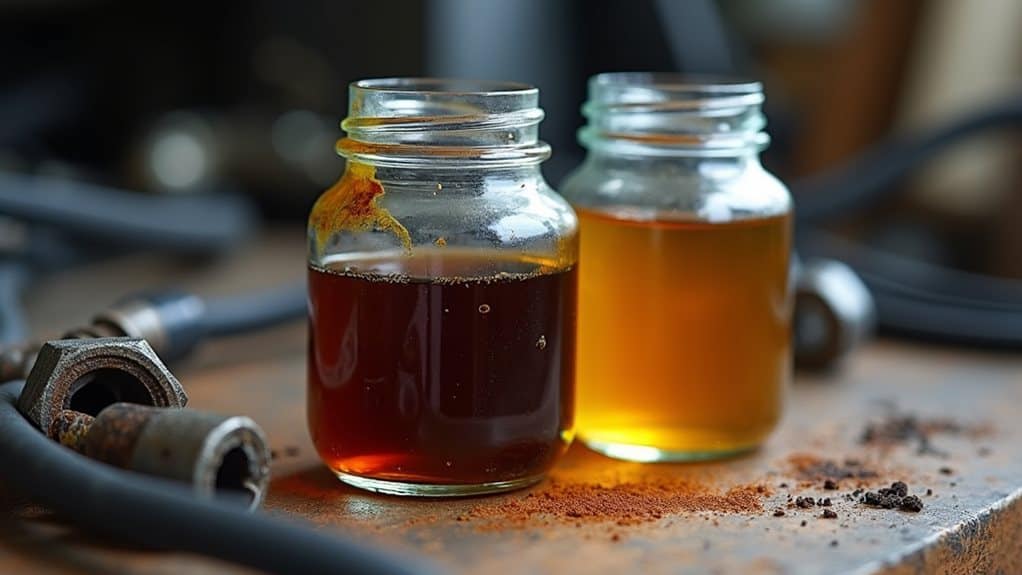
When should you replace brake fluid? Replace by age: unopened glycol ~2 years, opened bottles within 3 months, silicone up to 5 years if stored properly.
Replace immediately if moisture >3%, boiling point falls under 500°F, or fluid looks dark, cloudy, or contains particles.
Also act on symptoms: spongy pedal, increased stopping distance, sinking pedal, or warning lights—follow manufacturer intervals too. Brake fluid is a hydraulic fluid specially designed for automotive brake systems transmitting force. It is important to avoid using incompatible fluids like transmission fluid because mixing them can damage seals and reduce braking performance.
Why Never Pour Brake Fluid Down Drains or on the Ground
Why should you never pour brake fluid down a storm drain or onto the ground? Brake fluid contains toxic, flammable chemicals classified as hazardous waste, so dumping contaminates waterways, harms aquatic life, and pollutes soil and groundwater.
It can kill septic bacteria, corrode pipes, and create underground fire risks.
Laws forbid dumping, and violations can trigger fines, cleanup liability, and infrastructure costs.
Always store and dispose of brake fluid following hazardous waste guidelines at a certified collection site.
What to Do Now: Dispose, Recycle, or Contain (Quick Decision)
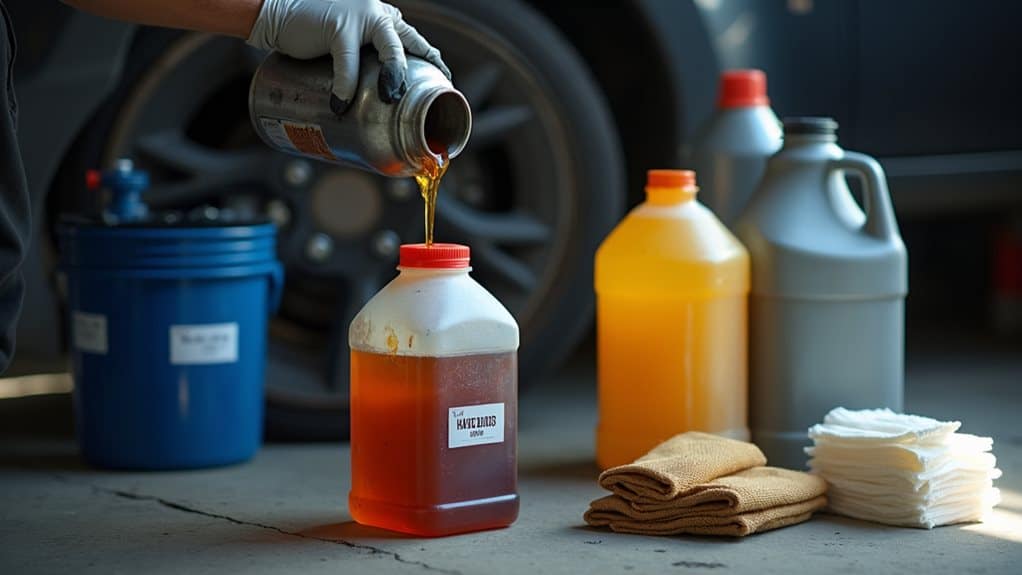
Decide quickly whether you’ll dispose, recycle, or contain the brake fluid, because the right choice depends on how much you have, its condition, and local regulations. If contaminated or small quantity, take it to a household hazardous waste facility; if clean and accepted, some centers recycle brake fluid.
Otherwise, contain it in a labeled, sealed chemical-grade container and await proper disposal guidance. Check the system for signs of fluid leakage before disposal to avoid hiding underlying brake issues.
How to Store and Label Used Brake Fluid Safely
After you’ve chosen whether to dispose, recycle, or contain the fluid, store used brake fluid in a way that prevents leaks, contamination, and chemical degradation.
Keep it in the original, tightly sealed container or an approved, leakproof vessel; label with fluid type (e.g., DOT 3), “Used Brake Fluid,” date opened, volume, and hazard warnings.
Store cool, ventilated, away from children and ignition sources.
Also consider using a smart battery charger to maintain any vehicle batteries stored nearby and prevent sulfation while brake fluid is being handled.
Prepare and Transport Used Brake Fluid Safely (What to Bring, Fees)
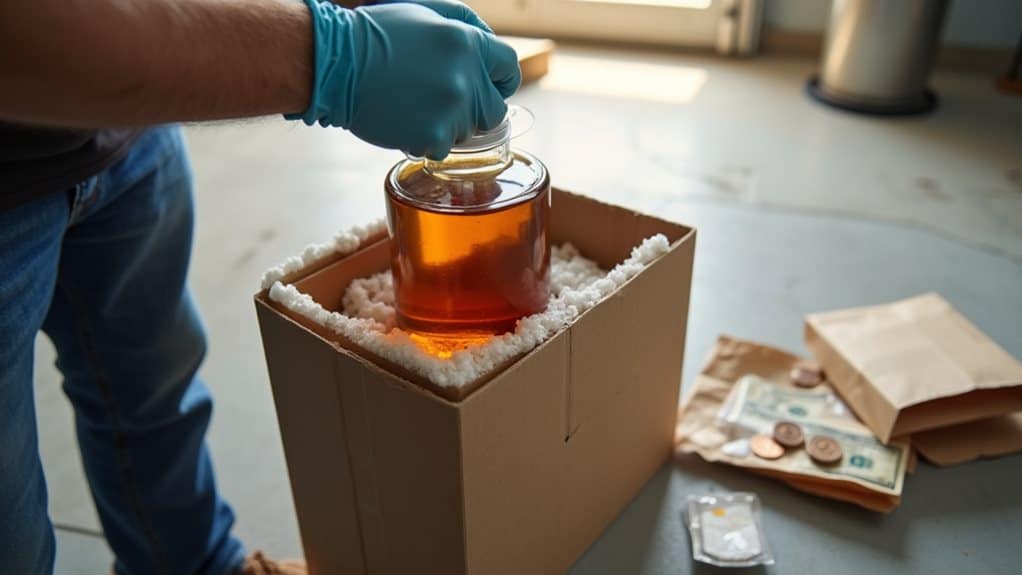
When you prepare to transport used brake fluid, gather the right containers, protective gear, and documentation so the drop-off goes smoothly and safely; use only tightly sealed, non‑reactive containers (glass jars or approved plastic bottles), place each upright inside a leak‑proof secondary container, and clearly label them “Used Brake Fluid” with the fluid type and volume.
Wear nitrile gloves, eye protection, secure containers in the trunk, bring ID or residency proof, and a completed disposal form if required.
Most HHW centers accept it free; commercial drops may charge $5–$20/gal.
Inspect hoses and seals for contamination before transport to avoid leaks from degraded components and consult resources on brake hose failure if you suspect internal collapse.
Where Homeowners Can Drop Off Brake Fluid: HHW vs Auto Shops
You can drop off brake fluid at designated HHW (household hazardous waste) centers, which usually accept labeled, sealed containers up to about 15 gallons or 125 pounds per resident and offer free residential service on specific days.
Some auto repair shops will take used brake fluid for recycling or transfer to a waste facility, but they often limit acceptance to customers, require sealed and labeled containers, and may charge a disposal fee or require an appointment.
Check local HHW locations and shop policies ahead of time so you know hours, any appointment requirements, acceptable quantities, and whether a fee will apply.
Heavy vehicles may require specialized heavy-duty floor jacks and handling considerations when disposing of large volumes of brake fluid.
HHW Drop-Off Locations
Although auto shops sometimes accept small amounts of used brake fluid, municipal household hazardous waste (HHW) drop-off sites are usually the safer and more widely available option for homeowners, since they’re set up to handle, store, and recycle hazardous liquids properly.
Check local HHW hours and rules—many accept brake fluid free in original containers, limit residential drops, and list specific locations and operating days.
Auto Shop Acceptance Policies
Because policies vary widely by chain, region, and even individual store managers, you’ll need to call ahead before assuming an auto shop will accept used brake fluid; some national retailers and diagnostic centers exclude brake fluid entirely or accept it only in certain jurisdictions, while many independent mechanics will take it if it’s sealed, labeled, and free of contamination.
Confirm container, quantity, and local rules.
Appointment And Fee Details
When dropping off brake fluid, plan ahead and make an appointment at your local household hazardous waste (HHW) facility or check whether a nearby auto shop accepts small quantities.
HHW sites typically require bookings made online or by phone, usually within a 24‑hour to 7‑day window, while auto shop policies vary by chain and location and often require you to call first.
Most HHW drop-offs are free for homeowners; fees apply for over 5 gallons or commercial waste, payment methods vary, and containers must be sealed, labeled, and not mixed with other hazardous materials.
How to Find Local HHW Drop‑Offs and Curbside Pickup
How do you locate the right place to drop off or arrange pickup for brake fluid and other household hazardous waste?
Check municipal HHW centers, rotating events, or curbside programs. Call listed numbers (e.g., 831-454-2606, 916-875-5555), use city interactive maps, or contact regional waste services.
Verify hours, appointment rules, container labeling, and whether curbside pickup accepts sealed, clearly labeled brake fluid.
Clean Small Brake‑Fluid Spills With Kitty Litter and Evaporation
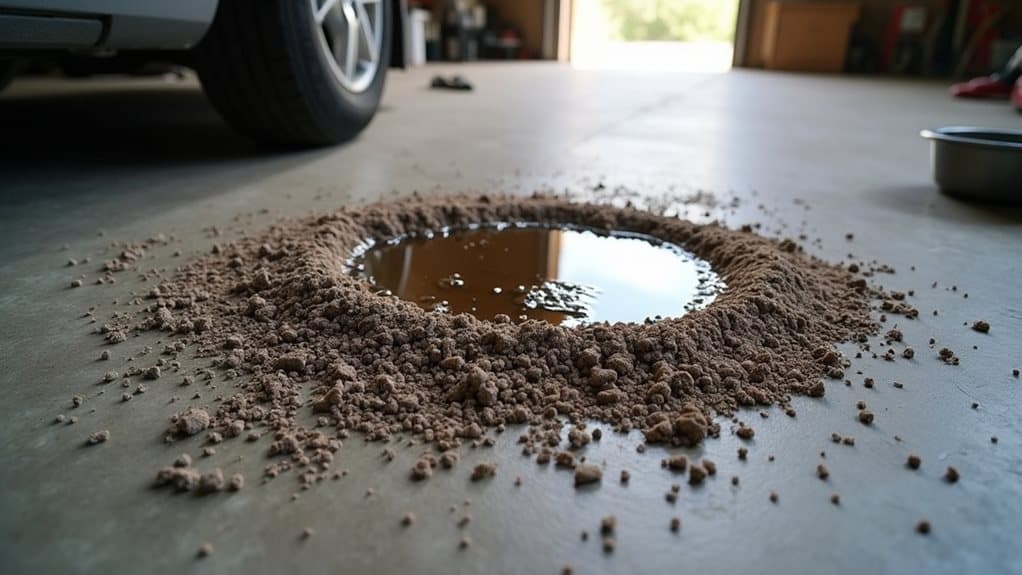
If you spill a small amount of brake fluid, act quickly and use cheap, non‑clumping clay-based kitty litter to absorb it: spread a generous layer over the entire puddle so the granules contact the fluid, let it sit at least 15–20 minutes (overnight if practical) to wick up glycol‑ether–based fluids, then sweep the saturated litter into a dustpan with a stiff broom;
this approach captures the bulk of the liquid, reduces surface penetration into concrete pores, and makes subsequent evaporation and disposal safer and easier.
After sweeping, place the used litter in a well‑ventilated, uncovered area for 3–5 days to evaporate residual solvents; confirm no fumes, then seal dry material in a thick plastic bag and discard per local rules.
What to Do for Larger Spills or Leaks: Containment & Emergency
Small, contained spills you can clean with kitty litter are one thing; large leaks call for immediate containment and an organized emergency response to protect people and the environment.
Secure the area, block spread with sandbags or absorbent socks, cut off drains, and post warnings.
Use high‑volume absorbents, apply neutralizing water‑vinegar mix, ventilate, evacuate if needed, and contact hazmat crews.
Local Disposal Laws & Environmental Risks: What to Check
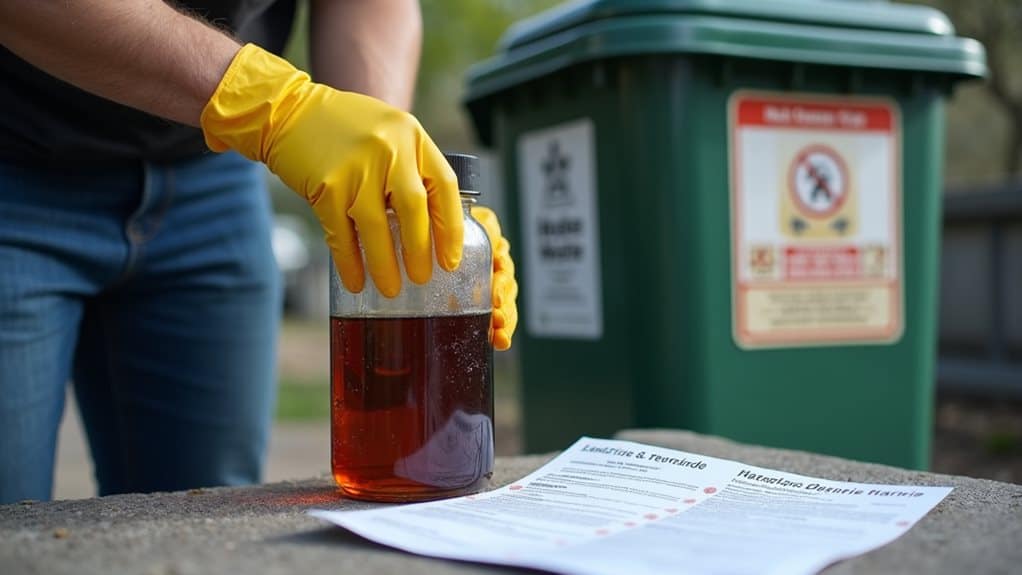
Where should you start when local rules and environmental risks intersect with brake‑fluid disposal? Check HHW facility rules: hours, container types, fees, appointments, and volume limits. Verify retail take‑back policies and whether mixed fluids are accepted.
For businesses, confirm EPA/state reporting, tracking, permits, and fire‑department notifications. Note contamination risks, cleanup liability, and fines for illegal dumping; follow local evaporation and kitty‑litter guidelines.
Reduce Brake‑Fluid Waste: Storage, Maintenance, and Buying Tips
To cut down on brake‑fluid waste, start by treating storage, maintenance, and purchasing as an integrated system:
store unopened fluid in its original, tightly sealed containers and keep them in a cool, dry place away from sunlight and petroleum products, date each opened container, and use FIFO or FEFO inventory methods so older stock gets used first.
Flush every two years, buy exact volumes, never reuse drained fluid, reject cloudy or bulging containers, and keep stock off the floor to reduce moisture and temperature swings.
Wrapping Up
You should discard brake fluid when it’s old, contaminated, or causing braking issues, and never pour it down drains or on soil; take it to a hazardous-waste facility or auto shop for proper disposal, or store it in a labeled, sealed, nonreactive container until transport. For spills, absorb with clay cat litter and sweep into a sealed bag; contain large leaks and call emergency services if needed. Check local rules, minimize waste by keeping fluid sealed and buying only what you’ll use.