When your car backfires on deceleration, unburned fuel ignites in the exhaust, which is caused by issues like incorrect ignition timing, a lean or overly rich fuel mixture, or vacuum leaks that disrupt airflow. Faulty carburetor components or damaged ignition parts also contribute by causing irregular sparks or delayed timing, allowing unburned fuel to escape and ignite in the exhaust system. Correcting these problems improves engine performance; keep exploring to understand detailed troubleshooting steps.
Quick Tips
- Unburned fuel ignites in the exhaust due to timing issues or a lean air-fuel mixture.
- Exhaust leaks allow unburned fuel to escape and ignite outside the combustion chamber.
- Ignition system problems, such as incorrect timing or faulty spark plugs, cause incomplete combustion.
- Vacuum leaks or intake system damage introduce unmetered air, disrupting proper fuel combustion.
- Modifications like aftermarket exhausts can amplify the backfire sound during deceleration.
Why Does My Car Backfire When I Decelerate?
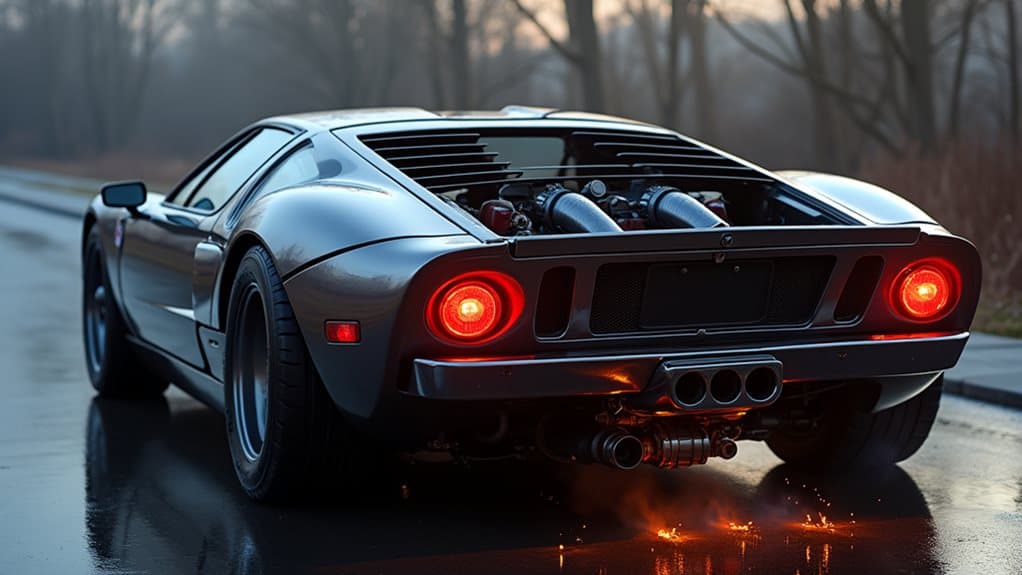
A car tends to backfire during deceleration when unburned fuel in the exhaust ignites unexpectedly, causing a loud pop.
This often happens if the air-fuel mixture is too lean or if ignition timing is too advanced.
Modifications to the exhaust, like glass packs, can amplify the backfire sound.
Proper tuning and avoiding vacuum leaks help prevent this issue.
Using the wrong fuel octane can harm some engines, so check whether your vehicle requires premium gas before troubleshooting.
What Causes Exhaust Backfire During Deceleration?
Exhaust backfire during deceleration occurs when unburned fuel ignites outside the engine’s combustion chambers, producing a loud popping sound.
An exhaust leak can allow unburnt fuel from incomplete combustion or rich mixtures to escape into the exhaust system.
This fuel ignites due to ignition timing issues or a lean air-fuel mixture, causing the characteristic backfire noise.
Regular maintenance, including checking the airflow system and related components, can help prevent conditions that contribute to backfiring.
How Do Fuel Mixture and Carburetor Issues Lead to Backfire?
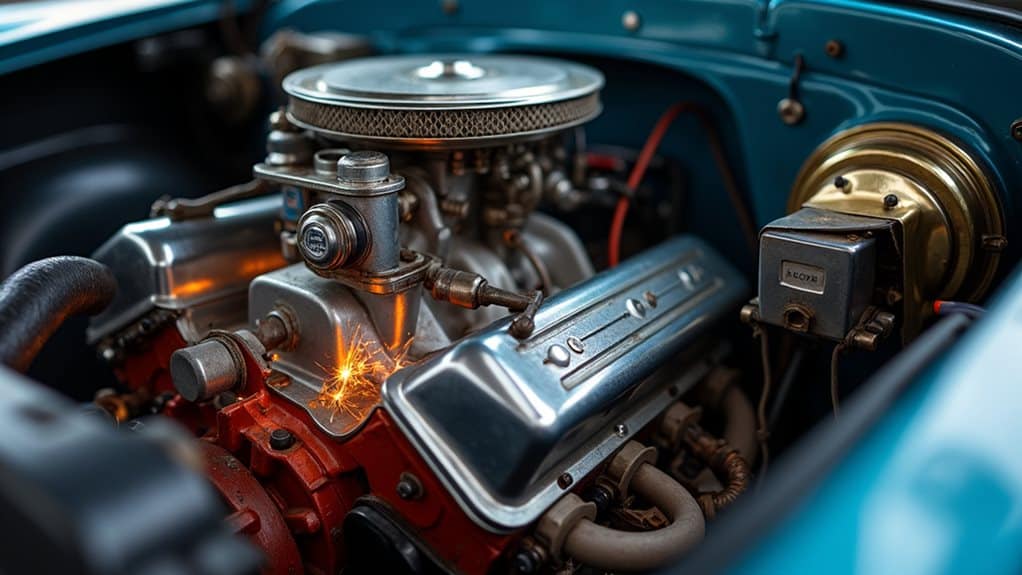
Fuel mixture and carburetor issues play a significant role in causing backfire during deceleration because they directly influence the amount of fuel and air entering the engine.
A lean mixture can cause unburned fuel to ignite in the exhaust, while an overly rich mixture floods the engine.
Faulty carburetor components disrupt fuel delivery, increasing unburned fuel and promoting backfire through the exhaust system.
Proper coolant and accessory drive issues can indirectly affect engine performance and fueling when components like the belt drive or water pump malfunction, leading to conditions that exacerbate backfiring.
Can Ignition Timing or Spark Problems Cause Backfire?
Incorrect ignition timing or problems with the spark can directly cause backfire during deceleration because they disrupt the precise timing of the combustion process.
If your ignition timing is off, especially if advanced, unburned fuel can ignite in the exhaust.
Faulty spark plugs or worn components can produce irregular sparks, leading to incomplete combustion and potential backfire.
Ensuring a solid ignition system—proper 12V supply, good engine ground, and a healthy HEI distributor—helps prevent backfire by maintaining consistent spark timing and strength, so check the engine ground and power to the distributor.
How Do Vacuum Leaks and Air Intake Problems Contribute?
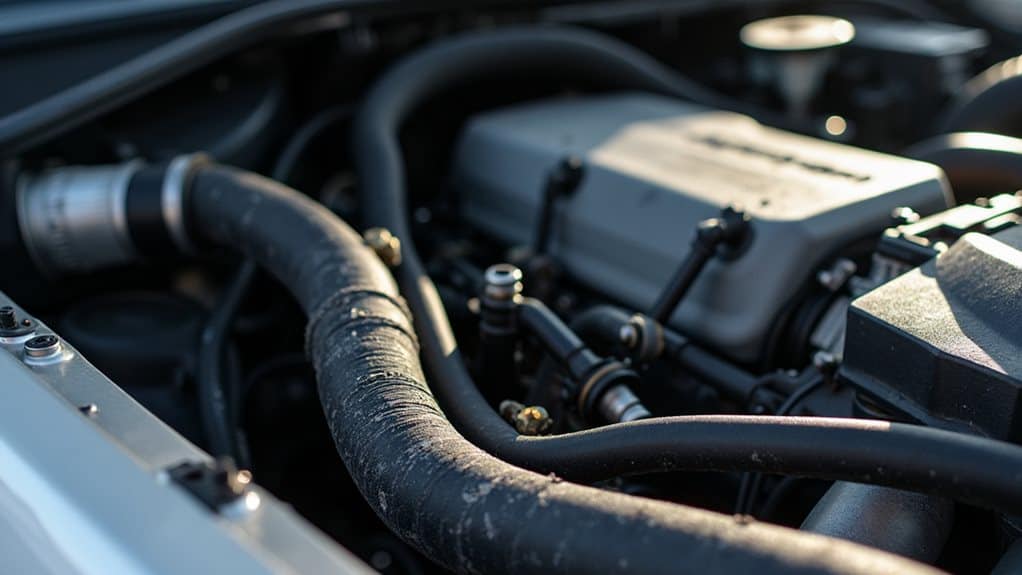
Vacuum leaks and air intake problems can considerably affect your engine’s performance, especially during deceleration. When unmetered air enters through leaks or damaged components, it disrupts the precise air-fuel mixture needed for proper combustion.
This imbalance can cause unburned fuel to ignite in the exhaust system, resulting in a backfire. A common culprit is a vacuum leak that creates a lean condition the ECU can’t fully correct, especially under changing throttle conditions.
Impact of Vacuum Leaks
When vacuum leaks occur in the intake system, they allow outside air to enter the engine without passing through the mass airflow sensor, which measures incoming air for proper fuel mixture calculations.
This unmetered air causes a lean mixture during deceleration, disrupting engine vacuum levels, affecting ignition timing, and increasing the chance of unburnt fuel igniting in the exhaust, leading to backfires.
Air Intake System Role
The air intake system plays a crucial role in ensuring the engine receives the correct mixture of air and fuel necessary for ideal combustion.
Vacuum leaks in this system allow unmetered air to enter, disrupting balance.
Damaged intake hoses or cracked tubes alter airflow, creating lean conditions that cause raw fuel ignition and backfires during deceleration.
Proper maintenance prevents these issues.
Effects on Combustion Quality
Damage or leaks in the engine’s intake system can substantially impact combustion quality, especially during deceleration.
Vacuum leaks cause an overly lean air and fuel mixture, disrupting normal combustion. This imbalance allows unburned fuel to ignite in the exhaust, often resulting in a backfire.
Proper sealing and maintenance are crucial to prevent these issues and guarantee smooth, controlled engine operation.
How Can You Troubleshoot and Fix Backfire During Deceleration?
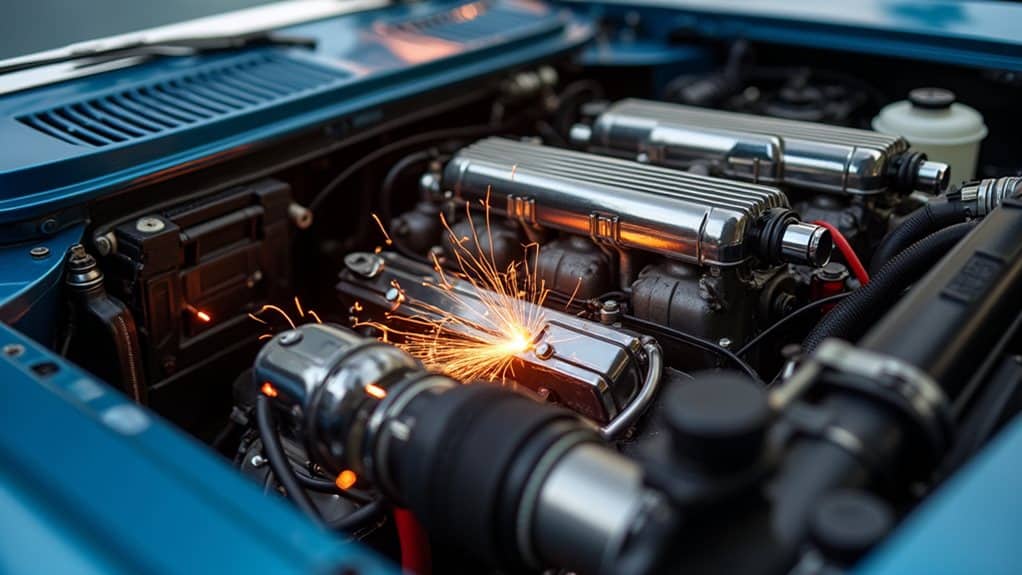
To troubleshoot and fix backfire during deceleration, start by conducting a leak-down test to identify exhaust or intake leaks. These leaks can cause unburned fuel to ignite in the exhaust system.
Use diagnostic tools to monitor the air-fuel ratio, aiming for below 20.
Inspect and repair damaged exhaust components like headers and gaskets to prevent backfire risks.
Wrapping up
Identifying and fixing a car that backfires during deceleration requires understanding its causes. Common issues include incorrect ignition timing, a rich fuel mixture, or vacuum leaks that allow unburned fuel to ignite in the exhaust. Troubleshooting involves checking spark plugs, adjusting timing, inspecting the carburetor, and sealing vacuum hoses. Addressing these problems systematically guarantees smoother engine performance, reduces backfire occurrences, and maintains vehicle safety and efficiency. Proper diagnosis and repair are crucial for peak engine operation.