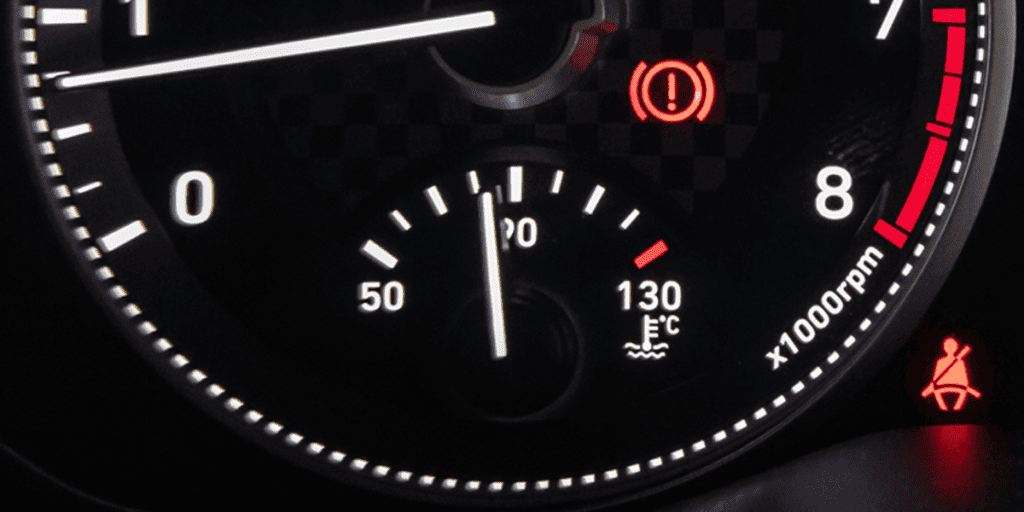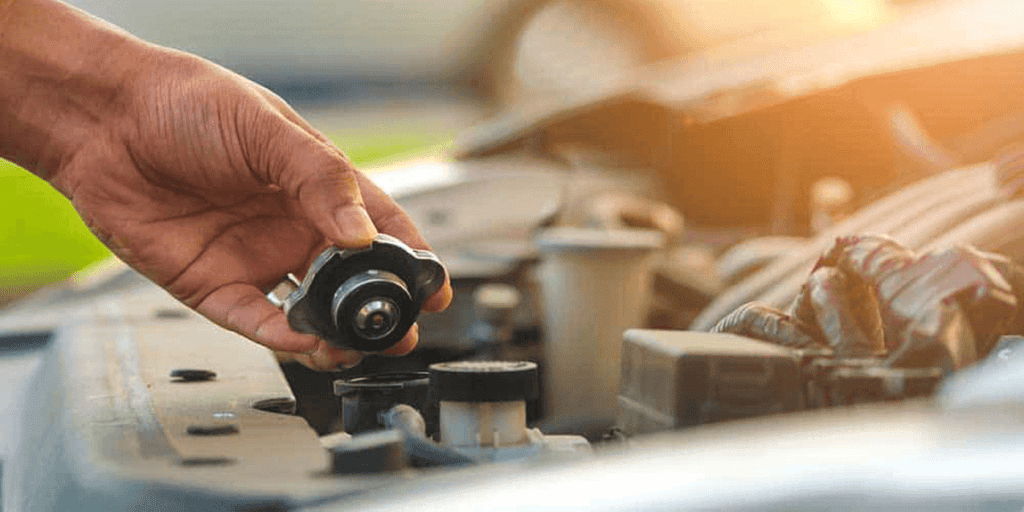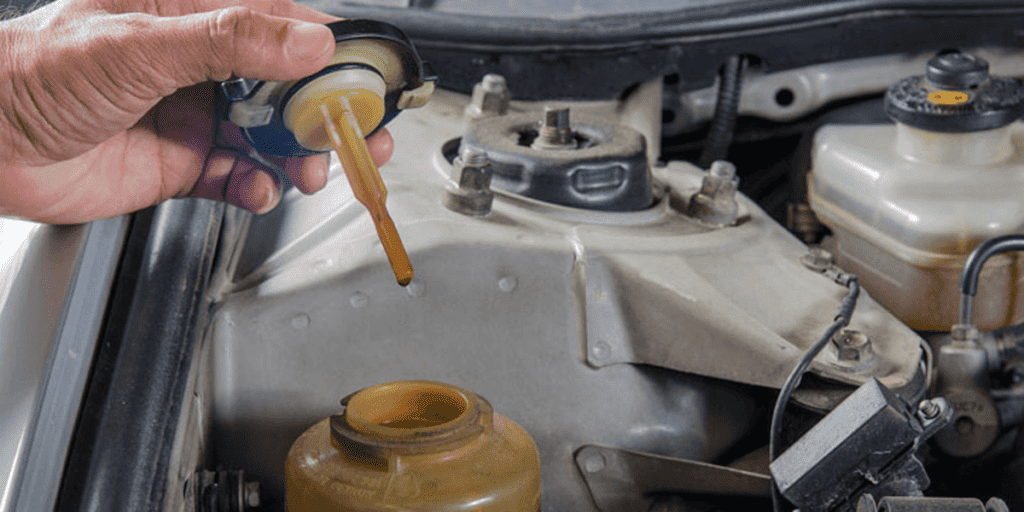
Signs of a failing head gasket include coolant leaks without visible drips, engine overheating, and white smoke from the exhaust. You may notice milky oil on the dipstick or bubbles in the oil, indicating oil contamination. External coolant leaks, loss of coolant without leaks, and bubbling in the radiator are also key indicators. Additionally, engine misfires or power loss can signal internal issues. Continuing this guide will provide deeper understanding into early detection and diagnostics.
Quick Tips
- Look for unexplained coolant loss or leaks without visible drips near the gasket area.
- Watch for engine overheating and persistent bubbling in the radiator.
- Check for white smoke from the exhaust or milky oil on the dipstick.
- Monitor for rough idling, misfires, or decreased engine performance.
- Conduct chemical tests for combustion gases in the coolant to detect internal leaks.
What Is a Head Gasket and Why Is It So Important?
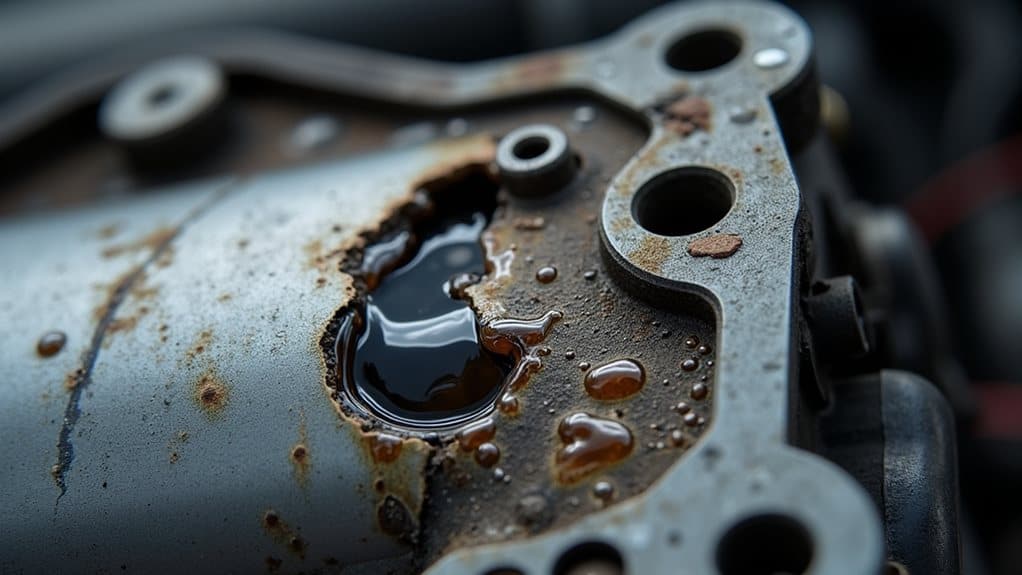
Have you ever wondered what keeps your engine running smoothly beneath the hood? The head gasket seals the cylinder head to the engine block, preventing engine fluids like coolant and oil from mixing.
It maintains compression in the combustion chambers.
Gasket failure can cause coolant leaks, engine overheating, and a loss of compression, risking severe engine damage. Using proper rust prevention and maintenance, such as treating exposed metal and keeping components clean, helps reduce related risks to engine integrity and longevity, especially when applying protective coatings.
How Can You Tell If Your Head Gasket Is Starting to Fail?
Detecting the early signs of a head gasket failure involves paying close attention to several key indicators.
Coolant leaks may occur without visible drips, and engine overheating often signals gasket issues.
White smoke from the exhaust, frothy oil, or coolant in the oil suggests gasket failure.
Performing a compression test can confirm if the gasket is compromised, preventing further engine damage.
Fuel system issues can also cause dangerous leaks only while the engine is running, so inspect fuel lines and connections for cracks or loose clamps that fail under operating pressure and consider pressure testing to identify problems accurately.
Does Engine Overheating Mean a Head Gasket Problem?
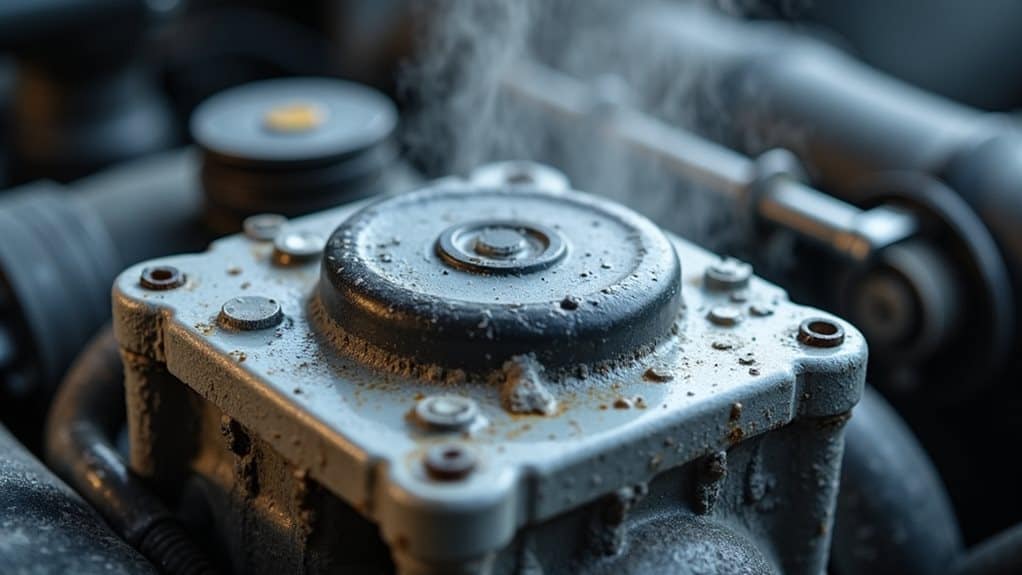
Engine overheating can be a sign of a head gasket problem, but it’s important to understand what causes this issue. Overheating occurs when coolant leaks, combustion gases enter the cooling system, or the flow of coolant is restricted, all of which can stem from a failing gasket.
However, other factors like radiator or cooling fan failures can also cause overheating, so it’s essential to take into account the overall condition of your engine. Prolonged overheating can lead to severe engine damage such as blown head gaskets and cracked engine components.
Overheating Causes
Is engine overheating always a sign of a head gasket failure? Not necessarily. Overheating can result from issues like coolant leaks, low coolant levels, or radiator blockages.
White smoke and coolant loss often indicate a gasket problem, but other causes include thermostat failure or cooling fan issues.
Proper diagnosis involves testing the coolant system and engine temperature regulation.
Gasket Failure Link
While engine overheating is often associated with head gasket failure, it doesn’t automatically mean the gasket is the cause.
Signs like coolant leaks, bubbles in the radiator, or loss of compression suggest internal issues.
Oil and coolant mixing or a warped cylinder head can also lead to overheating, indicating possible head gasket failure without external leaks.
What Do White Smoke and Coolant Loss Indicate?
White smoke coming from your exhaust combined with coolant loss is a clear sign that something is wrong inside your engine. Often, this indicates a head gasket failure.
This usually results from internal leakage of coolant into the combustion chamber, causing white smoke.
Persistent coolant loss and white smoke suggest coolant mixing and potential engine overheating, signaling the need for immediate inspection.
Check engine codes and perform diagnostics to rule out other causes like a failing head gasket or leaking coolant passage.
How Do Oil Contamination and Engine Performance Changes Show Up?
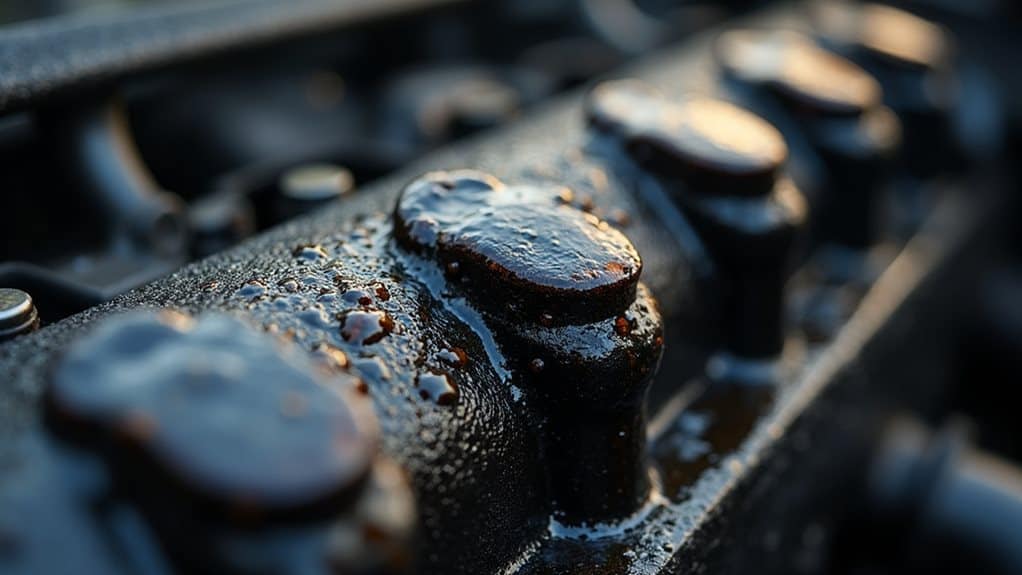
When your engine oil appears milky or frothy on the dipstick or under the oil cap, it indicates that coolant has mixed with the oil. This is often due to a failing head gasket.
You may also notice a decline in engine performance, such as misfires, rough idling, or a loss of power. This occurs because reduced compression affects combustion efficiency.
Additionally, symptoms like bubbles or white foam in the oil, increased oil consumption without visible leaks, or warning lights can signal that coolant contamination is impairing your engine’s operation. The fuel system can also be affected if electrical components like the fuel pump control module malfunction and alter fuel delivery.
Milky Oil Appearance
A milky or frothy appearance on your oil cap or dipstick indicates coolant has entered the oil system, signaling coolant ingress and coolant contamination.
This milky oil, often showing a color change or creaminess, reduces lubrication efficiency and accelerates engine wear.
Regular checks help detect head gasket leaks early, preventing more severe engine damage from sustained oil and coolant mixing.
Engine Power Loss
Engine power loss is a common sign that indicates your vehicle’s head gasket may be failing, especially when oil contamination occurs.
Coolant leaks into the engine can cause compression loss, leading to misfires and rough idling. These issues reduce engine performance and responsiveness.
Oil contamination, with a milky appearance, further signals internal gasket failure affecting overall engine efficiency.
Rough Idling Symptoms
Rough idling symptoms often become noticeable when oil contamination interferes with the engine’s normal operation. Signs include engine misfire, stalling, and inconsistent idling, which can stem from head gasket failure causing coolant leaks.
Milky oil, compression loss, and reduced engine performance indicate coolant and oil mixing, leading to rough idling and potential engine damage if not addressed promptly.
What Do External Leaks and Bubbles in the Cooling System Signify?
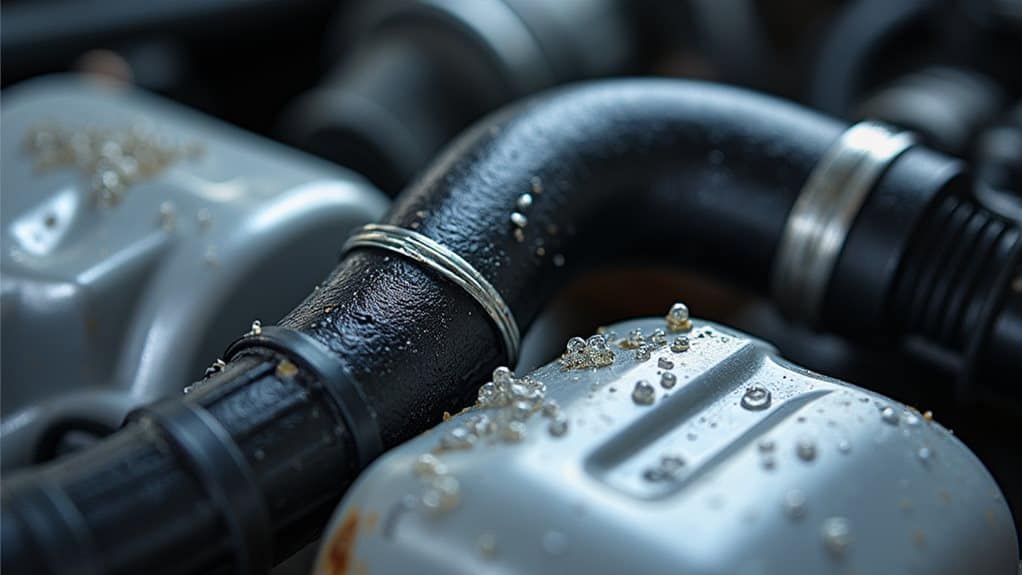
External leaks and bubbles in the cooling system are important indicators of potential head gasket failure.
If you notice coolant leaks near the gasket area or persistent bubbling in the radiator, it may mean exhaust gases are escaping into the coolant channels.
These signs can lead to engine overheating, signaling that the head gasket is compromised and needs immediate inspection.
Faulty ECU signals can also cause electrical issues that may affect engine management systems and lead to symptoms similar to cooling system problems, so have the ECU checked if electrical anomalies accompany these signs.
How Can You Monitor Your Vehicle to Detect Head Gasket Issues Early?
Monitoring your vehicle closely is essential for early detection of head gasket issues, as many signs manifest before failure. Check coolant levels regularly and watch for unexplained drops.
Use the engine temperature gauge to detect overheating.
Inspect for oil leaks, white smoke from the exhaust, and coolant leaks around the radiator cap.
Chemical tests can detect combustion gases in the coolant, indicating gasket problems.
What Are the Best Ways to Prevent Head Gasket Failures?
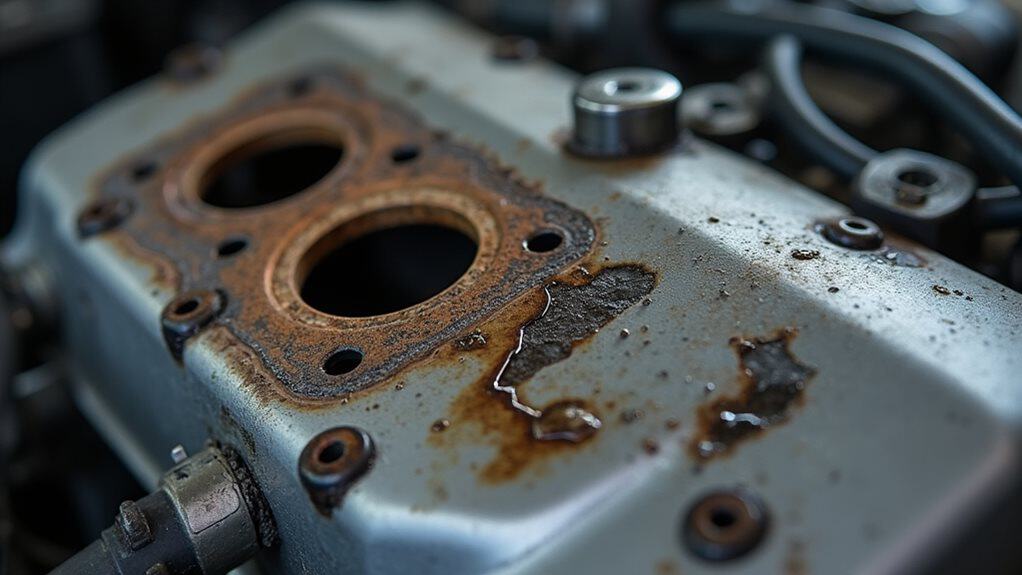
Proper prevention of head gasket failures begins with maintaining the cooling system effectively. You should regularly check coolant levels and guarantee the mixture prevents overheating.
Routine cooling system maintenance, including flushing coolant passages and inspecting gasket sealing, helps avoid engine temperature issues.
Using high-quality gaskets during head gasket repair enhances durability and reduces the risk of failure caused by thermal stress.
What Should You Do If You Suspect a Head Gasket Leak?
If you notice signs that could indicate a head gasket leak, such as unexplained drops in coolant or oil levels, it’s important to act quickly.
Check for coolant leaks, oil contamination, overheating, or white smoke.
Stop driving if these symptoms occur.
Seek professional diagnosis promptly—experts can perform tests to confirm the leak, preventing further engine damage.
Wrapping up
Regularly monitor your engine’s temperature, coolant levels, and oil condition to catch head gasket issues early. Pay attention to symptoms like white smoke, coolant leaks, or engine performance changes, as these can indicate failure. Promptly address any signs by consulting a mechanic to prevent severe engine damage. Maintaining proper cooling system function and addressing minor problems immediately helps extend your engine’s lifespan and avoid costly repairs caused by a blown head gasket.