
Your car’s AC vents should blow air 30–40°F cooler than the outside temperature, so if it’s 100°F outside, 60°F air is normal. In extreme heat or humidity, temps of 50–55°F are acceptable since cooling efficiency drops. Set your AC to max cool, use recirculate, and measure from the center vent after a few minutes. If the drop is less than 25°F, there may be an issue—especially if airflow feels weak or cooling takes over 15 minutes. You’ll want to check common causes like low refrigerant or a clogged filter.
Quick Tips
- Normal AC vent temperatures are typically 35–40°F, or 30–40°F cooler than the outside air.
- At 100°F ambient, 60°F vent air is normal; a 30–40°F drop indicates good performance.
- In extreme heat or humidity, vent temps up to 50–58°F may be acceptable due to reduced cooling capacity.
- Vent air warmer than 60°F or a differential under 20°F may signal refrigerant leaks or system issues.
- Measure vent temperature with AC on max, fan high, and recirculate mode for accurate performance assessment.
What Temperature Should Car AC Vents Blow?

Most drivers expect cold air when they turn on the AC, but the exact temperature coming from your vents depends on several factors.
Under standard conditions, you’ll see 35–40°F at the vent. High humidity or ambient heat raises output to 45–50°F. Set your fan to high, use recirculate, and make sure the engine is warm for the best cooling performance. If the vent temperature seems off, check the radiator fan and cooling system components as they can affect AC efficiency.
A reliable assessment requires comparing vent temperature to ambient conditions, which is often missed in basic tests—making typical temperature differential a key indicator of true AC performance.
Ideal AC Vent Temp: 30–40°F Below Outside Air
You’ll usually get the best cooling when your AC blows air 30–40°F colder than the outside temperature, which means 60°F air at a 100°F ambient is normal.
The actual vent temperature depends on both the outside heat and humidity—higher humidity reduces cooling, so you might see 45–50°F even if the system’s working right.
For an accurate check, run the AC on high, in recirculate mode, for at least 10 minutes before measuring at the center vent.
Also check cabin airflow and filters, since restricted airflow from a dirty air filter can make vents feel warmer.
Optimal Temperature Differential
A well-functioning car air conditioning system typically delivers air from the vents that’s 30°F to 40°F cooler than the outside temperature, and this range represents the core benchmark for peak performance.
You achieve peak cooling when the differential hits 40°F; 30°F is acceptable. In extreme heat, up to 45°F drop is possible.
Measure accurately by testing vent air on low fan, in recirculation mode, while noting ambient conditions.
Ambient Influence On Cooling
When outside temperatures climb, your car’s air conditioning system has to work harder to deliver cold air, and this directly affects how cool the air coming from the vents can get.
High ambient heat reduces cooling efficiency, especially above 80°F. Combined with humidity, the system struggles to achieve ideal vent temperatures—typically 30–40°F below outside air.
How Hot Weather Affects Your Car’s AC Output
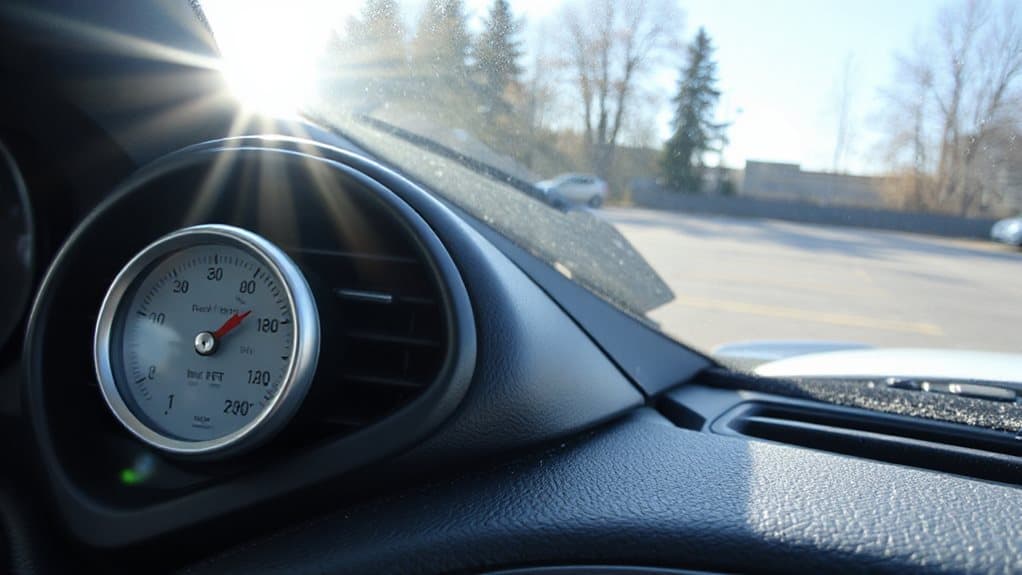
When it’s blazing outside, your car’s AC can’t cool as effectively because the high ambient temperature limits how much the refrigerant can condense.
Hot, humid air makes things worse—your system has to work harder to remove moisture before it even cools the air, so vent temperatures naturally rise.
That’s why you might see 58°F instead of 49°F on a scorching day, even with everything running normally.
Cooling fans may run for a few minutes after shutoff to help dissipate residual heat and protect the engine, especially in hot conditions and when the AC has been working hard, due to their role in dissipating excess heat from the radiator.
High Ambient Cooling Limits
Even though your car’s air conditioning system works hard to keep you cool, its performance depends heavily on how hot it’s outside.
Most vehicles are designed to handle up to 95°F (35°C) ambient temperatures. Beyond that, cooling drops off—your AC may only cool 30–40°F below the outside air.
At 100°F, expect about 60°F at the vents. Driving helps; idling in extreme heat strains the system, reducing efficiency.
Humidity Impact On Output
Often, high humidity plays a bigger role than people realize in how cool your car’s AC feels, even if the system is working perfectly.
Warm, moist air holds more heat, making vent temperatures seem less cold—up to 58°F (14°C) can be normal.
R-134a performance charts factor in humidity, showing higher acceptable discharge temps.
Is 50–55°F Normal for Car AC Vents?
A vent temperature between 50°F and 55°F is typically normal for your car’s air conditioning—especially when outside temperatures are high or humidity levels are raised.
You can expect warmer output under extreme heat or 90% humidity, where 45–50°F is common. At upper 90s ambient, 50°F is acceptable if cooling feels effective, since absolute 40°F isn’t always achievable. If vents are noticeably warmer than this range, check for possible causes like low refrigerant that can reduce cooling performance.
How to Check Your AC’s Vent Temperature
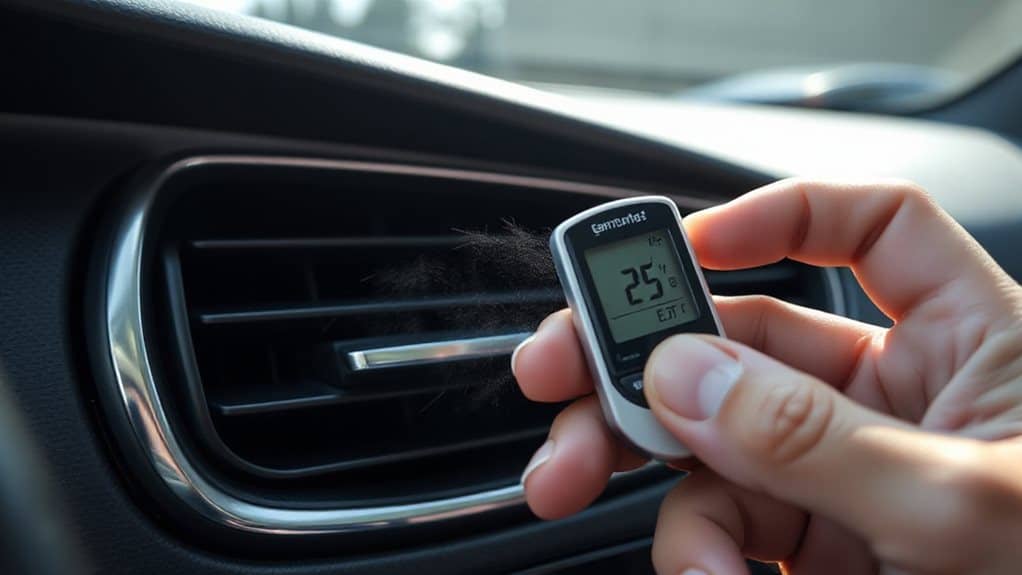
To accurately assess your car’s AC performance, start by measuring the vent temperature using a digital thermometer placed in the center dash vent on the passenger side.
Position the probe in the airflow without blocking it fully. Set the AC to max cool, fan on high, and recirculation mode.
Let it run for 2–5 minutes, then read the temperature while noting ambient conditions for accurate evaluation. Regularly checking vent temperature can help identify issues like a clogged cabin air filter or weak airflow that may indicate HVAC problems such as a failing blower motor.
Why High Humidity Makes AC Air Feel Warm
Dealing with sticky, moisture-heavy air? High humidity forces your AC to work harder removing water vapor before cooling, slowing heat transfer.
Moist air holds more heat, reducing cooling output. Even if the system runs, damp air feels warmer.
Condensation on coils restricts airflow, further limiting efficiency. So, while the AC cools, humidity makes the air feel less cold than expected.
In addition, poor airflow from a clogged cabin filter or weak blower can worsen this effect by reducing dehumidification airflow across evaporator.
7 Signs Your Car AC Isn’t Cold Enough
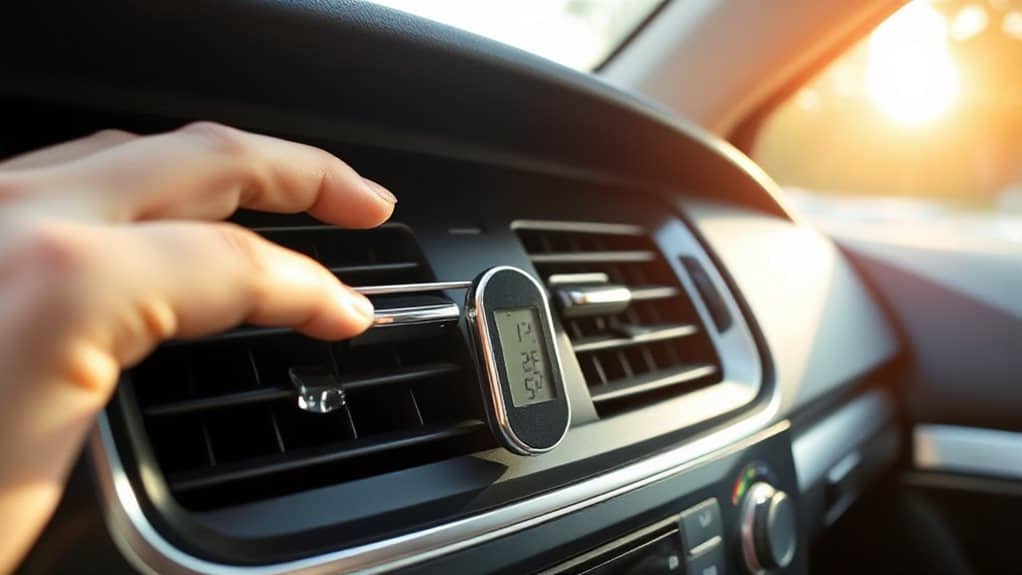
You might still feel sticky even with the air blowing from the vents, and that’s not just because of the weather outside—high humidity can make cooled air feel warmer than it actually is, as discussed earlier.
If your AC takes more than 10–15 minutes to cool, blows air above 30–40°F below the outside temperature, or needs constant max settings, it’s likely underperforming.
Inconsistent cooling, weak airflow, or hissing noises suggest refrigerant leaks or compressor issues.
These signs mean your system needs professional inspection to restore proper function and efficiency.
Common Causes of Weak AC Cooling Performance
While your car’s air conditioning system relies on several components working together, a drop in cooling performance often points to one of a few common mechanical issues.
Low refrigerant, usually from leaks, hampers heat removal, causing warm airflow. A clogged cabin filter restricts air, reducing efficiency. Failing compressors, dirty condensers, or mold in the evaporator can also block airflow and cooling, each requiring specific fixes to restore proper function.
Best AC Settings for Faster, Colder Air
Maximize your car’s cooling power by setting the air conditioning to the right temperature and mode from the start. Set the temperature to 20–22°C (68–72°F) and use recirculation after venting hot air.
Direct airflow to your legs or the cabin ceiling, not your face. Use the front defrost briefly to cool faster.
Keep windows up, and let the system stabilize for peak, efficient cooling.
Wrapping Up
Your car’s AC vents should blow air 30–40°F cooler than the outside temperature. If it’s 90°F outside, expect 50–60°F from the vents. Use a thermometer near the center vent to check. Warm air could mean low refrigerant, a clogged filter, or compressor issues. High humidity makes cold air feel warmer, even when the system works. Adjust fan speed, set recirculate mode, and park in shade for best cooling.


