
WD‑40 will dissolve road grime and give your wiper blades a quick, streak‑free glide, but the petroleum solvent also strips plasticizers from the rubber, hardening it and leaving an oily film that attracts dust. You’ll notice reduced squeaking and clearer visibility for a couple of rainfalls, yet the blade’s flexibility and durability start to decline within days, and cracks may form over weeks. Use a microfiber cloth, spray the cloth—not the blade—wipe three to four times per side, then test for streaks. If you keep going, you’ll discover safer alternatives and long‑term maintenance tips.
Quick Tips
- WD‑40 quickly dissolves grime and provides a temporary shine, improving visibility for a few rainfalls.
- The petroleum distillates in WD‑40 can extract rubber plasticizers, causing brittleness and cracks within weeks.
- Lubricating film reduces friction and noise briefly, but the effect fades as the film erodes.
- Oily residue may attract dust and create rainbow streaks, potentially worsening wiping performance over time.
- Silicone‑based cleaners and protectants are safer long‑term alternatives, preserving rubber flexibility and clarity.
Instant Benefits of WD‑40 on Wiper Blades

WD‑40 works as a powerful solvent that instantly dissolves dirt, road grime, and other debris clinging to wiper‑blade rubber. When you spray a cloth and wipe the blade, grime lifts off in a single pass, leaving a clean, residue‑free surface. The product also lubricates the rubber, reducing friction and preventing streaks or squeaking. Consequently, visibility improves, noise drops, and the blades regain flexibility for smoother, safer wiping. It was originally developed to repel water and prevent corrosion on rockets. However, note that WD‑40 can harm rubber and attract dirt on some components, so it should be used cautiously and alternatives may be preferable for rubber parts.
How to Apply WD‑40 to Your Wiper Blades – Step‑by‑Step Guide
How do you safely and effectively treat your wiper blades with WD‑40? Raise one arm, pull the blade forward, and inspect for damage. Spray WD‑40 onto a microfiber cloth—never directly on the blade—then wipe the rubber edge back and forth three to four times, covering both sides. Reapply spray as needed, reinstall the blade, lower the arm, and test for reduced streaking. Also consider checking and addressing contaminated filters as part of regular maintenance to prevent debris buildup that can accelerate blade wear.
WD‑40 Wiper Blade Cleaning: Immediate Performance Boost

When you spray WD‑40 onto a cloth and wipe the blade, the solvent instantly dissolves embedded dirt, so the streaks disappear and the glass stays clearer.
The lubricating film also quiets the screeching noise that usually comes from dry or gritty rubber, giving you a smoother, quieter wipe.
This immediate boost lasts for a few rainfalls before the grime builds up again, making it a handy short‑term fix when the blades are still structurally sound.
Torx designs allow for more torque without damaging the tool, making them superior in some applications and worth considering as an alternative to hex torque transmission.
Instant Streak Removal
What happens when you spray WD‑40 onto a clean cloth and run it along a wiper blade? The solvent dissolves grime, and wiping extracts road filth instantly, leaving the blade surface darkly clean.
Streaks vanish because the blade contacts glass uniformly, and the hydrophobic coating repels water.
You’ll notice reduced screeching and smoother sweeps right away, though the effect fades after a few rainfalls.
Temporary Noise Reduction
Spraying WD‑40 onto a clean cloth and wiping it along a wiper blade instantly dissolves accumulated grime, which in turn reduces the friction that causes squeaking and chattering.
The solvent lifts road film and oxidized carbon, while the lubricant temporarily eases blade‑glass contact, silencing noise for two to three rain cycles.
However, petroleum distillates extract rubber plasticizers, causing embrittlement and residue that soon returns screeching and may damage the blade.
How Long Does the WD‑40 Boost Actually Last?
How long does the WD‑40 enhancement actually last? You’ll notice silence and streak‑free wiping right after application, but the effect usually fades after two to three rainfalls.
Petroleum distillates in WD‑40 can make rubber brittle within 48 hours, so the boost disappears faster than silicone sprays or alcohol wipes.
Expect a short‑term fix, not a lasting solution. Additional maintenance, such as choosing products formulated for rubber protection like silicone sprays, can provide longer-lasting results.
WD‑40 Wiper Blade Cleaning: Common Side Effects
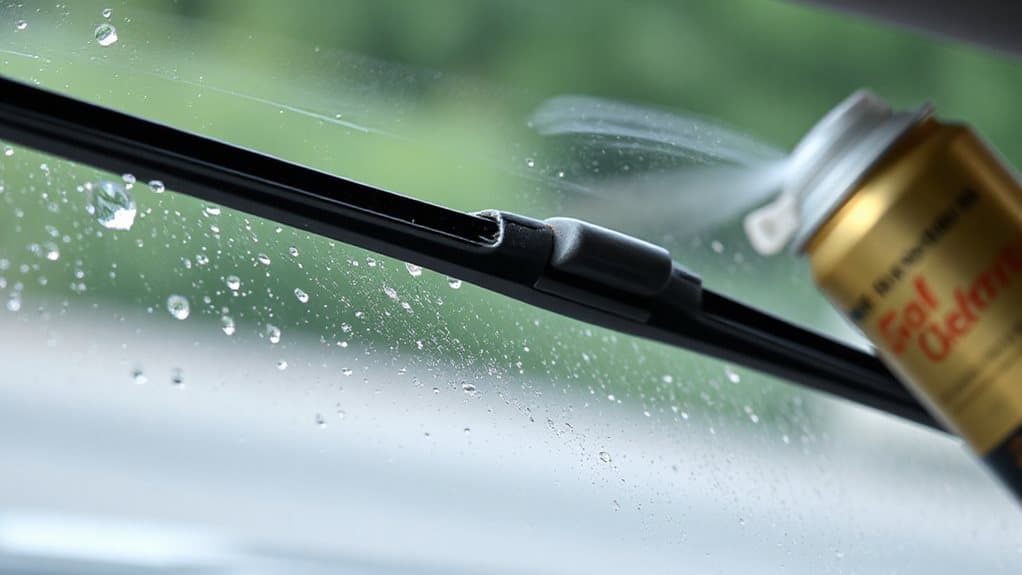
The increase you noticed after spraying WD‑40 fades quickly, and the side effects start to appear as soon as the product dries.
You’ll see rubber drying, cracking, and splitting, which weakens blade structure and accelerates edge wear.
Oily residue forms rainbow streaks and smears, reducing visibility.
The lubricant also attracts dirt, causes skipping, and can compromise safety if blades deteriorate.
Using WD‑40 on brakes can be a dangerous maintenance mistake because it can impair braking performance.
How to Mitigate Rainbow Streaks and Oily Residue?
If you notice rainbow‑colored streaks and a greasy film after using WD‑40 on your wiper blades, the first step is to remove the oily residue before it hardens. Spray WD‑40 onto a clean microfiber cloth, wipe each blade until the cloth stays clean, then follow with a 99 % isopropyl‑alcohol wipe to evaporate remaining film. Finally, clean the windshield with a regular glass cleaner to eliminate any remaining iridescent particles. Radon is a colorless, odorless gas that can accumulate in homes, so ensure proper ventilation when working in enclosed spaces.
Expert Viewpoint: Why WD‑40 Cleans but Doesn’t Revitalize Rubber

Why does WD‑40 clean your wiper blades but fail to revive the rubber? It dissolves grime by letting petroleum distillates penetrate the surface, breaking up traffic film and oxidised carbon. However, those same hydrocarbons swell elastomer molecules, leach plasticisers, and warp the blade edge. The result is temporary streak‑free wiping, but within days the rubber becomes brittle, loses its sharp angle, and performance deteriorates.
Alternative Cleaners to Consider Alongside WD‑40
You can complement WD‑40 with silicone‑based blade conditioners, which form a thin, water‑repellent film that reduces friction and protects the rubber edge from cracking. Alcohol‑based surface cleaners, such as rubbing alcohol, break down sap and road grime quickly and evaporate without leaving residue, making them ideal for targeting stubborn buildup on pivots. Using these alternatives together lets you address both lubrication and deep cleaning in a single maintenance routine.
SiliconeBased Blade Conditioners
Silicone‑based blade conditioners serve as a practical alternative to WD‑40 for maintaining wiper performance, especially when durability and weather resistance are priorities. They extend blade life to 12‑18 months, resist UV, ozone, and freeze‑thaw cracking, and stay flexible in subzero temps. A thin hydrophobic film reduces ice buildup, improves water beading, and quiets chatter. Apply every six months after cleaning for optimal protection.
AlcoholBased Surface Cleaners
Ever wondered how a simple alcohol solution can revive your wiper blades? Rubbing alcohol, preferably 70% isopropyl, evaporates fast, leaving almost no residue. It dissolves the rubber’s outer layer, loosening dirt, grime, and oily film, while breaking down germs. Soak a cloth, wipe blades and crevices, then dry. Test, repeat if needed, but remember it’s a temporary fix, not a substitute for replacement.
Best Practices to Avoid Damage With Any Blade Cleaner

What should you watch for when choosing a blade cleaner? Pick a solution without ammonia, petroleum, or harsh solvents, because they dry or crack rubber. Use mild dish soap, isopropyl alcohol, or a vinegar‑water mix, and apply it with a soft, lint‑free cloth. Fold the wiper arm up, protect the windshield, wipe gently, rinse, then dry completely to avoid residue or damage.
Bottom‑Line Verdict – Should You Use WD‑40 on Your Wiper Blades?
You’ll notice an immediate performance enhancement when you wipe the blades with WD‑40, because the solvent lifts road grime and restores a slick surface. However, that improvement fades quickly; the petroleum base can swell and brittleize rubber within a day, leading to streaking and reduced blade life.
For a more durable solution, consider silicone‑based lubricants or isopropyl alcohol, which clean without degrading the rubber and keep the windshield clear over the long term.
Quick Performance Boost
How does a quick WD‑40 treatment affect wiper performance? You spray a cloth, wipe the rubber edge, and grime lifts off instantly, reducing smearing and screeching on the first wipe. The blades appear cleaner, and wiping quality improves slightly. This boost works only if the rubber is still sound; it’s a temporary fix, not a long‑term solution.
Short‑Lived Benefits
Ever wondered whether the fleeting shine you see after spraying WD‑40 on your wiper blades is worth the risk? You’ll notice a quick, glossy surface and smoother glide for a few days, but the petroleum distillates dry out rubber, causing cracks and loss of flexibility. The protective barrier erodes within weeks, so the enhancement disappears, and performance soon declines.
Safer Long‑Term Alternatives
The brief gloss you get from WD‑40 fades quickly, and the petroleum distillates it contains begin to degrade the rubber, so the next logical step is to look at options that protect the blades without sacrificing durability.
Use a silicone‑based spray after washing the blades with soap and water or isopropyl alcohol; silicone cushions rubber, prevents swelling, and lasts longer.
For extra care, apply a silicone protectant such as 303 Aerospace or Opti‑Bond. This routine avoids petroleum damage, extending blade life safely.
Wrapping Up
WD‑40 can temporarily reduce squeaking and improve glide by displacing moisture and loosening grime, but it does not restore the rubber’s elasticity or longevity. The effect typically lasts a few weeks before the blade’s natural wear resumes. Use it sparingly, wipe off excess, and follow up with a proper rubber conditioner if you need lasting protection. For consistent performance, consider dedicated wiper‑blade cleaners and replace blades when they show cracking or stiffening.


