
To determine whether a head gasket is leaking oil or coolant, check for external signs like wet spots, stains, or discoloration around the gasket area. Inside the engine, look for milky oil or white deposits, which indicate coolant contamination, while oil leaks appear as greasy spots. Perform pressure or chemical tests to confirm leaks. Detecting bubbles in the radiator or abnormal fluid levels can also reveal gasket issues. Continuing will provide detailed methods to accurately diagnose and address these problems.
Quick Tips
- Check for greasy, stained spots or residue around the gasket area for oil leaks or coolant deposits.
- Look for milky or frothy engine oil, indicating coolant mixing with oil.
- Inspect the coolant for white deposits or discoloration, signaling a coolant leak.
- Monitor engine temperature and fluid levels for signs of overheating or coolant loss.
- Use diagnostic tests like compression or leak-down tests to confirm the source of the leak.
External Signs of a Head Gasket Leak (Oil or Coolant Spots, Smoke)
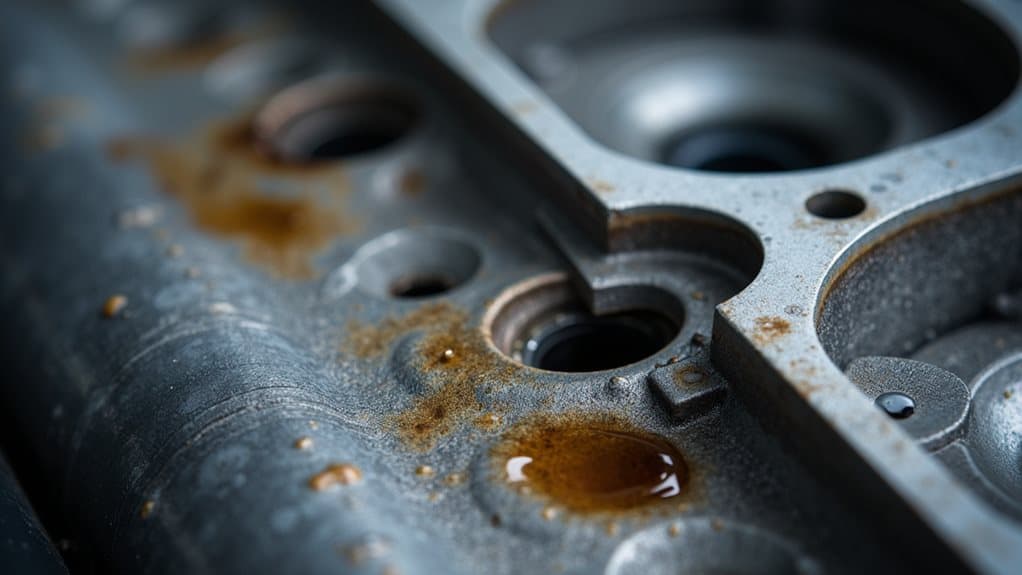
External signs of a head gasket leak can be quite noticeable if you know what to look for. Oil leaks may appear as greasy spots or streaks on the engine surface.
Coolant spots often form puddles beneath the vehicle, especially near the gasket.
White exhaust smoke, combined with external coolant leaks, indicates coolant escaping, highlighting visible signs of gasket failure. Use protective gear like gloves and eyewear when inspecting for leaks to avoid injury and contact with hazardous fluids; safety precautions are important.
Internal Symptoms That Indicate Gasket Failure (Misfires, Overheating)
Internal symptoms of head gasket failure often manifest as changes in engine performance that can be detected through various operational signs.
You may notice misfires, rough running, or loss of power, often caused by compression loss or coolant leaks into cylinders.
Overheating episodes, white smoke, and a drop in oil levels with a milky appearance also indicate internal gasket issues affecting engine function.
Exhaust leaks before the oxygen sensor can disrupt the air/fuel ratio and cause misfires and rough idling, especially if hot gases overheat spark plugs.
How to Visually Check for Head Gasket Damage (Oil Milky Appearance, Coolant Residue)
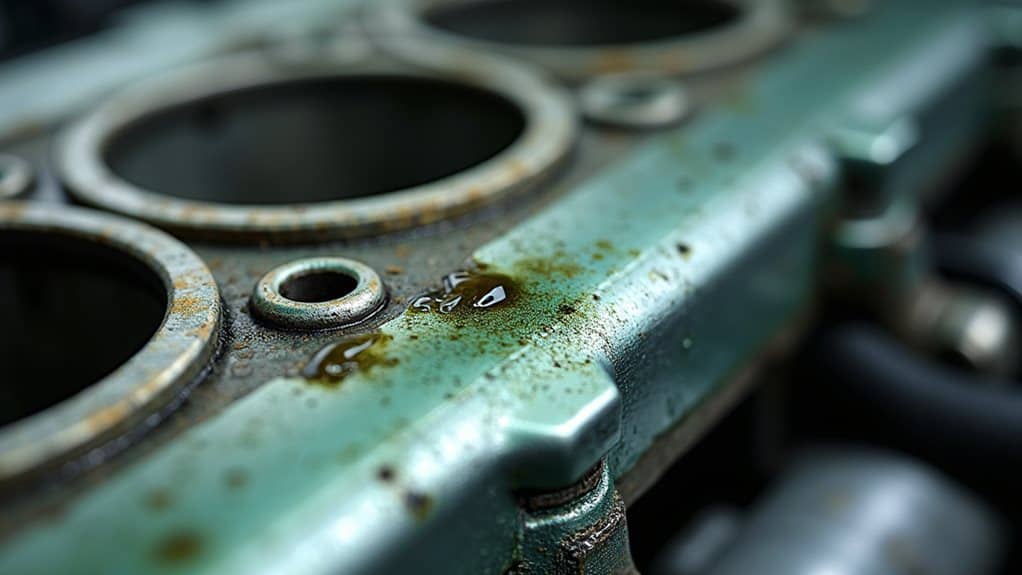
To identify head gasket damage visually, start by inspecting the engine oil for a milky, frothy appearance, which indicates coolant has entered the oil system.
Look for coolant residue or white deposits around the cylinder head or engine block, as these are common signs of a leak.
Additionally, check the oil cap and engine surface for discoloration or residue, such as a creamy substance or oil puddles, which further suggest gasket failure.
Early detection is crucial to catch a head gasket problem early before it turns into a full engine rebuild.
Milky Oil Appearance
A milky or frothy appearance in engine oil is a clear sign that coolant may be mixing with the oil, often caused by a head gasket leak.
This milky oil indicates coolant contamination, which can be seen on the oil cap or dipstick.
Monitoring the oil appearance helps identify early signs of internal gasket failure and prevents further engine damage.
Coolant Residue Signs
Coolant residue signs offer a visual way to identify potential head gasket problems beyond just oil contamination. Look for white residue around the engine or spark plugs, which suggests a coolant leak.
Visible coolant residue on engine surfaces or near the cylinder head indicates a head gasket leak. These signs point to gasket failure and should prompt further inspection.
External Leak Indicators
External leak indicators are among the most straightforward ways to identify head gasket damage through visual inspection. Look for signs of coolant leaks, such as wet spots or stains around the gasket area, especially near the cylinder head or engine block.
A milky or frothy appearance in engine oil or visible coolant residue on the exterior of the gasket indicates potential leaks.
Key Tests to Confirm a Blown Head Gasket (Compression, Leakdown, Chemical Tests)
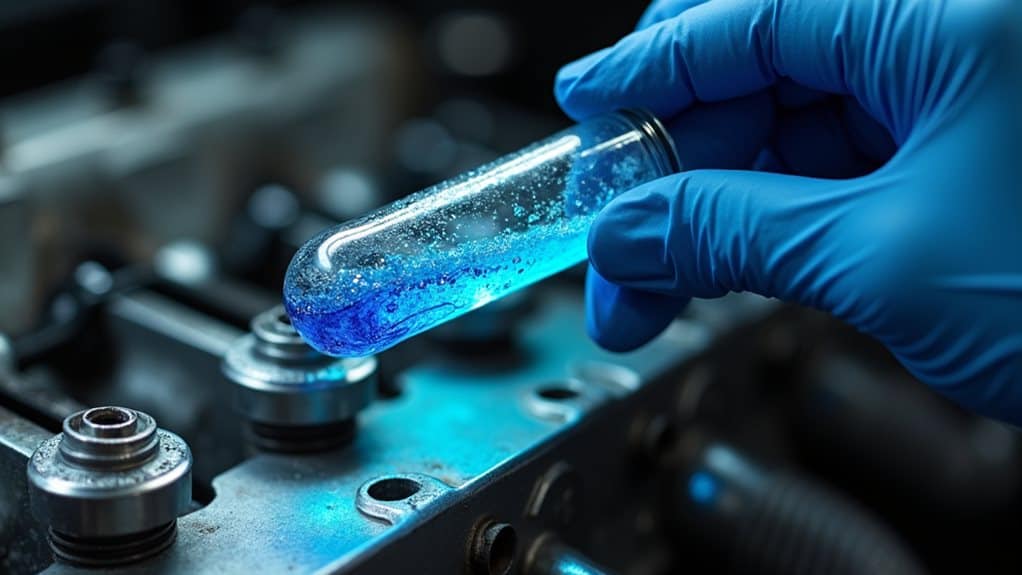
Compression testing measures the pressure in each cylinder to identify any drops indicating a leak.
Leakdown tests pressurize cylinders and listen for escaping air that reveals gasket failure.
Chemical tests detect exhaust gases in the coolant using dyes or reagents.
Observing bubbles in the radiator during pressure testing can also confirm leaks caused by a compromised gasket.
Regular maintenance of the cooling and HVAC system, including replacing a clogged cabin air filter, helps prevent secondary issues that can complicate diagnosis.
Compression Testing Methods
When diagnosing a suspected head gasket failure, compression testing is a fundamental step that provides vital understanding into the engine’s internal condition.
By measuring compression readings in each cylinder, you can identify discrepancies that suggest a head gasket leak.
Unequal readings may indicate engine damage or localized leaks, helping you determine if the gasket’s integrity is compromised.
Leakdown Test Procedures
A leakdown test is a more precise method for diagnosing a head gasket failure compared to a standard compression test. It involves sealing the cylinder, pressurizing it with compressed air, and measuring the percentage of air escaping.
Listening for hissing sounds or watching for air bubbles in the coolant or oil helps identify internal leaks caused by a blown head gasket.
Chemical Gas Detection
Chemical gas detection is a crucial method for confirming a blown head gasket because it directly identifies combustion gases escaping into the cooling system or oil.
A chemical test uses a special fluid to detect gases like CO₂ or hydrocarbons through coolant analysis.
Gas detection confirms gasket failure by revealing these gases, providing clear evidence of internal leaks caused by head gasket damage.
How to Use Compression and Leakdown Tests to Diagnose Gasket Problems
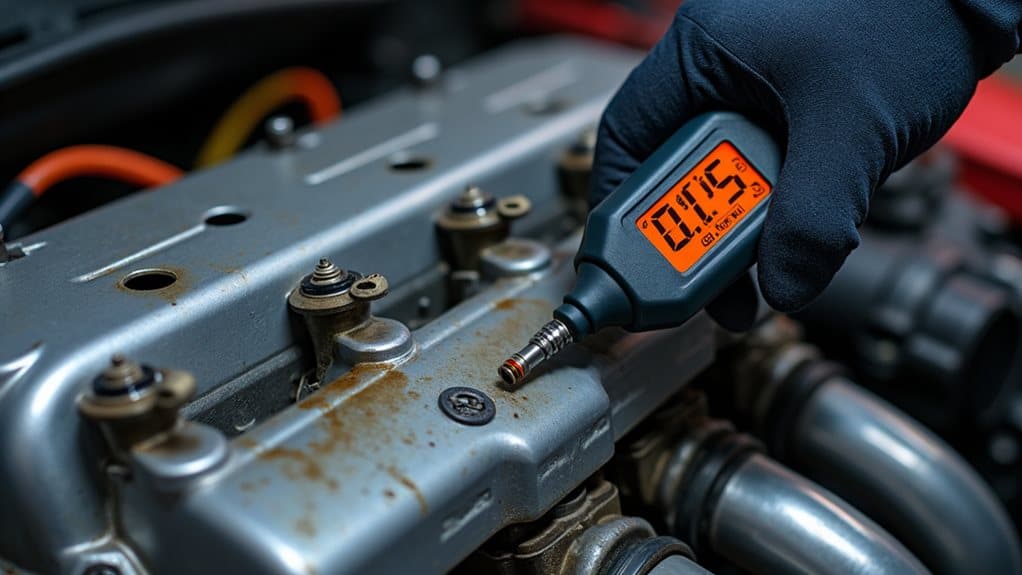
Understanding how to diagnose a potential head gasket leak involves using specific engine testing methods, primarily compression and leak-down tests.
A compression test measures cylinder pressure, revealing internal leaks if pressures are low.
A leak-down test pressurizes cylinders and listens for escaping air, helping pinpoint if the head gasket is compromised by internal leaks, such as into coolant or oil passages.
Jerky acceleration and stalling can also indicate related engine issues like accelerator pump failure, which may accompany or mimic symptoms of gasket problems.
Signs of Coolant or Oil Contamination in the Engine (Milky Oil, Residue)
Contamination of engine oil with coolant or oil residues is a clear indicator of a head gasket leak.
Milky oil, residue, or a creamy, mayonnaise-like substance on the oil cap or inside the valve cover suggest coolant contamination.
White or light-colored sludge signals coolant intrusion, often caused by a head gasket leak, which can lead to engine damage if left unaddressed.
Regular inspection of oil and coolant levels can help detect coolant intrusion early and prevent further engine damage.
Detecting Gasket Leaks With Radiator Bubbles and Pressure Tests
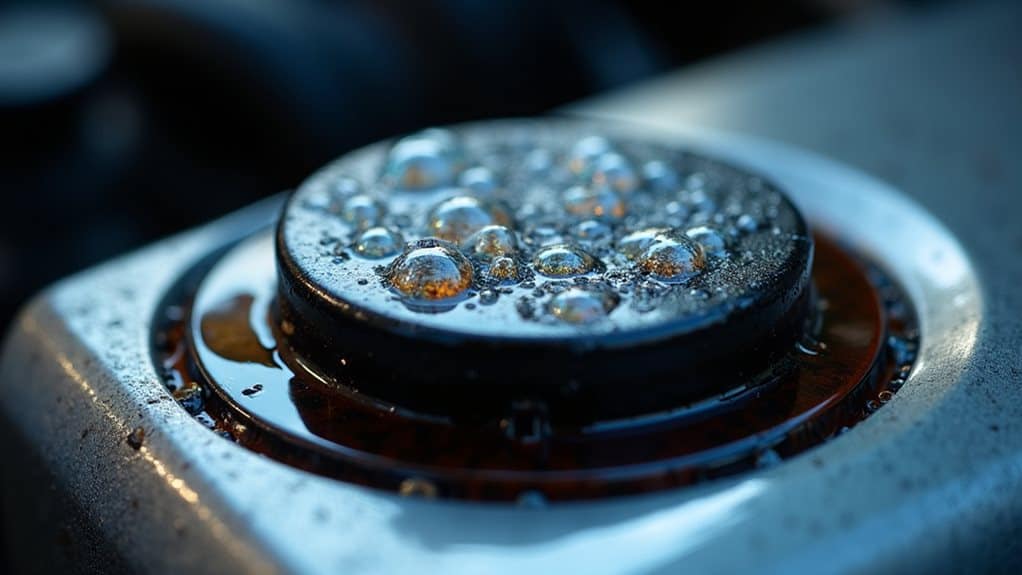
Detecting a head gasket leak can often be accomplished by observing specific signs within the cooling system, such as radiator bubbles or coolant reservoir bubbles while the engine runs.
Performing a pressure test helps identify a coolant leak by revealing pressure drops over time.
Introducing a chemical block tester can also detect exhaust gases, confirming a head gasket failure indirectly.
How to Differentiate Head Gasket Failures From Other Engine Issues
Differentiating head gasket failures from other engine issues requires careful observation and specific testing, as multiple problems can produce similar symptoms.
Signs like coolant intrusion, external leaks, and white smoke point to head gasket failure.
Conducting engine diagnostics, such as compression and leak-down tests, helps confirm internal gasket leaks versus external oil leaks, ensuring accurate diagnosis and appropriate repairs.
What to Do When You Suspect a Head Gasket Is Failing (Professional Diagnosis, Repairs)
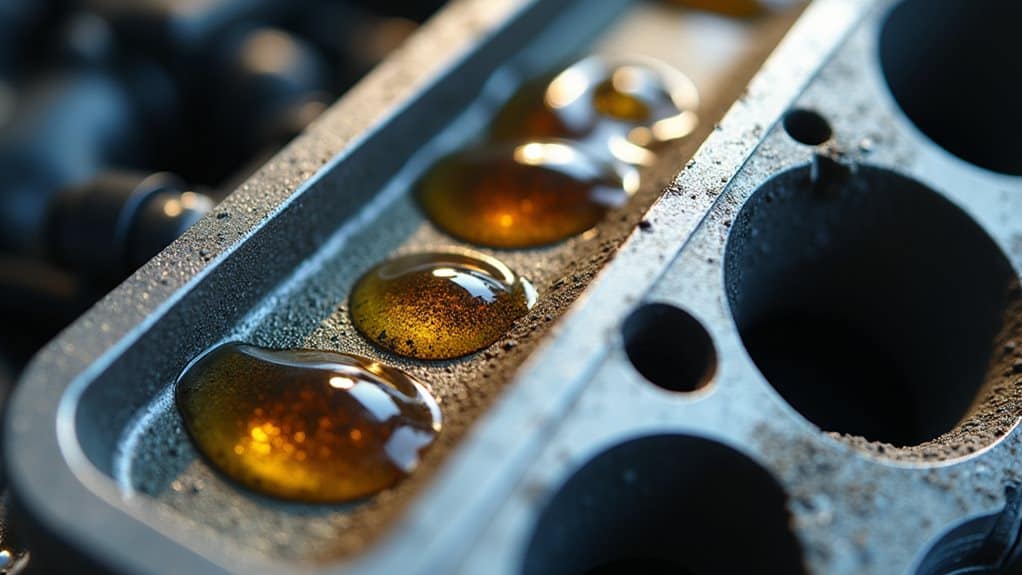
When you suspect a head gasket is failing, the most important step is to seek professional diagnosis rather than attempting to diagnose or fix the problem yourself.
Certified mechanics use specialized tests, like a chemical coolant test or cylinder leak-down test, to confirm a coolant leak from head gasket failure.
Proper repairs, including gasket replacement and head resurfacing, prevent engine damage and guarantee reliability.
Wrapping up
When diagnosing a head gasket leak, focus on visual signs like milky oil or coolant residue and perform key tests such as compression, leakdown, or chemical analysis. External indicators like oil spots or smoke can also help identify the issue. Differentiating between oil and coolant leaks is crucial for proper repair. If symptoms persist or tests confirm damage, consult a professional mechanic promptly to prevent further engine damage and guarantee accurate repairs.