
A knock sensor detects high-frequency vibrations caused by abnormal combustion events like knocking, pre-ignition, or pinging within your engine. It uses a piezoelectric crystal to convert these vibrations into electrical signals, focusing on frequencies between 5-15 kHz. These signals indicate irregular explosions or detonation inside cylinders, which can harm the engine. By monitoring and analyzing these vibrations, the sensor helps prevent damage and optimizes performance. Continuing will reveal how this essential component maintains engine health and efficiency.
Quick Tips
- Detects high-frequency vibrations caused by engine knocking or pre-ignition events.
- Converts mechanical stress from knocking into electrical signals via a piezoelectric crystal.
- Tunes to resonant frequencies between 5-15 kHz to identify abnormal combustion sounds.
- Differentiates knocking sounds from normal engine noise based on vibration frequency and amplitude.
- Sends signals to the ECU to adjust engine timing and prevent potential damage.
Why a Knock Sensor Matters for Your Engine
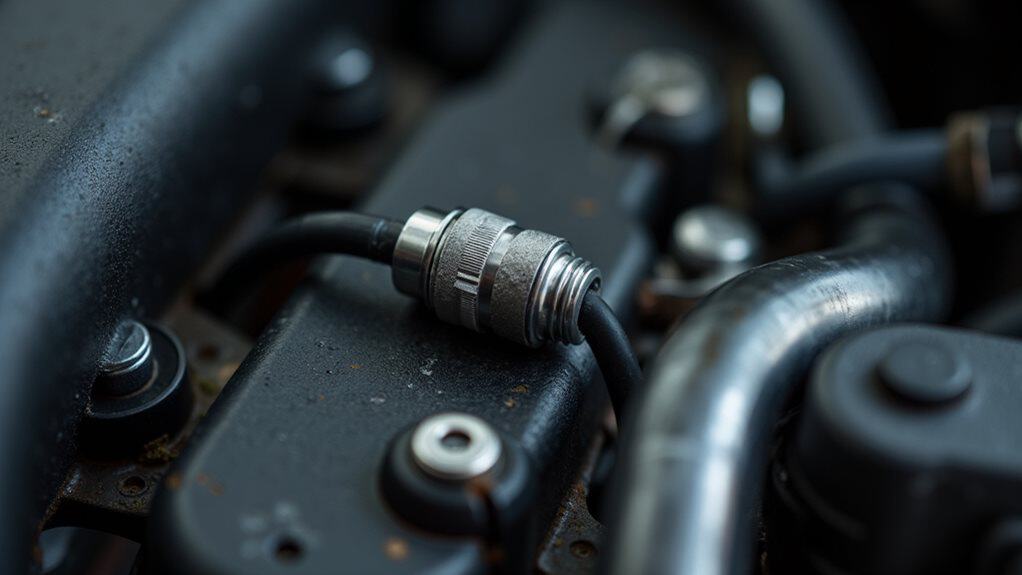
A knock sensor plays a crucial role in protecting your engine by detecting abnormal vibrations caused by knocking or pre-ignition. It helps the engine control module (ECM) identify the timing and intensity of spark knock. It also communicates with the ECU to help regulate fuel delivery and engine performance by monitoring fuel pressure.
How a Knock Sensor Detects Engine Vibrations and Sounds
When a knock sensor detects engine vibrations, it relies on a specialized component known as a piezoelectric crystal, which converts mechanical stress into an electrical signal.
It detects vibrations caused by engine knocking by tuning to specific resonant frequencies, typically between 5-15 kHz.
These vibrations produce AC voltage signals that are sent to the engine control module for analysis.
Regular inspections can catch related issues early, such as worn suspension components that create clunking noises and may be mistaken for engine vibration.
How Piezoelectric Crystals Help Detect Engine Knocks
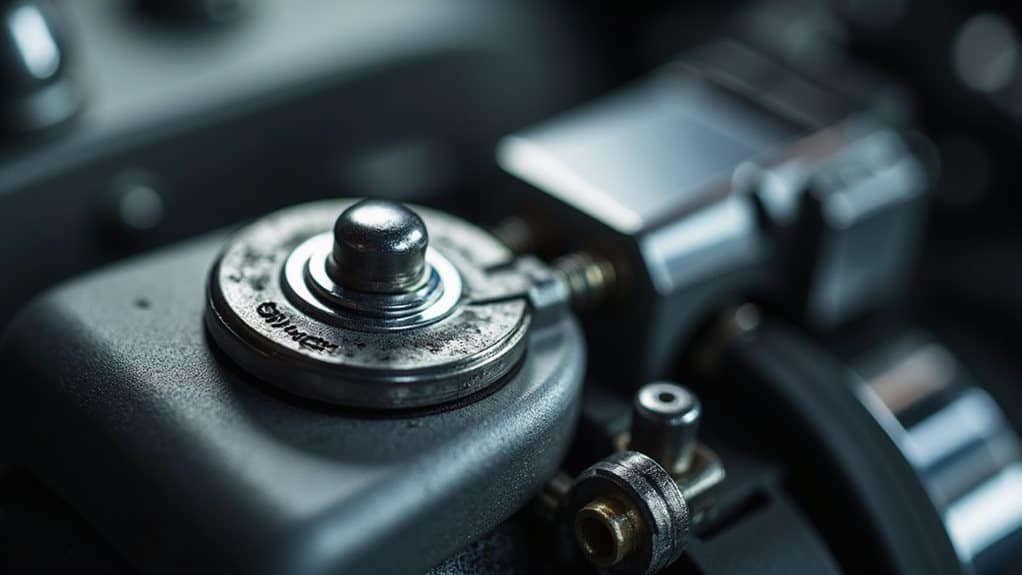
Piezoelectric crystals play a crucial role in detecting engine knocks because they directly convert vibrations into electrical signals that the engine control unit can analyze.
When engine knocks occur, vibrations deform the crystals, producing signals with specific amplitudes and frequencies.
These signals are tuned to resonant frequencies, enabling the system to accurately detect knocking and respond appropriately.
Vehicles with different fuel tank capacities and driving conditions can affect the urgency of diagnosing and addressing engine knock issues.
What Types of Combustion Events Does the Sensor Detect?
The knock sensor detects specific abnormal combustion events within your engine, such as knocking, pinging, or pinking caused by uncontrolled explosions in the cylinders. It monitors high-frequency vibrations and shockwaves generated by irregular air-fuel mixture combustion, including pre-ignition and detonation.
These abnormal combustion events can harm engine components. By identifying these events, the sensor helps guarantee peak engine performance and prevents damage from harmful combustion anomalies. A malfunctioning sensor can lead to incorrect engine control responses and potentially cause excessive engine wear if left unaddressed.
Detects Engine Knocking
Engine knocking involves abnormal combustion events that generate specific vibrations detectable by the knock sensor. It senses high-frequency signals caused by engine knocking, which produces sudden shockwaves within the combustion chamber.
The sensor detects vibrations from pre-ignition, pinging, or pinking, alerting the engine control module to abnormal combustion that could harm the engine if uncorrected.
Senses Abnormal Combustion Events
Abnormal combustion events such as knocking, pinging, or pre-ignition produce distinct high-frequency vibrations that a knock sensor can detect. These vibrations result from engine knocking and detonation, often caused by altered ignition timing or fuel quality.
The sensor uses piezoelectric effects to sense resonance frequencies related to these events, helping prevent engine damage from premature or uncontrolled explosions.
How the Sensor Tells Normal Noise From Engine Knocking
Since the knock sensor relies on detecting specific vibrations, it differentiates knocking sounds from normal engine noises by analyzing their frequency and amplitude.
It detects high-frequency vibrations, typically between 5-15 kHz, produced by engine knocking.
The piezoelectric crystal produces electrical signals only when vibrations match the pattern of knocking, filtering out normal noise like valve operation.
Many technicians also recommend inspecting and treating nearby corroded components with products like rust removers to prevent false readings caused by degraded mounting surfaces.
Common Signals and Frequencies a Knock Sensor Picks Up
You should understand that knock sensors primarily detect signals within the 5 to 15 kHz frequency range, which are typical of engine knocking.
These signals vary in amplitude depending on the severity of the knock, allowing the sensor to measure the intensity of abnormal combustion.
Additionally, the sensor is tuned to vibrate at specific frequencies associated with knocking, helping distinguish these from normal engine vibrations and sounds.
Choosing the wrong exhaust component can affect engine tuning and increase the likelihood of knock by altering backpressure and exhaust flow, so be aware of how exhaust components interact with engine performance.
Typical Knock Frequencies
Typically, a knock sensor detects vibrations within a specific frequency range that corresponds to engine knocking, which usually falls between 5 kHz and 15 kHz. These high-pitched vibrations, caused by engine knocking, activate piezoelectric sensors tuned to their resonant frequency.
The sensor’s electrical signals identify these frequencies, allowing the engine control unit to detect and respond to abnormal engine vibrations efficiently.
Signal Amplitude Variations
What kind of signals does a knock sensor pick up during engine operation? It detects variations in signal amplitude caused by high-frequency vibrations from engine knocking.
Louder knocks produce higher electrical signals, reflecting increased vibration intensity.
These signals match specific resonant frequencies, enabling the engine control unit to distinguish between normal vibrations and those indicating abnormal combustion.
Resonant Frequency Tuning
Resonant frequency tuning allows knock sensors to effectively distinguish between normal engine vibrations and those caused by knocking.
By calibrating the resonant frequency, typically between 5-15 kHz, the piezoelectric crystals vibrate at their designated frequency. This amplifies signals from high-frequency shockwaves caused by engine knocking vibrations.
This precise tuning prevents false positives and guarantees accurate detection.
Signs Your Knock Sensor Might Be Failing
When your vehicle’s knock sensor begins to fail, signs like engine knocking or pinging noises during acceleration may appear.
Diagnostic trouble codes such as P0325 often trigger the check engine light.
You might also notice reduced engine performance, vibrations signals, or increased emissions, all indicating a faulty knock sensor.
Prompt inspection prevents further engine damage caused by knock sensor failure.
How to Test and Replace Your Knock Sensor
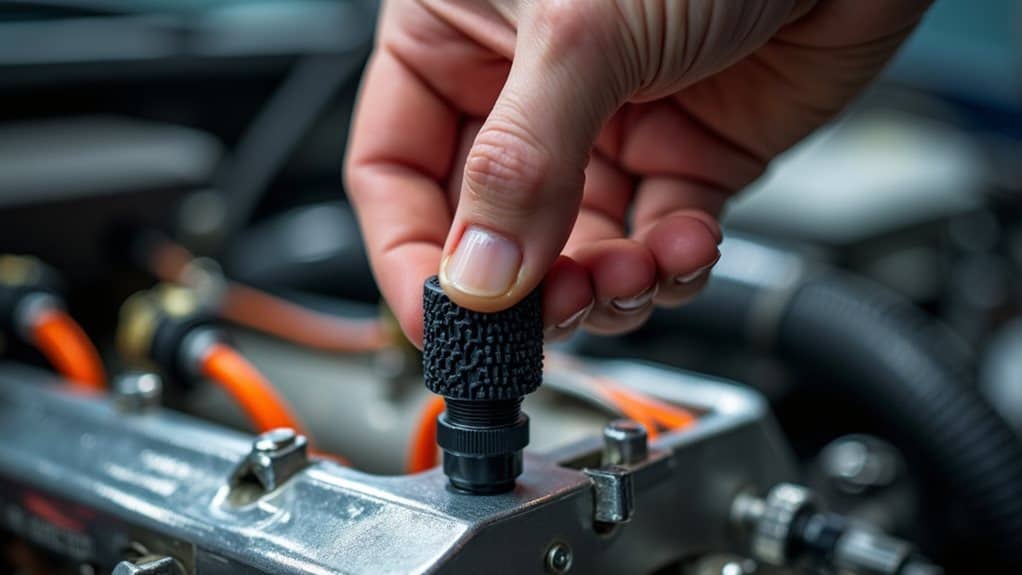
To effectively test your knock sensor, start by disconnecting the wiring connector from the sensor itself.
Measure its resistance with a multimeter; a healthy sensor should read in the hundreds of kiloohms.
Conduct testing by checking for diagnostic trouble codes, inspecting AC voltage signals during a tap test, and visually examining for damage before replacing the sensor with a compatible, high-quality part.
Wrapping up
Understanding what a knock sensor detects is essential for maintaining engine health. It primarily senses vibrations and sounds caused by abnormal combustion, distinguishing them from normal engine noise. By analyzing specific frequencies associated with knocking, the sensor helps prevent engine damage. Regularly inspecting and testing your knock sensor guarantees it functions correctly. If it fails, your engine could suffer from inefficient performance or costly damage. Proper maintenance and timely replacement keep your engine running smoothly and reliably.