You’ll see the anti‑theft LED flash red in a steady 1‑2‑second rhythm after you lock the car, then pause for about 30 seconds before it steadies; this confirms the immobilizer is armed and the vehicle is protected. If the light blinks faster than two seconds, stays solid, or continues erratically, it usually means a sensor, door, trunk, or hood isn’t fully closed, the key fob battery is weak, or a fault code is stored that requires a scanner. Verify all closures, remove any key from the ignition, and check the fob battery before assuming a serious issue. Persistent abnormal patterns or red‑orange flashes after locking may indicate a deeper electrical or BMS problem, so a professional diagnostic is advisable. Continue for more detailed troubleshooting steps.
Quick Tips
- A steady red light after locking usually means the anti‑theft system is armed and the vehicle is protected.
- Rapid red blinking (faster than two seconds) indicates a fault code; a scanner is required to read the exact error.
- Continuous blinking after unlocking signals the security system remains active, often due to a door, trunk, or hood sensor still detecting “open.”
- Weak key‑fob battery or a key left in the ignition can cause irregular red flashing; replace the battery or remove the key and retry.
- If blinking persists despite checking closures and battery health, professional diagnosis is needed to inspect sensors, wiring, or the BMS.
Understand the Normal Anti‑Theft Light Sequence
Why does the red or orange light flash when you lock your car? It signals the anti‑theft system is arming. After you lock, the LED flashes rapidly for about 30‑45 seconds, then steadies, confirming the immobilizer engaged. The car‑and‑padlock icon stays lit, showing the vehicle is protected. This pattern continues until you start the engine, reset, or turn the ignition off. Torx designs, which provide a larger bearing surface and allow for more torque without tool damage, are an example of how specialized hardware (Torx advantages) can improve system reliability.
Identify Abnormal Blinking Patterns
After you’ve learned how the normal anti‑theft light sequence confirms that the immobilizer is armed, you need to recognize when the flashing pattern deviates from that baseline.
Rapid blinking—faster than two‑second intervals—signals a code error and may require a scanner.
A steady light means the key isn’t recognized or the sensor is faulty.
Persistent blinking after unlocking shows the security system remains active, often due to lock cylinder wear.
Professional intervention is often required because the Ford security system cannot be reset by a user.
A blown transmission fuse can cause gear engagement and shifting issues that may coincide with security system behavior.
Typical Reasons the Anti‑Theft Light Blinks Erratically
If the hood or a door stays ajar after you lock the car, the anti‑theft sensor registers an intrusion and the red light will flash erratically until the latch is secured.
Leaving the key in the ignition can also confuse the immobilizer, causing the same unpredictable blinking pattern as the system thinks the vehicle is still being accessed.
Check both the door/hood closure and remove any key from the ignition before locking to stop the irregular flashes.
Door or Hood Ajar
A door or hood ajar condition is the most common trigger for an erratic anti‑theft light after you lock the car.
A faulty door contact switch or a misaligned hood latch sends a false open signal, causing rapid blinking.
Check the switches manually, clean sensor contacts, and ensure (or confirm) the latch fully engages.
If the light persists, inspect the battery voltage and verify proper closure.
Key Left in Ignition
When the door or hood is properly closed, the anti‑theft system still may flash if the key stays in the ignition after you lock the car. The system detects the key’s presence, preventing the arming sequence, so the light blinks erratically. You must turn the ignition to the OFF position or remove the key.
If the key fob battery is weak or the smart key is damaged, the car may not recognize it, also causing irregular blinking. Check the battery and ensure the key is removed before locking.
Make Sure All Doors, Trunk, and Hood Are Closed
Ever wonder why the red security light keeps blinking after you lock your car? If any door, trunk, or hood is ajar, its sensor stays active, sending a continuous alert to the security module.
Make sure each door clicks fully, the trunk latch engages completely, and the hood secondary latch secures.
Once everything is sealed, the system normalizes, and the blinking stops. Professional inspection may be advisable if the light persists, since regular inspections can help identify underlying issues and ensure safety compliance.
Ensure No Key Remains in the Ignition
If the doors, trunk, and hood are all properly closed, the next common cause of a blinking red security light is the ignition key still being left in the cylinder.
The anti‑theft system monitors the key’s transponder signal; a key left in the ON position triggers the light and disables starting.
Remove the key, wait five seconds, and verify the signal disappears before locking.
Corrosion and oxidation on ignition components can also cause intermittent signals that make the light blink.
How to Reset the Anti‑Theft System Without Starting the Engine
Why does the anti‑theft system stay active after you lock the car? You can reset it without starting the engine by using the ignition‑cycle method: insert the key, turn it to ON, leave it 10‑15 minutes, then turn it OFF and wait two minutes.
Alternatively, hold the door key for 30 seconds, or lock and unlock with the fob after a two‑minute pause. These steps reauthenticate the transponder and clear the alarm.
Simple Checks Before Using a Scanner
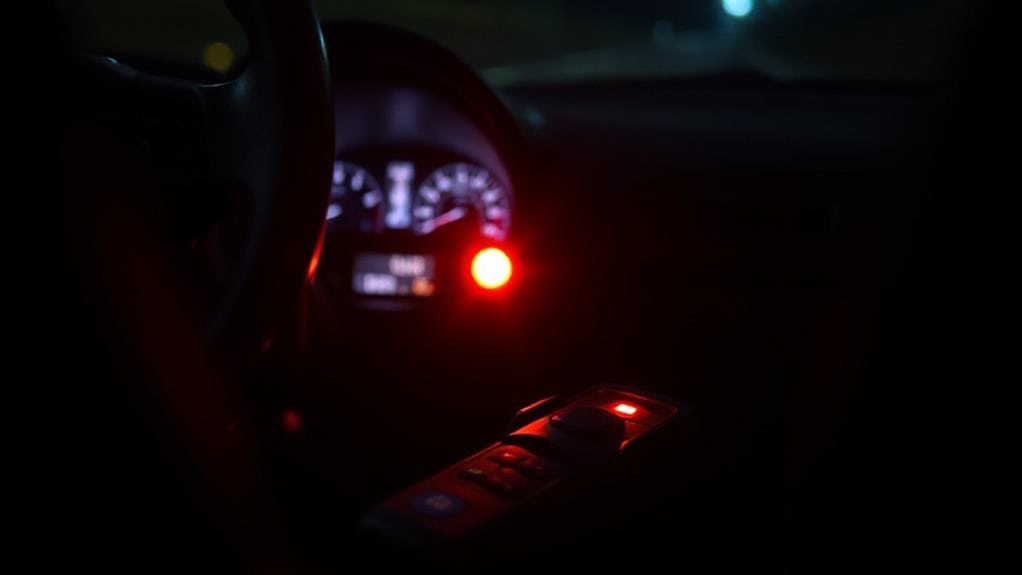
After resetting the anti‑theft system, the next step is to verify that the vehicle’s basic conditions are normal before connecting a diagnostic scanner. Check that every door, trunk, and hood is fully lat; a partially open door triggers fast blinking. Ensure the key is completely out of the ignition, because a lingering key disables the immobilizer. Observe the flash rate—slow one‑per‑two seconds is normal, while erratic or steady lights suggest a fault. Test main battery voltage and confirm backup battery health, especially in hybrids. Consider inspecting the vehicle’s security system for damaged sensors or wiring that could cause abnormal blinking.
Tools That Identify the Exact Blink Code (OBD2, Scan Apps)
Ever wondered how to turn a mysterious red‑light flash into a precise diagnostic? Plug an OBD2 scanner into the 16‑pin port after cycling ignition to ON, then read security‑related DTCs that map each blink pattern.
Or pair a Bluetooth adapter with a scan app like Torque Pro, which translates erratic flashes into textual fault descriptions, confirming sensor or wiring issues.
Modern home mechanics also rely on jack stands rated for safety features that prevent common workshop disasters.
Battery‑Related Blink Issues in Hybrids and EVs
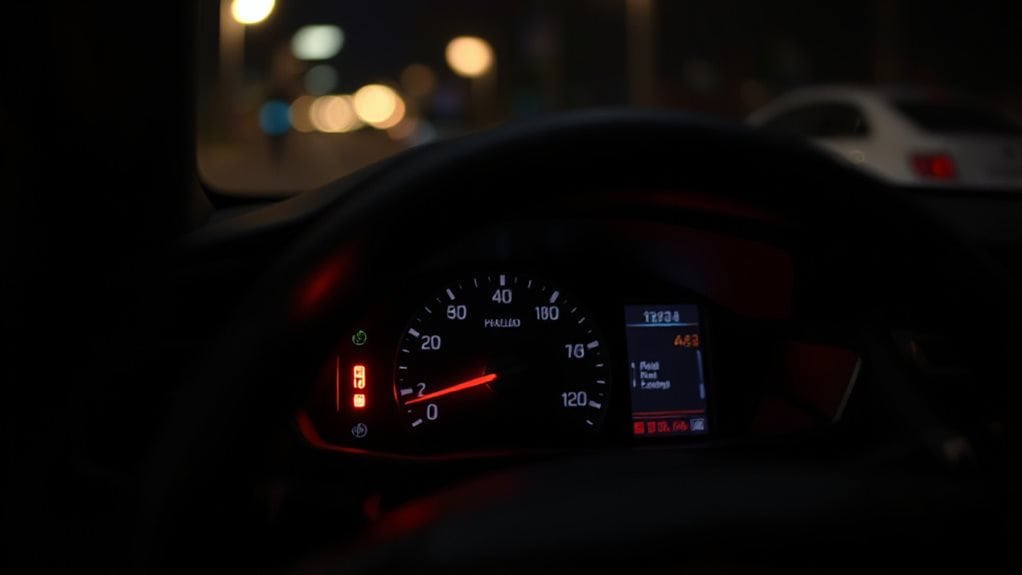
When the hybrid’s battery voltage drops below about 12.4 V, the red security light will start blinking faster after you lock the car, and you may notice dim headlights or difficulty starting.
In EVs, a weak 12‑V auxiliary battery can trigger the same blinking because the immobilizer and key‑fob sensors rely on that low‑voltage source, even though the high‑voltage traction battery is still fine.
You can confirm the issue by checking the voltage with a multimeter and, if needed, resetting the system by cycling the ignition, but a persistent blink usually means the battery needs to be recharged or replaced.
Low Battery Voltage Effects
Why does a red light keep blinking after you lock a hybrid or electric vehicle?
Low battery voltage can cripple the anti‑theft controller, causing erratic flashes.
Weak voltage hinders sensor communication, especially in cold weather when efficiency drops.
Test with an OBD2 scanner or voltmeter, clean terminals, and consider replacement if voltage stays below spec, restoring normal blinking.
Hybrid Power‑Management Interaction
The red lock‑light that keeps flashing after you lock a hybrid or electric vehicle is more than a simple reminder; it’s a signal from the power‑management system that the immobilizer is still communicating with the high‑voltage battery. This interaction confirms the anti‑theft circuit is active, draws minimal current, and indicates the battery’s voltage is within normal range.
If the blink becomes rapid or irregular, it may suggest low voltage, recent battery replacement, or a need to recalibrate the immobilizer after service.
EV Battery Management System Alerts
Ever wondered why your EV’s dashboard flashes a red or amber light after you lock the car? That signal usually means the Battery Management System detected a fault—low voltage, temperature extremes, or a high‑voltage drivetrain issue.
A solid amber indicates a sensor glitch; a blinking red demands immediate inspection, especially if the “Do Not Drive” icon appears.
Short drives can reset some alerts, but persistent warnings require service.
When to Call a Mechanic for the Anti‑Theft Light?
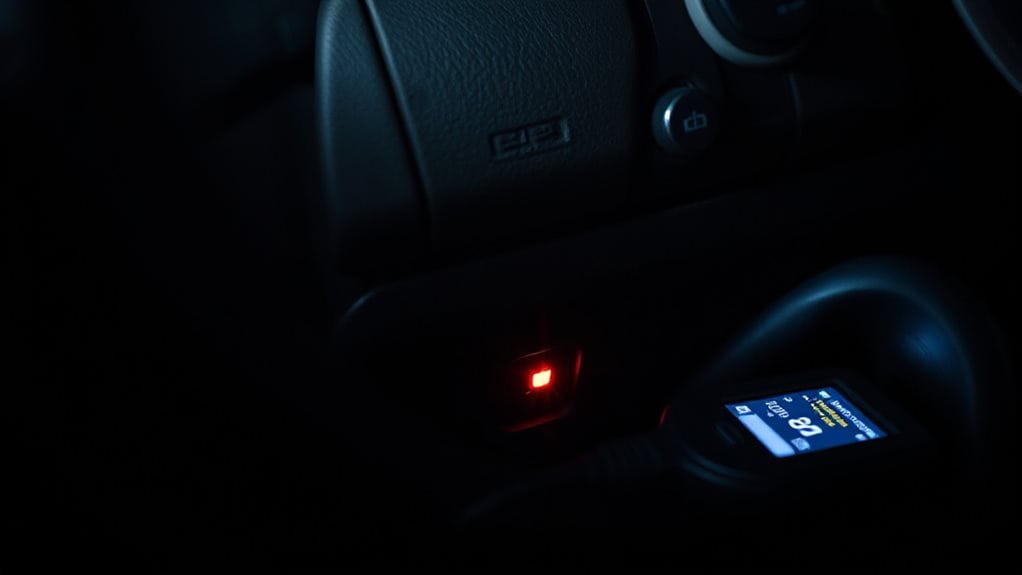
When the anti‑theft light stays steady after you’ve locked the car and tried to start it, you should consider calling a mechanic promptly.
A steady red or gold symbol means the immobilizer distrusts the key, preventing engine cranking.
If door and hood checks, ignition cycles, or a new battery don’t reset it, the ECU likely needs professional diagnosis.
Persistent light despite basic resets signals a deeper fault.
How to Diagnose Faulty Sensors or Wiring?
You start by visually inspecting the wiring harness for any signs of wear, corrosion, or loose connectors that could interrupt the anti‑theft circuit. Next, you measure the voltage at each door or trunk sensor while locking the car; a reading that deviates from the manufacturer’s specification usually points to a faulty sensor. Finally, you run a scan tool to pull error codes, which will pinpoint the exact component or wiring segment that’s causing the abnormal blinking.
Visual Inspection of Wiring
How can you spot a wiring problem before it causes a red‑light warning? Use a bright flashlight to scan for chafed insulation, cracked connectors, or bare wires rubbing metal edges. Check plugs for oxidation, loose pins, or improper insertion. Feel for heat, smell burnt odor, and listen for abnormal noises. Remove trim panels carefully, expose rear connectors, and verify battery cables are tight and corrosion‑free. Ensure harnesses are intact, abrasion‑free, and correctly routed.
Sensor Voltage Testing
Can you verify that a sensor is receiving the correct voltage before blaming the wiring? Set your multimeter to DC volts, probe the sensor’s brown reference wire, and expect 5 V ± 0.1 V. If you read zero, the power line or sensor is faulty. Jump the reference to the signal lead; a stable 5.0 V indicates an intact circuit.
For two‑wire sensors, measure 4.98‑5 V between power and ground. Use a battery‑connected test to spot voltage drops across connectors.
Scan Tool Error Codes
Connect the OBD2 scanner to the vehicle’s diagnostic port and read the stored error codes to pinpoint which sensor or wiring segment is causing the red‑light blinking.
The tool will show DTCs like P0513 for key‑signal errors, B1213 for anti‑theft module faults, or P0606 for open circuits.
Use live data to verify sensor voltages, run continuity tests, and compare freeze‑frame snapshots to isolate broken wires or malfunctioning sensors.
Quick Reference: Blink‑Code Cheat Sheet From the Owner’s Manual
Ever wondered how to decode the flashing lights on your dashboard without digging through a thick manual? Your owner’s manual offers a cheat sheet: note each pattern’s rhythm—slow 1‑2 seconds for normal, rapid for faults.
Match steady‑then‑flash to alarm activation, erratic bursts to sensor issues, and consistent sequences to immobilizer status. Record timing, compare to the chart, and verify doors, battery, and keys before seeking professional help.
Wrapping Up
In summary, a steady or regular flashing red light after locking usually indicates the anti‑theft system is functioning as designed, while irregular or rapid blinking often points to a sensor fault, an open door, trunk, or hood, or a low‑voltage condition—especially in hybrids and EVs. Verify all closures, remove any keys from the ignition, and check battery health before assuming a serious problem. If abnormal patterns persist despite these checks, consult a qualified technician to diagnose potential wiring or sensor issues.