
You can use rubbing alcohol on car paint, but only carefully: diluted to about 10–15% isopropyl for routine residue removal, applied briefly with a microfiber in the shade, then rinsed and resealed. High concentrations, prolonged contact, hot surfaces, or fresh/faded paint raise risk of hazing, wax stripping, or clear-coat softening. Always spot-test a hidden area and avoid solvents like Goof Off. Continue for dilution ratios, application steps, and repair options.
Quick Tips
- Rubbing alcohol can damage car paint if concentrated, used repeatedly, or left on hot/new paint.
- Dilute isopropyl alcohol to about 10–15% for safe spot cleaning on clear coats.
- Avoid high concentrations (70%–99%) which can strip wax, haze, or soften clear coat quickly.
- Always spot-test in shade, limit contact under ~30 seconds, then rinse and reseal the area.
- Use freezing, citrus-based removers, or gentle mechanical removal for sticky residue instead of repeated solvents.
Will Rubbing Alcohol Harm My Car Paint? Quick Answer
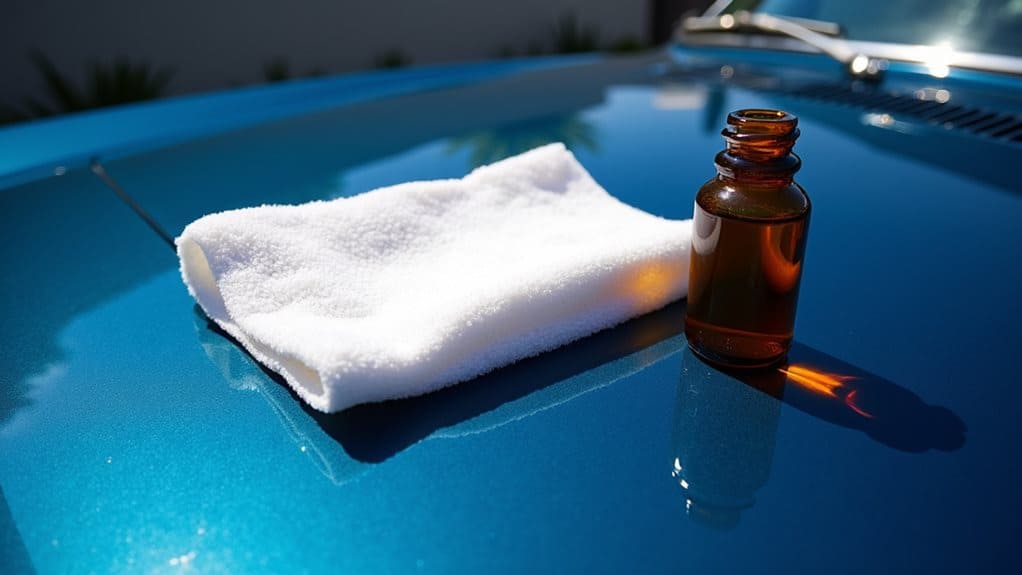
Although rubbing alcohol can be a useful cleaner, it can also harm your car’s paint if you use it incorrectly, so you need to treat it with care.
You can safely use isopropyl alcohol only when diluted to about 10–15% (mix 1:3–1:4 with distilled water), applied briefly with a microfiber cloth, rinsed quickly, and followed by wax or sealant to restore protection. For small sticky spots like gum residue, consider a freeze-first removal or a citrus-based solvent as safer alternatives to repeated solvent use to minimize finish damage and then re-wax the area to protect it polish and wax.
Be careful with repeated use on fresh paint because repeated exposure can cause damage.
When Is Rubbing Alcohol Unsafe for Paint (Age, Weather, Products)?
When evaluating when rubbing alcohol becomes unsafe for paint, consider the paint’s age and condition, the weather at the time of application, and the type and concentration of product you’re using; these factors interact and can turn a simple cleaning step into a source of damage.
Avoid high concentrations on new, faded, or scratched paint, don’t apply in hot, sunny, or windy conditions, and always spot-test.
Also remember that some solvent-based removers, like petroleum-based solvents, can dissolve adhesives and paint if left too long, so use them cautiously and rinse thoroughly.
What Rubbing Alcohol Concentrations Damage Clear Coats and Wax?
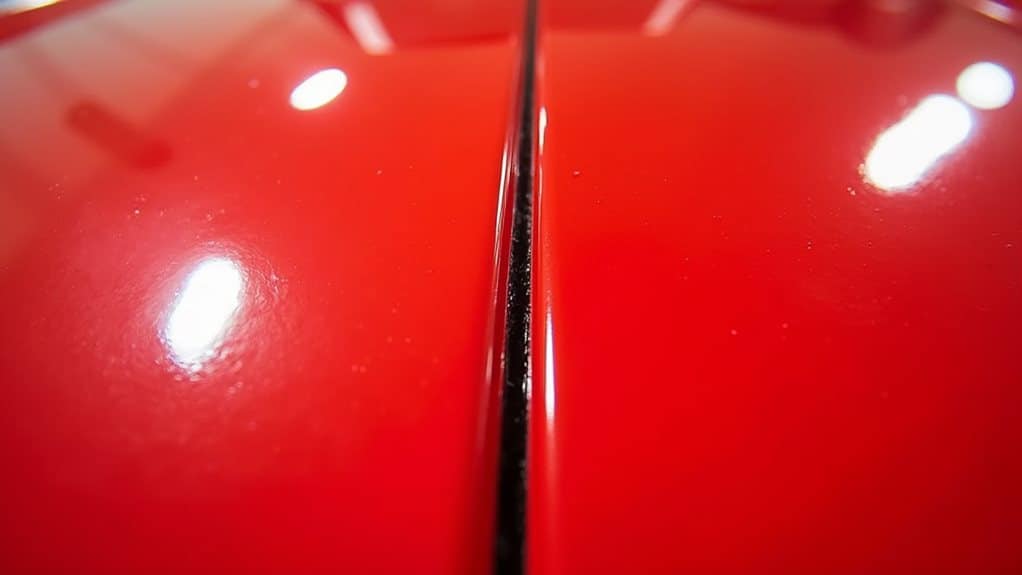
You should treat concentrations above about 80–90% isopropyl alcohol as hazardous to clear coats because they can cause micro-swelling, hazing, and even dissolve fresh or marginal clear layers with short contact times.
For routine use, dilute stronger solutions down to safe ranges—experts typically recommend 10–20% for direct paint contact or reducing 70–90% stock solutions to roughly 20% for panel cleaning—to avoid stripping waxes, sealants, and accelerating oxidation.
Always rinse and limit contact time, and remember that higher surface temperatures and older or softer clear coats increase the risk even at lower concentrations.
If you’ve previously used solvents like WD‑40 on trim or seals, be aware they can leave an oily residue that attracts dirt and may interact poorly with alcohol-based cleaners.
Safe Dilution Ranges
A careful approach to diluting rubbing alcohol is essential because alcohol concentration determines whether you’re cleaning safely or risking damage to clear coats and wax; for routine cleaning a 10–15% solution (for example, 1 part 70% isopropyl alcohol to 7 parts water yields about 12.5%) removes grime without stripping protective layers, while stronger mixes are reserved for specific prep or removal tasks.
Use 10% on fresh paint, 15–20% for pre-wax oil removal, test hidden spots, limit contact time, and cool the surface; rinse afterward.
Harmful High Concentrations
Because high concentrations of isopropyl alcohol interact directly with the polymers in clear coats and the hydrocarbons in wax, solutions above roughly 50% begin to risk measurable surface damage, so you should treat anything stronger than that as potentially harmful.
Above 50% IPA you’ll see reduced surface tension, polymer swelling and marring.
70% strips wax, 90%+ softens binders and degrades gloss, 99% can dissolve clear coat.
What Dilution Ratios Are Safe : And How to Mix Them?
You’ll generally stick to a safe alcohol concentration between 10% and 15% for routine paint cleaning, with 15% useful for tougher grime and up to 25% only for short, controlled applications.
To mix, measure the alcohol by volume and add distilled water—For example, mix 100 mL of 70% isopropyl alcohol with about 366 mL distilled water to get ~15%, or use a simple 1:6 ratio of pure alcohol to water for a 15% solution.
Apply with a microfiber cloth in the shade, test on a hidden panel first, and rinse and dry immediately to prevent clear coat damage from pooling or rapid evaporation.
White vinegar is a mild, acidic substance safe for leather and can be used as an alternative cleaning agent for stubborn residues when alcohol is not suitable, so consider testing white vinegar on a hidden area before use.
Safe Dilution Ratios
When working with rubbing alcohol on automotive paint, follow precise dilution guidelines so you don’t risk stripping the clear coat or leaving streaks; industry practice recommends keeping concentrations between about 10% and 20% isopropyl alcohol (IPA) for routine cleaning, with 15% serving as a safe, general-purpose compromise.
Use 10% for mild stains, 15% for stubborn grease; avoid >25% to prevent softening.
Mixing And Application
Start by choosing the exact dilution you need and measuring carefully, since the difference between a safe 10–15% isopropyl alcohol (IPA) mix and a too-strong solution that can harm clear coat is primarily a matter of math and technique.
Calculate volumes (70% or 100% IPA formulas given), mix alcohol and distilled water in a labeled container, test on an inconspicuous area, then apply with a damp microfiber, rinse, and dry.
How to Apply Diluted Rubbing Alcohol Without Damaging Paint
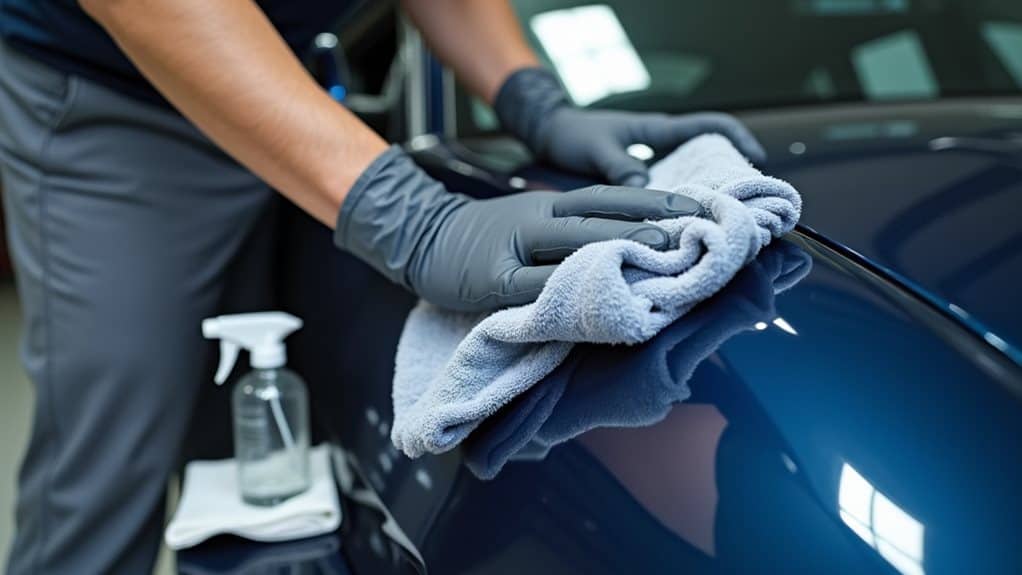
Because isopropyl alcohol can remove contaminants without harming paint if used correctly, you should always dilute it and follow careful procedures before applying it to automotive finishes.
Mix to 10–15% (99% IPA 1:6 water), test on a jamb for five minutes, then blot with a clean microfiber.
Work small areas, under 30 seconds contact, rinse, dry, wash, and reseal the finish.
Regular maintenance of related systems like the engine ground can help prevent electrical issues that might affect vehicle care.
Signs Rubbing Alcohol Damaged Your Paint : And Quick Fixes
If rubbing alcohol has harmed your car’s finish, you’ll usually see specific visual and structural signs that tell you how severe the damage is and what to do next.
Look for uniform dulling, micro-hazing, streaks, discoloration, swelling, etching, peeling, micro-cracks, chipping or blistering.
Rinse with pH-balanced shampoo, clay-bar, light polish and re-wax; seek professional sanding, clear-coat replacement or repainting for deep damage.
Wrapping Up
You can use rubbing alcohol safely if you dilute it and avoid fresh paint, hot surfaces, or thin clear coats; higher concentrations and undiluted isopropyl can strip wax and soften some clear coats, so test a hidden spot first. Mix about 70% IPA down to 30–50% with water for general cleaning, apply with a soft microfiber, and rinse. If you see dullness or soft spots, stop, polish, and consider professional help to restore finish.


