
To determine if your fuel injector is clogged, watch for symptoms like rough idling, engine hesitation, or stalling at stops. Poor fuel efficiency and increased emissions also signal potential issues. You might notice misfires, sluggish acceleration, or inconsistent engine power, which occur when fuel spray is uneven or incomplete. Conduct a visual check for leaks or cracks around the injector, and consider using fuel additives or professional cleaning if problems persist; continuing this guide will help you identify and address injector problems thoroughly.
Quick Tips
- Notice rough idling, engine shaking, or stalling at stops.
- Observe poor fuel economy despite consistent driving habits.
- Detect engine hesitation, sluggish acceleration, or reduced power.
- Check for misfires, sputtering, or rough engine performance.
- Perform visual inspections for leaks, cracks, or seepage around injectors.
What Are the Signs That Your Fuel Injector Might Be Clogging?
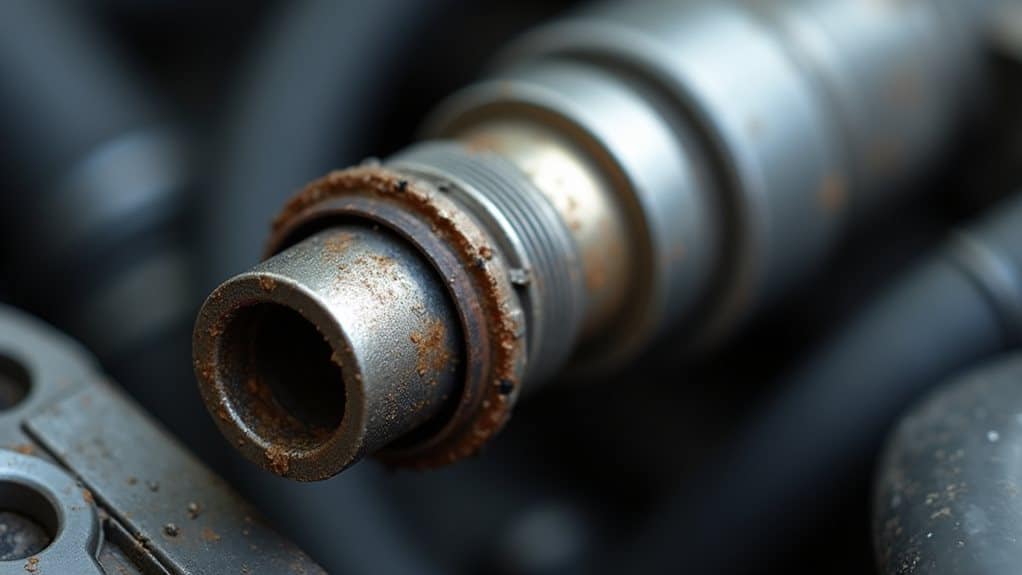
If your vehicle’s engine isn’t running smoothly, it might be due to a clogged fuel injector, which can cause a range of noticeable symptoms.
You may experience rough idling, where the engine shakes or stalls at stops, and poor fuel economy, with increased fuel consumption despite consistent driving.
These signs indicate restricted fuel flow from a compromised fuel injector.
Bad wheel bearings can also produce unusual noises from the rear of the car and may indicate related drivetrain or suspension issues.
How Does a Clogged Fuel Injector Affect Your Engine’s Performance?
A clogged fuel injector reduces engine power because it can’t deliver the proper amount of fuel needed for efficient combustion, causing the engine to feel sluggish.
When fuel flow is restricted, your vehicle consumes more fuel as it struggles to maintain performance, leading to increased fuel consumption.
Incomplete fuel atomization results in poor combustion efficiency, which can cause misfires, rough idling, and overall decreased engine smoothness.
Careful removal and replacement should follow proper procedures to avoid damaging paint or interior components.
Reduced Engine Power
When a fuel injector becomes clogged, it can considerably impact your engine’s performance by restricting the flow of fuel into the combustion chamber. This leads to reduced engine power, making acceleration sluggish and decreasing overall responsiveness.
Engine hesitation is common because the fuel injectors can’t deliver the proper amount of fuel, causing incomplete combustion and a noticeable drop in performance.
Increased Fuel Consumption
Clogged fuel injectors can substantially impact your engine’s fuel efficiency by causing it to work harder than necessary. This leads to increased fuel consumption because the injectors deliver less fuel than needed, forcing the engine to burn more to maintain power.
Over time, inefficient fuel delivery from clogged injectors results in higher costs and reduced miles per gallon.
Poor Combustion Efficiency
Poor combustion efficiency occurs when fuel isn’t burned completely within the engine cylinders, often as a direct result of a fuel injector that’s partially or fully clogged. This causes incomplete combustion, reducing engine power, causing misfires, and increasing emissions.
A clogged fuel injector disrupts proper fuel atomization, leading to uneven fuel delivery and overall decreased engine performance.
Can Poor Fuel Quality Cause Injector Clogs?
Low-quality fuel can substantially contribute to the clogging of fuel injectors because it often contains contaminants such as dirt, debris, and water that aren’t adequately filtered out before reaching your vehicle’s fuel system.
Poor fuel quality introduces these contaminants, which can cause deposits and corrosion, leading to clogged fuel injectors and impairing engine performance over time.
Regular maintenance, including periodic cleaning of injectors and fuel system components, helps prevent deposits and corrosion from causing long-term damage.
How Do Fuel Additives Help Prevent Injector Blockages?
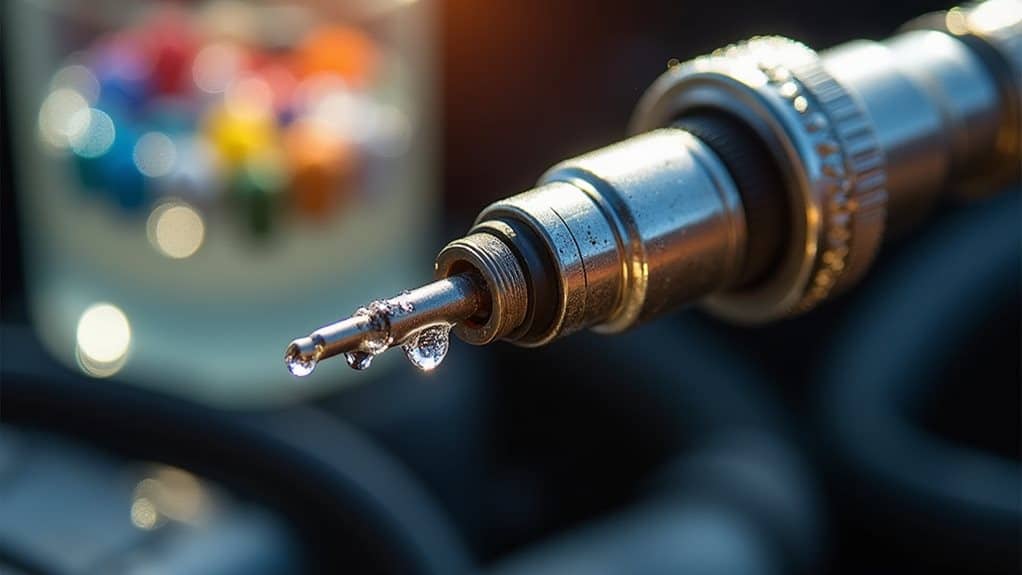
Fuel additives containing detergents play a significant role in maintaining the cleanliness of your vehicle’s fuel system. They help prevent injector blockages by dissolving and reducing carbon deposits that can accumulate inside fuel injectors.
Regular use of these additives improves spray patterns, enhances fuel atomization, and prevents buildup. Ultimately, this supports peak engine performance and extends injector lifespan. Water exposure can also damage electrical and fuel-system components, so it’s important to check for wet spark plugs and other water-related issues after driving through deep water.
How to Diagnose and Clean Your Fuel Injectors at Home
Diagnosing a clogged fuel injector at home involves paying close attention to symptoms like rough idling, engine misfires, and poor fuel efficiency.
You should also perform visual checks for leaks, cracks, or fuel seepage around the injectors.
Using fuel injector cleaner additives can help loosen deposits.
If issues persist, professional ultrasonic cleaning guarantees thorough maintenance and ideal injector performance.
OBS trucks are known for their robustness and reliability, which can make DIY maintenance more feasible for owners.
What Are the Symptoms of Uneven Fuel Spray?

Uneven fuel spray from a clogged injector often presents itself through specific engine performance issues that are noticeable during driving. You might experience engine misfires, rough idling, or hesitation during acceleration.
Visible signs like sputtering or coughing, along with inconsistent engine power, indicate an irregular fuel spray pattern caused by a clogged injector. Diagnostic tools can confirm these irregularities. A sputtering car under acceleration often means a fuel delivery or ignition problem, so checking the fuel delivery system can help narrow down the cause.
When Should You Have Your Fuel Injectors Professionally Checked?
You should have your fuel injectors professionally checked whenever you notice ongoing issues that basic maintenance doesn’t resolve, such as persistent rough idling or engine misfires.
If your check engine light flashes or fuel economy drops markedly, a professional inspection can diagnose potential problems.
Regularly scheduled inspections, typically every 30,000 to 50,000 miles, help prevent severe engine damage caused by clogged or faulty fuel injectors.
Tips for Keeping Your Fuel Injectors Clean and Working Properly
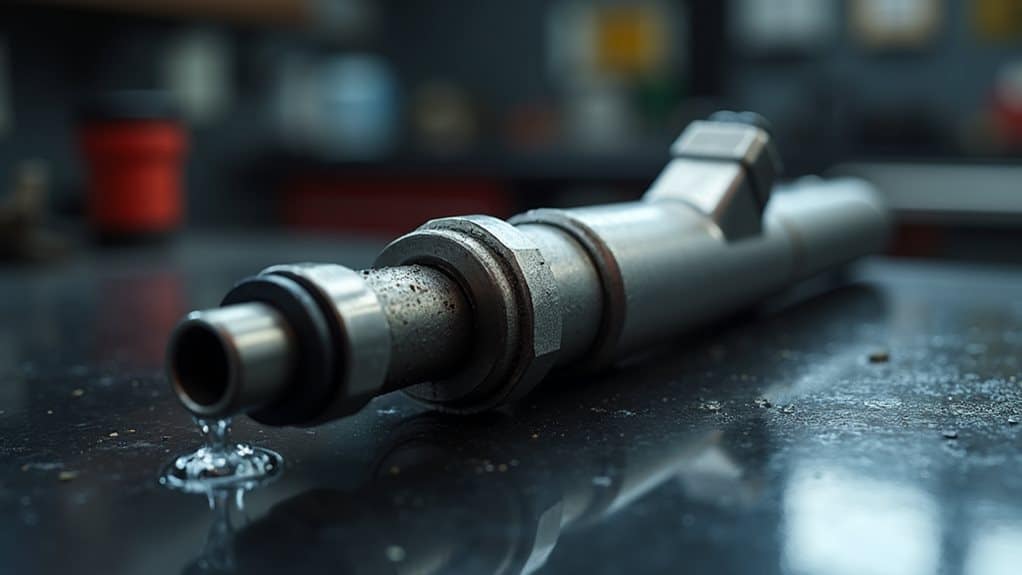
Keeping your fuel injectors clean is vital for maintaining ideal engine performance and fuel efficiency.
To guarantee fuel injector issues are prevented, use high-quality fuel and add fuel system cleaners regularly.
Schedule professional fuel injector cleanings every 30,000 to 50,000 miles, and replace fuel filters as recommended.
Regular maintenance makes sure injectors stay clear, functioning properly, and reduces the risk of clogs.
Wrapping up
Regularly inspecting your fuel injectors and paying attention to engine performance can prevent costly repairs. Use fuel additives as recommended and maintain proper fuel quality to reduce clogging risk. If you notice symptoms like rough idling or poor acceleration, consider cleaning or professional diagnosis. Keeping your injectors clean guarantees ideal fuel atomization, combustion efficiency, and engine longevity. Consistent maintenance and awareness of signs can help you avoid unexpected breakdowns and maintain smooth vehicle operation.