If your CV axle boot is failing, you’ll notice visible signs like grease splatters around the wheel well, cracks or tears in the rubber boot, or dirt and debris inside it, indicating contamination. You might hear clicking or popping sounds during turns, especially at low speeds, or experience grease leaks that suggest the boot has torn. Increased noise or stiffness may point to joint damage. Pay attention to these clues; continuing will reveal more about preventing and fixing this issue.
Quick Tips
- Visible grease splatters around the wheel well indicate possible torn or leaking CV boot.
- Unusual clicking or popping noises during turns suggest joint damage from boot failure.
- Cracks, tears, or bulging in the rubber boot signal deterioration and potential grease leakage.
- Dirt or debris inside the boot reflects contamination from a torn or damaged CV boot.
- Accelerated wear or stiffness in the joint may result from loss of lubrication due to a failing boot.
What Are CV Axle Boots and Why Do They Matter?
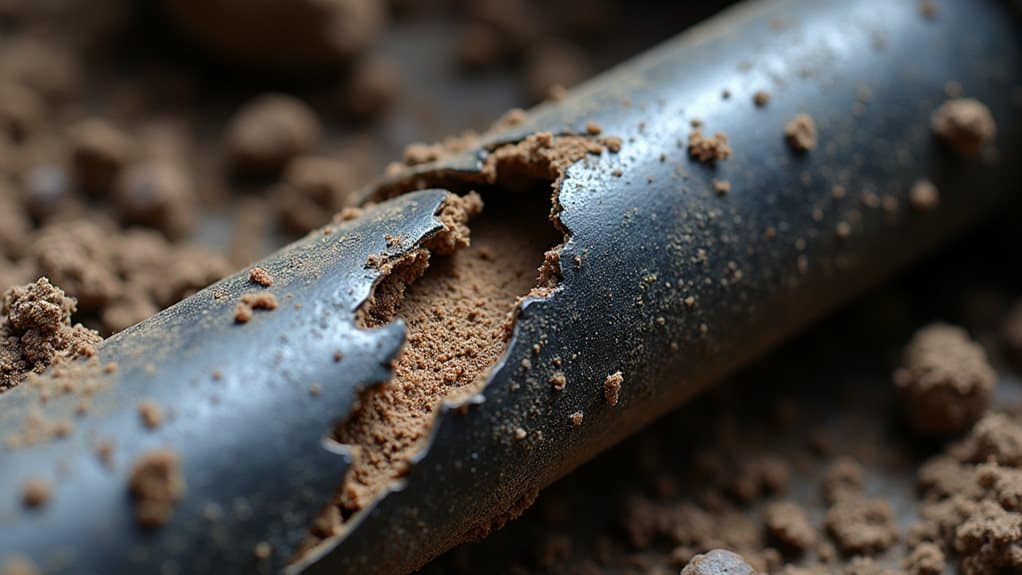
A CV axle boot is a flexible rubber cover that surrounds the constant velocity (CV) joint, a critical component in your vehicle’s drivetrain. It seals the joint and contains grease, which guarantees smooth operation.
Damage or tearing in the boot exposes the CV joint to contamination, risking increased friction, heat, and premature wear.
Ultimately, this can compromise your vehicle’s performance. Modern vehicles often classify components like the CV joint as personal property for inventory and equipment purposes, affecting how they’re recorded in vehicle asset lists.
How Can You Spot Visible Signs of a Torn CV Boot?
To identify a torn CV boot, start by looking for visible grease splatters around the inner wheel area or wheel well, which often indicate leakage.
Check the rubber boot for cracks, tears, or splits, as these are clear signs of damage, and note any bulging or misshapen boots that suggest internal grease has leaked out.
Additionally, inspect the clamps holding the boot in place; damaged or loose clamps can cause grease to leak or the boot to slip.
The presence of dirt or debris inside the boot signals that contaminants have entered the joint.
Also, inspect nearby electrical connections and battery terminals for corrosion or looseness, since corrosion and grounding issues can cause related vehicle electrical problems.
Visual Grease Leaks
How can you identify a torn CV boot through visible grease leaks? Look for grease splatters or visible grease around the wheel area or wheel well, often dark and oily.
Grease buildup on suspension components or the underside of the vehicle indicates leakage.
A cracked boot may cause grease to escape, leaving dried or dirty grease spots, signaling a compromised CV boot.
Cracks or Tears
Cracks or tears in the CV boot are often the most noticeable signs of damage, especially when you know where to look. Visible signs include splits or cracks in the rubber, often accompanied by hardened or brittle areas indicating deterioration.
Grease leaks around the edges signal a tear, and damaged boots may lack secure clamps, allowing dirt and moisture to enter and worsen the problem.
Damaged Clamp Signs
Damaged clamps are often a key indicator that your CV boot may be torn or failing, as these small components play an essential role in securing the boot to the axle joint.
Look for signs like loose, rusted, or broken clamps. Clamp damage can cause grease leaks, rust, and seal compromise.
This increases the risk of dirt and debris entering, which worsens boot deterioration.
What Noises Indicate a Failing CV Axle Boot?
Have you noticed unusual noises when turning your vehicle? Clicking or popping sounds during turns, especially at low speeds, often indicate a torn CV axle boot causing joint damage.
Noise during turns and grease leaks are signs of a compromised boot. These issues can lead to further joint failure, so early detection and repair are essential to prevent costly damage. A stiff or seized joint may benefit from lubricant application to ease movement and prevent further wear.
Why Does Grease Leak From Your Wheels or Suspension?
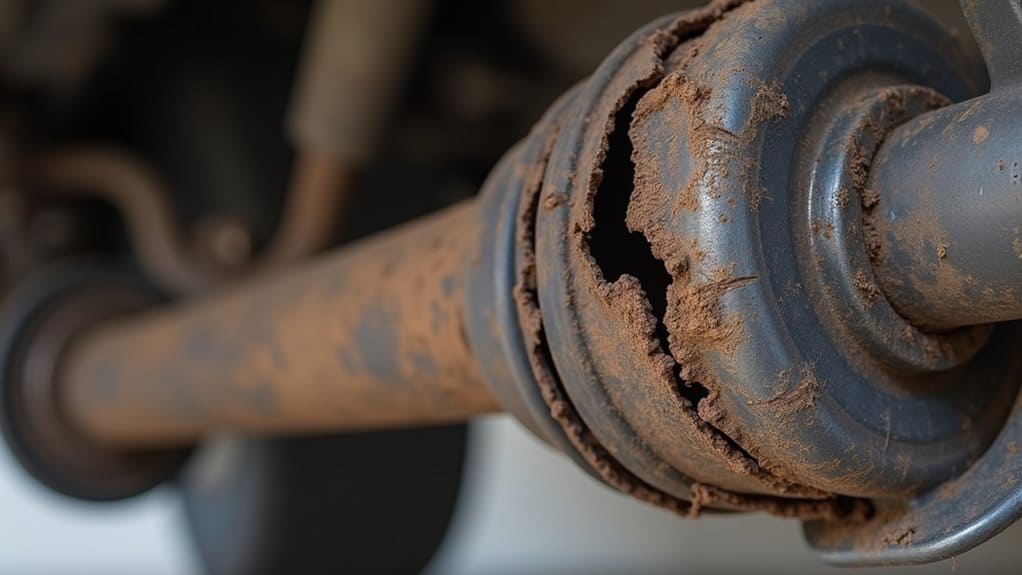
Grease leaks from your wheels or suspension primarily because the CV axle boot has torn or become damaged. A CV boot tear allows grease to escape, leading to grease leakage and visible grease splatter around the wheel well.
This exposes the joint to dirt and debris, which can accelerate axle damage by impairing joint lubrication and increasing friction. Regular inspection and cleaning can help maintain component longevity and reveal issues like brake dust buildup early.
How Do Driving Conditions Speed Up CV Boot Damage?
Driving conditions such as frequent sharp turns and stop-and-go traffic cause repeated flexing and stress on CV boots, which can lead to material fatigue and tears over time.
Rough terrain and debris, like gravel or dirt, increase the risk of puncturing or tearing the boot, especially if it’s already damaged.
Additionally, driving through deep water or modifying your suspension height can alter joint angles, placing extra strain on the CV boots and accelerating their deterioration.
Improper disposal of solvent-soaked rags and contaminated materials can create fire hazards and environmental risks if not handled at hazardous waste facilities.
Frequent Turns and Stops
Frequent turns and stops place additional stress on your vehicle’s CV boots because they cause the CV joints to flex more often and with greater intensity.
Sharp turns and sudden stops increase the risk of boot tears, leading to grease leakage and contamination.
Over time, this can damage wheel bearings and cause axle issues, accelerating overall drivetrain wear.
Rough Terrain and Debris
When a vehicle maneuvers rough terrain or encounters debris, CV boot damage becomes more likely.
Impacts and punctures from debris can cause tearing, while raised suspension angles put additional stress on the boot.
Water, mud, and gravel introduce contaminants that weaken the rubber, accelerating deterioration.
Continuous flexing and obstacles increase wear, leading to early CV boot failure.
What Are the Risks of Ignoring a Torn CV Boot?
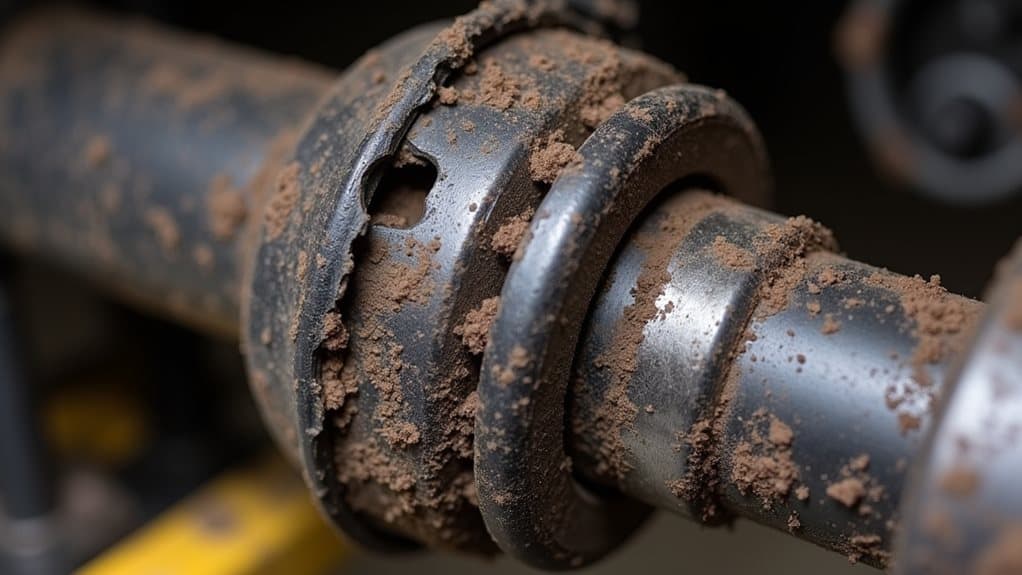
Ignoring a torn CV boot can lead to serious mechanical problems that may compromise your vehicle’s safety and performance. A torn CV boot allows grease to escape, which reduces lubrication, and debris to enter, causing joint damage.
Over time, this can result in axle failure, risking loss of drive power and unpredictable handling, endangering vehicle safety. Using a primer or activator can help ensure proper sealing and prolong joint life.
How to Repair or Replace a Torn CV Boot : Step-by-Step Guide
Repairing or replacing a torn CV boot involves a systematic process that requires careful preparation and attention to detail. Begin by lifting your vehicle and removing the wheel for clear access.
Carefully cut off the damaged boot, clean the joint thoroughly to remove grease leakage, then inspect the CV joint for wear.
Apply new grease, slide on the new boot, and secure with CV boot clamps, completing axle replacement if necessary.
Tips to Maintain Your CV Boots and Prevent Damage
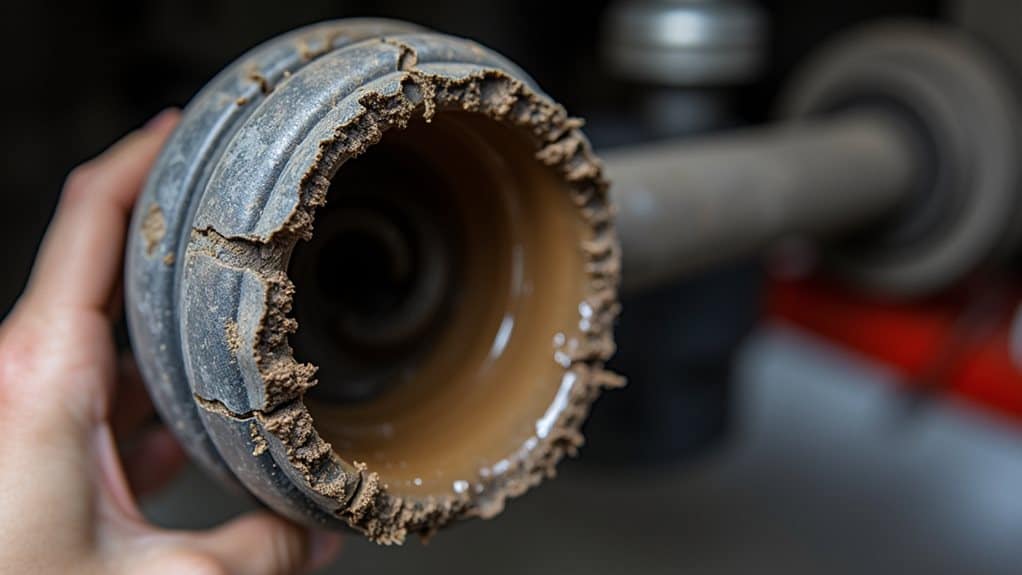
Regularly maintaining your CV boots is essential to prevent premature failure and costly repairs. During routine maintenance, inspect for tears, cracks, or grease leaks that indicate damage.
Keep your suspension and wheel alignment properly adjusted, as misalignment stresses the boots.
Applying protective spray or grease helps keep rubber supple, reducing the risk of a torn CV boot and damage prevention.
Wrapping up
Regularly inspect your CV axle boots for tears, cracks, or grease leaks, as these signs indicate potential failure. Promptly replacing damaged boots prevents dirt, debris, and moisture from entering the joint, which can cause accelerated wear and costly repairs. Pay attention to unusual noises and driving conditions that may hasten damage. Proper maintenance and timely repairs guarantee your vehicle’s safety and extend the lifespan of your CV axle system, saving you both time and money.