During normal driving your muffler’s outer surface usually sits between 300 °F and 500 °F (149 °C–260 °C). The heat comes from exhaust gases that have already cooled a bit after passing the catalytic converter, which can be around 1,000 °F, and the exhaust manifold, which may reach 1,200 °F during hard acceleration. Heavy loads, high RPMs, or a clogged exhaust can push the temperature above 600 °F, increasing burn and fire risks. Proper monitoring and maintenance keep temperatures safe, and the next sections explain how.
Quick Tips
- Typical muffler surface temperature during normal driving is 300 °F–500 °F (149 °C–260 °C).
- Heavy load, high RPM, or towing can push muffler temperatures above 600 °F (315 °C).
- Exhaust manifold can exceed 1,200 °F (650 °C) and catalytic converters add 100–200 °F, raising downstream muffler heat.
- Ambient temperature and airflow affect cooling; hot weather or restricted airflow can raise muffler surface toward 600 °F.
- Use a K‑type thermocouple for accurate measurement; temperatures above 500 °F pose burn and fire hazards.
Typical Muffler Temperature Range in Everyday Driving?
So, what temperature does a muffler typically reach while you’re driving?
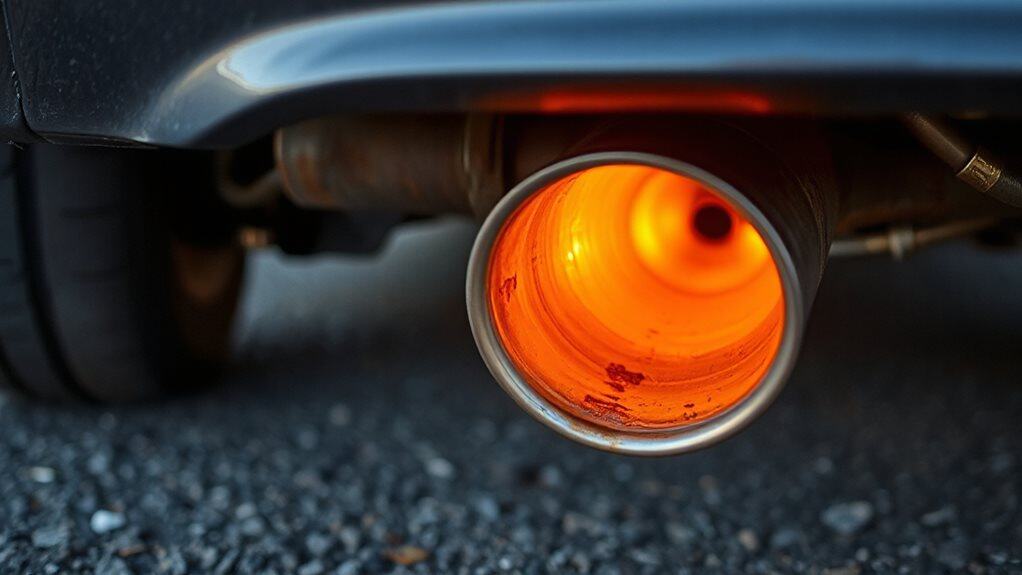
In everyday driving, a muffler stays between 300 °F and 500 °F (149‑260 °C). It handles up to 260 °C routinely, staying cooler than upstream exhaust components because its larger surface area dissipates heat. Even during stop‑and‑go, the surface rarely exceeds 500 °F, keeping the tailpipe gases around 400 °F. Stainless steel mufflers can further reduce heat buildup due to their superior heat resistance. A related vehicle alert like a door ajar warning can sometimes be triggered by electrical issues that also affect sensors near the exhaust system.
What Makes Muffler Temperatures Rise Above 600 °F?
How do muffler temperatures climb past 600 °F? High‑performance engines push more exhaust gases, and RPM spikes amplify heat flow. Heavy towing, rapid acceleration, or prolonged high‑load driving increase gas pressure and temperature. Clogged pipes or poor combustion create unburned fuel that burns in the exhaust, raising heat. Design factors—shorter pipes, tight bends, or restrictive muffler types—concentrate heat, pushing temperatures well above 600 °F.
How Do Catalytic Converters and Manifolds Affect Muffler Heat?
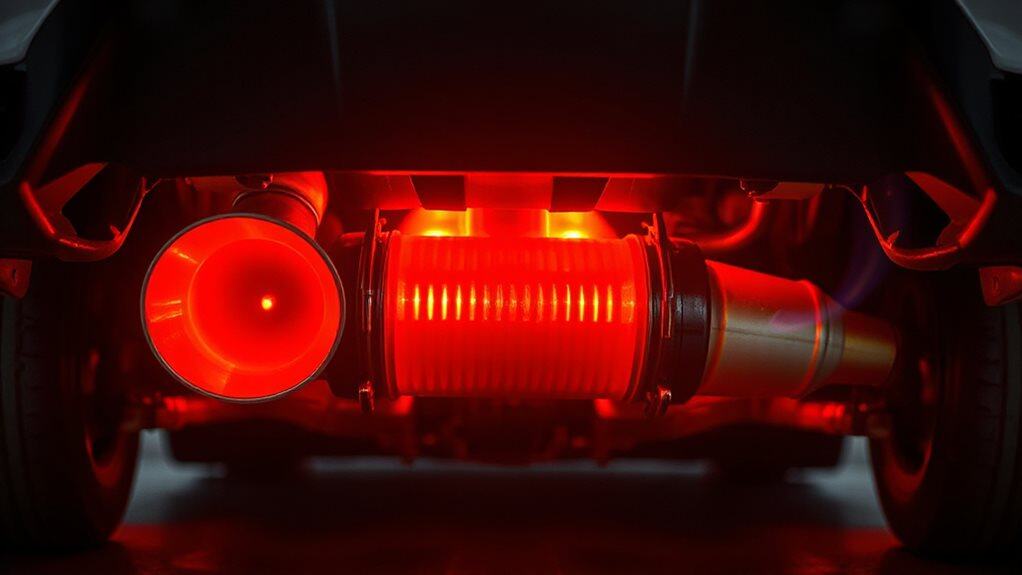
When the exhaust gases leave the engine, they first travel through the exhaust manifold, which can reach up to 1,200 °F during hard acceleration; this intense heat is then carried into the catalytic converter, where chemical reactions that reduce emissions add another 100‑200 °F, often pushing the converter’s temperature to around 1,000 °F.
The hot gases from the converter flow directly into the muffler, raising its temperature to roughly 300‑500 °F.
The short distance preserves heat, while increased engine speed enhances gas volume and heat transfer, making the muffler hotter during high‑load driving.
Electrical faults or a failing alternator can also cause related overheating concerns by affecting engine control systems and accessory loads, which may indirectly influence exhaust temperatures and thermal management weak or dying batteries.
Why Do Ambient Weather and Load Conditions Influence Muffler Temperature?
Ever wondered why a muffler feels hotter on a scorching summer day or when you’re pulling a heavy trailer? Ambient heat slows exhaust cooling, so surface temperatures climb toward 500‑600°F, while cold air cools gases faster but forces the engine to work harder, raising exhaust heat.
Heavy loads increase engine output, producing exhaust up to 1000°F, which directly raises muffler temperature. RPM spikes and prolonged driving further amplify these effects. Using incorrect tools or low-quality components can exacerbate maintenance issues and affect exhaust system performance fastening reliability.
How Can You Safely Measure Muffler Heat in Real Time?
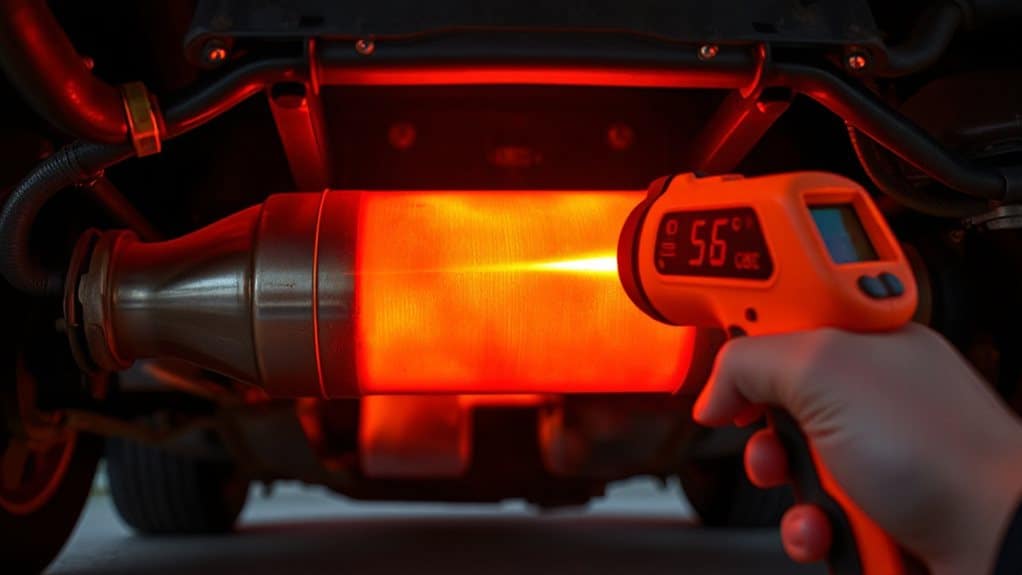
What you need to know before you start measuring muffler heat is that safety and accuracy go hand‑in‑hand. Use a K‑type thermocouple, preferably a weld‑pad or washer‑style sensor, and mount it on the exhaust manifold away from welds. Connect the sensor to a TCA‑enabled data logger with cold‑junction compensation. Monitor real‑time voltage, set alarm thresholds, and avoid non‑contact infrared guns for precise readings.
What Do 500 °F+ Temperatures Mean for Burn and Fire Risks?
So, why does a muffler that exceeds 500 °F become a serious safety concern? At that heat, skin contact causes third‑degree burns in under a second, while 400‑500 °F still produces severe burns after shutdown. Dry grass ignites at 400‑500 °F, fuel leaks spark instant fires near 500 °F+ surfaces, and plastic bags melt and combust.
Heat retention keeps these temperatures hazardous for hours, endangering children, pets, and nearby components. A muffler at these temperatures can also exacerbate vehicle problems by igniting nearby leaking fluids or damaged components, symptoms that may accompany issues like fuel system faults requiring prompt inspection.
How Can You Keep Muffler Temperatures Within Safe Limits?
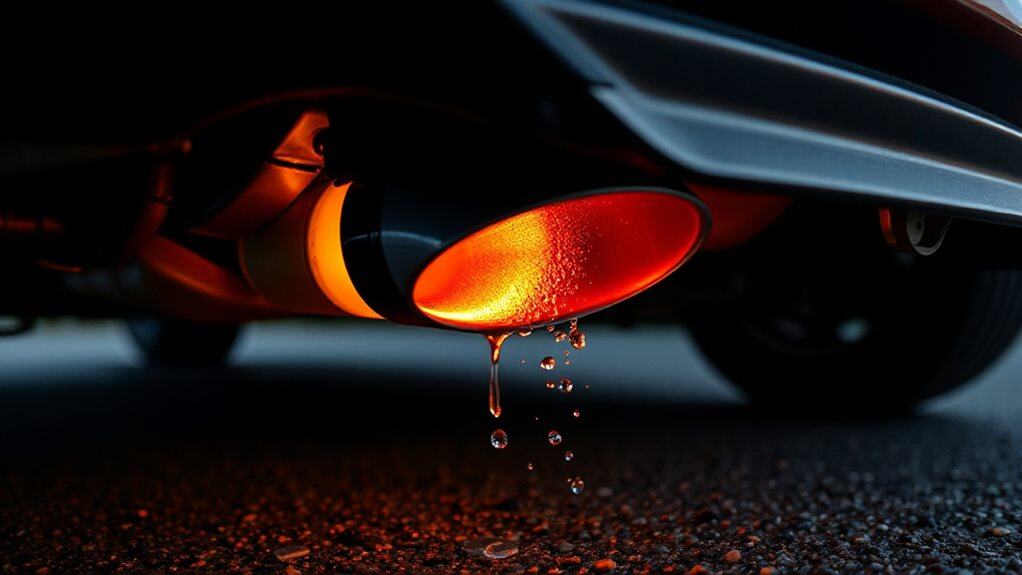
How can you keep your muffler’s temperature from climbing into dangerous territory? Inspect regularly for leaks or blockages, clean debris, and replace worn gaskets.
Drive smoothly, avoid aggressive acceleration, and limit high‑speed or heavy‑towing runs.
Install stainless‑steel heat shields or thermal wraps, and choose high‑grade stainless pipes.
Use infrared thermometers or thermocouples to monitor surface heat, ensuring it stays below 500 °F.
Maintain proper tire pressure (about 35 PSI) and perform TPMS relearn after service to help overall vehicle systems run efficiently and reduce stress that can contribute to elevated exhaust temperatures, especially during long drives with heavy loads 35 PSI.
When Does High Muffler Heat Indicate a Potential Exhaust Problem?
When high muffler heat appears, it often signals an underlying exhaust issue that warrants immediate attention.
You should notice louder roaring or rattling, a sudden increase in exhaust noise, or a hot, metallic smell near the manifold.
These cues suggest leaks, blockages, or a cracked muffler, which can reduce fuel mileage, cause misfires, and trigger dashboard overheating warnings.
Prompt inspection prevents further damage.
In some cases, high exhaust temperatures can also be associated with failing catalytic converters and related sensor issues that affect engine performance.
Wrapping Up
You’ve learned that typical muffler temperatures stay between 250 °F and 500 °F during normal driving, but can climb above 600 °F when the engine works hard, the catalytic converter is inefficient, or ambient conditions are hot. Monitoring heat with an infrared thermometer or thermocouple lets you spot dangerous spikes that could cause burns or fire. Regular maintenance—checking for blockages, ensuring proper clearance, and keeping the exhaust system intact—keeps temperatures within safe limits and helps prevent costly exhaust failures.