Your brake fluid should normally be clear to a light amber (pale straw) color and transparent in the reservoir, with no cloudiness, particles, or sediment; DOT 3, DOT 4 and DOT 5.1 start clear to pale amber while DOT 5 (silicone) is usually purple, so always check the DOT label. Dark brown or black, milky/cloudy, or visible debris signals contamination or moisture absorption and needs service, and the following sections explain tests, causes, and replacement timing.
Quick Tips
- Normal brake fluid is clear to light amber, often described as a pale straw or honey-like color.
- Slight yellowing is common; a faint amber tint alone usually doesn’t require immediate service.
- Dark brown or black fluid indicates heavy contamination and needs immediate replacement.
- Milky, cloudy, or particle-filled fluid signals contamination or moisture and requires service.
- DOT 5 (silicone) is often purple; always confirm DOT type because dyes can change expected color.
What Healthy Brake Fluid Looks Like (Short Answer)
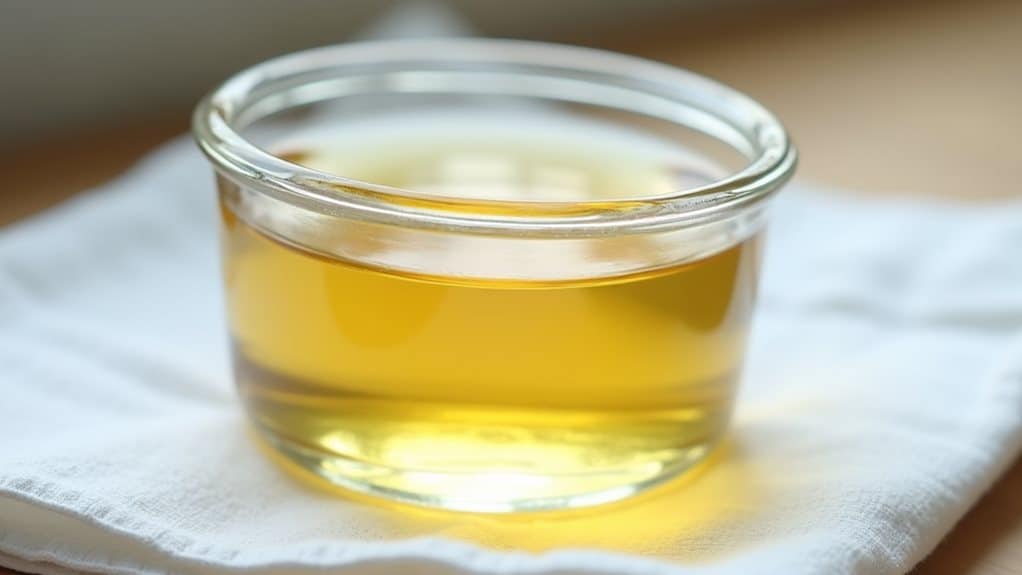
Although you mightn’t check it often, healthy brake fluid is usually clear to a light yellow and appears transparent when you look into the reservoir.
You’ll see no cloudiness, particles, or suspended matter; the fluid stays transparent and may show a light amber tint depending on brand.
Minimal moisture absorption indicates a clean system; slight yellowing can be normal, but darker shifts warn you to test and service.
Brake fluid ages over time due to heat cycles and contamination, so darker or brownish fluid often signals it needs inspection or replacement.
Too many neglected vehicles can lead to enforcement actions from local authorities if left stored improperly.
Brake Fluid Color by DOT Type (DOT 3, DOT 4, DOT 5, DOT 5.1)
You should expect fresh DOT 3 brake fluid to be a clear amber—sometimes with a light yellow or golden tint—that darkens toward brown or even black as it ages. DOT 4 and DOT 5.1, both glycol-based, are generally clear to light amber at first (DOT 4 can show a brighter amber or faint red, while DOT 5.1 may be more translucent or pale yellow), and both will turn brown or black when contaminated or moist.
DOT 5, a silicone-based fluid, is distinctively purple or sometimes blue/clear when new, and its color shifts over time without necessarily indicating the same kind of degradation as glycol fluids.
Check the system for air trapped if you notice no fluid flow while bleeding brakes, as trapped air can prevent proper circulation.
DOT 3 Color Range
When inspecting DOT 3 brake fluid, note that fresh fluid is usually clear to a light amber—often described as a pale straw color—and you should expect transparency without cloudiness as an indicator of good condition.
Because DOT 3 is glycol-based and hygroscopic, it tends to absorb moisture over time, which causes the color to shift toward dark yellow, brown, or even black as contamination or internal wear particles accumulate.
You should check visually, compare to new fluid, probe for cloudiness or particles, and replace if color darkens noticeably, since dark hues signal contamination, moisture saturation, or internal wear requiring system flush and fresh fluid.
DOT 4 Typical Hue
Because DOT 4 is a glycol-based fluid like DOT 3, its fresh color is usually clear to a pale amber, and you can expect a transparent, honey-like appearance that lets light pass through without cloudiness; this neutral tone comes from the base chemicals rather than added dyes, so reputable brands show only slight variation such as faint golden or sometimes subtle reddish undertones.
You should expect a clear, pale amber fluid when new; any darkening, cloudiness, or unusual hues indicates moisture absorption, contamination, or aging and signals the need for service.
DOT 5 And 5.1
Having covered DOT 4’s typical pale-amber appearance, it helps to compare that with DOT 5 and DOT 5.1 so you can reliably identify fluid types by sight.
DOT 5 is silicone-based and standardized purple, distinct from glycol fluids; some brands may lean blue or deep red and the color stays stable.
DOT 5.1 is glycol-based, usually clear to pale amber, matching DOT 3/4.
Brake Fluid Color Comparisons for Quick Diagnosis
You’ll compare fresh versus aged fluid by noting that new brake fluid is usually clear to light yellow or amber, while aged or contaminated fluid darkens to amber, brown, or black and becomes increasingly opaque.
Remember that DOT 3, DOT 4, and DOT 5.1 start clear to pale amber when new but will darken with moisture and contamination, whereas DOT 5 is silicone-based and is characteristically purple regardless of age.
Use these color differences as a quick visual screen—clear/light yellow means acceptable, dark amber warns of moisture uptake, and brown or black signals immediate replacement and system inspection.
If you notice smoking brakes after service, it could be normal during break-in but also indicate a dangerous mechanical failure requiring immediate attention.
Fresh Versus Aged
When you compare fresh and aged brake fluid, the color gives an immediate clue about its condition and service needs: new DOT 3, DOT 4, and DOT 5.1 fluids are translucent and range from clear to light yellow or a slight amber, resembling diluted cooking oil or apple juice, while oxidation and moisture absorption darken the fluid over time to pale yellow, then amber, then dark brown and eventually black or murky, signaling progressive degradation.
You should inspect through the reservoir, note translucency and absence of particles, and act: light amber is acceptable, dark brown needs scheduled flushing, black or cloudy fluid requires immediate replacement.
DOT Color Differences
Because brake fluids from different DOT classes often look similar at a glance, using color as a quick diagnostic tool can save you time—but you must understand its limits.
DOT 3 and DOT 4 are glycol-based, amber to clear with brand tints; DOT 5 is silicone-based, purple and distinct; DOT 5.1 matches DOT 3/4 amber.
Always confirm the DOT label—dyes can mislead.
Signs Your Brake Fluid Is Contaminated or Old
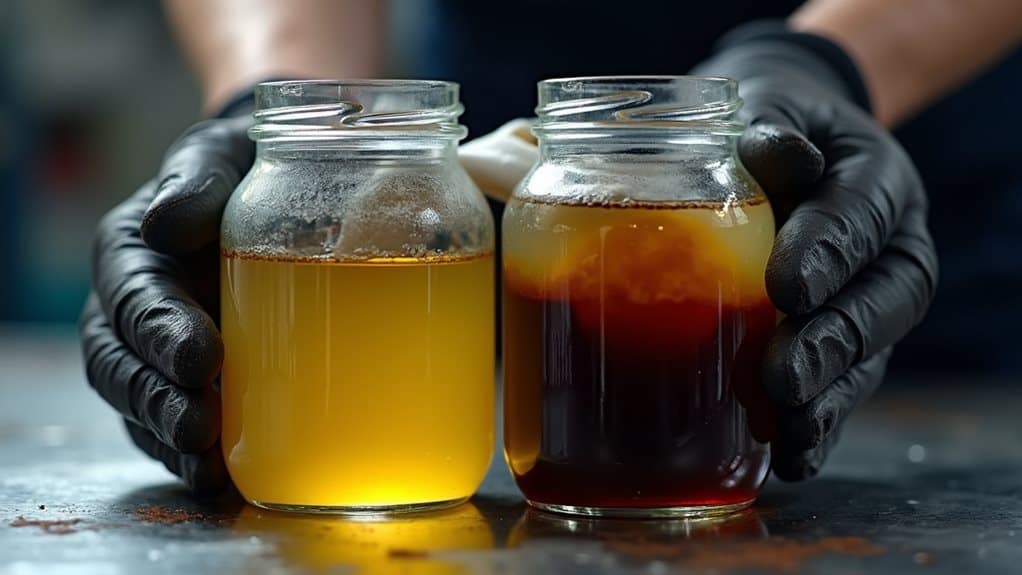
If your brake fluid looks noticeably darker than its original clear or light amber tone, that change is one of the most reliable visual signs that the fluid is contaminated or aged; cloudy, murky, or opaque fluid, visible particles or sediment, and a sludge-like coating on the fluid surface all point to degradation.
You may also notice a spongy pedal, longer stopping distance, corrosion, or ABS warnings.
Proper maintenance includes flushing brake fluid every 2–3 years to maintain system responsiveness and prevent moisture contamination, which helps avoid longer stopping distance and corrosion.
Where and How to Inspect Brake Fluid on Your Car
Check Min/Max markings, clean the cap area, use a flashlight if needed, and note fluid color and clarity without opening longer than necessary. It’s important to remember that when a caliper has been replaced you should generally bleed all four brakes to ensure no air remains in the system.
How to Inspect Brake Fluid (Step‑by‑Step)
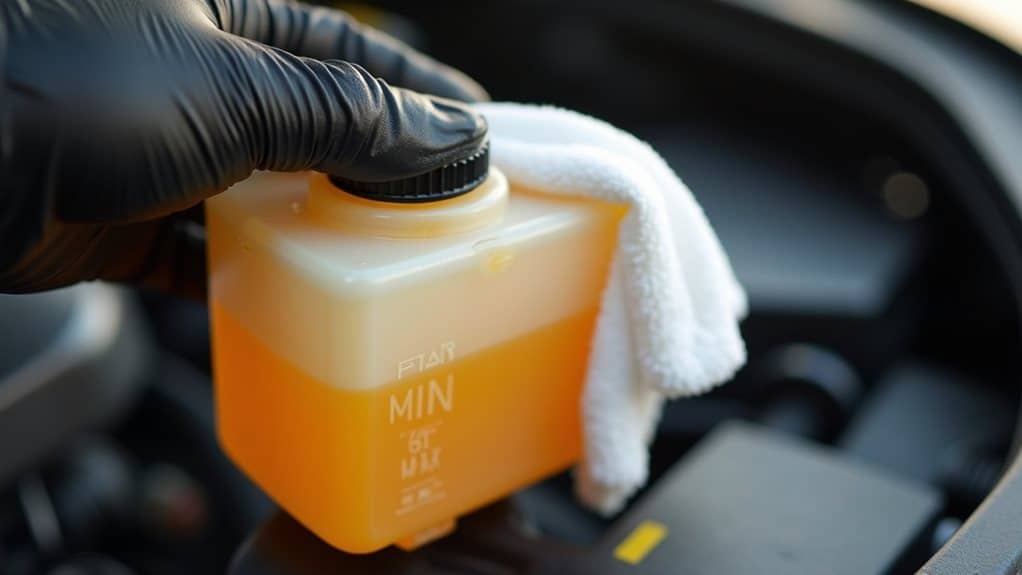
Before you open anything, make sure the vehicle is parked on level ground with the parking brake engaged and the engine cool, then pop the hood and secure it so you can work safely and without rushing.
Locate the translucent reservoir, clean its cap area, twist off the cap gently, check MIN/MAX levels, inspect color and clarity against a clean reference, and note any particles. Also be alert for a sharp, acrid burning smell which can indicate an overheating electrical component near the reservoir or fuse box—if detected, stop and inspect fuses and wiring for heat or damage before continuing overheating warning.
Can’t Tell by Color? Simple Tests to Confirm Contamination
How can you confirm brake-fluid contamination when color alone doesn’t tell the whole story?
Inspect the brake-cylinder cap seal: swelling or distortion signals petroleum contamination and requires immediate flushing.
Use moisture test strips or pencil testers—replace fluid at or above 3% moisture, often earlier above 2%.
Dip copper test strips; 200 ppm or more means corrosion and change fluid.
Use a voltmeter: over 0.30 V indicates acidity.
What Causes Brake Fluid to Darken and How It Affects Braking
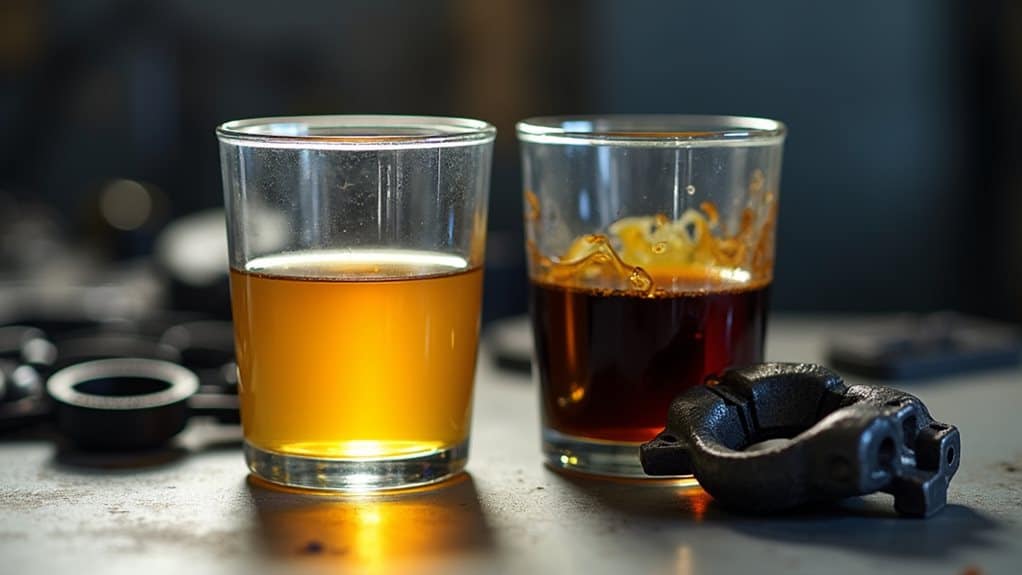
If color alone doesn’t confirm contamination, you still need to know why brake fluid darkens and what that means for stopping performance.
Fluid absorbs moisture, lowering boiling point and causing vapor lock under heavy braking.
Heat breaks down additives into sludge; corrosion and debris add particulates.
Dark fluid transmits pressure poorly, causes a spongy pedal, and signals corrosion or thermal failure requiring service.
How Often to Flush or Replace Brake Fluid (Intervals & Triggers)
Although brake fluid may look unchanged for months, manufacturers and technicians recommend replacing it on a regular schedule because moisture absorption and chemical breakdown steadily reduce its effectiveness; most passenger cars follow a 24–36 month window, some service plans cite 25,000–45,000 mile intervals, and high‑performance or track‑used vehicles typically need changes every 12–18 months.
Check color and use moisture testers; replace immediately if dark, cloudy, foul‑smelling, pedal feels spongy, ABS lights activate, or moisture exceeds about 3%.
Quick Decision Checklist: Replace, Monitor, or Ignore?
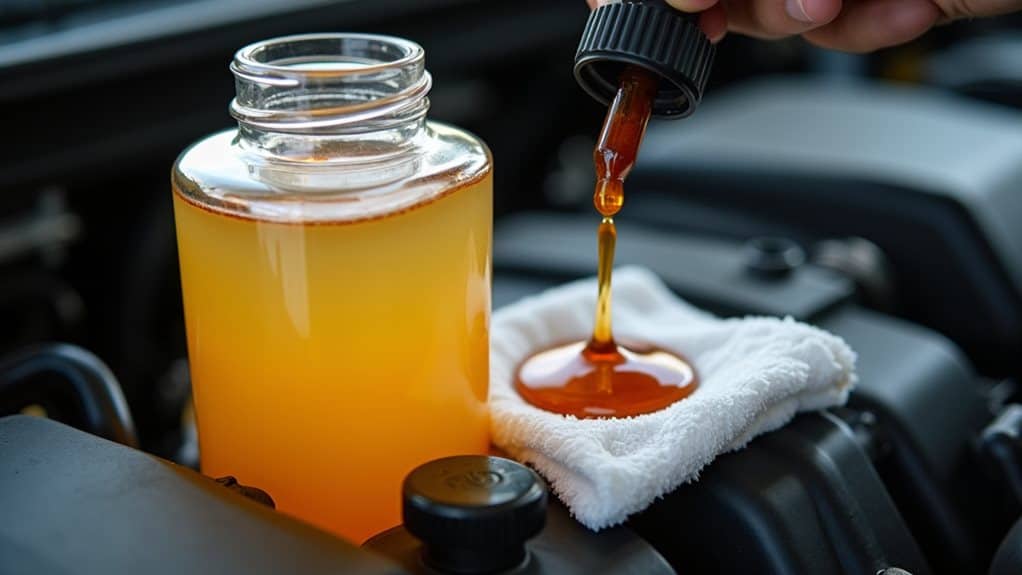
Now that you know recommended intervals and the common signs that fluid has aged, you can use a short checklist to decide whether to replace, keep an eye on, or ignore the brake fluid at a glance.
Replace immediately for black, dark brown, milky/cloudy fluid, spongy brakes, ABS warnings, or burning smell.
Monitor dark amber or slightly darkening fluid, check moisture near 3%.
Wrapping Up
You should check brake fluid regularly and expect it to be clear to pale amber when new; darker colors mean contamination or moisture. If fluid looks brown, black, or cloudy, plan a flush and replacement, because old fluid absorbs water and loses boiling point, reducing braking performance. Inspect the reservoir with the engine cool, use paper test strips if unsure, and follow your vehicle’s service interval or any signs of spongy pedals, leaks, or warning lights.