An EGR cooler is a device that helps reduce harmful nitrogen oxide (NOx) emissions by cooling exhaust gases before they are recirculated into the engine’s intake. It works as a heat exchanger, using coolant to absorb excess heat from the hot exhaust, lowering the temperature and minimizing pollutants. This process also helps prevent engine overheating and protects components like valves and turbochargers. Understanding its function and maintenance can help guarantee peak engine performance—continue exploring to learn more about how it keeps your engine running efficiently.
Quick Tips
- Cools exhaust gases before recirculation to reduce nitrogen oxide (NOx) emissions.
- Lowers exhaust gas temperature to meet environmental regulations.
- Protects engine components from overheating and thermal damage.
- Improves combustion efficiency by maintaining optimal operating temperatures.
- Prevents buildup of soot and carbon deposits that can cause blockages.
What Is an EGR Cooler and How Does It Work?
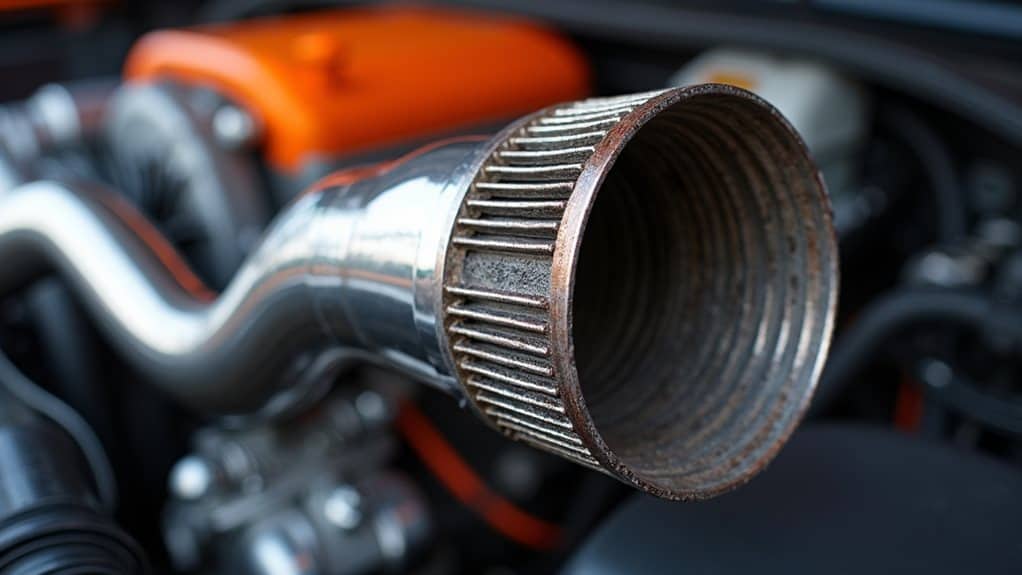
An EGR cooler is an essential component of a vehicle’s emissions control system that helps reduce the amount of harmful nitrogen oxide (NOx) gases produced during combustion. It works as a heat exchanger, cooling hot exhaust gases before recirculation. Ensuring proper vehicle identification with the VIN number and maintaining optimal conditions can help streamline replacement or repair of emissions-related components.
Why Your EGR Cooler Is Critical for Emissions and Engine Health
Your EGR cooler plays an essential role in reducing harmful nitrogen oxide (NOx) emissions by lowering the temperature of exhaust gases before they re-enter the engine, helping to meet environmental regulations.
It also protects engine components from overheating and damage by controlling combustion temperatures through efficient heat reduction.
When the cooler fails, coolant leaks can occur, leading to white smoke and potential engine damage, underscoring its significance for maintaining engine health and compliance.
Knowing whether your Audi A4 needs premium gas could save you from costly engine damage, so consult your owner’s manual or manufacturer recommendations.
Reduces Harmful Emissions
The EGR cooler plays an essential role in reducing harmful emissions by lowering the temperature of exhaust gases before they’re recirculated into the engine.
By cooling exhaust gases, it aids emissions control, especially NOx reduction, which results from high combustion temperatures.
This process prevents excessive heat buildup, helping the engine maintain an ideal combustion temperature and minimizing toxic nitrogen oxides.
Protects Engine Components
Have you ever wondered how an EGR cooler helps prevent engine damage? It reduces exhaust gas temperatures using coolant, lowering thermal stress on engine components like valves and turbochargers.
Common Signs Your EGR Cooler Is Failing or Leaking
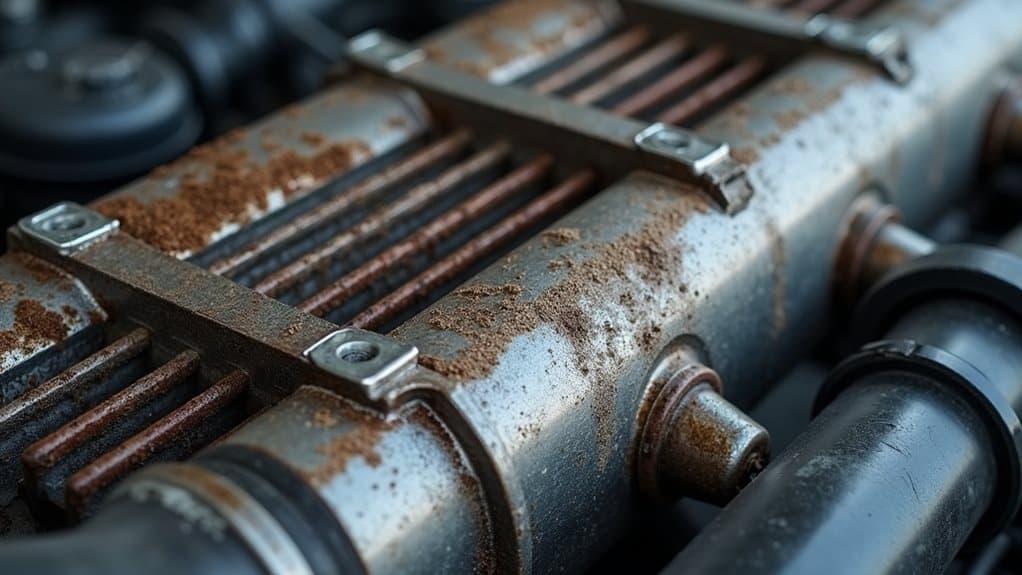
If you notice white smoke or steam coming from your exhaust, it may indicate coolant is leaking into the exhaust system due to a failing EGR cooler.
Additionally, sudden coolant loss without visible leaks suggests an internal crack or failure within the cooler, allowing fluid to bypass into the engine.
These signs, along with increased engine temperatures and engine warning lights, signal that your EGR cooler could be compromised and requires inspection.
Maintaining proper engine oil pressure is also important for overall engine health, as low pressure (below 20 psi) can indicate problems that may exacerbate cooling system issues like a failing oil pump.
White Smoke Emissions
White smoke emitting from your vehicle’s exhaust is often a clear sign that something is wrong with the EGR cooler, especially when it starts to leak or crack.
A coolant leak causes steam emissions and white smoke during operation.
Internal cracks in the EGR cooler allow coolant to mix with exhaust gases, leading to visible white smoke and coolant loss.
Coolant Loss Symptoms
Coolant loss symptoms are key indicators that your EGR cooler may be failing or leaking. You might notice coolant loss without visible leaks, or see white smoke from the exhaust, signaling coolant mixing with exhaust gases.
Engine overheating and frequent cooling system warnings also suggest a damaged EGR cooler causing coolant leaks. These leaks can impact overall engine performance.
Causes of EGR Cooler Failures and How to Prevent Them
One common cause of EGR cooler failures is the buildup of soot and carbon deposits inside the cooler tubes, which can block flow and cause overheating.
Coolant contamination or degradation reduces heat transfer efficiency, leading to corrosion and leaks.
Regular maintenance, including cleaning and using proper coolant, helps prevent blockages, corrosion, and thermal stress that weaken cooler components over time.
Inspect ducts and vents regularly to ensure proper airflow and prevent debris buildup that can contribute to cooling system inefficiencies.
Diagnosing EGR Cooler Problems: How to Tell If It’s Failing
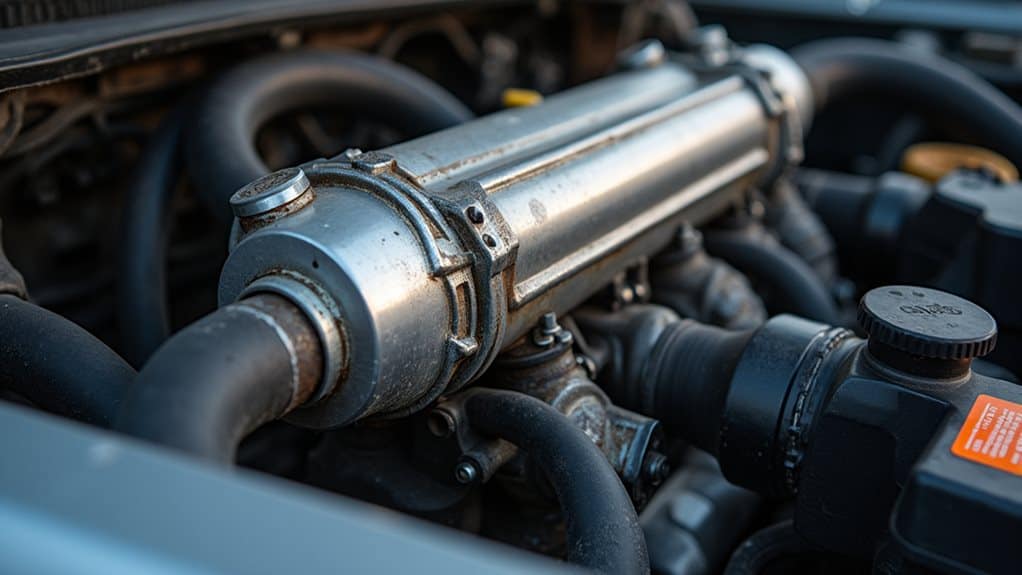
Diagnosing problems with your EGR cooler involves paying close attention to specific signs and symptoms that indicate failure.
White smoke or steam from the exhaust, coolant leaks, or engine overheating suggest issues like coolant entering exhaust or EGR cooler failure.
Diagnostic codes such as P0401 or P2188, along with deposits around the EGR valve, confirm internal problems.
Also inspect related drivetrain and engine systems for clicking or vibration that can mimic or accompany EGR issues, such as worn wheel bearings or CV joint problems.
Replacing or Repairing Your EGR Cooler: What You Need to Know
Replacing or repairing your EGR cooler is indispensable for engine health and efficiency.
If you notice coolant leaks, it’s important to address them promptly to prevent engine overheating, white smoke, or damage.
Proper coolant replacement, using high-quality coolers, and thorough EGR system repair—such as sealing and coolant bleeding—are essential steps to avoid future failures and costly repairs.
Corroded components and deteriorating seals can accelerate failures in related systems like the brake calipers, so inspect nearby metal parts and fluid condition when servicing the EGR cooler.
Tips to Maintain Your EGR Cooler for Long-Term Performance
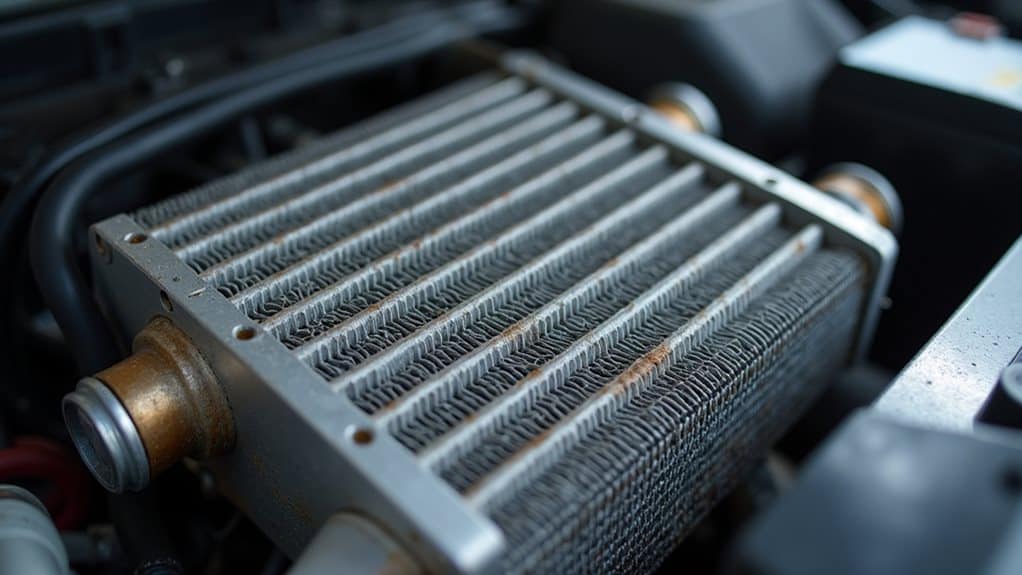
Regular maintenance of your EGR cooler is essential to guarantee it functions effectively over time. Inspect and clean the cooler regularly to prevent carbon buildup, which can cause clogging and impair heat transfer.
Use high-quality coolant, replace it on schedule, and immediately address coolant leaks or white smoke.
Avoid short trips and consider cleaners to maintain ideal cooling performance and prevent internal fouling.
Wrapping up
In summary, an EGR cooler plays a crucial role in reducing engine emissions by cooling exhaust gases before they re-enter the engine. Proper maintenance, timely diagnosis of issues, and prompt replacement when necessary guarantee optimal performance and compliance with environmental standards. Understanding how it works and recognizing signs of failure can help prevent costly repairs and engine damage. Regular inspections and attention to cooling system health are essential for long-term engine reliability and emissions control.